
Black Mischief
by Evelyn Waugh 
On This Page
Description
""Black Mischief, " Waugh's third novel, helped to establish his reputation as a master satirist. Set on the fictional African island of Azania, the novel chronicles the efforts of Emperor Seth, assisted by the Englishman Basil Seal, to modernize his kingdom. Profound hilarity ensues from the issuance of homemade currency, the staging of a "Birth Control Gala, " the rightful ruler's demise at his own rather long and tiring coronation ceremonies, and a good deal more mischief.Tags
Recommendations












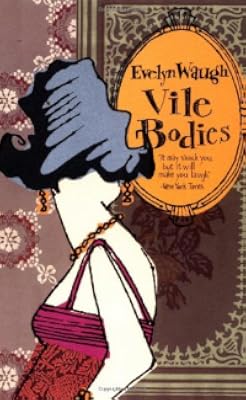
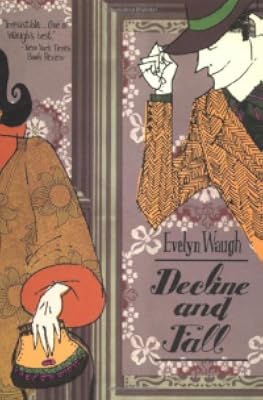








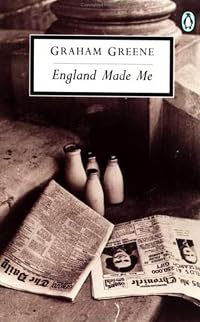

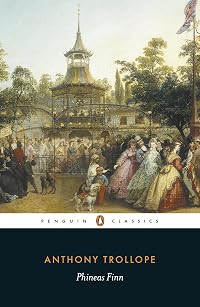


Member Recommendations

pechmerle Another satire, 30 years later than Waugh's, on post-colonial Africa. An amusing contrast of tradition vs. world-wide popular culture.
karatelpek Satire of diplomatic life in Africa
Member Reviews
It has the feel of an early novel by a talented writer learning their trade, who will go on to great things.
In fact it's Waugh's third and comes after, the far better, both Decline and Fall and Vile Bodies.
There is some fine writing here, and the elements of tropical farce are frequently funny. It's a novel "of its time" and the caricaturing of some of the natives is about as crass as one might expect. That said, much of the humour is at the expense of the French and British colonial types. Youkoumian the Armenian factotum is a splendid foil to the British antihero. It would take some robust editing to make this acceptable to modern ears, although the surprise is perhaps how little would have to go. It's not as if the book even _needs_ show more this stuff.
The real failing though is the weakness of Seth, the central character. A common enough trope, the African prince educated at Oxbridge, who returns home, unexpectedly ascends the throne and then decides to modernise his country, with the aid of his old college acquaintance. But he barely appears. He's mostly offstage, communicating by half-informed memos to the Ministry of Modernisation, as to where best to purchase an Artesian Well.
Overall, it doesn't work. It has its moments and Waugh is already clearly someone who will write great works. But sadly this isn't one of them. show less
In fact it's Waugh's third and comes after, the far better, both Decline and Fall and Vile Bodies.
There is some fine writing here, and the elements of tropical farce are frequently funny. It's a novel "of its time" and the caricaturing of some of the natives is about as crass as one might expect. That said, much of the humour is at the expense of the French and British colonial types. Youkoumian the Armenian factotum is a splendid foil to the British antihero. It would take some robust editing to make this acceptable to modern ears, although the surprise is perhaps how little would have to go. It's not as if the book even _needs_ show more this stuff.
The real failing though is the weakness of Seth, the central character. A common enough trope, the African prince educated at Oxbridge, who returns home, unexpectedly ascends the throne and then decides to modernise his country, with the aid of his old college acquaintance. But he barely appears. He's mostly offstage, communicating by half-informed memos to the Ministry of Modernisation, as to where best to purchase an Artesian Well.
Overall, it doesn't work. It has its moments and Waugh is already clearly someone who will write great works. But sadly this isn't one of them. show less
This was one of a bunch of Evelyn Waugh novels my mother found me in charity shops. In Harrogate. Where they obviously have a somewhat different class of customer to Sheffield. Although, to be fair, it’s a rare charity shop that will keep 1950s Penguin paperbacks on their shelves. And they were pretty tatty copies too. Black Mischief is set in the invented African island-nation of Azania. There are two African language-groups, one native to the island, the other invaders several centuries earlier. Plus Arabs, legations from assorted European nations, churches from the major religions, and a variety of hangers-on and chancers. The current ruler dies and his son, only just down from Oxford, takes the throne. And is determined to drag show more his country into the twentieth century (the fourth decade of it, at least). Waugh lays out the history of his invented country with impressive clarity. The story then shifts to London and Basil Seal, a character from Waugh’s earlier novels, a dissolute upper class wastrel, who happens to know the new emperor of Azania and fancies getting out of London. So he travels to Azania, hooks up with emperor, and is made Minister of Modernization. He’s in it for what he can get, of course, but he’s out-matched by pretty much everyone else in the country. Had Black Mischief been written a few decades later, it might have aged better. Because it’s horribly racist. It’s not just the language, it’s the treatment of races other than English. Waugh mocks the English quite heavily; and the French too. Especially their legations. But his treatment of the Sakuyu and Wanda relies on racial caricatures, as does his characterisation of Youkoumian, an Armenian Jew. Perversely, the one non-English character who isn’t treated racistly is the new emperor, who comes across as woefully naive, if well-intentioned, and the sort of over-educated naif so beloved of Oxbridge comedies. Not one of Waugh’s best. show less
Very funny. Big caveat with this one is the racism - Waugh is unabashedly racist, and the terminology he uses, while presumably common in 1932, grates pretty heavily now. That said, while none of the characters comes out of the book with any credit, it's the westerners who come off by far worst, both in manipulating the country for their own ends and in being the source of the forced modernity that is such a disaster. Really, Waugh just didn't like anyone...
If this was considered good writing in its time (1932) then time has not been kind. The back cover blurb includes the line “…from the wit of one of the finest practitioners of the art of satiric fiction. If this is the finest of the time, then, again, time has not been kind.
Satire is hard. And its strength comes from an understanding of what is being satirized. (Yes, an obvious statement, but an important one.) This book delves into the foibles of the higher class (not the highest, but those who think they are), of the idle rich, of government bureaucracy, and the silliness of the goings on in foreign countries. But this is all nigh on 100 years ago (okay, 90 years) and it means nothing to us.
Keep in mind that even Lewis Carroll show more suffers from this malady, with much of the satire long past understanding. But the strength of the books is based on the strength of the writing. And the writing here is not that strong.
But the most fatal blow to this book is the attitudes and verbiage used in relation to natives of the small African island about which this is being written. While Waugh may be trying to make fun of these attitudes, the language and characterizations still smack too much of the times in which this was written – offhand slurs and degradations that were taken for granted at the time, but we no longer tolerate. This can be painful to read, even understanding it was the tone of the times.
Finally, reading foibles and tribulations of these entitled people as they come together in the country while trying to keep their dignity and their justifications is, quite frankly, boring. Again, this is supposed to be wit and satire, but the age of that satire does not keep the novel going. Things really don’t pick up steam (read that as “worth reading”) until around page 240 (of 310) when the government is overthrown.
Waugh may be good. But I wouldn’t believe it from this single novel. (Too small a sample; I know.) Which means I’m not sure what it will take for me to take the plunge a second time. show less
Satire is hard. And its strength comes from an understanding of what is being satirized. (Yes, an obvious statement, but an important one.) This book delves into the foibles of the higher class (not the highest, but those who think they are), of the idle rich, of government bureaucracy, and the silliness of the goings on in foreign countries. But this is all nigh on 100 years ago (okay, 90 years) and it means nothing to us.
Keep in mind that even Lewis Carroll show more suffers from this malady, with much of the satire long past understanding. But the strength of the books is based on the strength of the writing. And the writing here is not that strong.
But the most fatal blow to this book is the attitudes and verbiage used in relation to natives of the small African island about which this is being written. While Waugh may be trying to make fun of these attitudes, the language and characterizations still smack too much of the times in which this was written – offhand slurs and degradations that were taken for granted at the time, but we no longer tolerate. This can be painful to read, even understanding it was the tone of the times.
Finally, reading foibles and tribulations of these entitled people as they come together in the country while trying to keep their dignity and their justifications is, quite frankly, boring. Again, this is supposed to be wit and satire, but the age of that satire does not keep the novel going. Things really don’t pick up steam (read that as “worth reading”) until around page 240 (of 310) when the government is overthrown.
Waugh may be good. But I wouldn’t believe it from this single novel. (Too small a sample; I know.) Which means I’m not sure what it will take for me to take the plunge a second time. show less
'...constitutional monarchy, bicameral legislature, proportional representation, women's suffrage, independent judicature, freedom of the press, referendums...
What is all that? asked the Emperor.
Just a few ideas that have ceased to be modern.'
That was fairly fun. A satire about a small nation of complicated culture and history, with a new leader who wants to replace the savagery of barbarism with the savagery of civilization..
I tend to quite like these small country political stories and have read quite a few but this stuff tends to be a backdrop to the main plot.
These elements arn't used here as the setting for the magical realism of [b:One Hundred Years of Solitude|320|One Hundred Years of Solitude|Gabriel García show more Márquez|https://images.gr-assets.com/books/1327881361s/320.jpg|3295655], or the hippie utopianism of huxley's [b:Island|5130|Island|Aldous Huxley|https://images.gr-assets.com/books/1375947541s/5130.jpg|3269256], nor the personal dramas of [b:South Wind|1198855|South Wind|Norman Douglas|https://images.gr-assets.com/books/1181816741s/1198855.jpg|1186973] or [b:Palace Without Chairs|2686939|Palace Without Chairs|Brigid Brophy|https://s.gr-assets.com/assets/nophoto/book/50x75-a91bf249278a81aabab721ef782c4a74.png|2712263].
There isn't really even anything you could call main characters. It reads at times more like a moviescript than a novel. There is no greater plot, its just this sketch of the life of the island through the eyes of various random elements.
Nevertheless its well drawn and quite funny and easy to read. Also occasionally quite dark at times especially near the end.
Oh, its also quite un-PC, but not in an aggressive way... although i am an extremely white male so your feelings may vary ;) .
Overall a nicely drawn albeit somewhat shallow satire.
Edit: Better than [b:Scoop|30919|Scoop|Evelyn Waugh|https://images.gr-assets.com/books/1416017359s/30919.jpg|1001166] not as good as [b:Vile Bodies|142492|Vile Bodies|Evelyn Waugh|https://images.gr-assets.com/books/1344264747s/142492.jpg|828762] . show less
What is all that? asked the Emperor.
Just a few ideas that have ceased to be modern.'
That was fairly fun. A satire about a small nation of complicated culture and history, with a new leader who wants to replace the savagery of barbarism with the savagery of civilization..
I tend to quite like these small country political stories and have read quite a few but this stuff tends to be a backdrop to the main plot.
These elements arn't used here as the setting for the magical realism of [b:One Hundred Years of Solitude|320|One Hundred Years of Solitude|Gabriel García show more Márquez|https://images.gr-assets.com/books/1327881361s/320.jpg|3295655], or the hippie utopianism of huxley's [b:Island|5130|Island|Aldous Huxley|https://images.gr-assets.com/books/1375947541s/5130.jpg|3269256], nor the personal dramas of [b:South Wind|1198855|South Wind|Norman Douglas|https://images.gr-assets.com/books/1181816741s/1198855.jpg|1186973] or [b:Palace Without Chairs|2686939|Palace Without Chairs|Brigid Brophy|https://s.gr-assets.com/assets/nophoto/book/50x75-a91bf249278a81aabab721ef782c4a74.png|2712263].
There isn't really even anything you could call main characters. It reads at times more like a moviescript than a novel. There is no greater plot, its just this sketch of the life of the island through the eyes of various random elements.
Nevertheless its well drawn and quite funny and easy to read. Also occasionally quite dark at times especially near the end.
Oh, its also quite un-PC, but not in an aggressive way... although i am an extremely white male so your feelings may vary ;) .
Overall a nicely drawn albeit somewhat shallow satire.
Edit: Better than [b:Scoop|30919|Scoop|Evelyn Waugh|https://images.gr-assets.com/books/1416017359s/30919.jpg|1001166] not as good as [b:Vile Bodies|142492|Vile Bodies|Evelyn Waugh|https://images.gr-assets.com/books/1344264747s/142492.jpg|828762] . show less
This simply was not as funny as I wanted it to be. There are some great moments of hilarity as Waugh mocks just about everyone associated with a bloody transfer of power in an independent African nation off the coast of Somalia (actually, I had no idea there really is a large island there--it is called Socotra, not Azania, but it has a similar history of population by a combination of Portuguese, Arab, and British settlers). The new emperor, Seth, is British-educated and elects to modernize the island in ways that are both resisted and misunderstood by his subjects. His chief minister of modernization is a vapid member of the British aristocracy who seems to have drifted into Azanian politics mostly out of boredom and a desire to show more irritate his mother. Meanwhile, the British consul just wants to play with toy boats in his bubble bath and wire chess moves to his pal back home, both of which the French consul interprets as wily strategic moves in the Great Game.
If this all sounds like it's ripe for a great Waugh send-up, that's what I thought, too. Unfortunately, as others here have noted, the book is actually a little boring. (There is also the racial, some might say racist, element, but I am not really offended by this, since I see the book as a cultural document of its time and attitudes.) The real offense here is that this is simply a minor book by a master, and I expected too much of it. Even the great literary geniuses can't hit a home run every time. show less
If this all sounds like it's ripe for a great Waugh send-up, that's what I thought, too. Unfortunately, as others here have noted, the book is actually a little boring. (There is also the racial, some might say racist, element, but I am not really offended by this, since I see the book as a cultural document of its time and attitudes.) The real offense here is that this is simply a minor book by a master, and I expected too much of it. Even the great literary geniuses can't hit a home run every time. show less
I read this for book club. While I was reading it I was mainly busy thinking about how racist it was, but it grew on me afterwards as I thought about it and discussed it. It's some kind of... political satire thing set in Africa. Parts are mildly amusing, I guess, but I can't say its sold me on Waugh.
Members
- Recently Added By
Lists

The Guardian's 1000 Novels Everyone Must Read
1,005 works; 552 members

Folio Society
831 works; 53 members

Books I Own But Haven't Read
144 works; 2 members

Blue Pyramid 1,276 Best Books of All Time
1,248 works; 32 members

Books with Colourful Titles
171 works; 8 members

Books Read in 2021
5,361 works; 114 members
Author Information

133+ Works 56,795 Members
Born in Hampstead and educated at Oxford University, Evelyn Waugh came from a literary family. His elder brother, Alec was a novelist, and his father, Arthur Waugh, was the influential head of a large publishing house. Even in his school days, Waugh showed sings of the profound belief in Catholicism and brilliant wit that were to mark his later show more years. Waugh began publishing his novels in the late 1920's. He joined the Royal Marines at the beginning of World War II and was one of the first to volunteer for commando service. In 1944 he survived a plane crash in Yugoslavia and, while hiding in a cave, corrected the proofs of one of his novels. Waugh's early novels, Decline and Fall (1927), Vile Bodies (1930), and A Handful of Dust (1934), established him as one of the funniest and most brilliant satirists the British had seen in years. He was particularly skillful at poking fun at the scramble for prominence among the upper classes and the struggle between the generations. He lived for a while in Hollywood, about which he wrote The Loved One (1948), a scathing attack on the United States's overly sentimental funeral practices. His greatest works, however, are Brideshead Revisited (1945), which has been made into a highly popular television miniseries, and the trilogy Sword of Honor (1965), composed of Men at Arms (1952), Officers and Gentlemen (1955), and The End of the Battle (1961). (Bowker Author Biography) show less
Evelyn Waugh has a Legacy Library. Legacy libraries are the personal libraries of famous readers, entered by LibraryThing members from the Legacy Libraries group.
Some Editions
Awards and Honors
Series
Belongs to Publisher Series
10/18, Domaine étranger (1508)
Work Relationships
Is contained in
Common Knowledge
- Canonical title*
- Diablerie
- Original title
- Black Mischief
- Original publication date
- 1932
- People/Characters
- Basil Seal; Seth (emperor); Youkoumian
- Important places
- Ethiopia (fictionalized); Azania
- Dedication
- With love to
Mary and Dorothy Lygon - First words
- We, Seth, Emperor of Azania, Chief of the Chiefs of Sakuyu, Lord of Wanda and Tyrant of the Seas, Bachelor of the Arts of Oxford University, being in this the twenty-fourth year of our life, summoned by the wisdom of Almig... (show all)hty God and the unanimous voice of our people to the throne of our ancestors, do hereby proclaim . . .
- Last words
- (Click to show. Warning: May contain spoilers.)The song rang clear over the dark city and the soft, barely perceptible lapping of the water along the sea-wall.
- Original language*
- Anglais (Royaume-Uni) (Royaume-Uni)
*Some information comes from Common Knowledge in other languages. Click "Edit" for more information.
Classifications
Statistics
- Members
- 1,524
- Popularity
- 15,200
- Reviews
- 27
- Rating
- (3.67)
- Languages
- 12 — Czech, Danish, Dutch, English, Finnish, French, German, Italian, Portuguese, Russian, Spanish, Swedish
- Media
- Paper, Audiobook, Ebook
- ISBNs
- 41
- UPCs
- 1
- ASINs
- 34