On This Page
Description
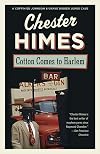
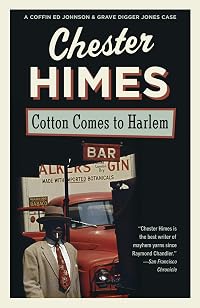
A classic entry in Chester Himes's trailblazing Harlem Detectives series, Cotton Comes to Harlem is one of his hardest-hitting and most entertaining thrillers. nbsp; Flim-flam man Deke O'Hara is no sooner out of Atlanta's state penitentiary than he's back on the streets working the scam of a lifetime. As sponsor of the Back-to-Africa movement, he's counting on a big Harlem rally to produce a massive collection--for his own private charity. But the takenbsp;is hijacked by white gunmen and show more hidden in a bale of cotton that suddenly everyone wants to get his hands on. As NYPD detectives "Coffin Ed" Johnson and "Grave Digger" Jones piece together the complexity of thenbsp;scheme, we are treated to Himes's brand of hard-boiled crime fiction at its very best. show lessTags
Recommendations












Member Reviews
Chester Himes created the perfect little world of 1960s Harlem in this book. Two black NYPD detectives with the nicknames of Coffin Ed and Gravedigger, which tells you a lot you need to know, investigate a reverend/swindler who’s taken $87k from people as part of a back-to-Africa scam.
Ed and Gravedigger are regular guys, family men, very brutal and very effective detectives. None of this seems contradictory. Although they work under white men they do it their way and are given allowances because white cops can’t do what they do in Harlem.
This is a well-written, fast-paced story with intricate plotting and great characters. I’ll look for others by Himes.
Ed and Gravedigger are regular guys, family men, very brutal and very effective detectives. None of this seems contradictory. Although they work under white men they do it their way and are given allowances because white cops can’t do what they do in Harlem.
This is a well-written, fast-paced story with intricate plotting and great characters. I’ll look for others by Himes.
I was on a real roll with Chester Himes books in late 2022. This one took on the legacy of Southern slavery, the flight to Harlem and desire to go further to Africa. All the while being ripped off by shysters and pursued by an evil white Kentucky gent. The standout scene is when the shyster's wife seduces the cop holding her under surveillance, he's so ugly that she forces him first to put a paper bag over his head while taking off all his clothes (and then she legs it of course).
Reverend O' Malley arrives in Harlem, quickly builds his own congregation, and soon organizes a Back-To-Africa campaign. For $1000 a family from Harlem will be transported to Africa and given land to start a new life, but at the final rally, when the Reverend and his staff have collected $87,000 in cash from the congregation, a delivery truck breaks in and robs the event. Coffin Ed and Grave Digger Jones, ace detectives from the local precinct are put on the case. They need to find the cash, bust the con man Reverend and trace a bale of cotton floating around Harlem. Though their lieutenant knows they're the best men for the job, Jones and Ed have been in trouble before because they tend to be violent.
With the creation of his big city black detectives, Coffin Ed Johnson and Gravedigger Jones, Chester Himes achieved something singular and grand. Hard boiled genre fiction was nothing new in the 1950’s, but populating a landscape with sharply detailed black characters was new and still reads fresh today half a century later. The detectives work for a police department mostly at odds with the community they serve and serve a community distrustful of the department that they work for. Often this puts them in a vice, but also it frees them to make up their own rules. Adhering to a clear vision of right and wrong, like most hard boiled detectives, their means can swerve wildly from what would seem acceptable. Their creativity in the face show more of constant adversity propels the novel. The richly created world of Pimps, Madams, hustlers, grifters and work-a-day going to church every Sunday folk gives the novel a pulse and lively step. Himes achieved his stated goal of doing for Harlem what Raymond Chandler did for Los Angeles. I almost felt like I knew where all the alleys were in Harlem by the end of the book. The heist at the center of the novel is a solid mystery that snakes through every corner of Harlem and squeezes out a fresh look at race relations on several social levels. The voices and language of COTTON COMES TO HARLEM still rings in my ears—always colorful but never overdone. show less
Cotton Comes to Harlem has a somewhat complex plot because of all the characters involved - and I mean characters in the double entendre sense! In Harlem in the 1960’s, the Reverend Deke O’Malley is soliciting $1,000 payments from black families to participate in a Back to Africa Movement. O’Malley got the idea from Marcus Garvey (a historical figure whose own movement, the Universal Negro Improvement Association (UNIA) included a Liberia project, launched in 1920. It was intended to build colleges, universities, industrial plants, and railroads, but was abandoned in the mid-1920s after opposition from European powers with their own plans for Liberia.)
But the Reverend has no intention of actually helping black folks start new show more lives in Africa; he is a con man with a police record. The only new life he is intent on starting is his own.
So far, he has collected $87,000. But then the money is robbed at gunpoint and O’Malley runs off. It is unclear if Deke has orchestrated the robbery.
Two black “ace” detectives, partners “Grave Digger” Jones and “Coffin Ed” Johnson, are put on the case. Jones and Johnson are recurring characters in Himes’ “noir black crime fiction series” – they appear in a total of eight books. “Grave Digger” has a “dark brown lumpy face…and the big, rugged, loosely knit frame of a day laborer…” “Coffin Ed” has an acid-scarred face from a past encounter with a hoodlum: “Afterwards he had earned the reputation of being quick on the trigger.”
Jones and Johnson are police in a down and dirty part of Harlem, and so the behavior and language are less than church-approved. (And in fact, the only part really dated in the book is the use of euphemisms for many of the obscenities skirted in the book.) Encounters with loose women are described in detail, and often entail violence.
The two detectives loathe Deke and all he stands for: a lack of concern and respect for his own people. The hard-bitten detectives want above all to get the money back for the 87 families “who had put down their thousand dollar grubstakes on a dream.” They knew that these families had come by their money the hard way:
"They didn’t consider these victims as squares or suckers. They understood them. These people were seeking a home – just the same as the Pilgrim Fathers. … These people had deserted the South because it could never be considered their home. … But they had not found a home in the North. They had not found a home in America. So they looked across the sea to Africa, where other black people were both the ruled and the rulers. … Everyone has to believe in something; and the white people of America had left them nothing to believe in. …”
As Jones and Johnson go about solving the crime, they take us on a tour of the black ghetto of Harlem in the 1960’s - a colorful amalgam of blues and booze, hustlers and peddlers, rascals and saints, and a large core of hard-working people trying to raise their kids and build a future.
The two detectives do not hesitate to use their police power in displays of force to get the information they need. Permeating their behavior is a steady confidence that they will find Deke, they will get the money, and they will restore it to the people who scrimped and saved for the chance of freedom.
A bale of cotton wends its way through the story like a mute Greek chorus, not speaking but standing in for the history of black Americans, from slavery and despair to hope and salvation.
Evaluation: This book has a lot of heart. These detectives love all their people – the good, the bad, and the ugly. (Although they appear to have mixed feelings about women - dividing them into the "traditional" two camps of mother or prostitute - within this framework they exhibit affection.) There is also a delightful, smack-your-head twist at the end that I, at least, never saw coming. If you can get past the R+ -rated sex and language, there’s a good story here, and an interesting look at an era of change for blacks in the 1960’s. show less
But the Reverend has no intention of actually helping black folks start new show more lives in Africa; he is a con man with a police record. The only new life he is intent on starting is his own.
So far, he has collected $87,000. But then the money is robbed at gunpoint and O’Malley runs off. It is unclear if Deke has orchestrated the robbery.
Two black “ace” detectives, partners “Grave Digger” Jones and “Coffin Ed” Johnson, are put on the case. Jones and Johnson are recurring characters in Himes’ “noir black crime fiction series” – they appear in a total of eight books. “Grave Digger” has a “dark brown lumpy face…and the big, rugged, loosely knit frame of a day laborer…” “Coffin Ed” has an acid-scarred face from a past encounter with a hoodlum: “Afterwards he had earned the reputation of being quick on the trigger.”
Jones and Johnson are police in a down and dirty part of Harlem, and so the behavior and language are less than church-approved. (And in fact, the only part really dated in the book is the use of euphemisms for many of the obscenities skirted in the book.) Encounters with loose women are described in detail, and often entail violence.
The two detectives loathe Deke and all he stands for: a lack of concern and respect for his own people. The hard-bitten detectives want above all to get the money back for the 87 families “who had put down their thousand dollar grubstakes on a dream.” They knew that these families had come by their money the hard way:
"They didn’t consider these victims as squares or suckers. They understood them. These people were seeking a home – just the same as the Pilgrim Fathers. … These people had deserted the South because it could never be considered their home. … But they had not found a home in the North. They had not found a home in America. So they looked across the sea to Africa, where other black people were both the ruled and the rulers. … Everyone has to believe in something; and the white people of America had left them nothing to believe in. …”
As Jones and Johnson go about solving the crime, they take us on a tour of the black ghetto of Harlem in the 1960’s - a colorful amalgam of blues and booze, hustlers and peddlers, rascals and saints, and a large core of hard-working people trying to raise their kids and build a future.
The two detectives do not hesitate to use their police power in displays of force to get the information they need. Permeating their behavior is a steady confidence that they will find Deke, they will get the money, and they will restore it to the people who scrimped and saved for the chance of freedom.
A bale of cotton wends its way through the story like a mute Greek chorus, not speaking but standing in for the history of black Americans, from slavery and despair to hope and salvation.
Evaluation: This book has a lot of heart. These detectives love all their people – the good, the bad, and the ugly. (Although they appear to have mixed feelings about women - dividing them into the "traditional" two camps of mother or prostitute - within this framework they exhibit affection.) There is also a delightful, smack-your-head twist at the end that I, at least, never saw coming. If you can get past the R+ -rated sex and language, there’s a good story here, and an interesting look at an era of change for blacks in the 1960’s. show less
Himes wrote some of the coolest novels in the genre, and Cotton Comes to Harlem is one of his best. It's a non-stop roller coaster ride of sex, violence and manic black humor that literally left me breathless at times; it's that good. In between the action Himes sneaks in a few telling comments on race relations and race politics, but this is by no means a cultural polemic posing as a thriller: it's the real deal baby. Check out A Rage in Harlem as well (the second best of his Harlem novels) then pick up anything else he's written.
Himes wrote some of the coolest novels in the genre, and Cotton Comes to Harlem is one of his best. It's a non-stop roller coaster ride of sex, violence and manic black humor that literally left me breathless at times; it's that good. In between the action Himes sneaks in a few telling comments on race relations and race politics, but this is by no means a cultural polemic posing as a thriller: it's the real deal baby. Check out A Rage in Harlem as well (the second best of his Harlem novels) then pick up anything else he's written.
Members
- Recently Added By
Lists

Donald E. Westlake's Top Ten Mystery Books
20 works; 3 members

Catalog
41 works; 2 members

Books With Complete Sentence Titles
502 works; 17 members

Books mentioned in Julian Symons’ Bloody Murder
438 works; 6 members

Books
85 works; 1 member

Books Read in 2024
4,712 works; 127 members

The 100 Best Crime Novels and Thrillers since 1945
100 works; 6 members

Reading LIst
648 works; 1 member
Author Information

59+ Works 6,148 Members
Chester B. Himes was born in Jefferson City, Missouri on July 29, 1909. He attended Ohio State University in Columbus, but was expelled his freshman year for a prank. He began writing short stories and having them published in national magazines such as Abbott's Monthly Magazine and Esquire while in prison for armed robbery. He was paroled after 8 show more years and eventually joined the Works Progress Administration, where he served as a writer with the Ohio Writers' Project. His first novel, If He Hollers Let Him Go, is about the fear, anger, and humiliation of a black employee at a racist defense plant during World War II and was published in 1945. He moved to Paris, France in the 1950s and then to Moraira, Spain in 1969. He was more popular in Europe than in the United States and primarily wrote about black protagonists plagued by white racism and self-hate. His other works include Lonely Crusade, Pinktoes, Black on Black, The Quality of Hurt, and My Life As Absurdity. He also wrote detective novels set in Harlem, New York City including Run Man, Run, The Real Cool Killers, and Blind Man with a Pistol. He won the 1958 Grand Prix de Littérature Policière and the 1982 Columbus Foundation award. He died on November 12, 1984 from Parkinson's Disease. (Bowker Author Biography) show less
Some Editions
Awards and Honors
Series

Belongs to Publisher Series
Work Relationships
Is contained in
Has the adaptation
Common Knowledge
- Canonical title*
- Retour en Afrique
- Original title
- Retour en Afrique
- Alternate titles
- Back to Africa (manuscript title) (manuscript title)
- Original publication date
- 1964 (in French translation) (in French translation); 1965 (in English) (in English)
- People/Characters
- Coffin Ed Johnson; Grave Digger Jones
- Important places
- Harlem, New York, New York, USA
- Related movies
- Cotton Comes to Harlem (1970 | IMDb)
- First words
- The voice from the sound truck said: "Each family, no matter how big it is, will be asked to put up one thousand dollars."
- Last words
- (Click to show. Warning: May contain spoilers.)"'Hell, the way that old mother-raper is behaving, he might have come from Africa,' Grave Digger said."
- Disambiguation notice
- Originally published as the French translation of "Back to Africa": Retour en Afrique, [Paris] : Librairie Plon, 1964.
1st American ed. published: New York : Putnam, 1965.
*Some information comes from Common Knowledge in other languages. Click "Edit" for more information.
Classifications
Statistics
- Members
- 601
- Popularity
- 48,712
- Reviews
- 15
- Rating
- (3.89)
- Languages
- 9 — Catalan, Dutch, English, Finnish, French, German, Italian, Spanish, Swedish
- Media
- Paper, Audiobook, Ebook
- ISBNs
- 29
- ASINs
- 16