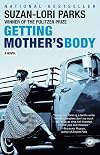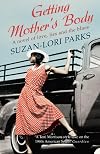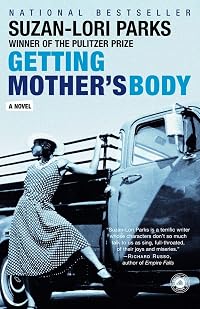
Getting Mother's Body
by Suzan-Lori Parks
On This Page
Description
Within the tradition of the great African-American women novelists, Pulitzer Prize-winning playwright Suzan-Lori Parks blazes her own trail. Parks tells the story of Billy Beede, a woman who has been impregnated by a bigamist coffin salesman, who sets out on a quest with her relatives to dig up her mother's body in La Junta, Arizona. Her mother's last wish was that she be buried with all her best jewelry, and Billy wants to rob the grave to help pay for future expenses. On the way, she and show more her relatives are plagued by the racist prejudices of the 1960s South -- where a couple of the Beedes spend the night in jail though they have committed no offense. This surreal narrative makes for an original and unsettling book. show lessTags
Recommendations






Member Recommendations
aethercowboy Getting Mother's Body is a reimagining of As I Lay Dying through a different culture's point of view.
Member Reviews
Parks’ writing here reads a lot like a play. I’m not sure what the qualities are that made me feel like that, but her background as a playwright sure felt like it came through. It’s a little heavier on dialogue than a lot of other books, and that talking is central to the story. This isn’t annoying in the "the characters just sit around talking" way. Most of it accompanies actions the characters take. Each short chapter is told from the perspective of a difference character, and a lot of the characters get a chapter or two. The reader really gets to get inside heads a lot. I liked that. And while it has a lot of substance that is just below the story’s surface, it never feels didactic or preachy.
Good reading to start off the show more year.
Full review: http://reading.kingrat.biz/reviews/getting-mothers-body-suzan-lori-parks show less
Good reading to start off the show more year.
Full review: http://reading.kingrat.biz/reviews/getting-mothers-body-suzan-lori-parks show less
I will start by saying that I really wanted to like this book better than I did. I was hopeful because the book started well. I was caught up in the different character's voice's, their dialect and phrasing set each character nicely apart as the narration duties swung from one character to the next. I could taste the dust of the Lincoln, Texas streets where the main characters lived in poverty and racial seclusion and feel the grit of their disappointed lives begin to come into focus. However as the story moved along, where the focus should have sharpened it instead became glassy-eyed. The ear for dialogue and the amusing antics that peppered the beginning began to pummel the ears and ring a tad hollow. Moments where the characters did show more ponder their lives felt forced into the last third of the book and were not so much delivered as the quiet revelations' they should have been but instead were stretched thin with too many words describing too little. And the ending felt tacked on like a hallmark card on an undertakers door. On the whole there were positives to be enjoyed but I think in this case, the author's history as a playwright of much renown has let her down. There were no actors to give weight where the characters needed it nor could they convey with a look what the author failed to do with a paragraph. show less
I picked this one up based on the review in Publishers Weekly. I wasn't sure starting off if I would like it. The 1960s southern dialect it's written in was a bit offputting (yr for your drove me nuts), but the darned book sucked me in.
Written in a series of first person chapters (every character seems to get his or her say), this is the story about a dirt poor extended black family with the focus on Billy Beede, a pregnant black teen whose husband prospects take a nosedive. The mother in the title is Billy's mother who died years ago and there's a reason, or two, to dig up her body and move her. Seems she was buried with a pearl necklace and diamond ring and Billy and her family could use the money so off they go. But it isn't that show more simple and it isn't about the treasure you can sell for cash. It's about the treasures deep in the human spirit and the things that can bring people together or pull them apart. Or so it seemed to me. All I know is that Billy, her plight, and her folks became very real to me and while I knew where things had to end up, the trip held enough surprises to keep me reading to see how it all turned out. There's some female empowerment, race relations, and sexual mores thrown in for good measure. I was not disappointed. show less
Written in a series of first person chapters (every character seems to get his or her say), this is the story about a dirt poor extended black family with the focus on Billy Beede, a pregnant black teen whose husband prospects take a nosedive. The mother in the title is Billy's mother who died years ago and there's a reason, or two, to dig up her body and move her. Seems she was buried with a pearl necklace and diamond ring and Billy and her family could use the money so off they go. But it isn't that show more simple and it isn't about the treasure you can sell for cash. It's about the treasures deep in the human spirit and the things that can bring people together or pull them apart. Or so it seemed to me. All I know is that Billy, her plight, and her folks became very real to me and while I knew where things had to end up, the trip held enough surprises to keep me reading to see how it all turned out. There's some female empowerment, race relations, and sexual mores thrown in for good measure. I was not disappointed. show less
Getting Mother's Body (2003) was the debut novel written by Suzan-Lori Parks, who won the 2002 Pulitizer Prize for Drama for her play called Topdog/Underdog, and also won a MacArthur genius grant in 2001.
I mention the fact that she's a playwright first because then it's no surprise when I insist that Parks has a real talent for writing dialog. That's important in a novel, especially to us sub-vocalizers, and these particular characters do not talk or act like the people living next door to most of us. This is Texas in 1963, and the protagonist is a 16 year old girl, Billy Beede, who is orphaned, very poor, and pregnant, with the added burden of being African-American in a segregationist time.
Billy's mother, Willa Mae, has been dead for show more six years, buried by her lover with a pearl necklace and a diamond ring. When Billy receives a letter letting her know that her mother's burial place is about to be paved over and that she should collect the body, Billy decides to go on a quest for the "treasure," the jewelry she could sell for money she so desperately needs. Meanwhile, Willa Mae's lover, Dill, is determined not to let the digging happen.
This is the story of how a whole family is drawn into joining this search, each with their own dreams about how they could start over or improve their lives, if only they had a little of that treasure. The story is told in turns by each one of them, so that Getting Mother's Body is a collection of interesting character sketches that all come together with a little surprise at the end. I enjoyed the journey and liked the ending. show less
I mention the fact that she's a playwright first because then it's no surprise when I insist that Parks has a real talent for writing dialog. That's important in a novel, especially to us sub-vocalizers, and these particular characters do not talk or act like the people living next door to most of us. This is Texas in 1963, and the protagonist is a 16 year old girl, Billy Beede, who is orphaned, very poor, and pregnant, with the added burden of being African-American in a segregationist time.
Billy's mother, Willa Mae, has been dead for show more six years, buried by her lover with a pearl necklace and a diamond ring. When Billy receives a letter letting her know that her mother's burial place is about to be paved over and that she should collect the body, Billy decides to go on a quest for the "treasure," the jewelry she could sell for money she so desperately needs. Meanwhile, Willa Mae's lover, Dill, is determined not to let the digging happen.
This is the story of how a whole family is drawn into joining this search, each with their own dreams about how they could start over or improve their lives, if only they had a little of that treasure. The story is told in turns by each one of them, so that Getting Mother's Body is a collection of interesting character sketches that all come together with a little surprise at the end. I enjoyed the journey and liked the ending. show less
I enjoyed reading it for the most part. There was wit, and love. It wasn't great though because I never felt the author had any idea of why she was writing this novel, other than that she knows how to write a good sentence so she might as well write a book's worth. So the book remained at the level of superficial entertainment that got a little annoying and then tedious by the end because in spite of being a road trip book it never went anywhere.
I thought this would be a great book from the back cover...it received a really thrilling sounding review from Richard Russo and this author had won the Pulitzer for a drama she had written. I found it to be incredibly dull with characters that were all immensely unlikable. Set in a small Texas town in the 1960s, while some African Americans were traveling to D.C. to hear MLK forty years ago, others were apparently traveling around Texas to dig up the body of a mother buried with her jewels. Well, it's fiction thank God...and it was interesting t to see from the author's perspective how segregation and discrimination played its role in various southern towns. On the flipside, despite what good reviews it had received, it seemed show more incredibly dull reading. I guess I can sum it all up to say that when a book is written in alternating first person perspectives and all of the characters are as dumb as dirt, it doesn't make for a very engaging time of it. I realized the first page in I would hate this book but I hadn't brought anything else to the gym to read and I didn't want to watch TV so I was stuck. And then, when I had read 90 pages of it, I figured I may as well go and finish it.
Not recommended. show less
Not recommended. show less
I've never read anything by this author. The book jacket says she won
the Pulitzer Prize for playwriters in 2002 for her play "Top
Dog/Underdog." I've never heard of it, either, so the only thing that
made me pick this one up was the title.
This is the story of a quest for buried treasure, set in 1963. Willa
Mae Beede was as fast as a race car when she was alive, going from lover
to lover, doing whatever she felt like doing. She died after a bad
abortion, while her 10 year old daughter, Billy, looked on from the
corner of the room, hating her mother with everything she had in her.
Willa Mae was buried in LaJunta, Arizona, by her lover Dill Smiles, in
Dill's mother's back yard, and she was buried with her most prized
possessions, her diamond ring show more and her pearls.
Six years later, Billy is living with her Aunt June and Uncle Roosevelt
in a tiny trailer behind the gas station her Uncle runs in Lincoln,
Texas. One day a letter arrives, telling Billy that her mother's
resting place is about to be plowed up and paved over to make a parking
lot for a new supermarket. Dirt poor and pregnant with an illegitimate
child, Billy knows that treasure is the only hope she has in this world,
so she sets her mind to go to LaJunta, dig up her mother, and get the
jewels. So, she steals Dill Smiles' pickup truck, talks her aunt and
uncle into going with her, and heads for Arizona, with Dill in hot
pursuit. Along the way, we meet some other members of the Beede family
who live between Texas and Arizona and the travelers stop to visit, eat,
wash up and move on, with one of the family members in tow.
This book is written entirely in the first person, with each chapter
from another person's point of view. It's written in the vernacular,
exactly as the people themselves would talk. Every character in the
book is black and Parks really captures the feeling of poor black people
living in the south in the early 1960s.
I found this book pretty entertaining, but hardly engrossing. A couple
of plot twists along the way and a conclusion you aren't led to expect
at the end. It was a nice change of pace and I enjoyed it. A pleasant
way to pass a couple of summer afternoons. show less
the Pulitzer Prize for playwriters in 2002 for her play "Top
Dog/Underdog." I've never heard of it, either, so the only thing that
made me pick this one up was the title.
This is the story of a quest for buried treasure, set in 1963. Willa
Mae Beede was as fast as a race car when she was alive, going from lover
to lover, doing whatever she felt like doing. She died after a bad
abortion, while her 10 year old daughter, Billy, looked on from the
corner of the room, hating her mother with everything she had in her.
Willa Mae was buried in LaJunta, Arizona, by her lover Dill Smiles, in
Dill's mother's back yard, and she was buried with her most prized
possessions, her diamond ring show more and her pearls.
Six years later, Billy is living with her Aunt June and Uncle Roosevelt
in a tiny trailer behind the gas station her Uncle runs in Lincoln,
Texas. One day a letter arrives, telling Billy that her mother's
resting place is about to be plowed up and paved over to make a parking
lot for a new supermarket. Dirt poor and pregnant with an illegitimate
child, Billy knows that treasure is the only hope she has in this world,
so she sets her mind to go to LaJunta, dig up her mother, and get the
jewels. So, she steals Dill Smiles' pickup truck, talks her aunt and
uncle into going with her, and heads for Arizona, with Dill in hot
pursuit. Along the way, we meet some other members of the Beede family
who live between Texas and Arizona and the travelers stop to visit, eat,
wash up and move on, with one of the family members in tow.
This book is written entirely in the first person, with each chapter
from another person's point of view. It's written in the vernacular,
exactly as the people themselves would talk. Every character in the
book is black and Parks really captures the feeling of poor black people
living in the south in the early 1960s.
I found this book pretty entertaining, but hardly engrossing. A couple
of plot twists along the way and a conclusion you aren't led to expect
at the end. It was a nice change of pace and I enjoyed it. A pleasant
way to pass a couple of summer afternoons. show less
Members
- Recently Added By
Lists

Amusing Book Titles
146 works; 39 members

Favorite Book Titles
35 works; 1 member
Author Information

22+ Works 1,879 Members
Awards and Honors
Awards
Work Relationships
Was inspired by
Common Knowledge
- Canonical title
- Getting Mother's Body
- Original publication date
- 2003-05-06
- People/Characters
- Billy Beede; Clifton Snipes; Lazerus "Laz" Jackson; Roosevelt Beede; June Flowers Beede; Dill Smith (show all 10); Homer Beede Rochfoucault; Dill Smiles; Candy Napoleon; Even Napoleon
- Important places
- Lincoln, Texas, USA; LaJunta, Arizona, USA
- Dedication
- For Francis Ammon - the first Texan I ever met. And, or course, for Paul.
- First words
- "Where my panties at?" I asks him.
- Last words
- (Click to show. Warning: May contain spoilers.)I think we did all right.
- Blurbers
- Russo, Richard; Cleage, Pearl
Classifications
Statistics
- Members
- 483
- Popularity
- 63,162
- Reviews
- 14
- Rating
- (3.40)
- Languages
- English, German
- Media
- Paper, Audiobook, Ebook
- ISBNs
- 14
- ASINs
- 3