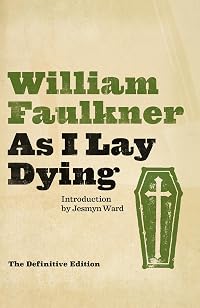
As I Lay Dying
by William Faulkner
On This Page
Description
Considered one of the most influential novels in American fiction in structure, style, and drama, As I Lay Dying is a true 20th-century classic. The story revolves around a grim yet darkly humorous pilgrimage, as Addie Bundren's family sets out to fulfill her last wish-to be buried in her native Jefferson, Mississippi, far from the miserable backwater surroundings of her married life. Narrated in turn by each of the family members-including Addie herself-as well as others the novel ranges in show more mood, from dark comedy to the deepest pathos. show lessTags
Recommendations



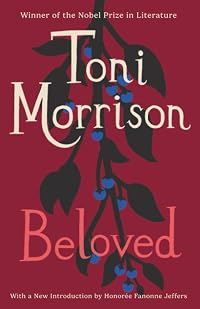


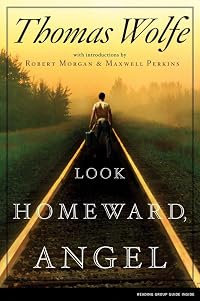
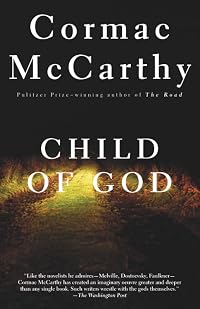
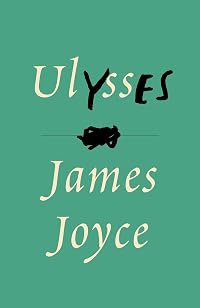








Member Recommendations
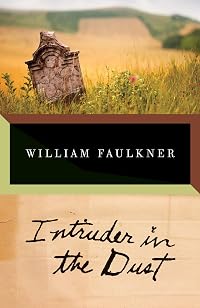
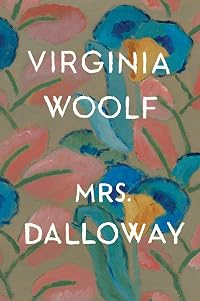
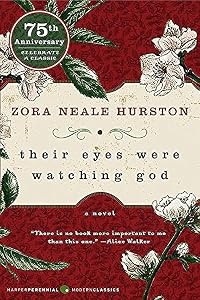
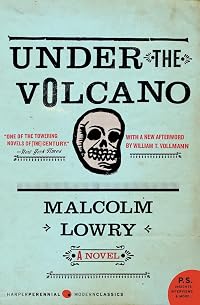
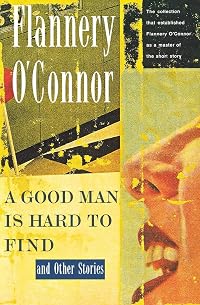
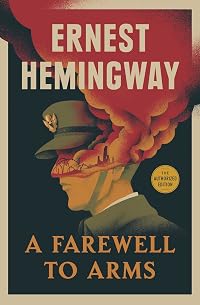
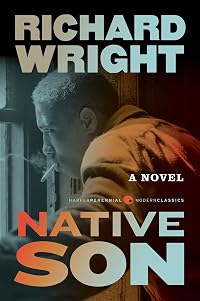
2below Both involve complicated characters (some might say messed up), crazy mishaps, and fascinating unstable and unreliable narratives. Also excellent examples of Modernist fiction.
72

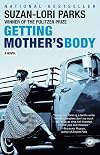
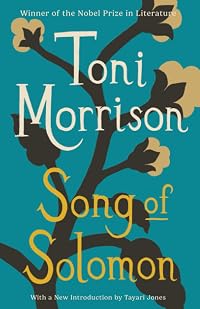
aethercowboy Getting Mother's Body is a reimagining of As I Lay Dying through a different culture's point of view.
30

Member Reviews
Here, in grief, things tumble into their constituents, into inanimacy, an unknowing, or in some instances a knowing too well that supercedes reductive language. Pride and vanity bear through carrying out a woman's revenge, one metted towards all but the man upon whom it was fixed. While it is not allotted so much direct pronouncement as other concerns, the tragedy and sorrow of womanhood is perhaps the most pronounced theme, everpresent as undercurrent, rising occasionally to wash away the bridge or drive a rushing log through the ford. After some chapters I had to set it aside and go for a walk. Impeccably written, at times genuinely visceral.
34. As I Lay Dying by William Faulkner
OPD: 1930
format: 182-page hardcover (no ISBN or publication date, but maybe 1960's?)
acquired: 2006 read: May 25-27 time reading: 6:42, 2.2 mpp
rating: 5
genre/style: Classic theme: Faulkner
locations: 1920’s Mississippi
about the author: 1897-1962. American Noble Laureate who was born in New Albany, MS, and lived most of his life in Oxford, MS.
I cannot capture or adequately post on this one. It's bigger than my ability to express. It's just doing a whole lot of stuff, from many different approaches, and it all works. I was absorbed. I was reading at a crawl, slowly wading through words that were demanding to me that I slow down and wade through them, and experience them, think of their sound. show more Meanwhile they were doing other things. This book isn't exactly a wow, but it has a presence, once you begin, that fills a lot of your mind, that hangs out there as some big thing. And I can't tell you what that big thing even is. But I have something like an awe there. In some non-emotional but deep way I find myself very attached to this.
It's all voices, in 1 to 4 or so page chapters titled by the speaker/thinker. Vardaman tells us, "My Mother is a fish." That's a whole capture. Here's his mother, Addie, speaking about her husband, Anse:
The story is about the death of Addie Bundren on her husband's poor farm isolated in rural Mississippi. She has made her husband promise to take her body to the town she came from, Jefferson, MS, about 40 miles away. They don't have a car, so this would by animal cart. When she dies, the weather breaks and the local river swells and tears down all the old bridges. But Anse is a weird guy, and a promise is a promise. He takes his three sons, his daughter, Dewey Dell, and a friend to help transport her. So, in a sense the book has two parts, the anticipation of Addie's death, where she looks out a window to watch her son make her coffin, the sounds of his sawing and hammering running through the text, and then a journey, their own odyssey.
But, it's the voices. That's everything here. From the opening line. They are just so distinct, that as a reader, my mind melded with their southern rural slang. Somehow, they take on their own reality, and they are the book. It's a kind of stream of conscious, with a repetition that should be irritating, but works, giving us a variety minds, sometimes compromised, sometimes religious, sometimes so coldly or even silently practical. It's almost doesn't matter what they say (or how funny it might be. The humor is superb). They have a rhythm and experience, that, itself, lingers.
This is a non-overrated wonderful classic. Recommended to the Faulkner curious.
2024
https://www.librarything.com/topic/360386#8549381 show less
OPD: 1930
format: 182-page hardcover (no ISBN or publication date, but maybe 1960's?)
acquired: 2006 read: May 25-27 time reading: 6:42, 2.2 mpp
rating: 5
genre/style: Classic theme: Faulkner
locations: 1920’s Mississippi
about the author: 1897-1962. American Noble Laureate who was born in New Albany, MS, and lived most of his life in Oxford, MS.
I cannot capture or adequately post on this one. It's bigger than my ability to express. It's just doing a whole lot of stuff, from many different approaches, and it all works. I was absorbed. I was reading at a crawl, slowly wading through words that were demanding to me that I slow down and wade through them, and experience them, think of their sound. show more Meanwhile they were doing other things. This book isn't exactly a wow, but it has a presence, once you begin, that fills a lot of your mind, that hangs out there as some big thing. And I can't tell you what that big thing even is. But I have something like an awe there. In some non-emotional but deep way I find myself very attached to this.
It's all voices, in 1 to 4 or so page chapters titled by the speaker/thinker. Vardaman tells us, "My Mother is a fish." That's a whole capture. Here's his mother, Addie, speaking about her husband, Anse:
"He had a word, too. Love, he called it. But I had been used to words for a long time. I knew that that word was like the others: just a shape to fill a lack; that when the time came, you wouldn't need a word for that anymore than for pride or fear. Cash did not need to say it to me nor I to him, and I would say, Let Anse use it, if he wants to. So that it was Anse or love; lover or Anse: It didn't matter."
The story is about the death of Addie Bundren on her husband's poor farm isolated in rural Mississippi. She has made her husband promise to take her body to the town she came from, Jefferson, MS, about 40 miles away. They don't have a car, so this would by animal cart. When she dies, the weather breaks and the local river swells and tears down all the old bridges. But Anse is a weird guy, and a promise is a promise. He takes his three sons, his daughter, Dewey Dell, and a friend to help transport her. So, in a sense the book has two parts, the anticipation of Addie's death, where she looks out a window to watch her son make her coffin, the sounds of his sawing and hammering running through the text, and then a journey, their own odyssey.
But, it's the voices. That's everything here. From the opening line. They are just so distinct, that as a reader, my mind melded with their southern rural slang. Somehow, they take on their own reality, and they are the book. It's a kind of stream of conscious, with a repetition that should be irritating, but works, giving us a variety minds, sometimes compromised, sometimes religious, sometimes so coldly or even silently practical. It's almost doesn't matter what they say (or how funny it might be. The humor is superb). They have a rhythm and experience, that, itself, lingers.
This is a non-overrated wonderful classic. Recommended to the Faulkner curious.
2024
https://www.librarything.com/topic/360386#8549381 show less
The impoverished and somewhat mule-headed farmer Anse Bundren has promised his wife Addie that she can be buried in Jefferson, where her family comes from. But that's several days' wagon journey away, even when the rivers aren't in flood. Anse and his children set out nonetheless, coping with dangerous fords, burning barns, untreated injuries, and a whole host of other personal difficulties along the way.
The text switches around between the viewpoints of all the family members (including the deceased Addie) and a number of outsiders, each with their own distinctive style. It's often hard to follow what's going on and how people are connected to each other, and the language of some of the speakers is so deep in eccentricities of dialect show more that you have to read it three or four times, but despite that it's beautiful and strange and often deeply shocking.
Faulkner was obviously showing off when he wrote this (he later claimed — falsely — to have written it in six weeks without any revisions at all along the way), but you can't help being drawn in by most of his characters, appalling as they are, and sympathising with their problems. Good stuff, in small doses. show less
The text switches around between the viewpoints of all the family members (including the deceased Addie) and a number of outsiders, each with their own distinctive style. It's often hard to follow what's going on and how people are connected to each other, and the language of some of the speakers is so deep in eccentricities of dialect show more that you have to read it three or four times, but despite that it's beautiful and strange and often deeply shocking.
Faulkner was obviously showing off when he wrote this (he later claimed — falsely — to have written it in six weeks without any revisions at all along the way), but you can't help being drawn in by most of his characters, appalling as they are, and sympathising with their problems. Good stuff, in small doses. show less
I persevered and I was rewarded...
I have a strange history with the author and the book. Having struggled somewhat to get to the end of The Sound and the Fury a few years back, I wanted to have another conversation with Faulkner.
William is not easy to talk to. He insists on using this southern dialect that is barely recognizable as English at times. He does not tell you the story in a straightforward manner, he keeps jumping back and forth, always digressing, he tends to forget the voice of some character, himself stepping into their shoes.
I borrowed As I Lay Dying from a library three times. First time, I only leafed through a few pages and decided I was not in the mood for deciphering the dialogs. Second time, I earnestly started show more reading and got as far as boy's obsession with the fish. The going was tough, it did not seem like the book had anything new to offer, I decided I had enough of Faulkner and the book went back to the library.
It was under fortitions circumstances that I picked up the book again in a couple of months. I had just finished this monster titled The Tin Drum. Despite enjoying it quite a bit, I needed an antidote to the humorous and the hysterical in the Drum, I needed something that was not satirical and was not cynical, I needed something dry and monotonous. When my eyes fell on As I Lay Dying on the library shelf, it was like a stroke of fortune. This is it! I could not think of a more humorless book. Besides, after completing Grass's colossal tome I had no justification for abandoning Faulkner's slender volume.
The book came to life as soon as the person who lay dying finally died and the journey began. It was not that suddenly the story jumped into action, things were still moving along slowly, matter-of-factly. By the time you get to this point you at least understand who the characters are, they are developed beyond the names in the chapter titles, you know their thoughts, their fears and their wants. Getting to that point is hard but after that the story flows seamlessly, like the river they need to cross.
The voices of characters become very distinct and recognizable, you could even drop the chapter titles at some point and it would be clear who is speaking. It is under the guise of feeble-minded Darl that Faulkner himself chooses to hide, chooses to release his poetic urges that come out in stark contrast to the stammering expressions of the clear-minded members of the family. This poetic flights of fancy are necessary for the book to proceed, they ultimately provide the balance that holds the storytelling together.
United by the grief and driven apart by their diverging needs, the characters clash. The sad journey, the family on the verge of collapse, an impending disaster absorb the reader. The tension mounts with vultures circling overhead and reaches the breaking point with the past reflections from the newly dead. This chapter almost ascends to the height of a myth. It might leave you shaking, it might take your breath away, it might force you to question who you are. All the chapters before it are in preparation for this point, the pinnacle you briefly and fleetingly reach, the reason for reading.
After that the story rolls downhill, it gathers pace, it races towards its yet unclear but inevitable ending, where you finally recognize that Faulkner has a sense of humor after all. show less
I have a strange history with the author and the book. Having struggled somewhat to get to the end of The Sound and the Fury a few years back, I wanted to have another conversation with Faulkner.
William is not easy to talk to. He insists on using this southern dialect that is barely recognizable as English at times. He does not tell you the story in a straightforward manner, he keeps jumping back and forth, always digressing, he tends to forget the voice of some character, himself stepping into their shoes.
I borrowed As I Lay Dying from a library three times. First time, I only leafed through a few pages and decided I was not in the mood for deciphering the dialogs. Second time, I earnestly started show more reading and got as far as boy's obsession with the fish. The going was tough, it did not seem like the book had anything new to offer, I decided I had enough of Faulkner and the book went back to the library.
It was under fortitions circumstances that I picked up the book again in a couple of months. I had just finished this monster titled The Tin Drum. Despite enjoying it quite a bit, I needed an antidote to the humorous and the hysterical in the Drum, I needed something that was not satirical and was not cynical, I needed something dry and monotonous. When my eyes fell on As I Lay Dying on the library shelf, it was like a stroke of fortune. This is it! I could not think of a more humorless book. Besides, after completing Grass's colossal tome I had no justification for abandoning Faulkner's slender volume.
The book came to life as soon as the person who lay dying finally died and the journey began. It was not that suddenly the story jumped into action, things were still moving along slowly, matter-of-factly. By the time you get to this point you at least understand who the characters are, they are developed beyond the names in the chapter titles, you know their thoughts, their fears and their wants. Getting to that point is hard but after that the story flows seamlessly, like the river they need to cross.
The voices of characters become very distinct and recognizable, you could even drop the chapter titles at some point and it would be clear who is speaking. It is under the guise of feeble-minded Darl that Faulkner himself chooses to hide, chooses to release his poetic urges that come out in stark contrast to the stammering expressions of the clear-minded members of the family. This poetic flights of fancy are necessary for the book to proceed, they ultimately provide the balance that holds the storytelling together.
United by the grief and driven apart by their diverging needs, the characters clash. The sad journey, the family on the verge of collapse, an impending disaster absorb the reader. The tension mounts with vultures circling overhead and reaches the breaking point with the past reflections from the newly dead. This chapter almost ascends to the height of a myth. It might leave you shaking, it might take your breath away, it might force you to question who you are. All the chapters before it are in preparation for this point, the pinnacle you briefly and fleetingly reach, the reason for reading.
After that the story rolls downhill, it gathers pace, it races towards its yet unclear but inevitable ending, where you finally recognize that Faulkner has a sense of humor after all. show less
"My mother is a fish" is the only sentence in this entire book where Faulkner is not silently laughing at these white trash folk behind the white of the page. This book is a comedy, not a tragedy, but Vardaman doesn't get the joke. If you squint hard enough at Chapter 19, you can see Vardaman standing in the door, watching the heat rise off the gravel. His eyes are sad and confused. His mother is a fish.
Faulkner is an author I discovered in high school and come back to periodically. I think his writing is pretty close to brilliant. I also find it difficult to really understand one of his novels with only one reading. [As I Lay Dying] is no exception.
In this novel Addie Bundren, mother and wife, dies, and at her request the family is tasked to bring her body to her home town of Jefferson, Mississippi for burial. For this poor, large, rural family, this is a large undertaking. It's a slim novel, but so much happens - destroyed bridges and dangerous river crossings, a broken leg idiotically set with cement, a hard-earned horse sold by a shiftless father, an arson and arrest, and a quest for an abortion. Seriously, all of that. But I show more didn't even realize how much I was learning about the family until the short book ended and I reflected back.
The story is told by 15 different narrators and each has a distinctive voice and point of view to add. It did make it hard to get in the flow of the book, but it also works very well. show less
In this novel Addie Bundren, mother and wife, dies, and at her request the family is tasked to bring her body to her home town of Jefferson, Mississippi for burial. For this poor, large, rural family, this is a large undertaking. It's a slim novel, but so much happens - destroyed bridges and dangerous river crossings, a broken leg idiotically set with cement, a hard-earned horse sold by a shiftless father, an arson and arrest, and a quest for an abortion. Seriously, all of that. But I show more didn't even realize how much I was learning about the family until the short book ended and I reflected back.
The story is told by 15 different narrators and each has a distinctive voice and point of view to add. It did make it hard to get in the flow of the book, but it also works very well. show less
The vernacular this is written in made it a little hard to get into. Also the multiple viewpoints and lack of linear story telling make it a little confusing in places. The trials and tribulations of the Bundren family taking their mother/wife to be buried with her people are very vividly drawn and quite comical at times. I think there are a lot of biblical allusions going on that passed mostly over my head. But its very human and funny as well, so I'm glad I read it.
Members
- Recently Added By
Lists

The Guardian's 1000 Novels Everyone Must Read
1,005 works; 550 members

1001 Books You Must Read Before You Die
1,448 works; 1,133 members

Radcliffe's 100 Best Novel of the 20th Century
100 works; 32 members
David Bowie's Top 100
97 works; 23 members

Classics you know you should have read but probably haven't
421 works; 407 members

Great American Novels
158 works; 42 members

The Top Ten: Writers Pick Their Favorite Books
240 works; 31 members

Southern Fiction
212 works; 51 members
Favourite Books
1,819 works; 309 members
Newsweek's Top 100 Books: The Meta-List
100 works; 18 members

Oprah's Book Club (original and 2.0)
91 works; 21 members
20th Century Literature
1,161 works; 55 members
Harold Bloom - The Western Canon: D. The Chaotic Age
833 works; 24 members

Stream of Consciousness
87 works; 8 members

The Guardian's 100 greatest novels of all time
100 works; 16 members
Folio Society
831 works; 49 members

In or About the 1930s
198 works; 27 members
Banned Books Week 2014
268 works; 63 members

Nobel Price Winners
222 works; 20 members

Experimental Literature
141 works; 18 members
Banned or Challenged Books
400 works; 41 members
Canon de la narrativa universal del siglo XX
254 works; 6 members

A Novel Cure
742 works; 23 members

1964 College Preparatory Reading List
202 works; 8 members

Modernism
140 works; 8 members

Reiny
17 works; 2 members

100 World Classics
99 works; 15 members
Fake Top 100 Fiction
81 works; 4 members
Daria Morgendorffer's Bookshelf
70 works; 5 members

Books You Read During High School (For School)
301 works; 52 members
The Greatest Books
99 works; 5 members

Dysfunctional Families
133 works; 7 members
The College Board: 101 Great Books Recommended for College-Bound Readers
111 works; 7 members
Best of American Literature
146 works; 9 members

Carole's List
445 works; 13 members

The Guardian's 100 Best Novels Written in English
105 works; 13 members
David Bowie's List of Top 100 Books
94 works; 6 members

1930s
262 works; 5 members

Books Set in Mississippi
15 works; 3 members

Willoyd's Tour of the USA
25 works; 1 member
Overdue Podcast
806 works; 9 members

Blackwell's Five Foot Bookshelf
72 works; 4 members
American Lit for Eng 11 Research Project
368 works; 6 members

Lo mejor leído en 2025 - Leídos por primera vez: Magistrales (R. D.)
28 works; 1 member

el
1,139 works; 1 member
School Made Us Read It
380 works; 196 members
David Bowie’s Top 100 Favourite Reads
100 works; 3 members
.
194 works; 2 members
.
396 works; 1 member
The Complete Rory Gilmore Reading List
506 works; 5 members
Modern Library's 100 Best Novels
100 works; 2 members
The Modern Library's 100 Best Novels: The Board's List
85 works; 6 members

DigitalDreamDoor top 300
300 works; 4 members
Canon de la narrativa universal del s. XX (cicutadry)
499 works; 3 members

The 150 Greatest Novels of All Time
150 works; 6 members

Books Read in 2024
4,623 works; 124 members

Recommended Reading : 600 Classics Reviewed, Editors of Salem Press, 2015
634 works; 6 members
Stephen King's 'On Writing' reading list
95 works; 4 members
Rory Gilmore Reading Challenge
34 works; 2 members
Rory Gilmore Challenge 1-100
27 works; 1 member
New Lifetime Reading Plan by Fadiman and Major
225 works; 5 members
My Favourite Books
86 works; 5 members

BingoDOG - Language in Fiction
35 works; 12 members
Beginner's Guide to Southern Gothic
22 works; 4 members
Meditations on Death
18 works; 3 members

Dead narrators
50 works; 4 members

Books Read in 2021
5,361 works; 113 members
Jones & Newman: Best Horror Books Further Recommended Reading
577 works; 4 members

Books With Our Favorite First Lines
168 works; 104 members

Books Read in 2013
1,630 works; 51 members
Greatest Books, allegedly
484 works; 10 members

Literary Works Read in College
316 works; 15 members

AP Lit
363 works; 6 members

Mustich's 1000 Books to Read Before You Die: A Life Changing List
1,001 works; 19 members

scav
54 works; 2 members

Books Read in 1995
22 works; 1 member

Unread books
1,063 works; 86 members
Talk Discussions
Past Discussions
As I Lay Dying: The More You Know. in William Faulkner and his Literary Kin (November 2018)
Author Information

464+ Works 99,184 Members
Born in an old Mississippi family, William Faulkner made his home in Oxford, seat of the University of Mississippi. After the fifth grade he went to school only off and on-lived, read, and wrote much as he pleased. In 1918, refusing to enlist with the "Yankees," he joined the Canadian Air Force, and was transferred to the British Royal Air Force. show more After the war he studied a little at the University, did house painting, worked as a night superintendent at a power plant, went to New Orleans and became a friend of Sherwood Anderson, then to Europe and back home to Oxford. By this time he had written two novels. The Sound and the Fury followed in 1929. Financial success came with Sanctuary in 1931, which he assisted in filming. Faulkner 's novels are intense in their character portrayals of disintegrating Southern aristocrats, poor whites, and African Americans. A complex stream-of-consciousness rhetoric often involves Faulkner in lengthy sentences of anguished power. Most of his tales are set in the mythical Yoknapatawpha County, Mississippi, and are characterized by the use of many recurring characters from families of different social levels spanning more than a century. His best subjects are the old, dying South and the newer materialistic South. As I Lay Dying (1930), is a grotesquely tragicomic story about a family of poor southern whites. With Absalom, Absalom! (1936); the difficult parts of his famous short novel "The Bear" (published in Go Down, Moses, 1942); and the allegorical A Fable (1954), a non-Yoknapatawpha novel set in France during World War I; Faulkner returned to an innovative and difficult style that most readers have trouble with. Yet, interspersed among such works are collections of easily read stories originally published in popular magazines. There seems to be a growing sentiment among critics that the Snopes trilogy-The Hamlet (1940), The Town (1957), and The Mansion (1959)-for the most part an example of Faulkner's "moderate" style, could well be among his most important works. Faulkner was awarded the 1949 Nobel Prize for literature "for his powerful and artistically independent contribution to the new American novel," but it would appear now that he also deserved to win that honor for his contribution to world literature. When reporting his death, the Boston Globe quoted Faulkner's having once told an interviewer: "Since man is mortal, the only immortality for him is to leave something behind him that is immortal since it will always move. That is the artist's way of scribbling "Kilroy was here" on the wall of the final and irrevocable oblivion through which he must some day pass." In addition to the Nobel Prize, Faulkner received the Howells Medal of the American Academy of Arts and Letters in 1950, and in 1951 he was given the National Book Award for his Collected Stories Collected Stories. For his novel A Fable he received the National Book Award for the second time, as well as the Pulitzer Prize in 1955. The Reivers (1962) was awarded the Pulitzer Prize in 1963. In 1957 and 1958, he was the University of Virginia's first writer-in-residence, and in January 1959 he accepted an appointment as consultant on contemporary literature to the Alderman Library of that university. Although Faulkner was not without honors in his lifetime and has received world recognition since then, it is surprising to learn that, when Malcolm Cowley edited The Portable Faulkner in 1946, he found that almost all of Faulkner's books were out of print. By arranging selections from the works to form a continuous chronicle, Cowley deserves much of the credit for making readers aware of the way in which Faulkner was creating a fictive world on a scale grander than that of any novelist since Balzac. William Faulkner died in Oxford, Mississippi, in 1962. (Bowker Author Biography) show less
Some Editions
Awards and Honors
Notable Lists
Series
Belongs to Publisher Series
De twintigste eeuw (14)
Keltainen kirjasto (85)
Gli Adelphi [Adelphi] (312)
A tot vent (140)
Mirmanda (186)
Gallimard, Folio (307)
Work Relationships
Is contained in
Is abridged in
Inspired
Has as a reference guide/companion
Has as a study
Has as a commentary on the text
Has as a student's study guide
Common Knowledge
- Canonical title*
- Terwijl ik al heenging
- Original title
- As I Lay Dying
- Alternate titles*
- Terwijl ik al heenging : roman; Uitvaart in Mississippi
- Original publication date
- 1930
- People/Characters
- Addie Bundren; Anse Bundren; Cash Bundren; Darl Bundren; Jewel Bundren; Dewey Dell Bundren (show all 17); Vardaman Bundren; Vernon Tull; Cora Tull; Lafe MacCallum; Dr. Peabody; Samson; Mosely; Reverend Whitfield; Armstid; Skeet MacGowan; Gillespie
- Important places
- Yoknapatawpha County, Mississippi, USA; Jefferson, Mississippi, USA; Jackson, Mississippi, USA; Mississippi, USA; USA
- Related movies
- As I Lay Dying (2013 | IMDb)
- Dedication
- To Hal Smith
- First words
- Jewel and I come up from the field, following the path in single file.
- Quotations
- "She's a-going," he says. "Her mind is set on it."
Sometimes I aint so sho who's got ere a right to say when a man is crazy and when he aint. Sometimes I think it aint none of us pure crazy and aint none of us pure sane until the balance of us talks him that-a-way. It's like ... (show all)it aint so much what a fellow does, but it's the way the majority of folks is looking at him when he does it.
My mother is a fish. - Last words
- (Click to show. Warning: May contain spoilers.)"Meet Mrs. Bundren," he says.
- Original language
- English; English US
- Canonical DDC/MDS
- 813/.52
- Canonical LCC
- PS3511.A86 A85 2022
*Some information comes from Common Knowledge in other languages. Click "Edit" for more information.
Classifications
Statistics
- Members
- 16,863
- Popularity
- 395
- Reviews
- 238
- Rating
- (3.88)
- Languages
- 20 — Catalan, Chinese, Czech, Dutch, English, Estonian, Finnish, French, German, Italian, Lithuanian, Norwegian (Bokmål), Farsi/Persian, Polish, Portuguese, Romanian, Russian, Spanish, Swedish, Turkish
- Media
- Paper, Audiobook, Ebook
- ISBNs
- 103
- UPCs
- 2
- ASINs
- 91