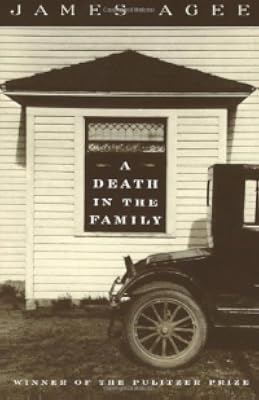
A Death in the Family
by James Agee
On This Page
Description
Decades after its original publication, James Agee's last novel seems, more than ever, an American classic. For in his lyrical, sorrowful account of a man's death and its impact on his family, Agee painstakingly created a small world of domestic happiness and then showed how quickly and casually it could be destroyed. On a sultry summer night in 1915, Jay Follet leaves his house in Knoxville, Tennessee, to tend to his father, whom he believes is dying. The summons turns out to be a false show more alarm, but on his way back to his family, Jay has a car accident and is killed instantly. Dancing back and forth in time and braiding the viewpoints of Jay's wife, brother, and young son, Rufus, Agee creates an overwhelmingly powerful novel of innocence, tenderness, and loss that should be read aloud for the sheer music of its prose. show lessTags
Recommendations





Member Recommendations

Member Reviews
“On the rough cut grass of the back yard my father and mother have spread quilts. We all lie there, my mother, my father, my uncle, my aunt, and I too am lying there….The stars are wide and alive, they seem each like a smile of great sweetness, and they seem very near. All my people are larger bodies than mine, quiet, with voices gentle and meaningless like the voices of sleeping birds.” -Page 7
James Agee's posthumously awarded Pulitzer Prize winning novel is thought to be based on his own life (his middle name is Rufus, just like the son in the story). Set in Knoxville, Tennessee in the summer of 1915, Rufus is enjoying all that is right with the world. A loving father that takes him to the movies and allows him other indulgences show more that his mother wouldn't approve of, a great aunt who dotes on him and purchases for him the cap he fancies and an extended family that showers him with love. His biggest worry involves the boys who pick on him on his way to school. And then the unthinkable happens: his loving father Jay is killed suddenly in a car accident, returning from his parents’ house, several hundred miles away. His drunken brother called him in the middle of the night suggesting that their father was near death, which proved to be untrue and there lies the irony in this story.
The story is told mainly through the viewpoints of Jay’s wife Mary, brother Ralph and young son, Rufus. The magnificence of this book is its’ lyrical prose (the entire prologue reads as a poem). I found myself rereading parts of the book over and over again because of the beautiful sound of the verses. The story is, of course, morbidly sad, and, in the hands of a less skilled writer, would have been very distasteful. But Agee is terrific at making you empathize with these characters. After receiving the initial news about “a serious accident,” Mary and her Great Aunt Hannah, await the return of Mary’s brother, Andrew with news of Jay’s injuries and when he returns those three and Mary’s parents speak for hours about the tragedy. The author made me feel as if I was in the room with them because the give and take of their conversation was so well done.
Agee’s treatment of Catholic religion suggests that he had a bad experience with it in his own life. Although Mary and Hannah are very religious and fall back on their faith to get them through this tough time, the author is hard on the Catholic faith with the inclusion of the rigid and hard-nosed Father Jackson, and revealing that Andrew and Joel, Mary’s father, have little faith.
I love the way Agee made the story a refreshing one rather than the maudlin tale it could have turned into, by revealing that Jay was a flawed character, whom other characters had to warm up to. It would’ve been so easy for the author to fall into the trap of creating a character that was bigger than life.
My favorite character was Rufus. I loved the way his mind worked and how he analyzed all the difficulties he faced and presented them through his child-like innocence. In the prologue, Agee says, “We are talking now of summer evenings in Knoxville, Tennessee, in the time that I lived there so successfully disguised to myself as a child.” Rufus grew up in a hurry that summer. Highly recommended. show less
James Agee's posthumously awarded Pulitzer Prize winning novel is thought to be based on his own life (his middle name is Rufus, just like the son in the story). Set in Knoxville, Tennessee in the summer of 1915, Rufus is enjoying all that is right with the world. A loving father that takes him to the movies and allows him other indulgences show more that his mother wouldn't approve of, a great aunt who dotes on him and purchases for him the cap he fancies and an extended family that showers him with love. His biggest worry involves the boys who pick on him on his way to school. And then the unthinkable happens: his loving father Jay is killed suddenly in a car accident, returning from his parents’ house, several hundred miles away. His drunken brother called him in the middle of the night suggesting that their father was near death, which proved to be untrue and there lies the irony in this story.
The story is told mainly through the viewpoints of Jay’s wife Mary, brother Ralph and young son, Rufus. The magnificence of this book is its’ lyrical prose (the entire prologue reads as a poem). I found myself rereading parts of the book over and over again because of the beautiful sound of the verses. The story is, of course, morbidly sad, and, in the hands of a less skilled writer, would have been very distasteful. But Agee is terrific at making you empathize with these characters. After receiving the initial news about “a serious accident,” Mary and her Great Aunt Hannah, await the return of Mary’s brother, Andrew with news of Jay’s injuries and when he returns those three and Mary’s parents speak for hours about the tragedy. The author made me feel as if I was in the room with them because the give and take of their conversation was so well done.
Agee’s treatment of Catholic religion suggests that he had a bad experience with it in his own life. Although Mary and Hannah are very religious and fall back on their faith to get them through this tough time, the author is hard on the Catholic faith with the inclusion of the rigid and hard-nosed Father Jackson, and revealing that Andrew and Joel, Mary’s father, have little faith.
I love the way Agee made the story a refreshing one rather than the maudlin tale it could have turned into, by revealing that Jay was a flawed character, whom other characters had to warm up to. It would’ve been so easy for the author to fall into the trap of creating a character that was bigger than life.
My favorite character was Rufus. I loved the way his mind worked and how he analyzed all the difficulties he faced and presented them through his child-like innocence. In the prologue, Agee says, “We are talking now of summer evenings in Knoxville, Tennessee, in the time that I lived there so successfully disguised to myself as a child.” Rufus grew up in a hurry that summer. Highly recommended. show less
James Agee’s Pulitzer Prize winning novel, A Death in the Family captured the initial moments of grief with beautiful clarity. The shock, anger and sadness that inflicted each character was so realistically drawn, it was near flawless. Won posthumously in 1957, the edition of A Death in the Family that I read contained only minor changes to Agee’s writing, plus two sections that were not placed formally into the story by the author. To think that Agee wrote this masterpiece without the benefit of an editor shows you the caliber of his writing. Like his character development, this story was close to perfect.
Jay Follett was a husband and father with a slightly mysterious past, who was called to his father’s bedside in the middle of show more the night. On his trip home, his car experienced mechanical failure, resulting in Jay’s instantaneous death. He left behind his wife, Mary and his two children, Rufus and Catherine.
The mysterious aspects of Jay’s life enthralled me. You get the impression that he was an alcoholic – perhaps on the wagon at the time of his death – who pulled himself out of nothing into a productive life. As Mary’s family learned of Jay’s death, you discovered they were not supportive of Mary and Jay’s marriage initially, but as time evolved, they grew to love him. Without a doubt, he held a tight bond with his son, Rufus. For most of the book, you witnessed the emotional roller coaster that the family experiences as they deal with Jay’s death. From wanting to know the details of the accident to trying to sleep and eat, death and daily living were juxtaposed for the readers to consider: How would you deal with the sudden death of a loved one?
The book ends on the day of the funeral, leaving you curious about how the family would cope so early in their grief. How would Mary survive without her husband’s financial support? How would the children learn to live without their father? Agee leaves many questions unanswered, but made one thing clear: grief is a force to be reckoned with. It ebbs and flows throughout a person’s lifetime; always there – sometimes in the distance, sometimes very close. A Death in the Family was a wonderful tribute to this raw human emotion. show less
Jay Follett was a husband and father with a slightly mysterious past, who was called to his father’s bedside in the middle of show more the night. On his trip home, his car experienced mechanical failure, resulting in Jay’s instantaneous death. He left behind his wife, Mary and his two children, Rufus and Catherine.
The mysterious aspects of Jay’s life enthralled me. You get the impression that he was an alcoholic – perhaps on the wagon at the time of his death – who pulled himself out of nothing into a productive life. As Mary’s family learned of Jay’s death, you discovered they were not supportive of Mary and Jay’s marriage initially, but as time evolved, they grew to love him. Without a doubt, he held a tight bond with his son, Rufus. For most of the book, you witnessed the emotional roller coaster that the family experiences as they deal with Jay’s death. From wanting to know the details of the accident to trying to sleep and eat, death and daily living were juxtaposed for the readers to consider: How would you deal with the sudden death of a loved one?
The book ends on the day of the funeral, leaving you curious about how the family would cope so early in their grief. How would Mary survive without her husband’s financial support? How would the children learn to live without their father? Agee leaves many questions unanswered, but made one thing clear: grief is a force to be reckoned with. It ebbs and flows throughout a person’s lifetime; always there – sometimes in the distance, sometimes very close. A Death in the Family was a wonderful tribute to this raw human emotion. show less
La mejor obra leída este año, por ahora. Difícil de superar, esta descripción de lo que supone la muerte de lo que amas en los que se quedan. Lo que hace la religión, a quién le sirve su consuelo y a quién no. Como vives la muerte si eres un adulto ya domesticado o si eres un niño en proceso de aprendizaje. La estructura de la obra con esos textos en cursiva, con todo lo que pasa por la cabeza de un niño de unos 7 u 8 años, situados donde el editor quiso ya que la obra estaba a medio rematar, no creo que varíen las intenciones del autor, que se salta una de las convenciones principales del escritor, no describas, muestra. Agee, no sé si por ser periodista, lo cuenta todo. Y aún así no es aburrido, ni pesado. Es show more sorprendete. Un milagro. show less
A beautiful, lyrical, poetic book that's simply a joy to read. Mainly taking place over a just few days, it paints a picture of a family before and after a much loved husband and father dies in a car accident. In addition, the book is a vibrant portrayal of 1915 Tennessee, when cars were beginning to take prominence in the cities and rural people still relied on horse power.
Much of the book is from the perspective of the son, Rufus, six years old at the time, who is a very observant and sensitive child, and very close to his father. Agee really puts us in the mind of a young boy trying to understand big concepts like death, religion, and his family's reactions to his father's death, in particular his mother's. Other perspectives are show more given and it feels like one of the themes is how we struggle to understand each other and, often unsuccessfully, try to decipher the thoughts of another.
The book intersperses almost stream of consciousness sections with straight-forward portrayals of scenes. Some of these are just stunning, such as in part 2 when Rufus's mother and great-aunt await news of her husband's accident and later her parents and brother sitting with her to console her. That the author can make these quiet, simple moments so engrossing, is amazing.
There has been some controversy over the years regarding how the book was edited as Agee himself died in 1955 before he could publish it. I can't imagine the book being much more perfect as is. It won the Pulitzer Prize, was adapted into a popular play and movie and has become beloved by generations of readers. show less
Much of the book is from the perspective of the son, Rufus, six years old at the time, who is a very observant and sensitive child, and very close to his father. Agee really puts us in the mind of a young boy trying to understand big concepts like death, religion, and his family's reactions to his father's death, in particular his mother's. Other perspectives are show more given and it feels like one of the themes is how we struggle to understand each other and, often unsuccessfully, try to decipher the thoughts of another.
The book intersperses almost stream of consciousness sections with straight-forward portrayals of scenes. Some of these are just stunning, such as in part 2 when Rufus's mother and great-aunt await news of her husband's accident and later her parents and brother sitting with her to console her. That the author can make these quiet, simple moments so engrossing, is amazing.
There has been some controversy over the years regarding how the book was edited as Agee himself died in 1955 before he could publish it. I can't imagine the book being much more perfect as is. It won the Pulitzer Prize, was adapted into a popular play and movie and has become beloved by generations of readers. show less
'nobody that ever lived is specially privileged; the axe can fall at any moment on any neck'
By sally tarbox on 3 April 2013
Format: Paperback
A heartbreaking work about the first few days after a death, from the point of view of a wife and her two small children.
For the first third of the book, Agee lets us into normal family life prior to the accident. The reader is constantly aware of the dreaded axe about to fall, and as good natured father Jay is called out in the middle of the night to visit his own sick father, the reader is aware of hints and symbols:
"It was just nearing daybreak when he came to the river; he had to rap several times on the window of the little shanty before the ferryman awoke."
The uncertainty in the immediate show more aftermath ;the confusion in the children's minds; religious dissent between family members (as their deeply Catholic mother struggles to maintain her faith: ' "For Thine is the kingdom, and the power and the glory", she said with almost vindictive certitude.')
Wonderfully written and with hope amid the tragedy... show less
By sally tarbox on 3 April 2013
Format: Paperback
A heartbreaking work about the first few days after a death, from the point of view of a wife and her two small children.
For the first third of the book, Agee lets us into normal family life prior to the accident. The reader is constantly aware of the dreaded axe about to fall, and as good natured father Jay is called out in the middle of the night to visit his own sick father, the reader is aware of hints and symbols:
"It was just nearing daybreak when he came to the river; he had to rap several times on the window of the little shanty before the ferryman awoke."
The uncertainty in the immediate show more aftermath ;the confusion in the children's minds; religious dissent between family members (as their deeply Catholic mother struggles to maintain her faith: ' "For Thine is the kingdom, and the power and the glory", she said with almost vindictive certitude.')
Wonderfully written and with hope amid the tragedy... show less
I have never seen the portrait of grief drawn so vividly and sporadically as in Agee’s posthumous novel, A Death in the Family. Every space, light, distance, and shadow weigh heavy against every ounce of feeling derive from the minutiae of everyday gestures and conversations; and they weigh heaviest once they turn into a series of memories. Since this novel does not rely on a rich narrative but more on the inevitable wake of death, it painfully but genuinely communicates—in often repetitive but differently structured phrases—a confrontation with mortality through its band of characters. The children are confused, the others conflicted, one is ladened with guilt, the wife is submerged both in emptiness and a roller coaster of show more emotions because in A Death in the Family, no months or years roll by but a day by day painstaking coping until the funeral. But as much as Agee’s prose is stunning it feels incomplete with some characters underused and underdeveloped. The italicised parts which are interspersed between the present seem out of place, even dull and negligible. Whilst its religious themes are also appreciable I can’t help but notice how unpolished they are that they just meddle with the novel’s intent. It is always questionable to publish an author’s leftover works after a sudden death. They often look like a mosaic created from whatever scraps are available. This is noticeable in A Death in the Family but how palpably slow-moving this all is gives bereavement the potential to immortalise; its mourners surrounded by its many arms in whispers of gnawing thoughts of the departed. For this they live on. show less
Just finished reading A Death in the Family James Agee's novel for one of my face to face book groups.
Knoxville Tennessee. 1915. Husband and Wife and two small children and their extended family. Father goes out one night for a drive in his "Tin Lizzie" and dies on the way back. That’s it.
Hadn't read Agee before this and was just blown away by the craftsmanship of the writing - beautiful, simple, intense, poetic.
He has the gift to be able to show at once the grown up writer telling the story and the six year old boy living through it.
Don't think I've ever read a book that so clearly delineated the mind of a child dealing with all the strangeness and terror of a child's life.
Nice to read a book that shows a person of faith - a show more devout Southern Christian - honestly, simply and without caricature or grotesquery.
He gets the voices of the people right too -- what is said and what is left unsaid.
The last scene of the boy going to his father's funeral is haunting and memorable.
Glad I read it. What a writer. Wow. show less
Knoxville Tennessee. 1915. Husband and Wife and two small children and their extended family. Father goes out one night for a drive in his "Tin Lizzie" and dies on the way back. That’s it.
Hadn't read Agee before this and was just blown away by the craftsmanship of the writing - beautiful, simple, intense, poetic.
He has the gift to be able to show at once the grown up writer telling the story and the six year old boy living through it.
Don't think I've ever read a book that so clearly delineated the mind of a child dealing with all the strangeness and terror of a child's life.
Nice to read a book that shows a person of faith - a show more devout Southern Christian - honestly, simply and without caricature or grotesquery.
He gets the voices of the people right too -- what is said and what is left unsaid.
The last scene of the boy going to his father's funeral is haunting and memorable.
Glad I read it. What a writer. Wow. show less
Members
- Recently Added By
Lists

Classics you know you should have read but probably haven't
421 works; 407 members

Pulitzer Prize Winners for Fiction
102 works; 54 members

The Top Ten: Writers Pick Their Favorite Books
240 works; 31 members

20th Century Literature
1,161 works; 54 members
Favourite Books
1,819 works; 316 members
Time Magazine's "All-Time 100"
113 works; 15 members

1950s
340 works; 22 members

Top Five Books of 2022
736 works; 272 members
National Book Award Finalists - Fiction
377 works; 12 members

Pulitzer Prize-Winning Books
42 works; 10 members

Canon de la narrativa universal del siglo XX
254 works; 6 members
Time's All-Time 100 Novels
100 works; 27 members
The College Board: 101 Great Books Recommended for College-Bound Readers
111 works; 7 members

A Novel Cure
742 works; 23 members

Five star books
1,767 works; 109 members

Mensa for Kids Excellence in Reading Award Program (Grades 9-12)
116 works; 3 members

Books Read in 2023
5,638 works; 147 members
Literary Travelogue of the United States Challenge
133 works; 6 members
Overdue Podcast
806 works; 9 members

Read This Next
120 works; 3 members

Books Read in 2017
4,249 works; 130 members

Books Read in 2022
5,226 works; 115 members

American Lit for Eng 11 Research Project
368 works; 6 members

Recommended Reading : 600 Classics Reviewed, Editors of Salem Press, 2015
634 works; 6 members

Writers In Public Domain 2026
90 works; 1 member

Reading LIst
648 works; 1 member

The Luca Guadagnino Universe
62 works; 1 member
Canon de la narrativa universal del s. XX (cicutadry)
499 works; 3 members
Mensa for Kids Excellence in Reading Award Program (Grades 9-12)
116 works; 5 members
Best Audiobooks
240 works; 114 members
Stephen King's 'On Writing' reading list
95 works; 4 members

2023 Update: The Best Twenty Books You've Read in the Past Five Years
40 works; 3 members

Books About Boys
175 works; 15 members

Summer Reading 2015
18 works; 1 member

Fiction With Familiar Settings
280 works; 93 members
Author Information

42+ Works 7,955 Members
Born in Knoxville, Tennessee, on November 27, 1909 and educated at Harvard, James Agee crowded versatile literary activity into his short and troubled life. In addition to two novels, he wrote short stories, essays, poetry, and screenplays; he worked professionally as a journalist and film critic. Appropriately, he is best remembered for a work show more that combines several genres and literary approaches. Let Us Now Praise Famous Men, a documentary report on sharecropper life accompanied by vividly realistic photographs by Walker Evans, has been called "a great Moby Dick of a book" (New York Times Book Review). It may be considered an important precursor of the so-called nonfiction novel that was to gain prominence during the 1960s. The Morning Watch (1954), a novel in the tradition of portraits of artists-to-be, and A Death in the Family, a moving account of domestic life based on the loss of Agee's father belong to more conventional types of fiction. The 1960 dramatization of All the Way Home by Tad Mosel, won a Pulitizer Prize and the New York Drama Critics Circle Award; it was also cited by Life as the "Best American Play of the Season." Agee's work for the screen included his scripts for The African Queen and The Night of the Hunter. Agee on Film (1958-60) consists of a gathering of reviews and comments as well as five scripts. Prior to Laurence Bergreen's well-received 1984 biography of Agee, the principal source of information about his life was Letters of James Agee to Father Flye, a collection of seventy letters written by Agee to his instructor at St. Andrew's School and trusted friend throughout his life. The letters show Agee most often in a reflective, self-condemning mood. The final letters, written from the hospital where he was battling daily heart attacks, are touching, as are his sad reflections on the work he yet wanted to do. Agee died in New York of a heart attack on May 16, 1955. He was posthumously awarded a Pulitzer Prize in 1957 for A Death in the Family. (Bowker Author Biography) show less
Some Editions
Awards and Honors
Awards
Distinctions
Notable Lists
Series
Belongs to Publisher Series
Work Relationships
Has the adaptation
Has as a commentary on the text
Has as a student's study guide
Common Knowledge
- Canonical title*
- Il mito del padre
- Original title
- A Death in the Family
- Original publication date
- 1957
- People/Characters
- Jay Follett; Mary Follett; Rufus Follett; Catherine Follett; Ralph Follett
- Important places
- Knoxville, Tennessee, USA
- Related movies
- All the Way Home (1963 | IMDb); Hallmark Hall of Fame: All The Way Home (1971 | IMDb); A Death in the Family (2002 | IMDb)
- First words
- I grew up in Texas, and I hitchhiked to Tennessee when I was nineteen years old with nothing but a guitar, a change of jeans, and a couple of shirt. I climbed down from the cab on an eighteen-wheeler at I-40 and Broadway a li... (show all)ttle after midnight on the something-something of November and turned left, spending my first night in town nursing a cup of coffee in an all-night dinner. -Introduction, Steve Earle
We are talking now of summer evenings in Knoxville, Tennessee, in the time that I lived there so successfully disguised to myself as a child. It was a little bit mixed sort of block, fairly solidly lower middle class, with on... (show all)e or two juts apieces on either side of that. The houses corresponded: middle-sized gracefully fretted wood houses built in the late nineties and early nineteen hundreds, with small front and side and more spacious back yards, and trees in the yards, and porches. These were softwooded trees, populars, tulip trees, cottonwoods. There were fences around one or two of the houses, but mainly the yards ran into each other with only now and then a low hedges that wasn't going very well There were few good friends among the grown people, and they were not poor enough for the other sort of intimate acquaintance, but everyone nodded and spoke, and even might talk short times, trivially, and at the two extremes of the general or the particular, and ordinarily nextdoor neighbors talked quite a bit when they happened to run into each other, and never paid calls. The men were mostly small business men, one or two very modestly executive, one or two worked with their hands, most of them clerical, and most of them between thirty and forty-five. -Knoxville: Summer, 1915 - Last words
- (Click to show. Warning: May contain spoilers.)But he did not ask, and his uncle did not speak except to say, after a few minutes, "It's time to go home," and all the way home they walked in silence.
- Original language*
- Inglés
- Canonical DDC/MDS
- 813.52
- Canonical LCC
- PS3501.G35
- Disambiguation notice
- Please do not combine with "A death in the family : a restoration of the author's text"
*Some information comes from Common Knowledge in other languages. Click "Edit" for more information.
Classifications
Statistics
- Members
- 3,363
- Popularity
- 5,034
- Reviews
- 68
- Rating
- (3.93)
- Languages
- 8 — Dutch, English, French, German, Italian, Portuguese, Spanish, Turkish
- Media
- Paper, Audiobook, Ebook
- ISBNs
- 59
- UPCs
- 2
- ASINs
- 54