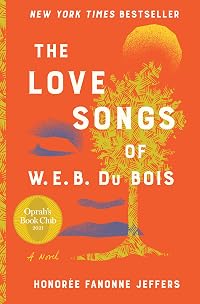
The Love Songs of W.E.B. Du Bois
by Honorée Fanonne Jeffers
On This Page
Description
To come to terms with who she is and what she wants, Ailey, the daughter of an accomplished doctor and a strict schoolteacher, embarks on a journey through her family's past, helping her embrace her full heritage, which is the story of the Black experience in itself.Tags
Recommendations



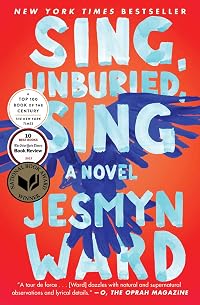
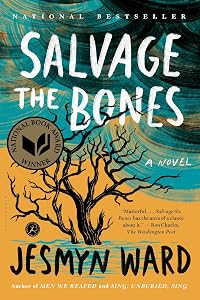
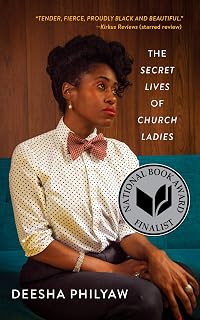
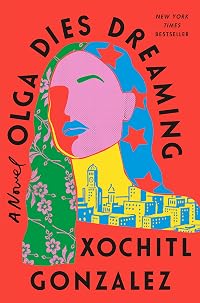




Member Recommendations
Member Reviews
This is an extraordinary, beautiful, epic, work of art exploring the complexities of American history and personal identity. The storytelling is amazing, it's a deeply personal and historically significant narrative. From the first page, I was consumed by the emotional depth of this book. Jeffers explores a wide range of emotions, from despair and heartbreak to hope and passion, weaving them seamlessly. The characters are richly drawn and deeply flawed, making them feel incredibly real and relatable. One of the most impressive aspects of this book is its scope. Spanning centuries and covering a wide range of historical events, Jeffers blends intimate personal narratives with broader historical context. Through the experiences of the show more characters, I gained a deeper understanding of the history of Georgia and the complex dynamics of race and identity in America. I learned about the deep roots of pecan and peach trees, as well as the long history of the Indigenous, Black, and white people who moved through and lived in the area. The pacing is perfect, each narrative shift felt natural and compelling. Despite its length, I was completely absorbed in the story and so looked forward to reading it when I could. By the end, I was emotionally spent and deeply satisfied. I left with so many books added to my TBR for more reading. By spanning centuries, this story feels eternal and is a future classic that deserves to be read by everyone. It is a book that will live inside me, and I cannot recommend it highly enough. If you haven’t read it yet, you must. show less
Really immersive epic of African-American history and family. Jeffers has written a masterpiece that moves around in time and in perspective and place, while always coming back to what's essential. It varies in tone from shift to shift in ways that are true to the characters and time being depicted. Jeffers has a deft hand for voice and characterization; it is not primarily a plot-driven book but readers looking for a rich character experience will get a lot of out of this book. And yeah it's long but you know what? You knew that going in.
When you start reading Honorée Fanonne Jeffers' The Love Songs of W.E.B. Du Bois, you're making a commitment. At 800+ pages—and none of it the kind of stuff you can skim through—you'll be spending the equivalent of two full work days reading. In addition, this is not lightweight reading. Love Songs has some great moments of humor, but on the whole this is a book with a lot of hardship—generations worth of hardship—so you need some strength to make your way through it.
I can, however, promise that your effort in terms of time and heartache will be well worth it.
Love Songs is the kind of book for which the adjective "epic" was intended. It moves back and forth in time, exploring the history of a single family, beginning with Creek show more Indians before this land had a large white presence and also on the shores of Africa in the midst of the slave trade. By its end, the novel has reached 2007 or 2008, when Obama is running for President, but hasn't yet been elected. Jeffers' central present-day character, Ailey, is a young black women (a child at the novel's start, in her early 30s at the novel's end) balancing life in the city and life at "home" in Chicasetta, the location where all the many generations of her family—indigenous, African, Black, and white—have come in contact, often with painful results. (CW: sexual abuse of children in several generations.)
Reading Love Songs, witnessing the interactions of past and present and their impact on individual lives, provides a complex overview of the history of the U.S. that would seem impossible—if it weren't for the fact that Jeffers is doing it. Take the time to read this title, embrace the fact that you'll need to move through it slowly and that you'll be deeply uncomfortable sometimes while you read. That's how we learn: a mix of pain and laughter, a longitudinal focus, and the necessary days and years and generations to build up experience and knowledge.
I received a free electronic review copy of this title from the publisher via Edelweiss; the opinions are my own. show less
I can, however, promise that your effort in terms of time and heartache will be well worth it.
Love Songs is the kind of book for which the adjective "epic" was intended. It moves back and forth in time, exploring the history of a single family, beginning with Creek show more Indians before this land had a large white presence and also on the shores of Africa in the midst of the slave trade. By its end, the novel has reached 2007 or 2008, when Obama is running for President, but hasn't yet been elected. Jeffers' central present-day character, Ailey, is a young black women (a child at the novel's start, in her early 30s at the novel's end) balancing life in the city and life at "home" in Chicasetta, the location where all the many generations of her family—indigenous, African, Black, and white—have come in contact, often with painful results. (CW: sexual abuse of children in several generations.)
Reading Love Songs, witnessing the interactions of past and present and their impact on individual lives, provides a complex overview of the history of the U.S. that would seem impossible—if it weren't for the fact that Jeffers is doing it. Take the time to read this title, embrace the fact that you'll need to move through it slowly and that you'll be deeply uncomfortable sometimes while you read. That's how we learn: a mix of pain and laughter, a longitudinal focus, and the necessary days and years and generations to build up experience and knowledge.
I received a free electronic review copy of this title from the publisher via Edelweiss; the opinions are my own. show less
“You should not expect a monster to change, even at the end of a fairy tale. For in a children’s story, the monster must be killed. If he remains alive, his nature will be limned. There is no gentling of an abomination.”
At the center of this sprawling epic, is Ailey Pearl Garfield, a young black woman. She is struggling with her own identity and where she fits in with her ancestral past. To aid in this process, she becomes an historian and on her free time she begins to unearth her family’s deep-ranging connections- from their roots in Africa, to their enslavement and arrival on the Georgia coast. She discovers that her ancestors are a complex mix of black, white and indigenous blood.
This is such an impressive debut and how show more Jeffers keeps the multiple timelines flowing is a marvel. She also does not flinch from the horrors of slavery, especially in regard to the women and children, which can be very disturbing to read at times. Sure, the novel could have used a bit of editing but it remains a terrific achievement. show less
At the center of this sprawling epic, is Ailey Pearl Garfield, a young black woman. She is struggling with her own identity and where she fits in with her ancestral past. To aid in this process, she becomes an historian and on her free time she begins to unearth her family’s deep-ranging connections- from their roots in Africa, to their enslavement and arrival on the Georgia coast. She discovers that her ancestors are a complex mix of black, white and indigenous blood.
This is such an impressive debut and how show more Jeffers keeps the multiple timelines flowing is a marvel. She also does not flinch from the horrors of slavery, especially in regard to the women and children, which can be very disturbing to read at times. Sure, the novel could have used a bit of editing but it remains a terrific achievement. show less
4.5 stars
Alright -- I'm going to start with a disclaimer. I did not know that it was 816 pages when I decided to listen to it as an audiobook. I'm not always as attentive when consuming literature as an audiobook, and my experience is sometimes too influenced by the voice actors, particularly if I don't enjoy their reading. That out of the way....
This is immense and epic, and digs deep into themes of addiction, racism, colorism (within Black communities too), historical relations between indigenous peoples and African Americans, sexual abuse, generational trauma...and more. It is a LOT for one novel to hold, and I wonder if it would have benefitted if trilogized (I just made up a word, I know). I can see, on the other hand, where that show more might have been a disadvantage -- threads would have been lost, as well as momentum.
The historical narratives resonated the most for me (hi, historian here!), and I appreciated the juxtaposition of Ailey reading about Samuel Prichard in the archives/ interviewing her relatives against the historical narrative so that we weren't just getting Ailey's perspective. The story is brutal in so many ways, and more importantly, it is true in its brutality. What the book has to tell us regarding generational trauma and how it can play out in a variety of ways, is invaluable. The novel is so massively interwoven, it is hard to say where cuts could have been made, but I do have a few things that diminished my experience of the book.
First, I really didn't care for the excruciating detail in describing Ailey's graduate studies. This may be totally personal. I have a PhD, and I'm a history professor, so perhaps I was having my own issues with grad school trauma, but I really didn't want to hear about footnotes versus endnotes. There were a lot of WHO CARES moments for me here. I get that not everyone is acquainted with the process of archival research, but I found these details a distraction from the more important substance of the research she was doing, as well as what she was processing. I also get that there was some mentoring happening with the cleaning of Dr. Oludara's office, but again -- I didn't need the details.
Second, in a case of the details were important but I only needed them once: Gandy. I had no issue with revisiting the situation generally, but playing out the scene, with similar descriptions, over and over and over? I don't generally need trigger warnings, and I am privileged I have never had to deal with that kind of trauma, but I started to feel so beaten down by the *description* (it is painful and disgusting) that it started to feel more about the shocking rawness of the image, rather than the shockwaves of the trauma. I can't imagine that my fatigue, however, is anything like the fatigue suffered by Lydia, Ailey, and Coco. This may be a very different experience from those who have lived through similar experiences, so I tread lightly considering this criticism. It may be more of a personal response to something that might be essential for other readers. For contrast, with a similar situation, we hear about Samuel's sins repeatedly (and effectively), but its always in the service of understanding the fuller picture of the tragedy--the forced silence (when life is on the line), the choices no human being should ever be forced to make, and the overarching theme of power.
My favorite character was Uncle Root, and I loved how he was voiced in the audiobook. You could hear his care, his intelligence, his pride in who he was, and his pride in Ailey. He served an important purpose for me as well -- occasionally I just didn't like Ailey very much. I needed Root's unconditional love of her to remind me how flawed we all are, and that like it or not, I probably had some real "moments" myself in my twenties. I struggled with the voicing of Ailey in the audiobook-- I felt her "little girl" voice/narrative never really left and I think that was part of my problem. I don't know if it was intentional, but it grated a bit.
I want to recognize my positionality here (white woman), because I think it is important. There's a lot in this book that I've never experienced, and likely never will experience. But that may be exactly the reason to read this book. The criticisms I mention above are quibbles relative to how this "epochal saga" (as Kirkus Reviews would have it) operates on SO MANY different levels: multi-generational history, coming-of-age story, family dynamics, polemics of perspectives (e.g. Du Bois v. Booker T. Washington)...just to name a few. There are stories wrapped in stories wrapped in stories, demanding an attention and care from the reader that few books even dare to achieve these days. The archival epilogue is a must read/listen for its beautiful array of sources -- do NOT skip it. show less
Alright -- I'm going to start with a disclaimer. I did not know that it was 816 pages when I decided to listen to it as an audiobook. I'm not always as attentive when consuming literature as an audiobook, and my experience is sometimes too influenced by the voice actors, particularly if I don't enjoy their reading. That out of the way....
This is immense and epic, and digs deep into themes of addiction, racism, colorism (within Black communities too), historical relations between indigenous peoples and African Americans, sexual abuse, generational trauma...and more. It is a LOT for one novel to hold, and I wonder if it would have benefitted if trilogized (I just made up a word, I know). I can see, on the other hand, where that show more might have been a disadvantage -- threads would have been lost, as well as momentum.
The historical narratives resonated the most for me (hi, historian here!), and I appreciated the juxtaposition of Ailey reading about Samuel Prichard in the archives/ interviewing her relatives against the historical narrative so that we weren't just getting Ailey's perspective. The story is brutal in so many ways, and more importantly, it is true in its brutality. What the book has to tell us regarding generational trauma and how it can play out in a variety of ways, is invaluable. The novel is so massively interwoven, it is hard to say where cuts could have been made, but I do have a few things that diminished my experience of the book.
First, I really didn't care for the excruciating detail in describing Ailey's graduate studies. This may be totally personal. I have a PhD, and I'm a history professor, so perhaps I was having my own issues with grad school trauma, but I really didn't want to hear about footnotes versus endnotes. There were a lot of WHO CARES moments for me here. I get that not everyone is acquainted with the process of archival research, but I found these details a distraction from the more important substance of the research she was doing, as well as what she was processing. I also get that there was some mentoring happening with the cleaning of Dr. Oludara's office, but again -- I didn't need the details.
Second, in a case of the details were important but I only needed them once: Gandy. I had no issue with revisiting the situation generally, but playing out the scene, with similar descriptions, over and over and over? I don't generally need trigger warnings, and I am privileged I have never had to deal with that kind of trauma, but I started to feel so beaten down by the *description* (it is painful and disgusting) that it started to feel more about the shocking rawness of the image, rather than the shockwaves of the trauma. I can't imagine that my fatigue, however, is anything like the fatigue suffered by Lydia, Ailey, and Coco. This may be a very different experience from those who have lived through similar experiences, so I tread lightly considering this criticism. It may be more of a personal response to something that might be essential for other readers. For contrast, with a similar situation, we hear about Samuel's sins repeatedly (and effectively), but its always in the service of understanding the fuller picture of the tragedy--the forced silence (when life is on the line), the choices no human being should ever be forced to make, and the overarching theme of power.
My favorite character was Uncle Root, and I loved how he was voiced in the audiobook. You could hear his care, his intelligence, his pride in who he was, and his pride in Ailey. He served an important purpose for me as well -- occasionally I just didn't like Ailey very much. I needed Root's unconditional love of her to remind me how flawed we all are, and that like it or not, I probably had some real "moments" myself in my twenties. I struggled with the voicing of Ailey in the audiobook-- I felt her "little girl" voice/narrative never really left and I think that was part of my problem. I don't know if it was intentional, but it grated a bit.
I want to recognize my positionality here (white woman), because I think it is important. There's a lot in this book that I've never experienced, and likely never will experience. But that may be exactly the reason to read this book. The criticisms I mention above are quibbles relative to how this "epochal saga" (as Kirkus Reviews would have it) operates on SO MANY different levels: multi-generational history, coming-of-age story, family dynamics, polemics of perspectives (e.g. Du Bois v. Booker T. Washington)...just to name a few. There are stories wrapped in stories wrapped in stories, demanding an attention and care from the reader that few books even dare to achieve these days. The archival epilogue is a must read/listen for its beautiful array of sources -- do NOT skip it. show less
The Love Songs of W.E.B. Du Bois, Honorée Fanonne Jeffers, author; Adenrele Ojo, Karen Chilton, Prentice Onayemi, narrator
Writing a book review on this type of novel is full of pitfalls. A really honest review might result in name-calling in today’s angry environment. So, do I couch all my comments in cloaks of disingenuity or do I take my chances writing the unvarnished truth about what I think? Let’s hope the review is accepted as a review and nothing more. Using two narratives, one in the past and one taking us into a time closer to the present, Jeffers has created a unique narrative about racial issues everywhere.
I did like this book. It is beautifully written, for the most part. Introducing sections of the book with the quotes show more of a famous, very respected, though sometimes disagreed with, black human/civil rights activist, was brilliant. In two narratives, current and past, the history of slavery and black culture plays out against the backdrop of a racist America. It covers the racial history, from many directions. It points out the ineffective ways the blending of multiple cultures has failed. In America, beginning as early as the 1600’s (perhaps paying homage to the Critical Race Theory), fairly or unfairly, I am not that judge, it spans the next several hundred years, giving the reader a bird’s eye view of what it feels like to be trapped in one body or another, as it is subjected to the will of another, both violently and unjustly. The passion and the pain is very palpable throughout. The legacy of slavery’s lasting impact is real. The information and experiences expressed expose the fear and the hopelessness. I recommend the book, but I hope the reader will look further than its message. As a Jew, I could walk around and hate or resent every German or German ally, Every Muslim or Muslim country, or Japanese citizen past and present, but I choose to go forward and not to only look backwards to place blame and perpetuate the fear and the hate. This book, looks backward, and under the guise of taking us forward, sometimes seems to encourages the very racist beliefs we all want to abolish, by pointing finger after finger at negative ideas and imposing constant and continuing guilt. Also, today’s environment is actively erasing our history, not preserving it as the main character intends to do. If you only want to promote one message, you are dangerously close to walking in the shoes of your enemy. The book fails for me because it does not address how to overcome racism, but rather, like the books by Ibraim Kendi, Isabel Wilkerson, Robin DeNapoli, and others, they exacerbate the problem by exaggerating the number of racists that seem to be under every rock and in every cranny of society, without once observing positive improvements in society or offering a real solution to the problem or a way to overcome it. Rather, the universal message seems to be that everyone white is a racist, and always will be, and our history proves it, especially today, as history is being erased in the cause of racial justice. This book seems to encourage its preservation, which is laudable and very much the antithesis of present day tactics. I hope that idea, more than the unforgiveable sins idea, takes hold.
The main character, Ailey insists and exposes, through her intensive research into her own family history, which crossed color lines when family members were used as chattel, the insidious nature of the racism that is everywhere, even today. It is alive in those who are naïve and unaware that they are racist, but who wish to relieve themselves of the ignoble ideas that have been inculcated in them through our system of education. They are all without hope of any possibility of redemption and must be condemned. Thus, the book, exposes racism, but it also runs the risk of instigating reverse racism. It encourages those of a particular race to stay with and find comfort with, only those who are of their race. Are we to segregate again?
The novel also had too much sex for my liking. There was too much emphasis on it to define the main character who chooses to use her body like a mattress and then to treat that body like some offended, innocent victim because of past abuse. Not every female in black society flaunts her sexuality and not every male is sexually active above all else. Not every black female and/or male, has been assaulted. This book is unforgiving of all those they believe are sinners, and it seems that all are sinners. Still, the book is cloaked in powerful, lyrical prose which distracts us from the power struggle between the races that it seems to support.
The author has exposed the underbelly of racism, addiction, grief and loss, pedophilia, Islamophobia, anti-Semitism, racist policing, infidelity, poverty, even the Trail of Tears, secrets and lies, plus all the other ills of society with clarity, and it is never really overwhelming as all of these issues are addressed. The problem is that the responsibility for all of these ills, seems to always rest upon the shoulders of someone other than the victim’s, and in some cases, that is fair, but not in all. Those who disagree are portrayed as evil racists, who are always ignorant and always act with an intent to wound. The street is one-way. The black professor who encouraged discourse in his class, was in contrast with himself as the professor who gave his one-sided support to Ailey, hoping for her to be the first black historian to receive a doctorate at the University. It may be deserved, but her race seemed to be the most important issue. Her indignation for being looked at as undeserving because of Affirmative Action, seemed disingenuous. While the judgment may be rude and unfair, it is the byproduct of a program that did provide a leg up, for some. Whether or not she needed it or used it was immaterial. The professor, on the other hand, seemed to be seeking her views over all others, as if only hers were legitimate, and, unlike the ignorant, unqualified white students in the class, he believed she was brilliant and more qualified. For me, qualifications and quality of work should be the only criteria when judging scholarship. So, the novel is complicated, it covers a multitude of social ills, without sugar coating their effect. It illustrates their influence on past and future generations. However, today, one only has to watch television for a few moments to see that the black 13% of the population is now dominating the airwaves, and they, as a group, are achieving great success. Is the success due to the qualifications or the skin color? Are we merely exchanging one form of racism and rights issues for another? I hope not.
DuBois’s theory of double consciousness promotes a divide that doesn’t seem to be bridgeable because the black community of current writers seems to encourage power as opposed to justice for all, and also a separation of the races, with safe spaces, insisting that only certain races need safe spaces. Yet rising crime within those races may seem to indicate that the other races may need more safety than originally thought. Are we encouraging blindness to certain sides of the issues in society?
I am an American, and I am a Jew, but it does not cause a conflict within me any longer, although Jews have been oppressed for thousands of years. Isn’t it about time we all became Americans and stopped this identity politics which the book acknowledges and is perhaps unwittingly, promoting? I hope that the “Ailey’s of the world” find some peace and success without feeling all eyes are judging them as inferior. It appears to be more of a false premise today, in the same way it would be false for me to say that every black person is an anti-Semite because of certain members of Congress or prominent spokesmen in the Black world, like Cori Bush, Al Sharpton, Louis Farrakhan and their supporters.
The protagonist, Ailey, wants to preserve history, even as her brothers and sisters today, in the 21st century, are tearing it down, erasing it in books, on college campuses, on historic battlegrounds and in town squares. The contrast with reality and the novel’s premise is stark.
The novel seems to be written more for women, and because it is so long, it will, sadly, discourage many from reading it. Slavery was a blight on our history. The Holocaust was a blight on our history. The lack of civil rights and women’s rights were also blights, etc. Isn’t it time we tried to move forward without these blights affecting our behavior and judgment. Isn’t it time to preserve our history and learn from it so we all became better people. show less
Writing a book review on this type of novel is full of pitfalls. A really honest review might result in name-calling in today’s angry environment. So, do I couch all my comments in cloaks of disingenuity or do I take my chances writing the unvarnished truth about what I think? Let’s hope the review is accepted as a review and nothing more. Using two narratives, one in the past and one taking us into a time closer to the present, Jeffers has created a unique narrative about racial issues everywhere.
I did like this book. It is beautifully written, for the most part. Introducing sections of the book with the quotes show more of a famous, very respected, though sometimes disagreed with, black human/civil rights activist, was brilliant. In two narratives, current and past, the history of slavery and black culture plays out against the backdrop of a racist America. It covers the racial history, from many directions. It points out the ineffective ways the blending of multiple cultures has failed. In America, beginning as early as the 1600’s (perhaps paying homage to the Critical Race Theory), fairly or unfairly, I am not that judge, it spans the next several hundred years, giving the reader a bird’s eye view of what it feels like to be trapped in one body or another, as it is subjected to the will of another, both violently and unjustly. The passion and the pain is very palpable throughout. The legacy of slavery’s lasting impact is real. The information and experiences expressed expose the fear and the hopelessness. I recommend the book, but I hope the reader will look further than its message. As a Jew, I could walk around and hate or resent every German or German ally, Every Muslim or Muslim country, or Japanese citizen past and present, but I choose to go forward and not to only look backwards to place blame and perpetuate the fear and the hate. This book, looks backward, and under the guise of taking us forward, sometimes seems to encourages the very racist beliefs we all want to abolish, by pointing finger after finger at negative ideas and imposing constant and continuing guilt. Also, today’s environment is actively erasing our history, not preserving it as the main character intends to do. If you only want to promote one message, you are dangerously close to walking in the shoes of your enemy. The book fails for me because it does not address how to overcome racism, but rather, like the books by Ibraim Kendi, Isabel Wilkerson, Robin DeNapoli, and others, they exacerbate the problem by exaggerating the number of racists that seem to be under every rock and in every cranny of society, without once observing positive improvements in society or offering a real solution to the problem or a way to overcome it. Rather, the universal message seems to be that everyone white is a racist, and always will be, and our history proves it, especially today, as history is being erased in the cause of racial justice. This book seems to encourage its preservation, which is laudable and very much the antithesis of present day tactics. I hope that idea, more than the unforgiveable sins idea, takes hold.
The main character, Ailey insists and exposes, through her intensive research into her own family history, which crossed color lines when family members were used as chattel, the insidious nature of the racism that is everywhere, even today. It is alive in those who are naïve and unaware that they are racist, but who wish to relieve themselves of the ignoble ideas that have been inculcated in them through our system of education. They are all without hope of any possibility of redemption and must be condemned. Thus, the book, exposes racism, but it also runs the risk of instigating reverse racism. It encourages those of a particular race to stay with and find comfort with, only those who are of their race. Are we to segregate again?
The novel also had too much sex for my liking. There was too much emphasis on it to define the main character who chooses to use her body like a mattress and then to treat that body like some offended, innocent victim because of past abuse. Not every female in black society flaunts her sexuality and not every male is sexually active above all else. Not every black female and/or male, has been assaulted. This book is unforgiving of all those they believe are sinners, and it seems that all are sinners. Still, the book is cloaked in powerful, lyrical prose which distracts us from the power struggle between the races that it seems to support.
The author has exposed the underbelly of racism, addiction, grief and loss, pedophilia, Islamophobia, anti-Semitism, racist policing, infidelity, poverty, even the Trail of Tears, secrets and lies, plus all the other ills of society with clarity, and it is never really overwhelming as all of these issues are addressed. The problem is that the responsibility for all of these ills, seems to always rest upon the shoulders of someone other than the victim’s, and in some cases, that is fair, but not in all. Those who disagree are portrayed as evil racists, who are always ignorant and always act with an intent to wound. The street is one-way. The black professor who encouraged discourse in his class, was in contrast with himself as the professor who gave his one-sided support to Ailey, hoping for her to be the first black historian to receive a doctorate at the University. It may be deserved, but her race seemed to be the most important issue. Her indignation for being looked at as undeserving because of Affirmative Action, seemed disingenuous. While the judgment may be rude and unfair, it is the byproduct of a program that did provide a leg up, for some. Whether or not she needed it or used it was immaterial. The professor, on the other hand, seemed to be seeking her views over all others, as if only hers were legitimate, and, unlike the ignorant, unqualified white students in the class, he believed she was brilliant and more qualified. For me, qualifications and quality of work should be the only criteria when judging scholarship. So, the novel is complicated, it covers a multitude of social ills, without sugar coating their effect. It illustrates their influence on past and future generations. However, today, one only has to watch television for a few moments to see that the black 13% of the population is now dominating the airwaves, and they, as a group, are achieving great success. Is the success due to the qualifications or the skin color? Are we merely exchanging one form of racism and rights issues for another? I hope not.
DuBois’s theory of double consciousness promotes a divide that doesn’t seem to be bridgeable because the black community of current writers seems to encourage power as opposed to justice for all, and also a separation of the races, with safe spaces, insisting that only certain races need safe spaces. Yet rising crime within those races may seem to indicate that the other races may need more safety than originally thought. Are we encouraging blindness to certain sides of the issues in society?
I am an American, and I am a Jew, but it does not cause a conflict within me any longer, although Jews have been oppressed for thousands of years. Isn’t it about time we all became Americans and stopped this identity politics which the book acknowledges and is perhaps unwittingly, promoting? I hope that the “Ailey’s of the world” find some peace and success without feeling all eyes are judging them as inferior. It appears to be more of a false premise today, in the same way it would be false for me to say that every black person is an anti-Semite because of certain members of Congress or prominent spokesmen in the Black world, like Cori Bush, Al Sharpton, Louis Farrakhan and their supporters.
The protagonist, Ailey, wants to preserve history, even as her brothers and sisters today, in the 21st century, are tearing it down, erasing it in books, on college campuses, on historic battlegrounds and in town squares. The contrast with reality and the novel’s premise is stark.
The novel seems to be written more for women, and because it is so long, it will, sadly, discourage many from reading it. Slavery was a blight on our history. The Holocaust was a blight on our history. The lack of civil rights and women’s rights were also blights, etc. Isn’t it time we tried to move forward without these blights affecting our behavior and judgment. Isn’t it time to preserve our history and learn from it so we all became better people. show less
This is a huge book and I did find the jumps between the different time periods a bit jarring whilst reading it (the chapters were long, so you'd be reading one section and almost forget the parallel timeline till it was suddenly back. I also hated the long text family tree at the beginning and ended up writing out my own more standard graphic family tree as it was definitely helpful to be able to put the characteres into a structure (though arguably sensible not to have this at the front giving away bits of the plot at a glance).
Anyway these quibbles aside I really enjoyed this big messy family saga showing the roots of America and the intertwining of black, white and indigenous people throughout the generations to bring us to the show more present day. The complications and lost branches of family, the family support and the horrific abuse. Ailey is a good narrator, flawed and making bad decisions, but intelligent and ambitious too. It doesn't shy away from feminist issues as well as race, and we see how Ailey and her female ancestors are oppressed by men of all colours in addition to the overall background of racism. Its a good solid family saga, recommended. show less
Anyway these quibbles aside I really enjoyed this big messy family saga showing the roots of America and the intertwining of black, white and indigenous people throughout the generations to bring us to the show more present day. The complications and lost branches of family, the family support and the horrific abuse. Ailey is a good narrator, flawed and making bad decisions, but intelligent and ambitious too. It doesn't shy away from feminist issues as well as race, and we see how Ailey and her female ancestors are oppressed by men of all colours in addition to the overall background of racism. Its a good solid family saga, recommended. show less
Members
- Recently Added By
Lists

Favourite Books
1,819 works; 316 members

Books recommended by Barack Obama
295 works; 28 members

NY Times Book Review Best Books 2021
5 works; 1 member

2022 Notable Books for Adults
25 works; 3 members

Books Read in 2023
5,547 works; 145 members

Five star books
1,757 works; 108 members

A's favorite novels
100 works; 3 members

Bitter Southerner Summer Reading Roundup
198 works; 8 members

Obama Reads
181 works; 3 members

Books Read in 2022
5,166 works; 114 members

Books Read in 2021
5,361 works; 113 members

Washington Post The 10 Best Books of 2021
10 works; 1 member

The Atlantic's The Great American Novel
136 works; 12 members

BLM
210 works; 1 member

Top Five Books of 2025
954 works; 303 members
Author Information

11+ Works 1,829 Members
Honoree Fanonne Jeffers teaches at the University of Oklahoma.
Some Editions
Awards and Honors
Awards
Distinctions
The Guardian Book of the Day (2022-01-17)
Oprah's Book Club 2.0 (2021-08 – 2021)
Notable Lists
The Great American Novels (2021)
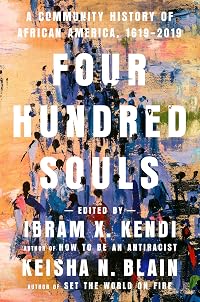
RUSA CODES Listen List (Listen-Alike – Listen-Alike to “Four Hundred Souls: A Community History of African America” edited by Ibram X. Kendi and Keisha N. Blain – 2022)
Common Knowledge
- Canonical title
- The Love Songs of W.E.B. Du Bois
- Original publication date
- 2021-08-24
- People/Characters
- Ailey Pearl Garfield
- Important places
- Georgia, USA
- Epigraph
- They that walked in darkness sang songs in the olden days—Sorrow Songs—for they were weary at heart. And so before each thought that I have written in this book I have set a phrase, a haunting echo of these weird old song... (show all)s in which the soul of the black slave spoke to men. Ever since I was a child these songs have stirred me strangely. They came out of the South unknown to me, one by one, and yet at once I knew them as of me and of mine.
—W.E.B. Du Bois, "Of Sorrow Songs" - Dedication
- For James William Richardson Jr.
and Sidonie Colette Jeffers:
brother and sister,
heart and heart
And for my mother,
Dr. Trellie Lee James Jeffers,
who gave me our land
and our people - First words
- We are the earth, the land. The tongues that trips and speaks the names of the dead as it dares to tell these stories of a woman's line.
- Last words
- (Click to show. Warning: May contain spoilers.)The question is my breath.
- Publisher's editor
- Wicks, Erin
- Blurbers
- Woodson, Jacqueline; Perkins-Valdez, Dolen; Thomas, Angie; Philyaw, Deesha; Watts, Stephanie Powell
- Original language
- English
- Canonical DDC/MDS
- 813.6
Classifications
Statistics
- Members
- 1,581
- Popularity
- 14,457
- Reviews
- 49
- Rating
- (4.27)
- Languages
- Dutch, English, German
- Media
- Paper, Audiobook, Ebook
- ISBNs
- 19
- ASINs
- 8