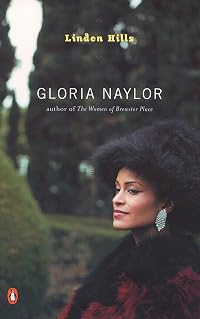
Linden Hills
by Gloria Naylor
On This Page
Description
The National Book Award-winning author of The Women of Brewster Place explores the secrets of an affluent black community. For its wealthy African American residents, the exclusive neighborhood of Linden Hills is a symbol of "making it." The ultimate achievement: a home on prestigious Tupelo Drive. Making your way downhill to Tupelo is irrefutable proof of your worth. But the farther down the hill you go, the emptier you the descent of Dante's Inferno as a model, this bold, haunting novel show more follows two young men as they attempt to find work amid the circles of the well-off community. Exploring a microcosm of race and social class, author Gloria Naylor reveals the true cost of success for the lost souls of Linden Hills-an existence trapped in a nightmare of their own making. show lessTags
Recommendations
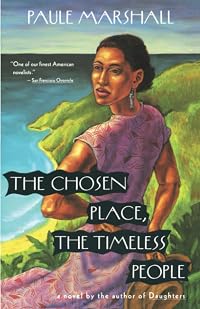
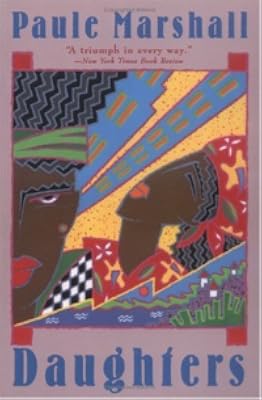


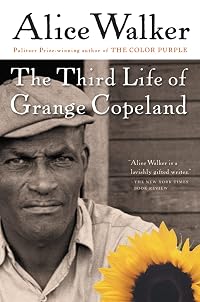
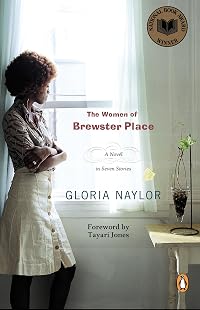









Member Recommendations
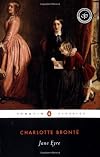
susanbooks Naylor so brilliantly plays w/Dante & Jane Eyre

Member Reviews
Linden Hills wasn’t black; it was successful. The shining surface of their careers, brass railings, and cars hurt his eyes because it only reflected the bright nothing that was inside of them.
Gloria Naylor's Lindon Hills is somehow a perfect allegory of race, gender, and sexuality within the black community and the power structures put in place to keep the status quo. The premise is simple: friends Willie and Lester—two 20-year-old black men who decide to travel through the glittering Linden Hills to scrape enough money together for the holiday season. What they find instead a community rotting from the inside out and the deeply twisted lives that are caught up in all of it in the daunting imagery of Dante's Inferno.
The novel has at show more times 4 simultaneous storylines running throughout: the present, involving Willie and Lester; the other presents depicting Mr. Nedeed and another with his wife trapped in the basement; and the backstories of the characters Willie and Lester interact with through their journey through Linden Hills.
I absolutely loved the characters Willie and Lester and how who interact with as they descend into Linden Hills. It almost felt a little like a mystery novel at times; the characters revealing subtle clues as to their ills before the great reveal of their "sins". We meet a gay man marrying and making his lover be his best man to get a foot into Linden Hills, a man mourning his conveniently dead wife before he marries another, an alcoholic, burned out priest, a woman who loses all sense of meaning after leaving the warm home of her grandmother and "making it", and a creepy historian who documents every happening of Linden Hills—including the acts of our own Willie and Lester from the past few days without anyone knowing. I kept wondering each chapter who'd I'd see, what cast of characters I'd meet and chip away word by word to see who they really were.
A vivid addition to the novel was the southern gothic elements of that comes alive around Willa Nedeed in her basement. There's major Wuthering Heights and Jane Eyre vibes in the calling across the hills of the trapped woman in the basement, the almost supernatural powers of Mr. Nedeed and his control over his own little section of hell. It's full of unnatural shadows and nightmares, dead children shrouded in lace and stiffening by the hour and fires (perhaps) purifying it all. It was exciting. It was something classic in an understandable, modern setting. It was amazing.
And so I really appreciated and enjoyed the ease that the book read in and the pervasiveness of the themes and symbols. For some, it may seem heavy-handed, but I think masking that in a novel such as this is would have been incredibly disingenuous and showed quite apparently the genius of Gloria Naylor. Her work in this story with the interwoven themes of and symbols of black and white, father and son, faces and identity, and material goods and their emptiness was beautiful and complex without being convoluted. It's the perfect allegory for the question of "making it" in a white man's world and a clear thesis against the philosophies of Booker T. Washington. It'll make you think, and I believe that's exactly what Naylor wanted.
"Being white was the furthest thing from his mind, since he spent every waking moment trying to be no color at all." show less
Gloria Naylor's Lindon Hills is somehow a perfect allegory of race, gender, and sexuality within the black community and the power structures put in place to keep the status quo. The premise is simple: friends Willie and Lester—two 20-year-old black men who decide to travel through the glittering Linden Hills to scrape enough money together for the holiday season. What they find instead a community rotting from the inside out and the deeply twisted lives that are caught up in all of it in the daunting imagery of Dante's Inferno.
The novel has at show more times 4 simultaneous storylines running throughout: the present, involving Willie and Lester; the other presents depicting Mr. Nedeed and another with his wife trapped in the basement; and the backstories of the characters Willie and Lester interact with through their journey through Linden Hills.
I absolutely loved the characters Willie and Lester and how who interact with as they descend into Linden Hills. It almost felt a little like a mystery novel at times; the characters revealing subtle clues as to their ills before the great reveal of their "sins". We meet a gay man marrying and making his lover be his best man to get a foot into Linden Hills, a man mourning his conveniently dead wife before he marries another, an alcoholic, burned out priest, a woman who loses all sense of meaning after leaving the warm home of her grandmother and "making it", and a creepy historian who documents every happening of Linden Hills—including the acts of our own Willie and Lester from the past few days without anyone knowing. I kept wondering each chapter who'd I'd see, what cast of characters I'd meet and chip away word by word to see who they really were.
A vivid addition to the novel was the southern gothic elements of that comes alive around Willa Nedeed in her basement. There's major Wuthering Heights and Jane Eyre vibes in the calling across the hills of the trapped woman in the basement, the almost supernatural powers of Mr. Nedeed and his control over his own little section of hell. It's full of unnatural shadows and nightmares, dead children shrouded in lace and stiffening by the hour and fires (perhaps) purifying it all. It was exciting. It was something classic in an understandable, modern setting. It was amazing.
And so I really appreciated and enjoyed the ease that the book read in and the pervasiveness of the themes and symbols. For some, it may seem heavy-handed, but I think masking that in a novel such as this is would have been incredibly disingenuous and showed quite apparently the genius of Gloria Naylor. Her work in this story with the interwoven themes of and symbols of black and white, father and son, faces and identity, and material goods and their emptiness was beautiful and complex without being convoluted. It's the perfect allegory for the question of "making it" in a white man's world and a clear thesis against the philosophies of Booker T. Washington. It'll make you think, and I believe that's exactly what Naylor wanted.
"Being white was the furthest thing from his mind, since he spent every waking moment trying to be no color at all." show less
Linden Hills is one of the creepiest books I've read, and certainly one of the most enjoyable. Gloria Naylor is a beautiful writer, hands down. Although her language is full of symbol and metaphor, she is still easily accesssable. I read Linden Hills after reading The Women of Brewster Place and expected something similar: stories of different people's stuggles with racism and class. Though I loved WBP, Linden Hills has an extra element, a feeling of being sucked down into disparity. The characters are all looking tho climb the social ladder of the bourgeois black comminuty. However, truly they seek a descent, both literally (the most coveted addresses are at the bottom of the hills) and figuratively (losing themselves and their souls show more to advance socially). I think this is a great book not only for its lessons about society, appearece and status, but also beacsue Naylor is a gifted storyteller. I finished this book within a day of starting it because I couldn't put it down. I'm dissapointed that Naylor isn't as highly recognized as some other contemorary authors: she definitely deserves a place beside Morrison for her beauty of language and Steinbeck for her examination of the human spirit in a crushing society. Bravo! show less
Not much of an idea? It was a wonderful idea - colossal. Anything that put the music back in Ruth's voice as she spoke to him. He would go into Linden Hills and work his butt off. Then he'd take the money and buy her and Norm a great gift — maybe even a turkey, too. Ruth wanted him to go into Linden Hills and he would go. He was just sorry that she hadn’t asked him to go into hell for her so he could really prove himself.
Best friends and fellow poets Willie Mason and Lester Tilson, work their way down through the exclusive, and exclusively African-American, suburb of Linden Hills, doing odd jobs to earn money to buy Christmas presents. But the streets of Linden Hills correspond to the circles of hell in Dante's Inferno, and Willie show more (who lives in the down-market area of Putney Wayne) and Lester (whose family have lived on First Crescent in Linden Hills since the very beginning) are this book's Dante and Virgil.
Lester and Willie's friends Ruth (who during her first marriage lived on Fifth Crescent) and Norman, live in a barely furnished apartment in Putney Wayne and are happy with their lot, and unlike most of their neighbours, they don't aspire to a house in Linden Hills. Those who have already made it into Linden Hills hope to move further down the hill, and ultimately onto Tupelo Drive, just above the moated house belonging to undertaker and property developer Luther Nedeed, whose ancestor bought the hillside back before the American Civil War.
Apart from the poets and their friends, the person I had most sympathy for was Reverend Hollis, a resident of Fifth Crescent who employed Willie and Lester to help him get ready for the children's Christmas party at his church. Reverend Hollis feels his faith seeping away, quashed by the emptiness emanating from his large, wealthy and status-conscious congregation, so every year he throws a party for the children of Putney Wayne at his own expense, in the hope of encouraging some poorer people who are full of God's spirit to start attending his church. The oddest person in the book doesn't even live in Linden Hills. Maxwell Smyth has risen to a high position in General Motors despite the handicap of being black. He controls every aspect of his life to the nth degree, including his dietary and toilet habits, dedicating his life to being so perfect that no-one can doubt that he is the best man for whatever job is on offer. show less
Best friends and fellow poets Willie Mason and Lester Tilson, work their way down through the exclusive, and exclusively African-American, suburb of Linden Hills, doing odd jobs to earn money to buy Christmas presents. But the streets of Linden Hills correspond to the circles of hell in Dante's Inferno, and Willie show more (who lives in the down-market area of Putney Wayne) and Lester (whose family have lived on First Crescent in Linden Hills since the very beginning) are this book's Dante and Virgil.
Lester and Willie's friends Ruth (who during her first marriage lived on Fifth Crescent) and Norman, live in a barely furnished apartment in Putney Wayne and are happy with their lot, and unlike most of their neighbours, they don't aspire to a house in Linden Hills. Those who have already made it into Linden Hills hope to move further down the hill, and ultimately onto Tupelo Drive, just above the moated house belonging to undertaker and property developer Luther Nedeed, whose ancestor bought the hillside back before the American Civil War.
Apart from the poets and their friends, the person I had most sympathy for was Reverend Hollis, a resident of Fifth Crescent who employed Willie and Lester to help him get ready for the children's Christmas party at his church. Reverend Hollis feels his faith seeping away, quashed by the emptiness emanating from his large, wealthy and status-conscious congregation, so every year he throws a party for the children of Putney Wayne at his own expense, in the hope of encouraging some poorer people who are full of God's spirit to start attending his church. The oddest person in the book doesn't even live in Linden Hills. Maxwell Smyth has risen to a high position in General Motors despite the handicap of being black. He controls every aspect of his life to the nth degree, including his dietary and toilet habits, dedicating his life to being so perfect that no-one can doubt that he is the best man for whatever job is on offer. show less
If you're familiar with Dante's Inferno, this is a fascinating read, but it's a wonderful book regardless. The characters are striking and the story moves quickly. As a reader, you'll be engaged quickly and finish the book wishing it were a bit longer. If I do have criticism, it's that I would have liked a bit more--a bit more detail, and a bit more time on character--but overall it comes together as you'd want it to after some thought, particularly if you've read The Inferno. As usual, Naylor's prose in perfect--raw and graceful; this one is worth reading, and rereading.
Gloria Naylor passed from the literary family at far too young an age. While The Women of Brewster’s Place and Mama Day are better works, Linden Hills offers a look at the competitive natures of this wealthy black neighborhood, as well as its secrets and narcissism. What is so good about Naylor’s work is the way she controls the magical and the realistic, taking a very serious look at human nature.
Reviewed in Le Coeur de l'Artiste: http://www.djadamson.com/le-coeur-de-lartiste
Reviewed in Le Coeur de l'Artiste: http://www.djadamson.com/le-coeur-de-lartiste
I struggled with this book. The ongoing anti-education riff annoyed me intensely - a friend claims this is irony but if it is, it misses the mark for me.
I find none of the main characters likable, and that makes it hard to read. I found myself feeling sorry for a few of the lesser characters (Laurel and Roberta especially) but that was only in the short term.
I came to this book knowing the parallels to the Inferno, but I wonder how anyone could miss them, there are several really strong screaming examples, including the school gates having "Abandon hope all ye..." over them, and the first circle having poets and pagans on it... so it's strongly established before you go down too far. It makes the parallels interesting, wondering how show more each of the circles will be dealt with, but that's just about the only attraction for me. show less
I find none of the main characters likable, and that makes it hard to read. I found myself feeling sorry for a few of the lesser characters (Laurel and Roberta especially) but that was only in the short term.
I came to this book knowing the parallels to the Inferno, but I wonder how anyone could miss them, there are several really strong screaming examples, including the school gates having "Abandon hope all ye..." over them, and the first circle having poets and pagans on it... so it's strongly established before you go down too far. It makes the parallels interesting, wondering how show more each of the circles will be dealt with, but that's just about the only attraction for me. show less
I have to say I really struggled with this book and there are two main reasons for this:
I don't find myself able to like ANY of the characters. Am I supposed to identify with mad woman in the basement? The mad man who is in the role of the devil, the young, poor, uneducated black man who frequently points out the folly of getting an education (at least in his mind).
There are a couple of minor characters I sympathise with - Laurell's grandmother, Laurell to some extent, and Dr. Braithwaite, but by and large I just couldn't give a damn.
The humour that others I've talked to find misses the mark for me. Perhaps there are too many cultural bridges for it to cross, I'm not Black, not American, etc...
Despite that, I persevered and found some show more interesting things. I knew the links to Dante's Inferno, but it was interesting to spot them and make the links. An intellectual exercise rather than a pleasant reading one for me. show less
I don't find myself able to like ANY of the characters. Am I supposed to identify with mad woman in the basement? The mad man who is in the role of the devil, the young, poor, uneducated black man who frequently points out the folly of getting an education (at least in his mind).
There are a couple of minor characters I sympathise with - Laurell's grandmother, Laurell to some extent, and Dr. Braithwaite, but by and large I just couldn't give a damn.
The humour that others I've talked to find misses the mark for me. Perhaps there are too many cultural bridges for it to cross, I'm not Black, not American, etc...
Despite that, I persevered and found some show more interesting things. I knew the links to Dante's Inferno, but it was interesting to spot them and make the links. An intellectual exercise rather than a pleasant reading one for me. show less
Members
- Recently Added By
Lists

Zora Canon
100 works; 6 members

The Zora Canon
98 works; 4 members

Books by Black Authors: Potential Reads
12 works; 1 member

AP Lit
363 works; 6 members
Author Information

11+ Works 5,402 Members
Gloria Naylor was born in Manhattan, New York on January 25, 1950. She received a bachelor's degree in English from Brooklyn College and a master's degree in African American studies from Yale University. She taught at several universities including George Washington University, the University of Pennsylvania, New York University, Princeton show more University, and Boston University. Her first novel, The Women of Brewster Place, won the American Book Award and the National Book Award for first novel in 1983. It was adapted into a two-part television movie in 1989. Her other novels include Linden Hills, Mama Day, Bailey's Café, and The Men of Brewster Place. She died of heart failure on September 28, 2016 at the age of 66. (Bowker Author Biography) show less
Some Editions
Series
Belongs to Publisher Series
Work Relationships
Common Knowledge
- Canonical title
- Linden Hills
- Original publication date
- 1985
- Epigraph
- Grandma Tilson, I'm afraid of hell.
Ain't nothing to fear, there's hell on earth.
I mean the real hell where you can go when you die.
You ain't gotta die to go to the real hell.
No?
Uh uh, you just gotta sell t... (show all)hat silver mirror God
propped up in your soul.
Sell it to who --the devil?
Naw, just to the highest bidder, child. The
highest bidder. - Dedication
- For my parents -
Roosevelt and Alberta Naylor - First words
- There had been a dispute for years over the exact location of Linden Hills.
- Quotations
- In Linden Hills they could forget that the world said you spelled black with a capital nothing. Well, they were something and there was everything around them to show it. The world hadn’t given them anything but the chance ... (show all)to fail—and they hadn’t failed, because they were in Linden Hills. (p. 15)
But there was no torment in Linden Hills for the white god his fathers had shaken their fists at, because there was no white god, and there never had been. (p. 16)
Linden Hills wasn’t black; it was successful. (p. 17)
Applications from any future Baptist ministers, political activists, and Ivy League graduates were now given first priority, since their kind seemed to reach the bottom faster than the others, leaving more room at the top. An... (show all)d whenever anyone reached the Tupelo area, they eventually disappeared. Finally, devoured by their own drives, there just wasn’t enough humanity left to fill the rooms of a real home, and the property went up for sale. Luther often wondered why none of the applicants ever questioned the fact that there was always space in Linden Hills. (p. 17)
Maxwell had discovered long ago that he doubled the odds of finishing first if he didn’t carry the weight of that milligram of pigment in his skin. There was no feasible reason why it should have slowed him down since in ma... (show all)ss it weighed so little, and even that was consistently distributed over his six-foot frame. But the handicap had been set centuries before it was his turn at the gate. And since he knew no tract of ground but the planet earth and no competition but the human race, he had to use the rules as written and find a way to turn a consequence into an inconsequence in his struggle to reach the finish line as a man. (p. 102)
...grappled with reordering their ingrained expectations (p. 103)
They’re hungry and they’re climbers, Xavier, with an advanced degree in expectations. (p. 109)
Roxanne thought about converting once when she was into her nationalist fever. Said it was more black to be Baptist. But when she found out that all the members of Sinai were expected to give a tenth of their incomes to the c... (show all)hurch—before taxes—she decided to stay an Episcopalian and just grow an Afro. (p. 155)
She hadn’t seen them building up behind her because she’d spent so much time captivated by the images in front of her: the Phi Beta Kappa pictures in her yearbook, front page of the New York Times business section, the br... (show all)idal pictures in the Dumont family album. All before her twenty-fifth birthday, and in all of them she had been smiling. No wonder the world pronounced her happy, and like a fool she had believed them. Perhaps, just once, if she had failed a course, missed a plane connection, or glittered less at Howard’s parties, she might have had time to think about who she was and what she really wanted, but it never happened. And when she finally took a good look around, she found herself imprisoned within a chain of photographs and a life that had no point. She had kept driving because memory told her that there was a point at the clearing of those pine trees. And wedged into it was a house, an old woman, and a beginning. (p. 228)
Where were the guidelines with which to judge what they had left behind that door? They stood there frozen in a space of time without a formula that lost innocence or future wisdom could have given them. There would have been... (show all) no question of smashing in that door if their world were still governed by the rules of cowboys and Indians, knights and dragons—black and white. But their twenty years immobilized them in a place where they were much more than boys, but a long way from being men. There was no way of telling exactly how long they might have stood still in that cutting wind if they hadn’t heard the crash. (p. 299) - Last words
- (Click to show. Warning: May contain spoilers.)Then, they walked out of Tupelo Drive into the last days of the year.
- Blurbers
- Brown, Claude
- Canonical DDC/MDS
- 813.54
- Canonical LCC
- PS3564.A895
Classifications
Statistics
- Members
- 642
- Popularity
- 45,134
- Reviews
- 9
- Rating
- (3.82)
- Languages
- 6 — Danish, English, Finnish, French, Spanish, Swedish
- Media
- Paper, Ebook
- ISBNs
- 16
- ASINs
- 7