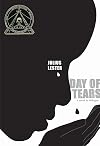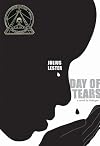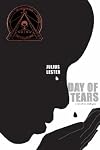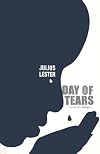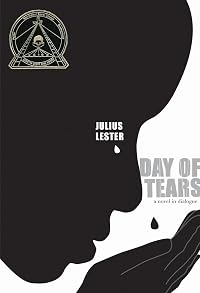
Day of Tears
by Julius Lester
On This Page
Description
Emma has taken care of the Butler children since Sarah and Frances's mother, Fanny, left. Emma wants to raise the girls to have good hearts, as a rift over slavery has ripped the Butler household apart. Now, to pay off debts, Pierce Butler wants to cash in his slave "assets", possibly including Emma.Tags
Recommendations


Member Recommendations
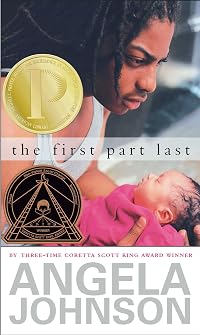
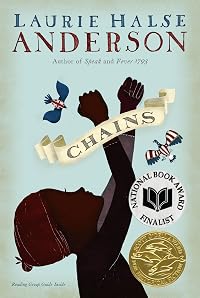
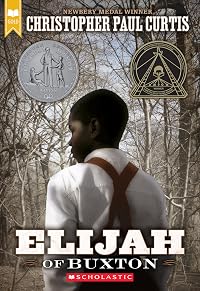
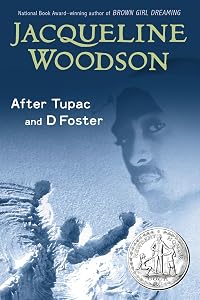
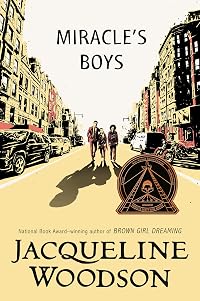
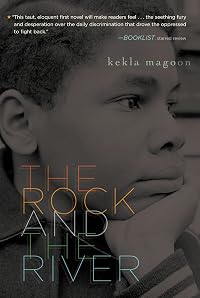
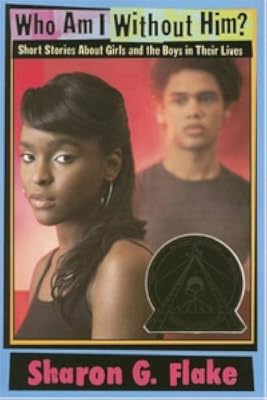
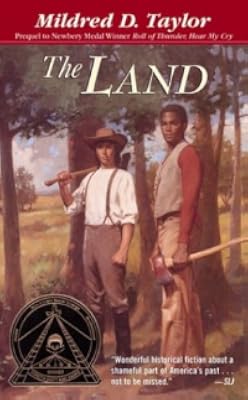
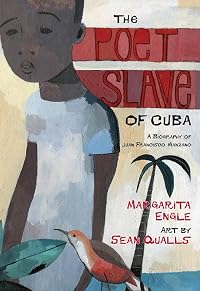
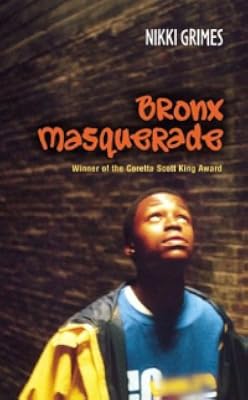
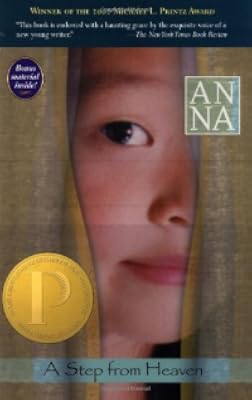
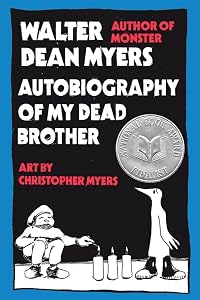
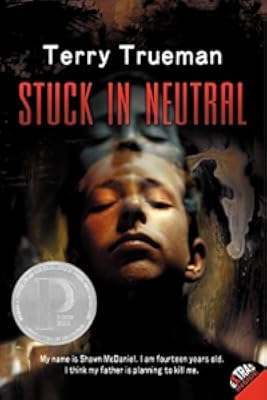
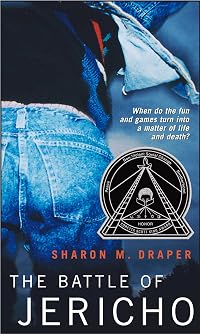
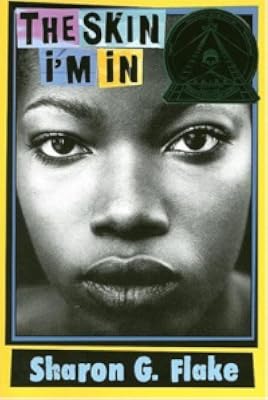
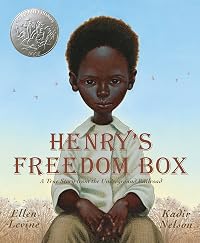
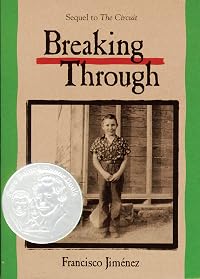
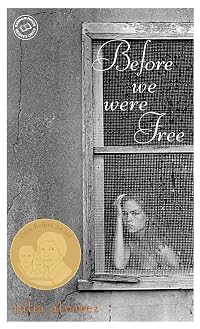
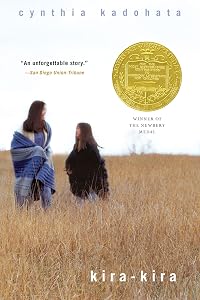
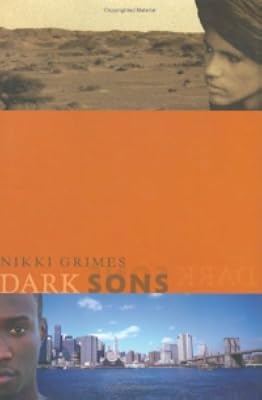
cammykitty Time travel story comparing gang membership and slavery
Member Reviews
5Q, 4P. Incredibly beautiful and moving short novel about the largest slave auction in history. This book follows Emma, a 12 year old slave girl who takes care of the two children of a plantation owner, as she witnesses the tragedy of having her family, friends, and relations torn away from their homes and sold. The book's narration shifts constantly, allowing for perspectives, flashbacks, and reflections from the plantation owner, his children, the auctioneer, the slaves, Emma's parents, and Emma herself. Refreshingly honest and straightforward, the author does not gloss over any of the language or attitudes of the slave owners and former slave owners - there is no glossy ending in which everyone realizes that they were wrong. That show more said, there is hope. And love. And a great deal of feeling portrayed through a very short novel. show less
On a day when rain came down “hard as sorrow,” George Weems sets out to sell more slaves at one time than anyone ever had. Pierce Butler must sell off hundreds of slaves to cover gambling debts and 12-year-old Emma is one of his victims. Named after Lester’s grandmother, whose mother was a slave, Emma is part of a large cast of characters—slaves, owners, businessmen and abolitionists—who tell their own stories, in their own voices. Interludes occasionally have characters return in old age to reflect on their lives since the auction, a brilliant technique that demonstrates, in some characters, the persistence of racist belief. Other, good-hearted, characters, white and black, act towards each other with respect and dignity and show more affirm the possibilities of conscience and common humanity even in the worst of times. This important novel, based on an actual slave auction in 1859, begs to be performed, though teachers and performers may be hesitant to utter the racist language of the day. Powerful theater and one of Lester’s finest works. (cast of characters, author’s note) (Fiction. 12+)
-Kirkus Review show less
-Kirkus Review show less
Twelve-year-old Emma, a slave on a Georgia plantation, witnesses what turns out to be the largest slave auction in U.S. history, a tragedy that becomes known as "the weeping time." The auction has devastating consequences for the people who live on the plantation, including Emma's family. Emma tells her story in a strong voice that resonates amidst a stirring chorus of personal accounts. We hear from her parents and her fellow slaves, as well as her masters, her master's daughters who she takes care of, and the auctioneer and abolitionists whose actions impact the course of her life. In between chapters, individual characters reflect on the events from later in life, and the overall effect is a stunning diversity of perspectives on a show more wrenching historical narrative.
My VOYA ratings: 5Q ("Hard to imagine it being better written") and 3P ("Will appeal with pushing"). It is amazing how much depth Lester brings to the characters through brief dialogues and monologues. And even though Emma's story would be compelling on its own, the tangential narratives branching out from hers give the book a remarkable complexity that leaves a lasting impression. So many unforgettable voices make this book accessible to a wide range of readers, including those who do not usually go in for the play format or the historical fiction genre. show less
My VOYA ratings: 5Q ("Hard to imagine it being better written") and 3P ("Will appeal with pushing"). It is amazing how much depth Lester brings to the characters through brief dialogues and monologues. And even though Emma's story would be compelling on its own, the tangential narratives branching out from hers give the book a remarkable complexity that leaves a lasting impression. So many unforgettable voices make this book accessible to a wide range of readers, including those who do not usually go in for the play format or the historical fiction genre. show less
4Q/3P. The Day of Tears is a perfectly paced, fictional account of slavery in America. Julius Lester gives unique voices to each member of the book’s cast. The narrative style brings life to the words and the characters, as the struggle between slavery and freedom ignites. Characters are not taken from a mold – each is depicted with sincerity and depth. I don't think this book would be the first to be chosen by a young adult reader, but I think it is an important one to share with young readers.
What I appreciated most about this book was its empathy for the characters and its affirmation of humanity. It would have been easy to portray the slave owners as evil people who freely chose to oppress their slaves and benefit from slavery. Instead, Lester does a fine job of showing the reader not only the psychological torment of slaves, and also the how whites were affected. For instance, Pierce Butler is not seen as happy man. Before the start of the story, Pierce has gambled his family fortune away and his wife has left him. This forces him to auction off his slaves, including Emma, his daughters' caretaker. His daughter Sarah despises him for what he has done and Pierce carries guilt to his early grave. His life was not worse life show more than the life of a slave, but the point of the novel is not to see who has a worse life. Rather, the point is to show how slavery poisoned society and humanity as a whole, and therefore could not be sustained. This book is an exceptional read. show less
Day of Tears by Julius Lester recounts the harrowing true story of the largest slave auction in American history. A novel in play format, Day of Tears is an absolute stunner, and I think the overall impact of the work rests largely on how directly this particular format allows the characters to speak to the reader. The characters are so vivid and utterly convincing, I felt as though I was eavesdropping on private, whispered conversations. What is perhaps most striking about Lester’s work is his unwillingness to draw a clear line of demarcation between good and evil—all people are born with the capacity to engage in both, and in great measure. Emma, a former slave on the Pierce plantation, reminds her granddaughter of this many years show more after her escape to freedom:
You be sure to write in that report of yours that a lot of people, white and black, died because of slavery. I’m thinking about them what died in slavery and them what died to kill slavery. And you be sure and put in there what I told you: all white folks back in that time wasn’t evil…And you be sure to put in that report of yours that I named your mother Sarah for a little white girl who hated slavery, too. She hated wrong and that’s because she had a good heart (p. 170).
Although Day of Tears would be a perfect novel to read in honor of Black History Month, I hesitate to recommend that it be read only during a special time of year; a novel this important and moving should simply be read. show less
You be sure to write in that report of yours that a lot of people, white and black, died because of slavery. I’m thinking about them what died in slavery and them what died to kill slavery. And you be sure and put in there what I told you: all white folks back in that time wasn’t evil…And you be sure to put in that report of yours that I named your mother Sarah for a little white girl who hated slavery, too. She hated wrong and that’s because she had a good heart (p. 170).
Although Day of Tears would be a perfect novel to read in honor of Black History Month, I hesitate to recommend that it be read only during a special time of year; a novel this important and moving should simply be read. show less
5Q 5P
This book tells the story of the biggest slave auction in American history from the point of view of several slaves, masters, mistresses, and the auctioneer. The story mostly centers on Emma, a house slave who is unexpectedly sold after the master gets greedy. She is torn from her family and the two daughters of the plantation owner who she is raising.
I was surprised at how much this book resonated with me. I had my doubts, because it's a novel in dialogue so it reads like a play and also it's about slavery so I thought it would be an awkward or painful read. But really, reading from each character's point of view was so powerful and gave a very nuanced picture of attitudes towards slavery. One of the passages that had the most show more impact on me was the list of slaves and how much they were sold for. Something about putting a price tag on a human being feels so wrong. In the author's note, Julius Lester says that the slaves' names and prices are included unchanged from a historical document he used for his research. show less
This book tells the story of the biggest slave auction in American history from the point of view of several slaves, masters, mistresses, and the auctioneer. The story mostly centers on Emma, a house slave who is unexpectedly sold after the master gets greedy. She is torn from her family and the two daughters of the plantation owner who she is raising.
I was surprised at how much this book resonated with me. I had my doubts, because it's a novel in dialogue so it reads like a play and also it's about slavery so I thought it would be an awkward or painful read. But really, reading from each character's point of view was so powerful and gave a very nuanced picture of attitudes towards slavery. One of the passages that had the most show more impact on me was the list of slaves and how much they were sold for. Something about putting a price tag on a human being feels so wrong. In the author's note, Julius Lester says that the slaves' names and prices are included unchanged from a historical document he used for his research. show less
Members
- Recently Added By
Published Reviews
ThingScore 100
During two rainy days in early March, 1859, the largest auction of slaves in America was held in Savannah, Georgia. Pierce Butler, a grandson of a signer of the Declaration of Independence and the former husband of English actress and abolitionist Fanny Kremble, sold more than 400 slaves to pay his gambling debts. Against the backdrop of the so-called “Weeping Time,” award-winning author show more Julius Lester has woven different first-person voices--told in flashback and flash forward scenes--into a moving, generational tale. The main story line is that of Emma, the slave girl who takes care of Butler’s children until he breaks a promise and sells her at the auction. Neither quite poetry nor a play, the book gives the voices of each character life and brings the reader closer to understanding, on an individual basis, the legacy of slavery and its impact on whites and blacks alike. The author is the Newbery Honor Book award winner for To Be a Slave. 2005, Jump at the Sun/Hyperion, $15.99. Ages 9 to 13. show less
added by kthomp25
On a day when rain came down "hard as sorrow," George Weems sets out to sell more slaves at one time than anyone ever had. Pierce Butler must sell off hundreds of slaves to cover gambling debts and 12-year-old Emma is one of his victims. Named after Lester's grandmother, whose mother was a slave, Emma is part of a large cast of characters-slaves, owners, businessmen and abolitionists-who tell show more their own stories, in their own voices. Interludes occasionally have characters return in old age to reflect on their lives since the auction, a brilliant technique that demonstrates, in some characters, the persistence of racist belief. Other, good-hearted, characters, white and black, act towards each other with respect and dignity and affirm the possibilities of conscience and common humanity even in the worst of times. This important novel, based on an actual slave auction in 1859, begs to be performed, though teachers and performers may be hesitant to utter the racist language of the day. show less
added by kthomp25
Nearly 200 years ago it rained for two days, merging God's tears with those of over 400 slaves auctioned in Georgia, separated from loved ones forever. In 13 chapters and 14 interludes, Lester shares their stories, beginning with Emma, the central character, who is sold unexpectedly, though she later escapes and eventually finds freedom in Canada. Other characters reveal how the auction show more changed their lives as well. The ambitious slave-seller loses his voice during the auction, ruining his career. Jeffrey's master is unable to buy his lover Dorcas, but he remains faithful to her and is crushed after the Civil War when he learns she is married to someone else. Emma shares the story of the day of tears with her granddaughter, who is doing a report on American slavery. She emphasizes the goodness of white abolitionists and others like her slave owner's daughter, for whom her own daughter was named. While it has become fashionable to tell slave stories from multiple perspectives, acknowledging that the institution devastated blacks and whites, leaving us all with a mixture of feelings, including guilt, this perspective seems contrived at times. The familiar types are all present: the loyal slave, the benevolent master/mistress, the devoted mammy figure, and the subversive slave. Yet, this book does what history texts are not designed to do: it humanizes the people involved as a Georgia plantation owner made history, having orchestrated the largest slave auction to ever take place. The final note from the author is especially important as it shares bibliographical sources used to create this novel, which reads more like a play. Many of the characters are based on real people and both the plot and subplots are influenced by real events that will capture the attention of young readers. show less
added by kthomp25
Lists

Children's Literature, Briefly Historical Fiction Reading List
44 works; 4 members
Author Information

56+ Works 11,089 Members
Julius Bernard Lester was born in St. Louis, Missouri on January 27, 1939. He received a bachelor's degree in English from Fisk University in 1960. He moved to New York to become a folk singer. He performed on the coffeehouse circuit as a singer and guitarist. He released two albums entitled Julius Lester in 1965 and Departures in 1967. His first show more published book, The Folksinger's Guide to the 12-String Guitar as Played by Leadbelly written with Pete Seeger, was published in 1965. In the 1960s, Lester was closely involved as a writer and photographer with the Student Nonviolent Coordinating Committee. He traveled to the South to document the civil rights movement and to North Vietnam to photograph the effects of American bombardment. He also hosted radio and television talk shows in New York City. He wrote more than four dozen nonfiction and fiction books for adults and children. His books for adults included Look Out, Whitey!: Black Power's Gon' Get Your Mama, Revolutionary Notes, All Is Well, Lovesong: Becoming a Jew, and The Autobiography of God. His children's books included To Be a Slave, Sam and the Tigers, and Day of Tears: A Novel in Dialogue, which won the American Library Association's Coretta Scott King Award in 2006. He also wrote reviews and essays for numerous publications including The New York Times Book Review, The Boston Globe, The Village Voice, Dissent, The New Republic, and the Los Angeles Times Book Review. After teaching for two years at the New School for Social Research in New York, Lester joined the faculty of the University of Massachusetts, Amherst in 1971. He originally taught in the Afro-American studies department, but transferred to the Judaic and Near Eastern studies department when Lester criticized the novelist James Baldwin for what he felt were anti-Semitic remarks. He died from complications of chronic obstructive pulmonary disease on January 18, 2018 at the age of 78. (Bowker Author Biography) show less
Awards and Honors
Awards
Distinctions
Common Knowledge
- Original publication date
- 2005
- People/Characters
- Emma; Mattie; Will; Master Pierce Butler; Frances; Sarah (show all 12); Joe; Mr Weems; Sampson; Mistress Henfield; Fanny Kemble; Mr Henry
- Important places
- Savannah, Georgia, USA
- Dedication
- For my grandson, Theodore Morton Lester
- First words
- It's been three days since we've seen the sun.
- Quotations
- History is not only an accounting of what happened when and where. It includes also the emotional biographies of those on whom history imposed itself with a cruelty that we can only dimly imagine. This book is another in my a... (show all)ttempts to make real those who did not have the opportunity to tell their stories for themselves. --- Julius Lester [p. 176, last words of Author's Note]
- Last words
- (Click to show. Warning: May contain spoilers.)The only sound is that of the gentle rain.
Classifications
- Genres
- Fiction and Literature, Tween, Kids, Historical Fiction, Teen, Young Adult
- DDC/MDS
- 813.54 — Literature & rhetoric American literature in English American fiction in English 1900-1999 1945-1999
- LCC
- PZ7 .L5629 — Language and Literature Fiction and juvenile belles lettres Fiction and juvenile belles lettres Juvenile belles lettres
- BISAC
Statistics
- Members
- 894
- Popularity
- 30,310
- Reviews
- 140
- Rating
- (4.24)
- Languages
- English, French
- Media
- Paper, Audiobook
- ISBNs
- 22
- ASINs
- 3