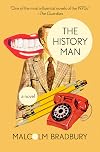
The History Man
by Malcolm Bradbury
On This Page
Description
Malcolm Bradbury's classic skewering of 1970s academia, hailed by the New York Times as "an encyclopedia of radical chic as well as a genuinely comic novel" Among the painfully hip students and teachers at the liberal University of Watermouth, Howard Kirk appears to be the most stylish of them all. With his carefully manicured mustache and easygoing radicalism, Kirk prides himself on being among the most highly evolved teachers on his redbrick campus. But beneath Kirk's scholarly bohemianism show more and studied cool is a ruthless, self-serving Machiavellian streak. A sociology lecturer who outwardly espouses freethinking nonconformity, Kirk is himself vain and bigoted, dismissing female students and colleagues while releasing vitriol against those who contradict him, particularly his clever, wayward wife, Barbara, the long-suffering mother of his two children. A funny and incisive satire of academia and ideological hypocrisy, The History Man is one of Malcolm Bradbury's most acclaimed novels and remains just as sharp and witty today as when it was first published. show lessTags
Recommendations






















Member Recommendations

Solar by Ian McEwan
by sanddancer
Member Reviews
The Kirks are are an interesting couple. Howard Kirk is a professor of sociology with a "convenient" marriage. Both Howard and his wife, Barbara, take advantage of sexual relationships that further their causes and commitments. Right from the beginning you know they are bound for trouble. "So, sensing the climate, some people called the Kirks, a well-known couple, decide to have a party" (p 1). And this is how it begins. The History Man starts with a party and ends with a party, but a whole lot happens in between. Howard has liaisons with a colleague and a student while trying to seduce a third woman. Barbara spends her weekends running off to London for a "shopping" trip.
Howard Kirk starts a vicious buzz about campus about inviting show more Professor Mangel to give a lecture at the University of Watermouth. This creates an uproar as Mangel is seen as a racist, a sexist, a geneticist, and a fascist so no one can agree about his invitation.
There is a good dose of philosophy and psychology; a whole lot of explaining how people are and what makes them tick. I couldn't decide if I really liked the Kirks. They reminded me of the Underwoods in House of Cards. They both seemed a little conniving. In the end I felt the most sorry for Barbara Kirk. She and her husband have an open relationship but, being a mother, she doesn't have quite the same opportunities as Howard.
As an aside, the author's note is hysterical. It sets the tone for the entire story. show less
Howard Kirk starts a vicious buzz about campus about inviting show more Professor Mangel to give a lecture at the University of Watermouth. This creates an uproar as Mangel is seen as a racist, a sexist, a geneticist, and a fascist so no one can agree about his invitation.
There is a good dose of philosophy and psychology; a whole lot of explaining how people are and what makes them tick. I couldn't decide if I really liked the Kirks. They reminded me of the Underwoods in House of Cards. They both seemed a little conniving. In the end I felt the most sorry for Barbara Kirk. She and her husband have an open relationship but, being a mother, she doesn't have quite the same opportunities as Howard.
As an aside, the author's note is hysterical. It sets the tone for the entire story. show less
The story of Howard Kirk, lecturer in Sociology at the University of Watermouth, is one of the defining tales of its era. Malcolm Bradbury uses Kirk as a vehicle for an incisive and devastating satire of the academic politics of the '60s and '70s, although the character types remained in place well after this, as I can vouch!
The core narrative takes place over one autumn term, occuring between two parties held by the Kirks - one to get the academic year off to a swinging start and the other to close it with a bang (I use both terms advisedly). The story of the Kirks' rise from aspirant working-class/lower-middle class grammar school success to self-proclaimed radicals is sketched in sympathetically early on in the story. In fact, at show more this point Howard Kirk and his wife Barbara seem very sympathetic - their growth from dutiful academic drones to self-aware critics of all forms of authority and power is a testament to their desire to "do the right thing". They do concern themselves with the interests of others at this point and they are driven by a sense of justice and moral probity. However, once the full extent of the sexual revolution makes its impact on them and once they are ensconced in the safe world of tenured employment, there is a distinctly complacent and self-regarding aspect of their nature that takes over. All this is described with gleeful and ironic accuracy by the cold hearted narrator, who never leaves the present tense; just like the Kirks themselves, who are caught up in their eternal now and their eternal me.
As the plot unfolds, Howard seems to see it as almost an act of political responsilbilty on his part to liberate students and fellow lecturers into his sex life. This allows for some comical scenes and exposure of Kirkian hypocrisy. Please note: this was all, of course, a long time before Operation Yewtree!
The darkest side of Howard's world, though, comes in his manipulationof rumour about an unfortunate liberal geneticist called Professor Mangel whose academic discipline marks him out as a fascist in Howard's eyes. Howard plants a rumour that Mangel is to visit the university and then exploits the outrage it causes amongst students and staff who have only the haziest notion of what his work entails. In many ways, this is a parody of the attitudes toward HJ Eysenk which were causing consternation at the time. This plot line leads to some very funny scenes especially one in which the protocols of the departmental meeting are held up for comic inspection.
But, most of all, it is in Kirk's treatment of a conservative student who does not sympathise with the leftist agenda of the Sociology department where the worst aspects of the era are exposed. This story of George Carmody, himself a rather unsavoury character it turns out, is a sorry saga and the fact that Kirk survives it seemingly unscathed does leave a bitter aftertaste and mark this out as in some ways quite an unsettling satire.
There are moments of ebullient laughter, though: the constant commentary on the architecture of this new utopian university with its collectivist arrangements of everything from dining rooms to concourses by way of the shaped plastic seats designed for "the universal buttock" and the guests at one party from the all nude production of "The Importance of Being Ernest" made me laugh out loud.
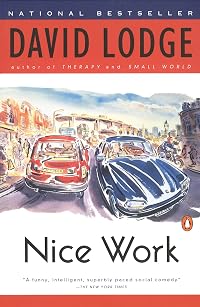
This is a delightful but serious campus novel - perhaps harsher than David Lodge's "Nice Work", the novel with which it might be most easily compared. show less
The core narrative takes place over one autumn term, occuring between two parties held by the Kirks - one to get the academic year off to a swinging start and the other to close it with a bang (I use both terms advisedly). The story of the Kirks' rise from aspirant working-class/lower-middle class grammar school success to self-proclaimed radicals is sketched in sympathetically early on in the story. In fact, at show more this point Howard Kirk and his wife Barbara seem very sympathetic - their growth from dutiful academic drones to self-aware critics of all forms of authority and power is a testament to their desire to "do the right thing". They do concern themselves with the interests of others at this point and they are driven by a sense of justice and moral probity. However, once the full extent of the sexual revolution makes its impact on them and once they are ensconced in the safe world of tenured employment, there is a distinctly complacent and self-regarding aspect of their nature that takes over. All this is described with gleeful and ironic accuracy by the cold hearted narrator, who never leaves the present tense; just like the Kirks themselves, who are caught up in their eternal now and their eternal me.
As the plot unfolds, Howard seems to see it as almost an act of political responsilbilty on his part to liberate students and fellow lecturers into his sex life. This allows for some comical scenes and exposure of Kirkian hypocrisy. Please note: this was all, of course, a long time before Operation Yewtree!
The darkest side of Howard's world, though, comes in his manipulationof rumour about an unfortunate liberal geneticist called Professor Mangel whose academic discipline marks him out as a fascist in Howard's eyes. Howard plants a rumour that Mangel is to visit the university and then exploits the outrage it causes amongst students and staff who have only the haziest notion of what his work entails. In many ways, this is a parody of the attitudes toward HJ Eysenk which were causing consternation at the time. This plot line leads to some very funny scenes especially one in which the protocols of the departmental meeting are held up for comic inspection.
But, most of all, it is in Kirk's treatment of a conservative student who does not sympathise with the leftist agenda of the Sociology department where the worst aspects of the era are exposed. This story of George Carmody, himself a rather unsavoury character it turns out, is a sorry saga and the fact that Kirk survives it seemingly unscathed does leave a bitter aftertaste and mark this out as in some ways quite an unsettling satire.
There are moments of ebullient laughter, though: the constant commentary on the architecture of this new utopian university with its collectivist arrangements of everything from dining rooms to concourses by way of the shaped plastic seats designed for "the universal buttock" and the guests at one party from the all nude production of "The Importance of Being Ernest" made me laugh out loud.
This is a delightful but serious campus novel - perhaps harsher than David Lodge's "Nice Work", the novel with which it might be most easily compared. show less
This is a sort of bitter sweet comedy. Howard Kirk is the archetypal hippie made good. If one were to ask him, he would say that he was living by those principles, and he would mean it. Sadly, the creeping fingers of Capitalism have ensnared him and he is too blind to see that change has come.
Kirk is a lecturer with an open marriage, which he feels it his duty to share the advantage of with his attractive female students, and a mind closed to any idea at odds with his own. Kirk enters a linguistic fight with a male student, George Carmody, unable to accept that his right wing views are worthy of consideration. He, of course, destroys the student and achieves his goal of sleeping with Miss Callendar, the pretty young lecturer who tries show more to defend Carmody.
It appears that Howard has swept all in front of him by the end of the novel but, there is the hint of change that will see Howard Kirk consigned to History. show less
Kirk is a lecturer with an open marriage, which he feels it his duty to share the advantage of with his attractive female students, and a mind closed to any idea at odds with his own. Kirk enters a linguistic fight with a male student, George Carmody, unable to accept that his right wing views are worthy of consideration. He, of course, destroys the student and achieves his goal of sleeping with Miss Callendar, the pretty young lecturer who tries show more to defend Carmody.
It appears that Howard has swept all in front of him by the end of the novel but, there is the hint of change that will see Howard Kirk consigned to History. show less
Period piece, from the pre-Thatcher idyll of public sector largesse. Long-haired radical embraces a self-righteous rejection of establishment conformity, whilst sleeping around, exploring and exposing, almost more from duty than desire. (The charisma and energy of the Anthony Sher portrayal is somehow missing from this written version). Bradbury's verbal flair, sense of narrative fun, and affectionate satire on the zeitgeist are all still enjoyable, though the feel is dated.
The History Man is another of the books on the Guardian's 1000 Must-Read books. Which is why I mooched a copy and read it. It took me two goes to start, and the second time I was on a coach heading for London, so I couldn't really put it down and pick up another book.... And I'm glad I forced myself to read it. It takes a while to get going, but once you've clicked into the narrative, it's an excellent read. The committee meeting alone is worth the price of admission. Now I want to see the 1980 BBC television adaptation....
Competent, occasionally funny novel about group-think and trendiness in the academic community.
This was an entertaining and informative read for me as a grad student but the situations described were still unfamiliar to me then. A few decades later, I can say that the same academic and social dimensions are still pertinent.
Members
- Recently Added By
Lists

The Guardian's 1000 Novels Everyone Must Read
1,005 works; 550 members

Best Campus Novels
99 works; 18 members

Classic British Humor
41 works; 8 members

Anthony Burgess 99 Post War Novels
99 works; 7 members

Academia in Fiction
158 works; 23 members

Best books made into television
66 works; 4 members

Michael Dirda's 100 Best Comic Novels
100 works; 1 member
Author Information

66+ Works 5,676 Members
A professor of English literature and American studies who has published numerous critical works, Malcolm Bradbury is also a novelist whose protagonists are academics who make muddles of their personal and professional lives. He maintains that his main concern is to explore problems and dilemmas of liberalism and issues of moral responsibility. show more The targets of Bradbury's satires include intellectual pretension, cultural myopia, and official smugness. His protagonists are largely sympathetic, if comic, failures at mastering their own fates in a world of absurd rules and regulations. His major novels include Eating People Is Wrong (1959), Stepping Westward (1965), and The History Man (1975). This last, a novel of intellectual and political conflict at an English university in the late 1960s, was made into a successful television minidrama. More recent novels include Rates of Exchange (1983) and Cuts (1987). (Bowker Author Biography) Malcolm Bradbury is a novelist, critic, television dramatist, & satirist. His many books include "Rates of Exchange", which was short-listed for the Booker Prize, & "The Modern American Novel". (Publisher Provided) show less
Some Editions
Awards and Honors
Series
Belongs to Publisher Series
Common Knowledge
- Canonical title
- The History Man
- Original title
- The History Man
- Original publication date
- 1975
- People/Characters
- Howard Kirk; Barbara Kirk
- Important places
- University of Watermouth (fictional); Sussex University, Brighton, East Sussex, England, UK (assumed)
- Epigraph
- "Who's Hegel?"
"Someone who sentenced mankind to a lot of history."
"Did he know a lot? Did he know everything?" – Günter Grass. - First words
- Now it is the autumn again; the people are all coming back.
- Quotations
- 'There are two studies in the Kirk house ... Howard's, downstairs, where he
writes books, and Barbara's, upstairs, where she means to.'
`Your idea of a good party', says B, `is to invite the universe. And then
leave ... (show all)me to wash up after.'
Howard says, `You need a party'. `I don't need a party,' says Barbara, `it's just
another sodding domestic chore I have to clear up after.'
[She buys French loaves and cheeses for the party.] `Enough?' she says. `Of
course, if there's 5,000, you'll be able to increase the quantity.'
... When Barbara went into Leeds Infirmary, Howard
insisted on being present. Indeed ... he decided not to cancel his
[sociology] class, but to take the group along and see the birth, examining
the problems of the NHS and the conditions of maternity care. The sister was strict and uncooperative, so the class waited out in the grounds, peering at
windows, while Barbara delivered, by the Lamaze method, with Howard present, giving
instructions and encouragement through a white mask. - Last words
- (Click to show. Warning: May contain spoilers.)In fact no one hears; as always at the Kirks' parties, which are famous for their happenings, for being like a happening, there is a lot that is, indeed, happening, and all the people are fully occupied.
- Original language*
- englanti
*Some information comes from Common Knowledge in other languages. Click "Edit" for more information.
Classifications
Statistics
- Members
- 901
- Popularity
- 29,850
- Reviews
- 9
- Rating
- (3.68)
- Languages
- 8 — Dutch, English, Finnish, French, German, Hungarian, Polish, Spanish
- Media
- Paper, Audiobook, Ebook
- ISBNs
- 25
- ASINs
- 13