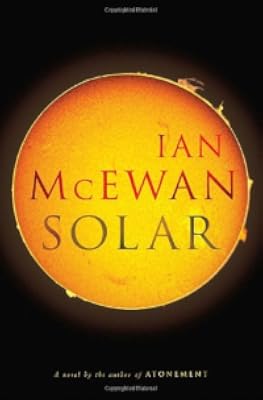
Solar
by Ian McEwan
On This Page
Description
When Nobel prize-winning physicist Michael Beard's personal and professional lives begin to intersect in unexpected ways, an opportunity presents itself in the guise of an invitation to travel to New Mexico. Here is a chance for him to extricate himself from his marital problems, reinvigorate his career, and very possibly save the world from environmental disaster.Tags
Recommendations





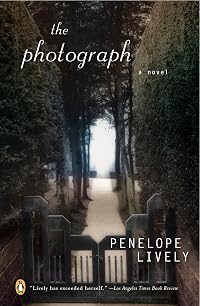
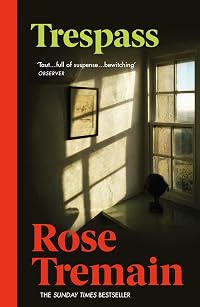
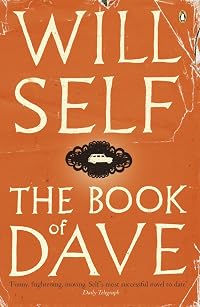
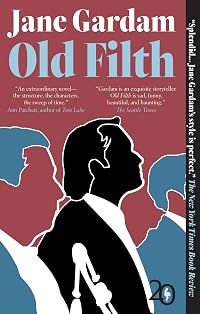










Member Recommendations


Member Reviews
Michael Beard, Nobel Prize winner, womanizer, occasional buffoon, has-been opportunist, is far from a likeable character. As a matter-of-fact, one wonders how he can have so much success with women since he's not much to look at either. But this is the genius of McEwan: I couldn't help but wonder what would happen to him, how the sordid mess that he created for himself would finish. In some ways, Beard is very relatable: he does the stupid things that we all occasionally do, makes cowardly decisions, has flashes of brilliance and undeniable qualities. He is very human, and where he is probably much more callous than most of us, we can probably all see aspects of ourselves, good and bad.
The narrative is also very cleverly constructed show more where a few incidents, a couple critical decisions, all come to roost in the most unlikely of places, a small town in New Mexico. There is definitely poetry in those last desert scenes where the oppressive heat becomes unbearable.
Overall, although it's a dense book, I really enjoyed this read with passages that had me laughing out loud and others shaking my head. The denouement is perfect as both a logical ending and a ruthless judgment of Beard who may be foolish but not a fool. show less
The narrative is also very cleverly constructed show more where a few incidents, a couple critical decisions, all come to roost in the most unlikely of places, a small town in New Mexico. There is definitely poetry in those last desert scenes where the oppressive heat becomes unbearable.
Overall, although it's a dense book, I really enjoyed this read with passages that had me laughing out loud and others shaking my head. The denouement is perfect as both a logical ending and a ruthless judgment of Beard who may be foolish but not a fool. show less
With grim wit, Ian McEwan masterfully dissects the sort of civilization threatening problem we face in climate change. The book is a satirical character study of one Michael Beard -- Nobel laureate, womanizer, glutton and intellectual charlatan who through an improbable and hilarious chain of circumstances comes to be in possession of an idea for an alternative energy source that is perhaps the last, best hope for the world as we know it. Beard's grotesque self-destruction through over-indulgence of every kind of comfort and pleasure embodies the sort of thoughtless excess that puts the world in peril; his greed, arrogance, dishonesty and capacity for self-delusion -- qualities that afflict most of the characters in the book (if not show more most of humanity), albeit to a much lesser degree -- are the reason why it will be not so easy to solve even as revolutionary approaches to energy are developed. My read of the book is that, though it deftly explains the science of global warming and avoids being preachy, it persuasively argues that climate change is not a technical, scientific problem, but a moral one. To deal with it successfully, we will not only have to develop new technology, we will have to scrutinize and master the frailties of human nature. show less
Being a Nobel prize winner means you've done something amazing. Nobody else before you did that. Today many others, most likely, are building on what you achieved. The world is likely in your debt for what you did. All this implies we are prone to think very positively of a Nobel laureate. Once you read this book, you will never think that way again.
The central character of this book, Michael Beard, has won a Nobel prize. But at this point he's clearly coasting on his laurels. He's on his fifth marriage. Rather than doing research or teaching, he's into getting funding for a Center he heads. The Center has a positive goal, reducing climate change by developing renewal energy. They are creating rooftop wind generators which he knows show more will never be workable. He's had countless affairs even though he's married beautiful women who adored him. He pays little attention to his assistants who desperately seek his approval. He seeks liquor whenever anything becomes troublesome. He's narcissistic, self-absorbed, and lacks empathy. In short, he's a cad. Yes, he's a Nobel laureate, are we supposed to overlook everything else?
It even gets darker. His beautiful young wife is no longer talking to him. She's been pushed over the edge. She's having a very public affair with someone who had worked on their house. Beard is beside himself. Returning home from a trip unexpectedly, he discovers she's also having an affair with the brightest assistant in his Center. The assistant had been trying to get Beard to abandon the rooftop wind generators and focus on solar, which is closer to what Beard's Nobel prize was based on. The assistant slips, hits his head and dies. Beard sees an opportunity He gets the workman's hammer from a closet, dips it in the assistant's blood and plants it as incriminating evidence. Workman goes to jail. Beard solves two problems at once. Our opinion of Beard plummets even if we had been sympathetic so far.
It gets worse. Beard reads what the assistant had wanted to show him. He realizes the assistant has created designs that will make solar viable as a renewable energy source and solve the climate change problem. Beard appropriates the designs as his own, and for the next several years he rides this wave based on "his" designs. He has an amazing ability to escape the consequences of what he's done. Still having affairs, still drinking, still getting older. Will his luck ever run out? You'll have to read the book to find out. show less
The central character of this book, Michael Beard, has won a Nobel prize. But at this point he's clearly coasting on his laurels. He's on his fifth marriage. Rather than doing research or teaching, he's into getting funding for a Center he heads. The Center has a positive goal, reducing climate change by developing renewal energy. They are creating rooftop wind generators which he knows show more will never be workable. He's had countless affairs even though he's married beautiful women who adored him. He pays little attention to his assistants who desperately seek his approval. He seeks liquor whenever anything becomes troublesome. He's narcissistic, self-absorbed, and lacks empathy. In short, he's a cad. Yes, he's a Nobel laureate, are we supposed to overlook everything else?
It even gets darker. His beautiful young wife is no longer talking to him. She's been pushed over the edge. She's having a very public affair with someone who had worked on their house. Beard is beside himself. Returning home from a trip unexpectedly, he discovers she's also having an affair with the brightest assistant in his Center. The assistant had been trying to get Beard to abandon the rooftop wind generators and focus on solar, which is closer to what Beard's Nobel prize was based on. The assistant slips, hits his head and dies. Beard sees an opportunity He gets the workman's hammer from a closet, dips it in the assistant's blood and plants it as incriminating evidence. Workman goes to jail. Beard solves two problems at once. Our opinion of Beard plummets even if we had been sympathetic so far.
It gets worse. Beard reads what the assistant had wanted to show him. He realizes the assistant has created designs that will make solar viable as a renewable energy source and solve the climate change problem. Beard appropriates the designs as his own, and for the next several years he rides this wave based on "his" designs. He has an amazing ability to escape the consequences of what he's done. Still having affairs, still drinking, still getting older. Will his luck ever run out? You'll have to read the book to find out. show less
While not my favorite of McEwan's books (Enduring Love & Saturday would rank higher), I laughed out loud as hard as at anything I've read at scenes in this story. And the tale whips right along without a bit of slogging and McEwan's writing is polished, witty and memorable. There is a great deal of info on physics (not my bent) but well done, even interesting, particularly the crowning moments in the U.S. desert.
A novel about the train wreckishly messy personal and professional life of Michael Beard, a Nobel Prize-winning physicist currently working on renewable energy and the struggle to halt global warming. Beard is easily the most unlikeable protagonist I've encountered in ages... and not in a fascinating-but-flawed or fun character-you-love-to-hate kind of way, either. He's a rotten husband, a piss-poor excuse for a human being and, despite the accomplishments of his youth, kind of a crappy scientist, to boot. He's not the sort of person whose company I'd enjoy spending time at all in, never mind spending an entire novel's worth of time in his head, and every time I started to feel any sympathy for him, he'd prove to me all over again just show more what a colossal schmuck he was. And yet, somehow, McEwan kept me turning pages, interested to see more of this man's story. I find this quite impressive.
I think it helps a great deal that Beard, in all his faults, feels very much like a real person. There was a danger here that he might have come across as a simplistic stereotype: the cold, detached, egotistical scientist with no capacity for human feeling. But even if that description fits him well enough, he doesn't feel like a stereotype. He's far too three-dimensional a character for that. And McEwan, far from displaying the hostility or ignorance towards science that usually goes with that particular stereotype, appears to have an amazingly good grasp of the philosophy of science and of how real physicists think. He also displays an excellent understanding of human psychology, and of the ways in which even those who value and strive for objectivity are subject to denial, irrationality, and the ability to remember only what we want to remember and believe what we wish to believe. (The relevance of this to global warming, pleasingly, is left as an exercise for the reader.) show less
I think it helps a great deal that Beard, in all his faults, feels very much like a real person. There was a danger here that he might have come across as a simplistic stereotype: the cold, detached, egotistical scientist with no capacity for human feeling. But even if that description fits him well enough, he doesn't feel like a stereotype. He's far too three-dimensional a character for that. And McEwan, far from displaying the hostility or ignorance towards science that usually goes with that particular stereotype, appears to have an amazingly good grasp of the philosophy of science and of how real physicists think. He also displays an excellent understanding of human psychology, and of the ways in which even those who value and strive for objectivity are subject to denial, irrationality, and the ability to remember only what we want to remember and believe what we wish to believe. (The relevance of this to global warming, pleasingly, is left as an exercise for the reader.) show less
It is great when a writer can successfully reinvent himself. Ian McEwan latest book is a feast to read. Humour, wit and a sharp analysis of the modern business of science and education. Neo-liberalism has perverted everything, and Solar is a great satirical novel to expose all of that. The episode of the artists' conference in the arctic is based on a true experience of the author, and we can only surmise how much of it is rooted in his real experience. I can imagine some of it, but McEwan's description of Michael Beard's ordeal is just too funny. I laughed out loud.
Pretty much overweight myself, and busy battling the belly, I cannot fail to notice Beard getting fatter and fatter throughout the book. Superficially, this gain in weight, show more could be a measure of success, but with McEwan it is surely more than that. One feels this metaphor of expansion is emblematic for our time in which growth is the prescribed paradigm, and everything gets blown up. Until it all comes down to nothing in the end. As Beard is the purported discoverer of the so-called "Beard-Einstein conflation", the book is full of conflation, inflation and subsequent deflation.
Another challenge the author poses, is the question how willing the reader is to go along with Beard's deceit. Beard is clearly a morally flawed character from the start, but his clumsiness seems endearing, and the reader is led along of the path of sympathy, ever deeper into moral decay. The episode of Beard eating another passenger's crisps on a commuter train, and drinking his water, is a gem. It is another example how wrong Beard is about himself, and the world around him. While relativity should be his strong point, Beard is clearly confused in all possible ways. show less
Pretty much overweight myself, and busy battling the belly, I cannot fail to notice Beard getting fatter and fatter throughout the book. Superficially, this gain in weight, show more could be a measure of success, but with McEwan it is surely more than that. One feels this metaphor of expansion is emblematic for our time in which growth is the prescribed paradigm, and everything gets blown up. Until it all comes down to nothing in the end. As Beard is the purported discoverer of the so-called "Beard-Einstein conflation", the book is full of conflation, inflation and subsequent deflation.
Another challenge the author poses, is the question how willing the reader is to go along with Beard's deceit. Beard is clearly a morally flawed character from the start, but his clumsiness seems endearing, and the reader is led along of the path of sympathy, ever deeper into moral decay. The episode of Beard eating another passenger's crisps on a commuter train, and drinking his water, is a gem. It is another example how wrong Beard is about himself, and the world around him. While relativity should be his strong point, Beard is clearly confused in all possible ways. show less
Ah, McEwan. I just love this writer. Every book is so different that you start them in perfect anticipation of what he'll throw at you this time.
Solar was a great read, possibly one of the funniest of McEwan's that I've read so far. The protagonist is scientist Professor Beard, Nobel Prize Winner, womaniser, egotist and general all round self-indulgent pig. He's a great character - super smart and super dumb in equal measures, a loathsome sloth of a man who rides his professional and personal life largely on the back of his Nobel win. Oftentimes he reminded me of an academic version of John Updike's Rabbit Angstrom, another brilliantly flawed character who is one of my all-time favourites.
I always find it very difficult to review a show more McEwan book as I never want to give too much of the plot away. It's suffice to say that in Solar Beard's professional and personal lives collide in some very unexpected ways which are in turn toe-curlingly embarrassing, laugh out loud funny and page turningly brilliant. A great mix of comedy and tension, and thoroughly enjoyable read. show less
Solar was a great read, possibly one of the funniest of McEwan's that I've read so far. The protagonist is scientist Professor Beard, Nobel Prize Winner, womaniser, egotist and general all round self-indulgent pig. He's a great character - super smart and super dumb in equal measures, a loathsome sloth of a man who rides his professional and personal life largely on the back of his Nobel win. Oftentimes he reminded me of an academic version of John Updike's Rabbit Angstrom, another brilliantly flawed character who is one of my all-time favourites.
I always find it very difficult to review a show more McEwan book as I never want to give too much of the plot away. It's suffice to say that in Solar Beard's professional and personal lives collide in some very unexpected ways which are in turn toe-curlingly embarrassing, laugh out loud funny and page turningly brilliant. A great mix of comedy and tension, and thoroughly enjoyable read. show less
Members
- Recently Added By
Published Reviews
ThingScore 72
Solar is grappig, slim geschreven en spannend tot op de laatste bladzijde. Een roman om, Beardsgewijs, duimen en vingers bij af te likken.
added by PGCM
Despite the book’s somber, scientific backdrop (and global warming here is little but that), “Solar” is Mr. McEwan’s funniest novel yet — a novel that in tone and affect often reads more like something by Zoë Heller or David Lodge. Like “Amsterdam,” this latest book shows off his gifts as a satirist, but while it gets off to a rollicking start, its plot machinery soon starts to show more run out of gas, sputtering and stalling as it makes its way from one comic set piece to another. show less
added by Shortride
Solar” is een vermakelijke en bijzonder goed gevulde roman, waarvan ook de wetenschappelijke gedeelten strak en helder geschreven zijn. Ian McEwan weet als zo vaak minutieus realisme en stilistische elegantie met elkaar te verenigen. De vraag die velen zich wel zullen stellen is: waar wil McEwan met zijn lezer naar toe? Er is namelijk slechts één gids: de onbetrouwbare anti-held Michael show more Beard, “passé” als geleerde maar niet genoeg om hem zo maar van de tafel te vegen. Zijn seksuele en andersoortige geeuwhonger maakt van deze Nobelprijslaureaat wel een karikaturale omkering van wat de nieuwe mens zou moeten zijn en hoe hij zich op een verantwoordelijke wijze tot de aarde en zijn medebewoners zou moeten gedragen. show less
added by PGCM
Lists

Recommend the 20 best books you've read in the last five years
2,168 works; 606 members

Best 21st Century Books (So Far)
670 works; 86 members

KayStJ's to-read list
1,616 works; 11 members

Arctic novels
35 works; 5 members

Books Read in 2026
1,938 works; 66 members
Author Information

77+ Works 100,191 Members
Ian McEwan was born in Aldershot, England on June 21, 1948. He received a B.A. in English Literature from the University of Sussex and an M.A. in English Literature from the University of East Anglia. He writes novels, plays, and collections of short stories including In Between the Sheets, The Cement Garden, The Comfort of Strangers, The show more Innocent, Black Dogs, The Daydreamer, Enduring Love, Sweet Tooth, The Children Act and Nutshell. He has won numerous awards including the 1976 Somerset Maugham Award for First Love, Last Rites; the 1987 Whitbread Novel Award and the 1993 Prix Fémina Etranger for The Child in Time; the 1998 Booker Prize for Fiction for Amserdam; the 2002 W. H. Smith Literary Award, the 2003 National Book Critics' Circle Fiction Award, the 2003 Los Angeles Times Prize for Fiction, and the 2004 Santiago Prize for the European Novel for Atonement; and the 2006 James Tait Black Memorial Prize for Saturday. (Bowker Author Biography) show less
Some Editions
Awards and Honors
Awards
Distinctions
Notable Lists
Series
Belongs to Publisher Series
Common Knowledge
- Canonical title
- Solar
- Original title
- Solar
- Original publication date
- 2010-03-18
- People/Characters
- Michael Beard; Patrice Beard; Rodney Tarpin; Tom Aldous
- Important places
- London, England, UK; Spitsbergen, Svalbard, Norway; Lordsburg, New Mexico, USA; Reading, Berkshire, England, UK
- Epigraph
- "It gives him great pleasure, makes Rabbit feel right, to contemplate the world's wastings, to know the earth is mortal too."
Rabbit is Rich, John Updike - Dedication
- To Polly Bide
1949-2003 - First words
- He belonged to that class of men - vaguely unprepossessing, often bald, short, fat, clever - who were unaccountably attractive to certain beautiful women.
- Quotations*
- La Edad de Piedra no terminó a causa de la escasez de piedras.
- Last words
- (Click to show. Warning: May contain spoilers.)As Beard rose to greet her he felt in his heart an unfamiliar, pleasantly swelling sensation, but he doubted as he opened his arms to her that anyone would ever believe him now if he tried to pass it off as love.
- Publisher's editor*
- Anagrama
- Blurbers
- Leith, Sam
- Original language*
- Anglais (Royaume-Uni) (Royaume-Uni)
*Some information comes from Common Knowledge in other languages. Click "Edit" for more information.
Classifications
Statistics
- Members
- 4,018
- Popularity
- 3,880
- Reviews
- 158
- Rating
- (3.30)
- Languages
- 20 — Catalan, Czech, Danish, Dutch, English, Estonian, Finnish, French, German, Greek, Hebrew, Italian, Norwegian (Bokmål), Polish, Portuguese, Romanian, Croatian, Spanish, Swedish, Turkish
- Media
- Paper, Audiobook, Ebook
- ISBNs
- 84
- ASINs
- 21