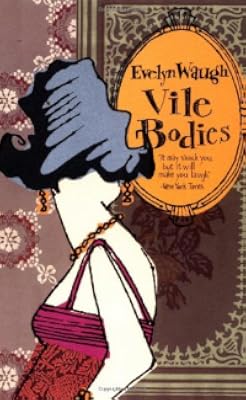
Vile Bodies
by Evelyn Waugh 
On This Page
Description
"A wickedly witty and iridescent novel" (Time) from one of England's greatest satirists takes aim at the generation of Bright Young Things that dominated London high society in the 1920s.In the years following the First World War a new generation emerged, wistful and vulnerable beneath the glitter. The Bright Young Things of 1920s London, with their paradoxical mix of innocence and sophistication, exercised their inventive minds and vile bodies in every kind of capricious escapade. In show more these pages a vivid assortment of characters, among them the struggling writer Adam Fenwick-Symes and the glamorous, aristocratic Nina Blount, hunt fast and furiously for ever greater sensations and the hedonistic fulfillment of their desires. Evelyn Waugh's acidly funny satire reveals the darkness and vulnerability beneath the sparkling surface of the high life.
. show less
Tags
Recommendations














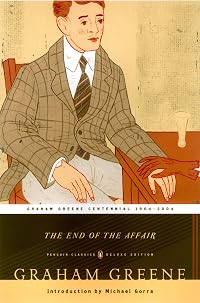
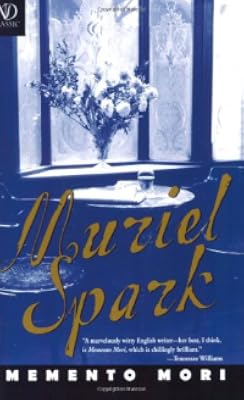
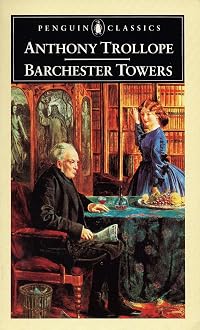



Member Recommendations
Nickelini If you like one of these Evelyn Waugh novels, chances are you'll like the second.
30
Member Reviews
3.6, say. Definitely meant to be revisited, for various reasons. Hilarious just about straight through (highly quotable/reciteable), and a very fast read (appropriately). Plenty of drinking (how divine!), very little eating (what a perfect bore); these vile bodies indeed. And so much stuff; if I were in a cartoon and dropped this book, it is likely that it would make a frightful clanking noise. And the picture of Waugh inside the front cover of this edition still cracks me up.
Shiny and witty at first, and you think "Oh yes, like Wodehouse, but rather mean, yay!" The shine and the wit are retained, but it takes on a far grimmer aspect than one might expect; pretty soon, when your back is turned, the surfaces become blinding, and what's show more on the page could burn holes through skin. Taking irreverence to the nth degree, and seeing what it does: war on our own humanity. The saddest line occurs early on (Nina, after the whole cheque business and she witnesses Adam's solitary jig in the hallway), and I think it is saddest because the line is right in the midst of what you still think is an absurd romp --flitting by like everything else. Unexpectedly haunting (or nagging, I cannot decide). show less
Shiny and witty at first, and you think "Oh yes, like Wodehouse, but rather mean, yay!" The shine and the wit are retained, but it takes on a far grimmer aspect than one might expect; pretty soon, when your back is turned, the surfaces become blinding, and what's show more on the page could burn holes through skin. Taking irreverence to the nth degree, and seeing what it does: war on our own humanity. The saddest line occurs early on (Nina, after the whole cheque business and she witnesses Adam's solitary jig in the hallway), and I think it is saddest because the line is right in the midst of what you still think is an absurd romp --flitting by like everything else. Unexpectedly haunting (or nagging, I cannot decide). show less
Vile Bodies by Evelyn Waugh was published in 1930 and is a humorous satire on the bright young things of upper class London society who were the rage between World War I and World War II. Their territory was Mayfair and their time was spent in various capricious escapades involving dancing, cocktail parties, promiscuity and sports cars.
The main character is struggling writer, Adam Fenwick-Symes who takes the job of a gossip columnist so that he can afford to marry his fiancee, the aristocratic Nina Blount. He is soon to be found writing about his own social set as they wander aimlessly through life, always looking for their next great sensation. The lampooning starts immediately in the first chapter as various characters are introduced show more and we discover last-week’s prime minister is called Outrageous and a homosexual journalist has the moniker of Miles Malpractice. The situations in which Waugh places his characters in are no less unconventional and absurd.
This book absolutely skewers this segment of a generation that emerged in the years after WW I, and along with being outrageously witty and humorous, Waugh doesn’t hesitate to expose the darkness and vulnerability that lurks just beneath the surface of these upper crust people. It seems that every generation has it’s own group of “bright young things’ that everyday people want to read about, in the 1950’s they were “the smart set”, and in the 1960’s, “the beautiful people”, even today Twitter and other sites are full of the exploits of the Kardashians, Hiltons and other members of the glitterati. Vile Bodies has more than it’s share of silly characters making poor decisions but overall, I found this book to be a very entertaining but slightly dated read. show less
The main character is struggling writer, Adam Fenwick-Symes who takes the job of a gossip columnist so that he can afford to marry his fiancee, the aristocratic Nina Blount. He is soon to be found writing about his own social set as they wander aimlessly through life, always looking for their next great sensation. The lampooning starts immediately in the first chapter as various characters are introduced show more and we discover last-week’s prime minister is called Outrageous and a homosexual journalist has the moniker of Miles Malpractice. The situations in which Waugh places his characters in are no less unconventional and absurd.
This book absolutely skewers this segment of a generation that emerged in the years after WW I, and along with being outrageously witty and humorous, Waugh doesn’t hesitate to expose the darkness and vulnerability that lurks just beneath the surface of these upper crust people. It seems that every generation has it’s own group of “bright young things’ that everyday people want to read about, in the 1950’s they were “the smart set”, and in the 1960’s, “the beautiful people”, even today Twitter and other sites are full of the exploits of the Kardashians, Hiltons and other members of the glitterati. Vile Bodies has more than it’s share of silly characters making poor decisions but overall, I found this book to be a very entertaining but slightly dated read. show less
I'm not really part of Waugh's intended audience, but I've got to concede that "Vile Bodies" is faster, funnier, and, despite being inspired by the breakup of his marriage, less embittered than the other Waugh I've read. Like, I suspect, most of Waugh's novels, "Vile Bodies" is full of fools, but, to the author's credit, they come off as mere fools, unlike the characters of, say, "A Handful of Dust," who seem to exist mostly to invite the reader's disgust. There's lots of top-notch wordplay in "Vile Bodies," and the tone is one of ironic farce, not moral condemnation: the book surprised me most by being, well, genuinely enjoyable. Of course, as others have surely noted, it's also interesting to the modern reader because so much of it show more seems so contemporary: the book's subject seems frivolous and ageless at the same time. Heck, add a few acid synths and this thing could have been written in the late eighties or early nineties. The media's print instead of social, but a party in a zeppelin? Sounds fab! Who's spinning, and what's the cover? Also, Waugh seems to have the same ideas about motor "sports" as I do, and the same ideas about Christian-themed entertainment , too. Who knew that I'd be able to find so much common ground with that old sourpuss? On a more serious note, you've got that weird coda that takes place on a European battlefield in the yet-to-be-declared Second Great War, which lends some sadness and gravity to the proceedings, as does, I suppose, the fact that the book is dedicated to Diana Mosely, wife of Sir Oswald Mosely, the justly despised leader of the British Union of Fascists.. I'd recommend, as other have, the British Penguin edition, which includes an essay and notes that lend some useful background. It seems that the author was actually married to a woman named Evelyn for a time! Monty Python couldn't come up with something so delightfully absurd. But it seems that the author could. show less
Despite a failure to extract much enjoyment from it at the time, I did read this book in its entirety.
Consequently, I do have some thoughts… (Which I proceed to expound at some length; you have been warned!)
Initially puzzled by what I perceived as the two-dimensional nature of the characters, all became clear when Adam undertook the ‘Chatterbox’ column. It appeared to me that Adam’s inventions were indistinguishable from the ‘real’ characters, and I felt, then, that this was the main point of the book; to underline the superficiality of that particular set of people at that particular time.
I found this rather amusing; we disparage our ‘celebrity culture,’ as a new and unappealing property of our time. Unappealing, maybe, show more but not, it would seem, new!
Waugh, it appears, was not greatly enamoured of ‘celebrity,’ and although he states in his preface that at some point in the book the mood shifts from ‘gaiety to bitterness,’ I could not spot the transition. I felt that Waugh treats his characters with contempt from the outset, and reveals himself as a misanthropist throughout.
Agatha’s hallucinations of a run-away car reflect the existence of the Bright Young People, which seems to be both aimless and beyond their control. Tellingly, Agatha’s only escape is in death.
Ultimately, I found this a bleak and somewhat savage book, making the self-evident circular argument that without a point to exist, existence must be pointless. It was also intimated that this meaning must come from within, and lack of meaning may not, as the book seemed to suggest initially, be attributed to circumstances.
This is illustrated on the battlefield, where the book delivers the bleakest message of all. Here, where Adam might find some meaning to his life, as he fights for the future of his country, nothing has changed! Fate continues to bombard him with changing fortune, and Adam remains resigned. This shows that Adam’s situation is irrelevant to his destiny. Adam (and similarly the rest of his set) lack some vital intrinsic quality (Responsibility? Imagination?) without which they are eternally condemned to a life dictated by the twists of fate, cruel or otherwise.
I suspect that most of the characters would bear close examination, but there were two that were especially memorable:
I was particularly struck by the character of Mrs Ape, and her girls, in their overtly religious set-up… The overtones seemed to draw parallels with an entirely different kind of establishment, deeply underscored by the ironically named ‘Chastity.’ I read this as an attack on the morality of the methods of Christian evangelists … or even a suggestion that this kind of religion was merely a convenient facade lacking commitment… or maybe I just spent too long thinking about this book!
Mr Isaacs was a disturbingly drawn character; caricatured in the anti-semitic mould favoured by Shakespeare. I found it interesting in its historical context; this was written relatively recently, which indicates that it was only the actions of Nazi Germany that caused a revision of attitudes; not an intrinsic sense of justice.
Of course, the book is dedicated to Diana Mosely…
Farce isn’t something I would usually appreciate, but I will concede that I did enjoy some of the humourous parts, especially the tragi-comic character of Simon Balcairn. I was still thinking about interpretations a week later, which in my estimation puts this work firmly in the realms of ‘A Good Book.’ show less
Consequently, I do have some thoughts… (Which I proceed to expound at some length; you have been warned!)
Initially puzzled by what I perceived as the two-dimensional nature of the characters, all became clear when Adam undertook the ‘Chatterbox’ column. It appeared to me that Adam’s inventions were indistinguishable from the ‘real’ characters, and I felt, then, that this was the main point of the book; to underline the superficiality of that particular set of people at that particular time.
I found this rather amusing; we disparage our ‘celebrity culture,’ as a new and unappealing property of our time. Unappealing, maybe, show more but not, it would seem, new!
Waugh, it appears, was not greatly enamoured of ‘celebrity,’ and although he states in his preface that at some point in the book the mood shifts from ‘gaiety to bitterness,’ I could not spot the transition. I felt that Waugh treats his characters with contempt from the outset, and reveals himself as a misanthropist throughout.
Agatha’s hallucinations of a run-away car reflect the existence of the Bright Young People, which seems to be both aimless and beyond their control. Tellingly, Agatha’s only escape is in death.
Ultimately, I found this a bleak and somewhat savage book, making the self-evident circular argument that without a point to exist, existence must be pointless. It was also intimated that this meaning must come from within, and lack of meaning may not, as the book seemed to suggest initially, be attributed to circumstances.
This is illustrated on the battlefield, where the book delivers the bleakest message of all. Here, where Adam might find some meaning to his life, as he fights for the future of his country, nothing has changed! Fate continues to bombard him with changing fortune, and Adam remains resigned. This shows that Adam’s situation is irrelevant to his destiny. Adam (and similarly the rest of his set) lack some vital intrinsic quality (Responsibility? Imagination?) without which they are eternally condemned to a life dictated by the twists of fate, cruel or otherwise.
I suspect that most of the characters would bear close examination, but there were two that were especially memorable:
I was particularly struck by the character of Mrs Ape, and her girls, in their overtly religious set-up… The overtones seemed to draw parallels with an entirely different kind of establishment, deeply underscored by the ironically named ‘Chastity.’ I read this as an attack on the morality of the methods of Christian evangelists … or even a suggestion that this kind of religion was merely a convenient facade lacking commitment… or maybe I just spent too long thinking about this book!
Mr Isaacs was a disturbingly drawn character; caricatured in the anti-semitic mould favoured by Shakespeare. I found it interesting in its historical context; this was written relatively recently, which indicates that it was only the actions of Nazi Germany that caused a revision of attitudes; not an intrinsic sense of justice.
Of course, the book is dedicated to Diana Mosely…
Farce isn’t something I would usually appreciate, but I will concede that I did enjoy some of the humourous parts, especially the tragi-comic character of Simon Balcairn. I was still thinking about interpretations a week later, which in my estimation puts this work firmly in the realms of ‘A Good Book.’ show less
I decided to read 'Vile Bodies' after finding [b:Decline and Fall|30929|Decline and Fall|Evelyn Waugh|https://i.gr-assets.com/images/S/compressed.photo.goodreads.com/books/1343781966l/30929._SY75_.jpg|1228767] incredibly funny. I assumed this would be another hilarious farce, yet somehow the humour was too bleak to really amuse me. It felt more cruel than absurd; possibly this had to do with my mood while reading it as well as the book itself. Once again the narrative orbits around a hapless and reactive young man, but not as closely and via different settings. Waugh depicts the bright young things of the 1930s, perpetually on the move from place to place and party to party. There is a pervasive nausea about this frenetic activity; show more characters are often sickened by boats, planes, dirigibles, and alcohol. Romantic relationships are offhand, money arbitrarily appears and disappears, and every sordid detail is published with embellishments in gossip columns. I think Waugh powerfully conveys a desire for distraction at all costs from the spectre of approaching war, which isn't an obvious theme in [b:Decline and Fall|30929|Decline and Fall|Evelyn Waugh|https://i.gr-assets.com/images/S/compressed.photo.goodreads.com/books/1343781966l/30929._SY75_.jpg|1228767]. 'Vile Bodies' includes a conversation in which the prime minister complains that no-one told him war was coming, then ends with a short chapter titled 'Happy Ending' set in an apocalyptic future with the war underway. Although the writing is just as glitteringly polished, the atmosphere is much grimmer and less hopeful. I did enjoy the running joke about green bowler hats, though.
The penguin edition I borrowed from the library included a lengthy introduction attempting to psychoanalyse Waugh, which I found a bit much. The fact that his marriage (to a woman named Evelyn, confusingly) broke down during the writing of 'Vile Bodies' may be relevant to its tone, though. It takes an even more jaded view of romance and marriage than [b:Decline and Fall|30929|Decline and Fall|Evelyn Waugh|https://i.gr-assets.com/images/S/compressed.photo.goodreads.com/books/1343781966l/30929._SY75_.jpg|1228767], which is saying something. Moreover, rather than miraculously reappearing after faking their own deaths, in 'Vile Bodies' characters die arbitrarily and suddenly by suicide or misadventure. Yet the astute observation and distinctively waspish style of dialogue remain very similar:
Although I enjoyed 'Vile Bodies' a lot less than [b:Decline and Fall|30929|Decline and Fall|Evelyn Waugh|https://i.gr-assets.com/images/S/compressed.photo.goodreads.com/books/1343781966l/30929._SY75_.jpg|1228767] and did not find it as cohesive, the writing is often brilliant in its parodic depiction of 1930s culture. show less
The penguin edition I borrowed from the library included a lengthy introduction attempting to psychoanalyse Waugh, which I found a bit much. The fact that his marriage (to a woman named Evelyn, confusingly) broke down during the writing of 'Vile Bodies' may be relevant to its tone, though. It takes an even more jaded view of romance and marriage than [b:Decline and Fall|30929|Decline and Fall|Evelyn Waugh|https://i.gr-assets.com/images/S/compressed.photo.goodreads.com/books/1343781966l/30929._SY75_.jpg|1228767], which is saying something. Moreover, rather than miraculously reappearing after faking their own deaths, in 'Vile Bodies' characters die arbitrarily and suddenly by suicide or misadventure. Yet the astute observation and distinctively waspish style of dialogue remain very similar:
The topic of the Younger Generation spread through the company like a yawn. Royalty remarked on their absence and those happy mothers who had even one docile daughter in tow swelled with pride and commiseration.
"I'm told that they're having another one of their parties," said Mrs Mouse, "in an aeroplane this time."
"In an aeroplane? How very extraordinary."
"Of course, I never hear a word from Mary, but her maid told my maid..."
Although I enjoyed 'Vile Bodies' a lot less than [b:Decline and Fall|30929|Decline and Fall|Evelyn Waugh|https://i.gr-assets.com/images/S/compressed.photo.goodreads.com/books/1343781966l/30929._SY75_.jpg|1228767] and did not find it as cohesive, the writing is often brilliant in its parodic depiction of 1930s culture. show less
Vile Bodies, Evelyn Waugh’s satire on the so called Bright Young Things who emerged in England in the 1920s, was published in 1930 and became an immediate topical success. The Bright Young Things were a bunch of hedonistic aristocrats who partied their way around the grander houses of London. The gossip columnists loved them and although some of them did go on to actually do something (Cecil Beaton and Waugh himself were both associated with the group) most of them were famous for being famous, so they were arguably the first flowering of the celebrity culture.
Plot? Almost non-existent: Adam Fenwick-Symes, an impecunious member of the BYG and a would-be writer, is trying to raise enough money to marry his girlfriend Nina Blount. He is show more also searching for a drunken Major who disappeared with £1000 of Adam’s money. On this slenderest of threads Waugh hangs a succession of comic set pieces. One of the funniest chapters is an extended send up of gossip columnists which, with a bit of tweaking, could have been published as a stand-alone piece in a magazine like Punch.
Waugh creates larger than life characters and equips them with larger than life names: Lottie Crump, the Prime Minister Mr Outrage, Margo Metroland, Miles Malpractice, Agatha Runcible and Mrs Melrose Ape.
The prevailing tone of existential emptiness beneath the glittering carapace is reminiscent of early T S Eliot poems such as The Lovesong of J Alfred Prufrock. The mood is constantly shifting but the sheer bleakness of the ending still takes the reader by surprise.
Much of the book’s charm is supplied by the narrative voice which is pleasingly arch, slightly intoxicated and cleverer than thou. There are lashings of dialogue as smart people have smart conversations, often on that ultramodern device, the telephone. The whole thing reads like a collaboration between Noel Coward and a PG Wodehouse grown cynical with a sprinkling of Eliot. The senile cineaste Colonel Blunt, for me the funniest character in the book, is straight out of Wodehouse.
This is the first time I’ve read Waugh, having previously been put off him by his self- inflicted reputation as über bigot, über snob, über reactionary. Perhaps it’s a case of having to separate the art from the artist as Vile Bodies is certainly entertaining, stylish, brimming with darkly comic energy and, ultimately, unsettling.
Since the days of the Bright Young Things the celebrity culture has been transformed into a massive and lucrative industry. The cast of characters has also been broadened and downscaled socially in a way that Waugh would doubtless not have approved of. show less
Plot? Almost non-existent: Adam Fenwick-Symes, an impecunious member of the BYG and a would-be writer, is trying to raise enough money to marry his girlfriend Nina Blount. He is show more also searching for a drunken Major who disappeared with £1000 of Adam’s money. On this slenderest of threads Waugh hangs a succession of comic set pieces. One of the funniest chapters is an extended send up of gossip columnists which, with a bit of tweaking, could have been published as a stand-alone piece in a magazine like Punch.
Waugh creates larger than life characters and equips them with larger than life names: Lottie Crump, the Prime Minister Mr Outrage, Margo Metroland, Miles Malpractice, Agatha Runcible and Mrs Melrose Ape.
The prevailing tone of existential emptiness beneath the glittering carapace is reminiscent of early T S Eliot poems such as The Lovesong of J Alfred Prufrock. The mood is constantly shifting but the sheer bleakness of the ending still takes the reader by surprise.
Much of the book’s charm is supplied by the narrative voice which is pleasingly arch, slightly intoxicated and cleverer than thou. There are lashings of dialogue as smart people have smart conversations, often on that ultramodern device, the telephone. The whole thing reads like a collaboration between Noel Coward and a PG Wodehouse grown cynical with a sprinkling of Eliot. The senile cineaste Colonel Blunt, for me the funniest character in the book, is straight out of Wodehouse.
This is the first time I’ve read Waugh, having previously been put off him by his self- inflicted reputation as über bigot, über snob, über reactionary. Perhaps it’s a case of having to separate the art from the artist as Vile Bodies is certainly entertaining, stylish, brimming with darkly comic energy and, ultimately, unsettling.
Since the days of the Bright Young Things the celebrity culture has been transformed into a massive and lucrative industry. The cast of characters has also been broadened and downscaled socially in a way that Waugh would doubtless not have approved of. show less
F. Scott Fitzgerald, after sharing a case of champagne with P.G. Wodehouse. The characters are wholly unsympathetic, as with Gatsby and Daisy, and drunk on London society and their own pointless lives. I borrowed this book to read about the 'bright young things' of the 1920s, flapper girls and Bertie Wooster types living the high life (or the nightlife) and squandering other people's money, but I now wish I hadn't bothered . In a rare fit of serious social commentary, Waugh observes: 'They had a chance after the war that no generation has ever had. There was a whole civilisation to be saved and remade - and all they seem to do is play the fool.' I can quite understand the point being made about these lost, spoiled young people, giddy on show more good times after the grief and sacrifice of the First World War, but they are basically idiots, calling each other 'darling' and 'angel' while destroying themselves, in a bid to mask how unhappy they really are. As Miss Runcible repeats throughout, 'too sick-making'.
Waugh notes in his preface that the novel ends in a different mood to which it begins - 'gaiety to bitterness' - and I think I prefer the latter. These 'intelligent' and 'anarchic' BYTs needed to be brought back down to earth. Although heavy-handed, I think Miss Runcible's concussed delusion about race-car driving says it all: 'we were all driving round and round in a motor race and none of us could stop - and then I used to crash and wake up'.
The film of the book, I seem to recall, is handled better, with more content and culpability. show less
Waugh notes in his preface that the novel ends in a different mood to which it begins - 'gaiety to bitterness' - and I think I prefer the latter. These 'intelligent' and 'anarchic' BYTs needed to be brought back down to earth. Although heavy-handed, I think Miss Runcible's concussed delusion about race-car driving says it all: 'we were all driving round and round in a motor race and none of us could stop - and then I used to crash and wake up'.
The film of the book, I seem to recall, is handled better, with more content and culpability. show less
Members
- Recently Added By
Published Reviews
ThingScore 75
There is no Grimes in Vile Bodies, and I suppose that humanity will gratify its deep need to be unpleasant by assuring Mr. Waugh that it is not so good as his first book. But it is actually better in many respects. It selects aspects of London and gives amazingly concise and complete renderings of them...
One is reminded of the technique that Anatole France employed when he wanted to give a show more picture of contemporary France in the Bergeret series. There he hangs side by side panels representing scenes in different houses affected by the political situation that was the real subject of the book; each is a calm, pretty, sunlit, elegant thing, like an eighteenth-century interior, offering a surface of deceptive calm until one looks into it and sees how it marks another stage in the progress of the subject. Mr. Waugh deals with contemporary London in something the same manner, speeding up his tempo to suit our age. show less
One is reminded of the technique that Anatole France employed when he wanted to give a show more picture of contemporary France in the Bergeret series. There he hangs side by side panels representing scenes in different houses affected by the political situation that was the real subject of the book; each is a calm, pretty, sunlit, elegant thing, like an eighteenth-century interior, offering a surface of deceptive calm until one looks into it and sees how it marks another stage in the progress of the subject. Mr. Waugh deals with contemporary London in something the same manner, speeding up his tempo to suit our age. show less
added by SnootyBaronet
Lists

The Guardian's 1000 Novels Everyone Must Read
1,005 works; 550 members

1001 Books You Must Read Before You Die
1,448 works; 1,134 members

David Bowie's Top 100
97 works; 23 members
20th Century Literature
1,161 works; 55 members

Folio Society
831 works; 53 members

1930s
262 works; 5 members

Books Read in 2015
3,299 works; 126 members

Books Read in 2020
4,379 works; 124 members

Books discovered on LibraryThing
256 works; 36 members
David Bowie's List of Top 100 Books
94 works; 6 members

Read in 2001–2002
29 works; 1 member
David Bowie’s Top 100 Favourite Reads
100 works; 3 members
Reading LIst
648 works; 1 member

In Our Time books
4,934 works; 2 members
Author Information

Born in Hampstead and educated at Oxford University, Evelyn Waugh came from a literary family. His elder brother, Alec was a novelist, and his father, Arthur Waugh, was the influential head of a large publishing house. Even in his school days, Waugh showed sings of the profound belief in Catholicism and brilliant wit that were to mark his later show more years. Waugh began publishing his novels in the late 1920's. He joined the Royal Marines at the beginning of World War II and was one of the first to volunteer for commando service. In 1944 he survived a plane crash in Yugoslavia and, while hiding in a cave, corrected the proofs of one of his novels. Waugh's early novels, Decline and Fall (1927), Vile Bodies (1930), and A Handful of Dust (1934), established him as one of the funniest and most brilliant satirists the British had seen in years. He was particularly skillful at poking fun at the scramble for prominence among the upper classes and the struggle between the generations. He lived for a while in Hollywood, about which he wrote The Loved One (1948), a scathing attack on the United States's overly sentimental funeral practices. His greatest works, however, are Brideshead Revisited (1945), which has been made into a highly popular television miniseries, and the trilogy Sword of Honor (1965), composed of Men at Arms (1952), Officers and Gentlemen (1955), and The End of the Battle (1961). (Bowker Author Biography) show less
Evelyn Waugh has a Legacy Library. Legacy libraries are the personal libraries of famous readers, entered by LibraryThing members from the Legacy Libraries group.
Some Editions
Awards and Honors
Series
Belongs to Publisher Series
Work Relationships
Is contained in
Has the adaptation
Common Knowledge
- Canonical title
- Vile Bodies
- Original title
- Vile Bodies
- Original publication date
- 1930
- People/Characters
- Adam Fenwick-Symes; Mrs Melrose Ape; Father Rothschild; Nina Blount; Lottie Crump; Mary Mouse
- Important places
- London, England, UK
- Related movies
- Bright Young Things (2003 | IMDb); Vile Bodies (1970 | IMDb)
- Epigraph
- "Well in our country," said Alice, still panting a little, "you'd generally get to somewhere else—if you ran very fast for a long time, as we've been doing."
"A slow sort of country!" said the Queen. "Now, ... (show all)>here, you see, it takes all the running you can do, to keep in the same place. If you want to get somewhere else, you must run at least twice as fast as that!"
"If I wasn't real," Alice said—half laughing through her tears, it all seemed so ridiculous—"I shouldn't be able to cry."
"I hope you don't suppose those are real tears?" Tweedledum interrupted in a tone of great contempt.
—Alice Through the Looking-Glass - Dedication
- WITH LOVE TO
BRYAN AND DIANA GUINNESS - First words
- It was clearly going to be a bad crossing.
- Quotations
- “All this fuss about sleeping together. For physical pleasure I'd sooner go to my dentist any day.”
One by one he took the books out and piled them on the counter. A copy of Dante excited his especial disgust. “French, eh?” he said. “I guessed as much, and pretty dirty, too, I shouldn’t wonder. "
She saw both Archbishops, the Duke and Duchess of Stayle, Lord Vanburgh and Lady Metroland, Lady Throbbing and Edward Throbbing and Mrs. Blackwater, Mrs. Mouse and Lord Monomark and a superb Levantine, and behind and about th... (show all)em a great concourse of pious and honorable people (many of whom made the Anchorage House reception the one outing of the year), their womenfolk well gowned in rich and durable stuffs, their men folk ablaze with orders; people who had represented their country in foreign places and sent their sons to die for her in battle, people of decent and temperate life, uncultured, unaffected, unembarrassed, unassuming, unambitious people, of independent judgment and marked eccentricities, kind people who cared for animals and the deserving poor, brave and rather unreasonable people, that fine phalanx of the passing order, approaching, as one day at the Last Trump they hoped to meet their Maker, with decorous and frank cordiality to shake Lady Anchorage by the hand at the top of her staircase. - Last words
- (Click to show. Warning: May contain spoilers.)And presently, like a circling typhoon, the sounds of battle began to return.
- Blurbers
- Woollcott, Alexander
- Original language
- English
- Disambiguation notice
- This edition (0-316-92611-6) is marked as a boxed set, but it is not. It is only Vile Bodies.
Classifications
Statistics
- Members
- 3,640
- Popularity
- 4,460
- Reviews
- 67
- Rating
- (3.74)
- Languages
- 9 — Dutch, English, French, German, Italian, Lithuanian, Portuguese, Russian, Spanish
- Media
- Paper, Audiobook, Ebook
- ISBNs
- 50
- UPCs
- 1
- ASINs
- 59