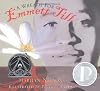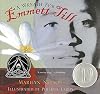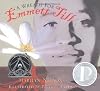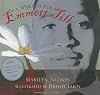
A Wreath for Emmett Till
by Marilyn Nelson
On This Page
Description
This illustrated poetry collection eulogizes Emmett Till, an African American man who was killed in a brutal, racially motivated lynching in 1955.Tags
Recommendations
Member Reviews
Only Marilyn Nelson can take one of the most hideous events of the 20th century and make of it something glorious: An intricate cycle of 15 sonnets—an Heroic Crown, in which the last sonnet is made up of the first lines of the previous 14. As she considers the lynching of Emmett Till, she uses the traditional “language of flowers,” plaiting rosemary for remembrance, heliotrope for justice, daisies for innocence through her wreath. Individual poems speak in the voices of a witnessing tree and of Mamie Till Mobley, and broaden the mourning to include all victims of violence. It’s a towering achievement, one whose power and anger and love will make breath catch in the throat and bring tears to the eyes. Children’s book newcomer show more Lardy’s illustrations are bold and powerful, appropriately choosing disturbing imagery over depictions that are more realistic. The poem is followed by a brief account of Till’s lynching, glosses on the individual poems and an essay from the artist explaining his choices of imagery. The latter two are rather unfortunate additions, as the words, purified in the crucible of the form, speak eloquently enough on their own. (Poetry. 12+)
-Kirkus Review show less
-Kirkus Review show less
A Wreath for Emmett Till is an extended poem written as a heroic crown of sonnets, a form that uses 15 sonnets in which the last line of each sonnet (or a slight variation of that line) forms the first line of the next sonnet, except for the final sonnet that is made up of the first line of each of the preceding sonnets. Sounds complicated, right? The effect is marvelous though, especially considering that Nelson’s final sonnet is also an acrostic spelling out RIP Emmett Till. Nelson’s subject is dark – the brutal murder of an innocent 14-year-old boy, Emmett Till, in the 1960s South brought about because of racial prejudices. Both Nelson’s and Lardy’s illustrations reflect the tragedy of this event but also point toward hope show more for a better future. Nelson evokes a number of literary predecessors and historical and modern events in her extended sonnet, which she explains in detail in the back of the book (don’t you wish all poems, especially those for young readers, came with a detailed explanation of the poem’s meaning?). There’s also an accompanying artist’s note explaining the meanings behind the illustrations. The supplementary material also includes a brief history of Emmett Till’s life and tragic death for those unfamiliar with the story and print and Web references for those who want to learn even more. Overall, this is a beautifully executed work on an important subject. show less
Over the years I’ve attempted to write several sonnets with varying degrees of success. Generously speaking, I have two sonnets worthy of sharing. Nelson has written a heroic crown of sonnets to tell the story of Emmett Till. Just try writing one of these! Not only does she use a 14-lined iambic pentameter device (Petrarchan) for each poem, but also each sonnet is linked. The last line of the first sonnet becomes the first line of the next. The 15th sonnet is composed of the first line of the previous 14 sonnets. Additionally, the first letter from each of the lines in the 15th sonnet spells out the phrase, “R.I.P. Emmett L. Till.”
The form is so excruciatingly exact, classical, and formal; it describes, perhaps, the ugliest, show more sickest, worst, random act of violence in our country’s history. The juxtaposition of exacting form and unspeakable cruelty produces a book that need not apologize to those who (mistakenly) view YA literature as “lit lite.” The illustrations with blood red trees and Janus-like crows that speak of both death and deliverance reinforce the poems’ themes in ways that words cannot.
Far too few students know about Emmett Till. Here is a book brimming with literary quality and a message that is both beautiful and filled with horror. The total package is one that must command the attention of the Printz Committee. Put this book into the hands of every high school advanced placement teacher for both literature and history. Don’t be surprised when this book reaps all sorts of awards. Don’t be surprised to find that you need a box of tissues to read this remarkable collection of sonnets. show less
The form is so excruciatingly exact, classical, and formal; it describes, perhaps, the ugliest, show more sickest, worst, random act of violence in our country’s history. The juxtaposition of exacting form and unspeakable cruelty produces a book that need not apologize to those who (mistakenly) view YA literature as “lit lite.” The illustrations with blood red trees and Janus-like crows that speak of both death and deliverance reinforce the poems’ themes in ways that words cannot.
Far too few students know about Emmett Till. Here is a book brimming with literary quality and a message that is both beautiful and filled with horror. The total package is one that must command the attention of the Printz Committee. Put this book into the hands of every high school advanced placement teacher for both literature and history. Don’t be surprised when this book reaps all sorts of awards. Don’t be surprised to find that you need a box of tissues to read this remarkable collection of sonnets. show less
Review #one This Printz honor award and Coretta Scott King award winning book is a powerful poem telling the story of Emmett Till.
At times the message punches and then, the author uses flowers as a softer medium to tell the story of young Emmett Till who died at the age of 14 at the hands of bigoted white men.
A stutterer, Emmett's mother told him to whistle when he was stuttering or nervous. This whistle was perceived as a black man whistling at a white woman.
1955 was a time of severe racial tension. When Emmett's mutilated body was found, his mother insisted there be an open casket so the world could see just what bigotry does!
Lynched, beaten beyond recognition, his swollen body, found in a river, showed a cotton gin fan with barbed show more wire strung around his neck.
When those who were guilty of Emmett's murder were acquitted, many believe this ushered in the Civil Rights movement.
REVIEW #2
This is a re-read for me. Because I own so many books, and have the habit of going to the library to check out more than I can read in the allotted time, I don't usually read a book more than once. But, because I first read this prior to immersing myself in learning about the Civil Rights movement, I wanted to get clearer insights regarding one of the major events that sparked and propelled Civil Rights forward.
His father was killed in the service because of an accusation of making advances, perhaps raping a white woman. How strangely tragic it was that things came full circle for poor Emmett Till.
Emmett Till was what some would say "a mommy's baby." He did not know his father, but had step fathers, some who were important in his life. But, after the relationships faded, Emmett and his mother were dependent on each other.
Close to his mother and family, he was an attractive, over weight, fun loving prankster of a boy. Some noted that while he could be shy, he also loved to be the center of attention. At times, his dare devil attitude and behavior resulted in trouble. Terribly, when at 14 he visited Money, Mississippi, his behavior resulted in death.
A wonderful poet, the author cleverly, expertly uses sophisticated poetry to express the sadness, and horror that resulted when Emmett and cousins defied Uncle Moses rules and, unknown to his Uncle, visited Bryant's store.
As the end of one poem becomes the beginning of the next, Marilyn Nelson uses the significance and meaning of various flowers, including Rosemary for remembrance, and rue, yew and cypress for grief.
No one knows for sure what happened on August 28, 1955. Did the fun loving jokester from Chicago suburbs forget that he was thick in the delta of bigotry. Did he, as Bryant's wife reported, make illicit comments to her, touching her hand while smiling and collecting his change from a bubble gum purchase?
What is know is that four days later, at approximately 2:30 a.m. Roy Bryant, Carolyn's husband, and his half brother J.W. Milam kidnapped Till from Emmett's Uncle Moses Wright's home.
The dramatic poetic form of the beating beyond recognition and the shot gun hole left in his head, renders this imagery difficult to absorb.
Read this and weep for a boy too soon gone. Cry for the ugly hatred and bigotry in a culture that could not abide by any one whom they thought did not know their place.
Five Stars show less
At times the message punches and then, the author uses flowers as a softer medium to tell the story of young Emmett Till who died at the age of 14 at the hands of bigoted white men.
A stutterer, Emmett's mother told him to whistle when he was stuttering or nervous. This whistle was perceived as a black man whistling at a white woman.
1955 was a time of severe racial tension. When Emmett's mutilated body was found, his mother insisted there be an open casket so the world could see just what bigotry does!
Lynched, beaten beyond recognition, his swollen body, found in a river, showed a cotton gin fan with barbed show more wire strung around his neck.
When those who were guilty of Emmett's murder were acquitted, many believe this ushered in the Civil Rights movement.
REVIEW #2
This is a re-read for me. Because I own so many books, and have the habit of going to the library to check out more than I can read in the allotted time, I don't usually read a book more than once. But, because I first read this prior to immersing myself in learning about the Civil Rights movement, I wanted to get clearer insights regarding one of the major events that sparked and propelled Civil Rights forward.
His father was killed in the service because of an accusation of making advances, perhaps raping a white woman. How strangely tragic it was that things came full circle for poor Emmett Till.
Emmett Till was what some would say "a mommy's baby." He did not know his father, but had step fathers, some who were important in his life. But, after the relationships faded, Emmett and his mother were dependent on each other.
Close to his mother and family, he was an attractive, over weight, fun loving prankster of a boy. Some noted that while he could be shy, he also loved to be the center of attention. At times, his dare devil attitude and behavior resulted in trouble. Terribly, when at 14 he visited Money, Mississippi, his behavior resulted in death.
A wonderful poet, the author cleverly, expertly uses sophisticated poetry to express the sadness, and horror that resulted when Emmett and cousins defied Uncle Moses rules and, unknown to his Uncle, visited Bryant's store.
As the end of one poem becomes the beginning of the next, Marilyn Nelson uses the significance and meaning of various flowers, including Rosemary for remembrance, and rue, yew and cypress for grief.
No one knows for sure what happened on August 28, 1955. Did the fun loving jokester from Chicago suburbs forget that he was thick in the delta of bigotry. Did he, as Bryant's wife reported, make illicit comments to her, touching her hand while smiling and collecting his change from a bubble gum purchase?
What is know is that four days later, at approximately 2:30 a.m. Roy Bryant, Carolyn's husband, and his half brother J.W. Milam kidnapped Till from Emmett's Uncle Moses Wright's home.
The dramatic poetic form of the beating beyond recognition and the shot gun hole left in his head, renders this imagery difficult to absorb.
Read this and weep for a boy too soon gone. Cry for the ugly hatred and bigotry in a culture that could not abide by any one whom they thought did not know their place.
Five Stars show less
This is a beautiful book of sonnets dedicated to Emmett Till. He had the whole world in front of him, but it was shortly cut off by an inconceivable act of ignorance. The sonnets make connections between the murder of Emmett with more recent issues such as 9/11.
In 1955, Emmett Till, a 14-year-old boy, was lynched while visiting relatives in Mississippi. This brutal murder contributed to the rise of the Civil Rights movement; it is a tragic and haunting moment in American history. Unlike so many victims of lynching and other hate crimes, the details of Emmett Till’s death have never been suppressed. His mother held an open casket funeral attended by thousands of mourners and recorded on film so that the image of Till’s ravaged face has remained a chilling part of American consciousness. In A Wreath for Emmett Till, poet Marylyn Nelson evokes this image, describing in vivid allegorical and literal detail the effects of Till’s murder on his body, on the surrounding environment, and its show more great lasting impact on this nation.
Wreath is a poem consisting of 14 Petrarchan sonnets. Its format is Heroic Crown, meaning it ends with a 15th sonnet made up of the first lines of the previous 14. Before her devotional poem begins, Nelson explains the form to her young readers, as well as her relationship to the story of Emmett Till and why she chose the heroic crown format for her composition. This short introduction provides a formula through which readers can begin to understand and deconstruct the poem, without explaining in detail who Till was and what happened to him. As a result, to those readers who are unfamiliar with Till’s story, the poem conveys with vivid imagery and tearful remembrance a tale that unravels in stages, but does not explicate the circumstances of his life or death. The poem is moving in a different way to readers who know about Till’s terrible murder and are able to fill in the holes of the poem’s narrative, so that their feelings about the event can intermingle with Nelson’s. The poem is effective to both types of audiences, elegantly crafted and enhanced by the wonderful illustrations of Philippe Lardy, whose imagery focuses on many of the symbols that are elemental to the poem. The images and text are laid out symbiotically in this beautiful book, and while the individual sonnets and illustrations can stand alone on their own merits, the reader is compelled to finish the book in one sitting by its progressive and cyclical structure. The poem begins as the author wonders which flowers with their corresponding meanings would best suit a wreath made to memorialize Emmett Till, then begins to ponder how the tree that played a vital and unconscious role in the lynching was effected by this savage murder, and how Till’s mother and the rest of the world was forever changed by this brutal event. In the end, the poem returns to the idea of the wreath, begins to construct a bouquet, and warns against forgetfulness, proscribing that “we stand before the populace,/ orators denouncing the slavery to fear.” Finally, the last sonnet, which is built from the first lines of the previous, is simply a miracle, and delivers a stunning surprise to the reader.
A Wreath for Emmett Till is an excellent choice for readers of about 12 years of age to adult. It is fundamentally a beautiful poem, intense, sad, and energetic, and its provocative illustrations help to concretely conceptualize the poem’s imagery and symbolism. The absence of biographical detail about Till in the poem’s introduction is a conscious and excellent choice. Instead, Nelson presents a prose narrative after the last of the sonnets that succinctly clarifies many questions about his life and death. In addition, Nelson provides a sonnet-by-sonnet break down of the literary allusions and allegorical meanings behind her work, making it easy to understand and appreciate, and supplying a great teaching tool for any student learning about the art of poetry. The book concludes with an Artist’s Note, wherein the illustrator explains her work and how her choices were influenced by the poem. This gorgeous book is crucial to any school or public library collection. show less
Wreath is a poem consisting of 14 Petrarchan sonnets. Its format is Heroic Crown, meaning it ends with a 15th sonnet made up of the first lines of the previous 14. Before her devotional poem begins, Nelson explains the form to her young readers, as well as her relationship to the story of Emmett Till and why she chose the heroic crown format for her composition. This short introduction provides a formula through which readers can begin to understand and deconstruct the poem, without explaining in detail who Till was and what happened to him. As a result, to those readers who are unfamiliar with Till’s story, the poem conveys with vivid imagery and tearful remembrance a tale that unravels in stages, but does not explicate the circumstances of his life or death. The poem is moving in a different way to readers who know about Till’s terrible murder and are able to fill in the holes of the poem’s narrative, so that their feelings about the event can intermingle with Nelson’s. The poem is effective to both types of audiences, elegantly crafted and enhanced by the wonderful illustrations of Philippe Lardy, whose imagery focuses on many of the symbols that are elemental to the poem. The images and text are laid out symbiotically in this beautiful book, and while the individual sonnets and illustrations can stand alone on their own merits, the reader is compelled to finish the book in one sitting by its progressive and cyclical structure. The poem begins as the author wonders which flowers with their corresponding meanings would best suit a wreath made to memorialize Emmett Till, then begins to ponder how the tree that played a vital and unconscious role in the lynching was effected by this savage murder, and how Till’s mother and the rest of the world was forever changed by this brutal event. In the end, the poem returns to the idea of the wreath, begins to construct a bouquet, and warns against forgetfulness, proscribing that “we stand before the populace,/ orators denouncing the slavery to fear.” Finally, the last sonnet, which is built from the first lines of the previous, is simply a miracle, and delivers a stunning surprise to the reader.
A Wreath for Emmett Till is an excellent choice for readers of about 12 years of age to adult. It is fundamentally a beautiful poem, intense, sad, and energetic, and its provocative illustrations help to concretely conceptualize the poem’s imagery and symbolism. The absence of biographical detail about Till in the poem’s introduction is a conscious and excellent choice. Instead, Nelson presents a prose narrative after the last of the sonnets that succinctly clarifies many questions about his life and death. In addition, Nelson provides a sonnet-by-sonnet break down of the literary allusions and allegorical meanings behind her work, making it easy to understand and appreciate, and supplying a great teaching tool for any student learning about the art of poetry. The book concludes with an Artist’s Note, wherein the illustrator explains her work and how her choices were influenced by the poem. This gorgeous book is crucial to any school or public library collection. show less
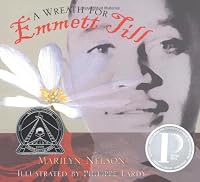
Ms. Nelson took this atrocious subject matter and for a brief moment lessens the pain long enough for readers to examine the artistry of the structuring of the poem. Just as the words were beautifully orchestrated so are the illustrations. The illustrator, Mr. Philippe Lardy not only echoes the horror of that night but he also interjects hope and change. Mr. Lardy uses coloration: red depicting blood suffering; browns and earthy colors for loss and oranges and yellows for hope; and symmetry: twin upright coffins illustrating the World Trade Center and numerous coffins including one with Emmett Till’s face showing various unknown victims. Mr. Lardy says about one image, "Emmett's face is surrounded by wreath or wires, chains, and show more thorns. This depicts the means of his murder, but is also a biblical reference to Jesus' crown and martyrdom." The illustrator offsets the cruelty of the subject matter with images of hope. show less
Members
- Recently Added By
Lists

Newbery Adjacent
747 works; 3 members

Authors and Works mention in The Craft
20 works; 1 member
Author Information

31+ Works 2,622 Members
Marilyn Nelson is the author of numerous books, including The Cachoeira Tales and Other Poems, The Fields of Praise, and Magnificat. Her honors include three National Book Award Finalist medals, the Frost Medal, the Poets' Prize, and the Boston Globe/Hornbook Award. Nelson is an emeritus professor at the University of Connecticut, the former poet show more laureate of Connecticut, and founder and director of Soul Mountain Retreat. show less
All Editions
Awards and Honors
Awards
Distinctions
Notable Lists
Work Relationships
Has as a student's study guide
Common Knowledge
- Canonical title
- A Wreath for Emmett Till
- Original publication date
- 2005
- People/Characters
- Emmett Till
- Important places
- Mississippi, USA
- Important events
- Lynching of Emmett Till
- Dedication
- For innocence murdered. For innocence alive. --M.N.
To Ariane. --P.L. - First words
- Introduction: I was nine years old when Emmett Till was lynched in 1955.
Rosemary for remembrance, Shakespeare wrote:
a speech of poor Ophelia, who went mad
when her love killed her father. - Last words
- (Click to show. Warning: May contain spoilers.)Let me gather spring flowers for a wreath:
Trillium, apple blossoms, Queen Anne's lace,
Indian pip, bloodroot, white as moonbeams,
Like the full moon, which smiled calmly on his death,
Like his gouged eye, which watched boots kick his face.
(Click to show. Warning: May contain spoilers.)Sonnet notes:This last sonnet is composed of the first lines from the preceding fourteen sonnets.
Classifications
Statistics
- Members
- 565
- Popularity
- 52,087
- Reviews
- 38
- Rating
- (4.41)
- Languages
- English
- Media
- Paper, Ebook
- ISBNs
- 9
- UPCs
- 1
- ASINs
- 4