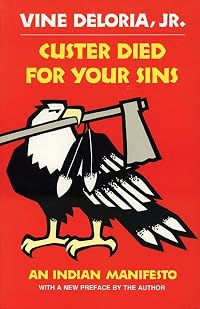
Custer Died for Your Sins: An Indian Manifesto
by Jr. Vine Deloria
On This Page
Description
History. Sociology. Nonfiction. Standing Rock Sioux activist, professor, and attorney Vine Deloria, Jr., shares his thoughts about U.S. race relations, federal bureaucracies, Christian churches, and social scientists in a collection of eleven eye-opening essays infused with humor. This "manifesto" provides valuable insights on American Indian history, Native American culture, and context for minority protest movements mobilizing across the country throughout the 1960s and early 1970s. show more Originally published in 1969, this book remains a timeless classic and is one of the most significant nonfiction works written by a Native American. show lessTags
Recommendations
















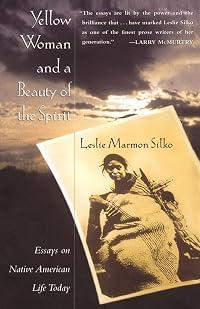

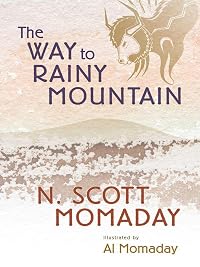
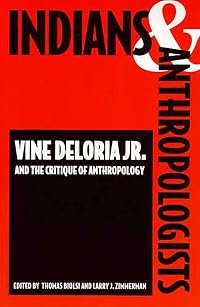
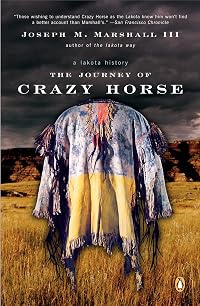




Member Recommendations
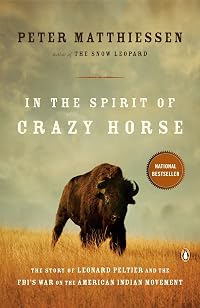
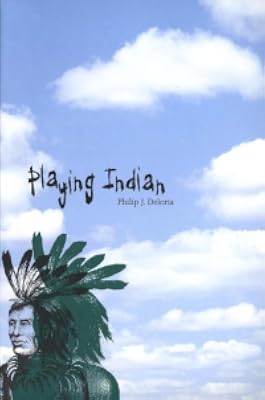
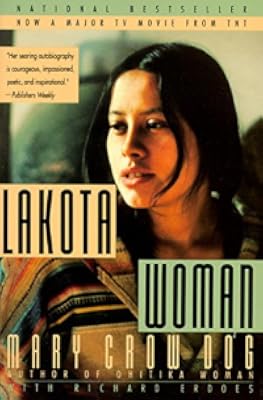
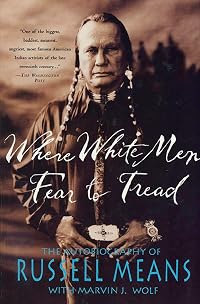
Sandydog1 Both are excellent overviews of US policy towards Native Americans.
Member Reviews
The aspect (situation and outlook) of American Indians is so subsumed in popular American consciousness that the history of Native Americans may have well as ended with Custer or, at most, Wounded Knee in the mind of the typical Americans. This incisive & witty account presents a land-based, rooted point of view that suggests something that is neither majority nor minority. It can be unimpressed with Civil Rights movements without being racist. Here is a sample of the mental reboots container herein:
"The Republican Party has ostensibly stood for less government as a political philosophical position. But when you listen carefully to the Republicans you do not really hear less government, you hear a strange religion of early Puritan show more mythology. The Republican Party is in reality the truest expression of America's religion of progress and white respectability. It stands for the white superman who never existed. The peddler's grandson who conquered the unknown by inheriting a department store—such is the basic American religion unmasked. The measure of America's willingness to examine the basis of its existence is to be counted in the number of registered voters who claim to be Republicans.
The measure of truth in the above assertion is the Republican willingness to lose elections rather than depart from cherished doctrines and myths. Only a religion can attract and hold such loyalty.
The other party is something else. Popular conceptions gloss over reality and continue the Rooseveltian myth that the Democrats are the party of the people. The old Roosevelt coalition of labor, minority and ethnic groups, and farmers fails to acknowledge one unpublicized member—the special interests."
- Vine Deloria, Jr., "Custer Died for your Sins"
. show less
"The Republican Party has ostensibly stood for less government as a political philosophical position. But when you listen carefully to the Republicans you do not really hear less government, you hear a strange religion of early Puritan show more mythology. The Republican Party is in reality the truest expression of America's religion of progress and white respectability. It stands for the white superman who never existed. The peddler's grandson who conquered the unknown by inheriting a department store—such is the basic American religion unmasked. The measure of America's willingness to examine the basis of its existence is to be counted in the number of registered voters who claim to be Republicans.
The measure of truth in the above assertion is the Republican willingness to lose elections rather than depart from cherished doctrines and myths. Only a religion can attract and hold such loyalty.
The other party is something else. Popular conceptions gloss over reality and continue the Rooseveltian myth that the Democrats are the party of the people. The old Roosevelt coalition of labor, minority and ethnic groups, and farmers fails to acknowledge one unpublicized member—the special interests."
- Vine Deloria, Jr., "Custer Died for your Sins"
. show less
Interesting as a time capsule. Lots of names dropped and scores settled. Not quite an entry level book, this clearly assumes at least passing familiarity with the current events of the mid 60s in both the civil rights movement and Indian affairs. Engagingly written and makes compelling points about both history and what Deloria sees as next steps for the movement.
It seemed like this was "required reading" for folks interested in Native American issues so I bought a used copy and it's been on my shelf for a few years. Well I started reading it and there was a few insights I gleaned but I found a lot of statements the author made that were presented as fact but he never listed his source. One particular statement he presented as fact was that the U.S. government gave Indians blankets infected with small pox. I had thought that this had been debunked and so I googled it. I found that it's a little bit of an ambiguous idea rooted some in fact and some in speculation. Small pox unquestionably was devastating t Native Americans. How the disease was actually introduced to Tribes is the question. I show more would not doubt the idea that biological warfare was used against Native Americans considering all the other atrocities inflicted but there doesn't appear to be any record of disease infested blankets being handed out. The only thing I could find was a record of British soldiers giving smallpox blankets out but not the U.S. government or soldiers.
I also read that a University of Colorado professor, Ward Churchill, started the "blanket" idea in book titled "A little Matter of Genocide" published in 2001. Vine Deloria Jr., in this book, published in 1969, writes "In the old days blankets infected with smallpox were given to the tribes in an effort to decimate them." Churchill says his source was a 1987 book, "American Indian Holocaust and Survival", by Russell Thornton, an anthropology professor at UCLA. But where did Deloria get the idea?
Also he writes as though every Native American thinks like he does. That's not the case, opinions greatly vary from tribe to tribe, person to person in Indian Country. Maybe I'm missing something because I didn't finish the book but that's the impression I got.
There are more mental notes I made but I'm to lazy to spell it out, lol! Besides, a word of wisdom I hears was "don't disparage the dead", so I wont talk to badly about Mr. Deloria.
One other thing. He mentions the Shoshone Chief Washakie once. I'm a non-enrolled member of the Easter Shoshone Tribe and my Great-Great Grandfather and Washakie's 1st cousin, John Enos, is buried next to him at Ft. Washakie, WY. As I said, he mentions him once in the entire book, only to say that "Washakie, the Shoshone chief who tattled on the other tribes every chance he got and finally received a nice reservation in Wyoming was another early fink who was honored posthumously as a good guy." Dude...I don't necessarily care about what people think about Washakie, I've no dog in the fight, but really? From my understanding, growing up on the Wind River, the "nice reservation in Wyoming" Washakie received, is a little more nuanced. Maybe expand on the guy a little. I think he was a good guy and recognized that fighting the whites was a losing battle and decided to save lives of his braves, women, children and elders by settling down and choosing the white way of life. Pretty wise in my opinion. So yeah, he did get a nice reservation for his people but it's much, much more detailed than Washakie "tattling" on other tribes.
I didn't finish this one, though I might yet still read the chapter on Indian Humor, and I have another book by Deloria "Red Earth, White Lies". I'll pass on reading that one. I've got enough of an idea what I'll be reading. show less
I also read that a University of Colorado professor, Ward Churchill, started the "blanket" idea in book titled "A little Matter of Genocide" published in 2001. Vine Deloria Jr., in this book, published in 1969, writes "In the old days blankets infected with smallpox were given to the tribes in an effort to decimate them." Churchill says his source was a 1987 book, "American Indian Holocaust and Survival", by Russell Thornton, an anthropology professor at UCLA. But where did Deloria get the idea?
Also he writes as though every Native American thinks like he does. That's not the case, opinions greatly vary from tribe to tribe, person to person in Indian Country. Maybe I'm missing something because I didn't finish the book but that's the impression I got.
There are more mental notes I made but I'm to lazy to spell it out, lol! Besides, a word of wisdom I hears was "don't disparage the dead", so I wont talk to badly about Mr. Deloria.
One other thing. He mentions the Shoshone Chief Washakie once. I'm a non-enrolled member of the Easter Shoshone Tribe and my Great-Great Grandfather and Washakie's 1st cousin, John Enos, is buried next to him at Ft. Washakie, WY. As I said, he mentions him once in the entire book, only to say that "Washakie, the Shoshone chief who tattled on the other tribes every chance he got and finally received a nice reservation in Wyoming was another early fink who was honored posthumously as a good guy." Dude...I don't necessarily care about what people think about Washakie, I've no dog in the fight, but really? From my understanding, growing up on the Wind River, the "nice reservation in Wyoming" Washakie received, is a little more nuanced. Maybe expand on the guy a little. I think he was a good guy and recognized that fighting the whites was a losing battle and decided to save lives of his braves, women, children and elders by settling down and choosing the white way of life. Pretty wise in my opinion. So yeah, he did get a nice reservation for his people but it's much, much more detailed than Washakie "tattling" on other tribes.
I didn't finish this one, though I might yet still read the chapter on Indian Humor, and I have another book by Deloria "Red Earth, White Lies". I'll pass on reading that one. I've got enough of an idea what I'll be reading. show less
I first found the book Custer Died For Your Sins, fittingly, on a field trip for an Intro to Post-Colonialism class. We went to the Smithsonian Museum of the American Indian where the book was on display. And, you know, it's a fun title, so I got a copy.
Unfortunately, Vine Deloria would probably not be impressed with my field trip or class or the institutionalization of "culture" in general. He spends an entire chapter making fun of the misguided and patronizing work of anthropology, often no-holds-barred scathing commentary:
"One workshop discussed the thesis that Indians were in a terrible crisis. They were, in the words of friendly anthro guides, BETWEEN TWO WORLDS. People between two worlds, the students were told, DRANK. For the show more anthropologists, it was a valid explanation of drinking on the reservation. For the young Indians, it was an authoritative definition of their role as Indians.
So they DRANK.
I lost some good friends who DRANK too much."
The book de-mythologizes the idealized Indian in the minds of many white Americans - e.g., Tonto or the Indians in Peter Pan, written by and for white impressions of the culture. But Deloria is also writing a specifically political manifesto concerning the status and rights of Indian nations at the end of the 1960s. So other chapters delve into the political struggles that American Indians have, both internally and externally. The black civil rights movement has a huge impact on the way that Deloria is thinking about Indians' civil rights. Yet he also resists the inclination to merely copy the success of black civil rights leaders - it wouldn't work, they're different minorities with different issues, and a simplification of different cultures with the status of "minority" is damaging to them all.
The relevance of this book 40 years later is ambiguous - certainly there are different political issues now, but there are still problems of marginalization and the tension between living with an American government and asserting independent nationhood. However, the book remains an interesting piece of history, and a strong voice of dissent on behalf of a group that has struggled to have its own say. show less
Unfortunately, Vine Deloria would probably not be impressed with my field trip or class or the institutionalization of "culture" in general. He spends an entire chapter making fun of the misguided and patronizing work of anthropology, often no-holds-barred scathing commentary:
"One workshop discussed the thesis that Indians were in a terrible crisis. They were, in the words of friendly anthro guides, BETWEEN TWO WORLDS. People between two worlds, the students were told, DRANK. For the show more anthropologists, it was a valid explanation of drinking on the reservation. For the young Indians, it was an authoritative definition of their role as Indians.
So they DRANK.
I lost some good friends who DRANK too much."
The book de-mythologizes the idealized Indian in the minds of many white Americans - e.g., Tonto or the Indians in Peter Pan, written by and for white impressions of the culture. But Deloria is also writing a specifically political manifesto concerning the status and rights of Indian nations at the end of the 1960s. So other chapters delve into the political struggles that American Indians have, both internally and externally. The black civil rights movement has a huge impact on the way that Deloria is thinking about Indians' civil rights. Yet he also resists the inclination to merely copy the success of black civil rights leaders - it wouldn't work, they're different minorities with different issues, and a simplification of different cultures with the status of "minority" is damaging to them all.
The relevance of this book 40 years later is ambiguous - certainly there are different political issues now, but there are still problems of marginalization and the tension between living with an American government and asserting independent nationhood. However, the book remains an interesting piece of history, and a strong voice of dissent on behalf of a group that has struggled to have its own say. show less
Finally sat down with a copy of this after, uh, 12 years. There are definitely parts of this that haven't aged well, but those are pretty minimal compared to the parts that have aged shockingly well. Deloria is an extremely charming, thoughtful writer that I hope to read more of.
Read in 2016 -- dated now but worth the read for Deloria's wit and philosophy. A window into a period of time. Upsetting how little has changed for many tribes.
Deloria's perspective on U.S. history was both discomforting and eye-opening. Whenever someone (clearly caucasian) tells me about their Cherokee princess great-great grandmother, I think of Vine Deloria's book.
Members
- Recently Added By
Lists

Native American / Indigenous Literature
172 works; 100 members

Top 100 books by Indigenous Masters
134 works; 7 members

r/AskHistorians' Recommended Books
1,068 works; 19 members
Author Information

39+ Works 4,638 Members
Vine Deloria, Jr. (1933-2005) was born and raised in South Dakota, the son and grandson of Dakota Sioux Indian leaders. In 1965, he began serving as the Executive Director of the National Congress of American Indians, and worked tirelessly to mobilize Indian people toward effective participation in the American political process. A noted scholar show more of American Indian legal, political and religious studies, he is the author of numerous works, including the 1969 bestseller Custer Died for Your Sins: An Indian Manifesto, God is Red (1973) and The Metaphysics of Modern Existence (1979). show less
Some Editions
Awards and Honors
Work Relationships
Common Knowledge
- Canonical title
- Custer Died for Your Sins: An Indian Manifesto
- Original publication date
- 1969
- First words
- Indians are like the weather.
- Quotations
- The truth is that practically the only thing the white man ever gave the Indian was disease and poverty. To imply that Indians were given land is to completely reverse the facts of history. (p 35)
- Last words
- (Click to show. Warning: May contain spoilers.)It is up to us to write the final chapter of the American Indian upon this continent.
- Canonical DDC/MDS
- 970.1; 973
- Canonical LCC
- E93
- Disambiguation notice
- Please do not list as part of a series. Only the recent reprint is part of a series.
Classifications
Statistics
- Members
- 1,306
- Popularity
- 18,627
- Reviews
- 15
- Rating
- (3.99)
- Languages
- 7 — Dutch, English, French, German, Italian, Spanish, Swedish
- Media
- Paper, Audiobook, Ebook
- ISBNs
- 12
- ASINs
- 25