On This Page
Description
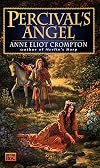
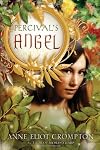
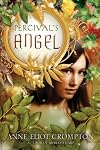
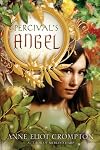
Lili's eyes can see in the dark like an owl. She can sense spirit auras of all creatures and perform magic more powerful than most. But because Lili is Fey, she does not possess the world's greatest power-the Human Heart. Lili wants to understand Heart more than anything and her human friend Percy is just the right person to help.Together they begin a treacherous journey-for nothing is more dangerous than finding true love.
"Crompton succeeds in incorporating the mysticism of medieval show more romance into her fantasy...This well-written fantasy can be compared to Katherine Paterson's Parzival and will please the insatiable fans of Arthurian legend."
-VOYA
"Readers looking for a decidedly different take on the popular reconstructionist view of Arthur and the Knights of the Round Table will find much to enjoy and consider in Crompton's latest book."
-The SF Site
. show less
Tags
Recommendations
























Member Recommendations
Member Reviews
'Percival's Angel' is set in the same world as 'Merlin's Harp,' (see my review of that book for feelings that apply equally to this novel) but it works very well as a stand-alone novel. Readers will benefit to a degree from having some of the background of the world, and backstory on minor characters if they've read the previous book, but it's not at all necessary.
The story is loosely based on the tales of the Knight of the Round Table, Percival, and the quest for the Holy Grail - but it's really about clashes between cultures, conflicts between people, and the search for meaning in life... like so many 'quest' stories.
The novel follows Lili, a girl of the fey, as she follows her childhood friend, Percy, out of the protected forest show more where her people live in isolation. Percival's mother took him into the forest as a babe, hoping to keep him from ever becoming a knight - a calling that proved the death of all her previous children. Regardless, Percival seeks to break free of his mother. Lili seeks to help him, and discover the power of the human heart, which Merlin has told her about, and which, as a member of the fey, she feels that she lacks.
Soon enough, Percival is recruited into the Quest for the Grail... which is simply a story that Merlin made up, to keep troublesome knights occupied in peacetime. But where humans believe, power is lent...
I didn't like this book quite as much as Merlin's Harp, but it's still a beautiful work of mythic fiction, rich in layers of meaning.
I liked it enough that, as soon as I finished it, I ordered Crompton's third book based on Arthurian tales (Gawain). show less
The story is loosely based on the tales of the Knight of the Round Table, Percival, and the quest for the Holy Grail - but it's really about clashes between cultures, conflicts between people, and the search for meaning in life... like so many 'quest' stories.
The novel follows Lili, a girl of the fey, as she follows her childhood friend, Percy, out of the protected forest show more where her people live in isolation. Percival's mother took him into the forest as a babe, hoping to keep him from ever becoming a knight - a calling that proved the death of all her previous children. Regardless, Percival seeks to break free of his mother. Lili seeks to help him, and discover the power of the human heart, which Merlin has told her about, and which, as a member of the fey, she feels that she lacks.
Soon enough, Percival is recruited into the Quest for the Grail... which is simply a story that Merlin made up, to keep troublesome knights occupied in peacetime. But where humans believe, power is lent...
I didn't like this book quite as much as Merlin's Harp, but it's still a beautiful work of mythic fiction, rich in layers of meaning.
I liked it enough that, as soon as I finished it, I ordered Crompton's third book based on Arthurian tales (Gawain). show less
This is a strange book with odd shifts in deixis, verb tense, and perspective. It's dream-like in its confusions, and while this works and I enjoyed it, I can't help but imagine what someone with more resources might have done with the ideas. I might read it again, to think about the strangeness (especially odd syntax without a subject), but I can't say why.
Have you ever had a random food craving—random in that it is for something you rarely eat, and doesn’t even qualify as one of your “guilty pleasures,” either? Say it’s for chocolate. (Oh dear, this analogy is breaking down already … isn’t chocolate everyone’s guilty pleasure?) What you really want is some high-brand dark, but your co-worker tosses you a tin-foil wrapped mystery chocolate that she was given at Halloween, and you decide to try it to tide it over. It’s not that great—actually, you admit to yourself, it’s pretty terrible—but somehow it still satisfies that basic craving. Well, that’s pretty much what happened with me and Percival’s Angel.
It’s been a couple of years since I last read an show more Arthurian novel, but while at a used bookstore, I had an unforeseen urging to pick one up. I did not want it to be something I’d read before, I did not want it to be too long, and I certainly did not want it to be the first book in a series. In other words, I was looking for a quick fix. I got it with Crompton’s book, and can now move on to other things, but there’s still that gnawing conviction that I could have chosen something better.
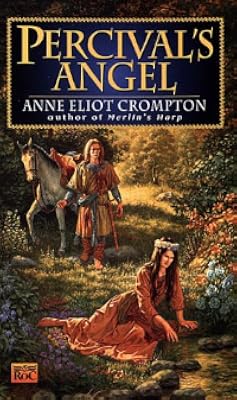
Percival has spent his entire life in the Fey Forest; his mother Alanna, her niece Ivie, and their faithful steward Edik brought him there when he was only a week old, in order to keep him from knighthood and eventual death. The Forest is a strange place, and Percival has never quite felt at home there, despite the fact that he has a protector in Nimway, the Lady of the Lake, and one true friend in the young Fey Lili. When a band of knights rides through, he finally discovers what he has been longing for, and sets out to become a knight. Lili comes with him, for she has a quest of her own: to gain a Human Heart.
There were a few things I found to like about the book. For one, the opening chapters set in the Fey Forest feature some very nice, dreamy writing, and the choice to use first person present tense for Lili’s point-of-view contrasts nicely with the third person past used for the human characters. Crompton sees these two races as diametrically opposed, with the Fey lacking the power of the Human Heart but gaining a simplicity, a clarity, and a freedom that mortals lack. (This must make things interesting for half-Fey such as Merlin.) Lili’s desire for a Human Heart reminds me a bit of the heroine of Andersen’s “The Little Mermaid,” who longs to have an immortal soul. This was one of the more interesting aspects in the book, although Nimway’s sorrow was also compelling, and although Alanna was a little difficult to get used to, in later chapters she emerged as a truly complex person, a woman who purposely lied to her son and dressed him up as a fool, that he might be mocked and derided and eventually come back to her.
Given that Percival is one of the most distinctive characters in the Arthurian legend—the sinless fool, the tarnished saint—Crompton’s characterization of him is more than a little disappointing. In her version, he’s a block-headed killing machine without a conscience, whose favorite word is “g**d***.” (Probably the weirdest feature of Crompton’s prose is the juxtaposition of such modern-sounding terms as this with high, flowery medieval language. “Lo, g**d***.” Yeah. That bad.)
Much of what happens in the last half doesn’t even make sense. The Grail is worked into this story in the oddest way—I can’t even recall now how it was first brought up, and by the end everyone seems to have pretty much forgotten about it, although there wasn’t that much going on to distract them from such a high and lofty goal. It’s not exactly clear how Lili ended up gaining her Human Heart, or how Percival suddenly became a halfway decent fellow. Maybe because they had sex? Ugh, that’s just nasty. Not sex itself, of course, but the concept that it is a cure for all ills. Finally, there was all the religious imagery—the figure of Mary in this story seems to have real power, and when Lili encounters good people she often sees angels guarding them. I was looking forward to seeing how Crompton would develop the conflict (or lack thereof) between medieval Christianity and the pagan ways of the Fey, but she never really does anything decisive in that area. That was a major failing of the book: great ideas, but no development.
I can’t see myself recommending this book to anyone, even fellow fans of Arthurian fiction. On the other hand, it did satisfy my random craving, so I can’t say I absolutely hated it either. show less
It’s been a couple of years since I last read an show more Arthurian novel, but while at a used bookstore, I had an unforeseen urging to pick one up. I did not want it to be something I’d read before, I did not want it to be too long, and I certainly did not want it to be the first book in a series. In other words, I was looking for a quick fix. I got it with Crompton’s book, and can now move on to other things, but there’s still that gnawing conviction that I could have chosen something better.
Percival has spent his entire life in the Fey Forest; his mother Alanna, her niece Ivie, and their faithful steward Edik brought him there when he was only a week old, in order to keep him from knighthood and eventual death. The Forest is a strange place, and Percival has never quite felt at home there, despite the fact that he has a protector in Nimway, the Lady of the Lake, and one true friend in the young Fey Lili. When a band of knights rides through, he finally discovers what he has been longing for, and sets out to become a knight. Lili comes with him, for she has a quest of her own: to gain a Human Heart.
There were a few things I found to like about the book. For one, the opening chapters set in the Fey Forest feature some very nice, dreamy writing, and the choice to use first person present tense for Lili’s point-of-view contrasts nicely with the third person past used for the human characters. Crompton sees these two races as diametrically opposed, with the Fey lacking the power of the Human Heart but gaining a simplicity, a clarity, and a freedom that mortals lack. (This must make things interesting for half-Fey such as Merlin.) Lili’s desire for a Human Heart reminds me a bit of the heroine of Andersen’s “The Little Mermaid,” who longs to have an immortal soul. This was one of the more interesting aspects in the book, although Nimway’s sorrow was also compelling, and although Alanna was a little difficult to get used to, in later chapters she emerged as a truly complex person, a woman who purposely lied to her son and dressed him up as a fool, that he might be mocked and derided and eventually come back to her.
Given that Percival is one of the most distinctive characters in the Arthurian legend—the sinless fool, the tarnished saint—Crompton’s characterization of him is more than a little disappointing. In her version, he’s a block-headed killing machine without a conscience, whose favorite word is “g**d***.” (Probably the weirdest feature of Crompton’s prose is the juxtaposition of such modern-sounding terms as this with high, flowery medieval language. “Lo, g**d***.” Yeah. That bad.)
Much of what happens in the last half doesn’t even make sense. The Grail is worked into this story in the oddest way—I can’t even recall now how it was first brought up, and by the end everyone seems to have pretty much forgotten about it, although there wasn’t that much going on to distract them from such a high and lofty goal. It’s not exactly clear how Lili ended up gaining her Human Heart, or how Percival suddenly became a halfway decent fellow. Maybe because they had sex? Ugh, that’s just nasty. Not sex itself, of course, but the concept that it is a cure for all ills. Finally, there was all the religious imagery—the figure of Mary in this story seems to have real power, and when Lili encounters good people she often sees angels guarding them. I was looking forward to seeing how Crompton would develop the conflict (or lack thereof) between medieval Christianity and the pagan ways of the Fey, but she never really does anything decisive in that area. That was a major failing of the book: great ideas, but no development.
I can’t see myself recommending this book to anyone, even fellow fans of Arthurian fiction. On the other hand, it did satisfy my random craving, so I can’t say I absolutely hated it either. show less
Eh. This book has a lot going for it: an Arthurian retelling that's not centered around King Arthur, a fantasy plot that appeals to more than just King Arthur fans, and a perspective on the Arthurian legend other than a knight's. There's not much action to the plot, but it's not boring. What makes this novel "eh" is that it can be confusing. Maybe I should have read another version of the legend first (Wolfram von Eschenbach's 400+ page Parzival is sitting on my shelf), but there were places in the book that just didn't make much sense. They weren't really random, it was just that their importance in the story, as well as how the story had led up to them, was left unexplained. It became frustrating after a while, especially since show more Crompton's otherwise a good author and writes an interesting retelling. It's left me with mixed opinions on Percival's Angel. show less
Lili is fey, once part of the Children Guard. She yearns to learn about the human heart and this power called "Love", that Merlin speaks of. Her friend Percy is a human that was raised in the Fey Forest. Never knowing of King Arthur or his Knights. They embark on a journey together to the human world to seek out what they most desire.
Percival's Angel is the third book in Crompton's Arthurian series and my first time delving into the series. A mystical and magical tale. The writing is like nothing I've read before. It's written in such a way that is almost poetic, which made for a delightful story. I was most intrigued and in the end enjoyed reading it. I have always loved the King Arthur legends, especially from the female point of show more view. I think fans of Fantasy and Arthurian Legends will like this one too. show less
Percival's Angel is the third book in Crompton's Arthurian series and my first time delving into the series. A mystical and magical tale. The writing is like nothing I've read before. It's written in such a way that is almost poetic, which made for a delightful story. I was most intrigued and in the end enjoyed reading it. I have always loved the King Arthur legends, especially from the female point of show more view. I think fans of Fantasy and Arthurian Legends will like this one too. show less
Ratings
Members
- Recently Added By
Lists

Biggest Disappointments
606 works; 168 members

Best Arthurian Fiction
104 works; 33 members
Author Information
21+ Works 645 Members
Series

Belongs to Publisher Series
Piper (6515)
Common Knowledge
- Canonical title
- Percival's Angel
- Original publication date
- 1999
- People/Characters
- Lili; Percival; Alanna; Edik; Nimway
- Important places
- Apple Island (Avalon)
- First words
- Knee deep in Fey forest pool, I bend to see my own, new face. Today I am new. Today I am free.
- Last words
- (Click to show. Warning: May contain spoilers.)"Lili, goddamn! You shine so bright!"
Classifications
- Genres
- Fiction and Literature, Teen, Fantasy, Young Adult, Tween
- DDC/MDS
- 813.54 — Literature & rhetoric American literature in English American fiction in English 1900-1999 1945-1999
- LCC
- PZ7 .C879 — Language and Literature Fiction and juvenile belles lettres Fiction and juvenile belles lettres Juvenile belles lettres
- BISAC
Statistics
- Members
- 72
- Popularity
- 436,389
- Reviews
- 5
- Rating
- (2.88)
- Languages
- English, German
- Media
- Paper, Ebook
- ISBNs
- 5
- UPCs
- 1
- ASINs
- 1