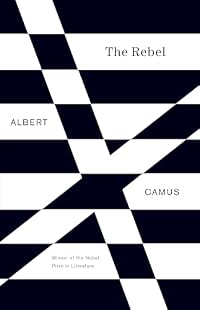
The Rebel: An Essay on Man in Revolt
by Albert Camus
On This Page
Description
By one of the most profoundly influential thinkers of our century, The Rebel is a classic essay on revolution. For Albert Camus, the urge to revolt is one of the "essential dimensions" of human nature, manifested in man's timeless Promethean struggle against the conditions of his existence, as well as the popular uprisings against established orders throughout history. And yet, with an eye toward the French Revolution and its regicides and deicides, he shows how inevitably the course of show more revolution leads to tyranny. As old regimes throughout the world collapse, The Rebel resonates as an ardent, eloquent, and supremely rational voice of conscience for our tumultuous times. show lessTags
Recommendations




Member Reviews
This “essay” (307 pages in English translation) is an extended analysis of the contradictory positive and negative elements of rebellion and how the negative elements can lead to the excesses of revolution. Rising up against slavery, oppression, injustice and other forms of domination is a positive. However, rebellion also has a potential negative side — the rejection of all restraints on liberty, the nihilist conclusion that everything is permitted and the political principle that the ends justify the means, including killing people to achieve a future ideal society. The book is relatively long because Albert Camus looks at these questions in a broad range of contexts: “metaphysical rebellion” against the human condition show more including the revolt against God who permits suffering (Prometheus, Cain and Abel, Epicurus and Lucretius, DeSade, Rimbaud, Lautreamont, Nietzsche, the Surrealists), “historical rebellion” consisting of political and social revolution against oppression (the French Revolution in particular Robespierre and Saint Just, the Russian terrorists of the 19th century, Hegel and Marx, and Russian communism), and art (Dostoyevsky). It is fascinating the way Camus tracks his theme among these various thinkers and movements and draws out the differences and similarities among them.
The fundamental question Camus poses in the essay is whether premeditated murder to achieve a political goal can be justified. The analysis starts with the concept of the absurd which Camus developed in the Myth of Sisyphus. Just as he concluded in the earlier work that suicide was not justified, in this work he rejects a logic of murder. However, he is not willing to deny the positive aspects of revolt because that would amount to acceptance of the status quo with all its injustices. At the same time, he cannot accept the historical logic that leads to revolution ending in a police state. His solution is to assert that there are values outside of history that counter nihilism or a historical logic that worships only the efficacy of results. These values are reflected and arise in the individual’s act of rebellion and include solidarity, equality, freedom of speech, and civil and natural rights. They provide a basis for rules of political action that limit excesses in the exercise of liberty and the establishment of justice. The rebel calls for moderation, not extremism. Violence may be required to respond to violence but should not be employed in an ultimately vain effort to establish a future ideal society. Camus argues that both the end must justify the means and the means must justify the end. The present must not be sacrificed to the future.
Camus contrasts a Mediterranean mentality, going back to the Greeks, based on a love of life and nature against the German ideology exemplified by Hegel and Marx who subject nature and life to history. The German ideology inherits the traditional Christian opposition to nature but has deified history to replace the absent God.
Camus’s views were controversial in his day when many in France still supported communism in the Soviet Union and elsewhere and revolts against colonialism (such as in Algeria) called into question the adequacy of a rebellion of moderation. Today little is left of the tradition to use violence to bring about a future ideal society. However, in the face of authoritarianism, inequality, racism and other ills, Camus’s rebel still has many reasons to rise up against injustice. show less
The fundamental question Camus poses in the essay is whether premeditated murder to achieve a political goal can be justified. The analysis starts with the concept of the absurd which Camus developed in the Myth of Sisyphus. Just as he concluded in the earlier work that suicide was not justified, in this work he rejects a logic of murder. However, he is not willing to deny the positive aspects of revolt because that would amount to acceptance of the status quo with all its injustices. At the same time, he cannot accept the historical logic that leads to revolution ending in a police state. His solution is to assert that there are values outside of history that counter nihilism or a historical logic that worships only the efficacy of results. These values are reflected and arise in the individual’s act of rebellion and include solidarity, equality, freedom of speech, and civil and natural rights. They provide a basis for rules of political action that limit excesses in the exercise of liberty and the establishment of justice. The rebel calls for moderation, not extremism. Violence may be required to respond to violence but should not be employed in an ultimately vain effort to establish a future ideal society. Camus argues that both the end must justify the means and the means must justify the end. The present must not be sacrificed to the future.
Camus contrasts a Mediterranean mentality, going back to the Greeks, based on a love of life and nature against the German ideology exemplified by Hegel and Marx who subject nature and life to history. The German ideology inherits the traditional Christian opposition to nature but has deified history to replace the absent God.
Camus’s views were controversial in his day when many in France still supported communism in the Soviet Union and elsewhere and revolts against colonialism (such as in Algeria) called into question the adequacy of a rebellion of moderation. Today little is left of the tradition to use violence to bring about a future ideal society. However, in the face of authoritarianism, inequality, racism and other ills, Camus’s rebel still has many reasons to rise up against injustice. show less
I enjoyed this translation of Camus's The Rebel and recommend it without reservation.
I find the basic premise fascinating, that the act of rebellion when a person says “this far and no further” is an act of creation. That is, in rejecting tyranny a person asserts and makes real a value that was previously only a concept.
This seems greatly relevant to our times, when so many people who have suffered in silence for so many years are finally finding the courage and means to rebel – to say “enough!” to the Weinstein’s of the world, and “no further!” to the merchants of hate.
And Camus is so quotable on this subject that it is a shame his works do not have a larger voice in society. “To create, today, is to create show more dangerously.” Magnificent!
This is not to say that I agree with all of his text; but it was fascinating to explore his ideas. show less
I find the basic premise fascinating, that the act of rebellion when a person says “this far and no further” is an act of creation. That is, in rejecting tyranny a person asserts and makes real a value that was previously only a concept.
This seems greatly relevant to our times, when so many people who have suffered in silence for so many years are finally finding the courage and means to rebel – to say “enough!” to the Weinstein’s of the world, and “no further!” to the merchants of hate.
And Camus is so quotable on this subject that it is a shame his works do not have a larger voice in society. “To create, today, is to create show more dangerously.” Magnificent!
This is not to say that I agree with all of his text; but it was fascinating to explore his ideas. show less
This is not a book for the casual reader. It is a collection of essays that Camus worked up for publication in 1951. He arranged them into five sections and his aim was to make them into a definitive statements on his thinking on Europe as it emerged from yet another catastrophic world war. At times I found them difficult to follow, but then a purple passage would emerge which, made earlier struggles with the text absolutely worthwhile.
The oft quoted first couple of sentences plunges the reader straight in to Camus' world:
"What is a rebel? A man who says no: but whose refusal does not imply a renunciation. He is also a man who says yes as soon as he begins to think for himself.
The short first section defines what Camus means by an show more act of rebellion and goes on to examine what value judgements need to be present. It leads into a longer second section titled "Metaphysical Rebellion" and it is here that Camus talks about "a man protesting about his condition and against the whole of creation" He says it is metaphysical because it disputes the ends of man and of creation. Remembering how Camus had defined his idea of an absurd world in the [Myth of Sisyphus] and his thoughts on Nihilism then this series of essays examines in what sort of state Nihilism has left modern European man. (circa 1950's). He looks at the world through the eyes and thoughts of the Marquis de Sade and Nietzsche attempting to show how they as intellectual rebels have challenged the prevailing thoughts, but have ended up in the trough of Nihilism. There are some difficult ideas to grasp here and Philip Thody in his book [Albert Camus: A study of his work] sums it up well:
It's real appeal is to the intellectual already acquainted with the thinkers it discusses and aware of the problems involved. Too frequently, the ordinary English reader feels like a stranger in the midst of a complicated family quarrel.
When reading The Rebel Camus position on the intellectual left should always be born in mind. He had experienced the German occupation in Paris, he had been an active member of The Resistance and an editor of the semi-clandestine paper Combat. His first novel [L'etranger] had garnered excellent reviews especially from left wing critics, however after the war Camus was moving closer to the political centre. He had already fallen out with Sartre and the French communists and so while he was extremely critical of German thinkers he also chose to be less than complimentary to some of the idols of the left wing. The long third section titled Historical Rebellion takes up over half of the book and examines the French and Russian revolutions as well as the rise of the Nazis. I was on surer ground here and found it easier to follow Camus, as in places he writes an almost revisionist history; this is especially true of the French Revolution where the left wing hero Saint-Just is cut down to size. Camus does at times appear like a schoolmaster lecturing the misguided left on the causes and outcomes of the Russian Revolution and it is no wonder he upset Sartre. I found some of his writing here particularly inspiring.
Camus point in rewriting the history of the revolutions of the past is to demonstrate that any revolt that does not recognise that it should transcend nihilism and establish limits of some kind is doomed to justify murder, terror and dictatorship. Revolutions are usually unsuccessful because they do not allow further rebellion. One repressive regime is followed by another equally repressive; or worse. Camus was passionate about the sanctity of human life and was horrified that Karl Marx political theories had been taken up by the left, whose slogan seemed to run along the lines of "the end justified the means" in a direct challenge to the Stalin regime he says:
What does it matter that this (the ideal of the Eternal City) should be accomplished by dictatorship and violence? in the New Jerusalem, echoing with the roar of miraculous machinery, who will still remember the cries of the victims?
In a short fourth section Camus looks at Rebellion and Art and writes about the novel's function of taking the reader into reality and beyond and leading him to a destiny of sorts. The novel can allow us to see the bigger picture. He digresses a little into themes of love and death and his writing on these again hits a purple patch.
The final section is titled "Thought at the Meridian" and is an attempt to provide a summary of his position, There is an essay on moderation and excess, where Camus again tries to come to terms with issues thrown up by rebellion. Revolutions must take cognizance of individuals, they must have limits they must have values, they have no right to commit murder. His final essay "Beyond Nihilism" takes him on a flight of fancy which is at times difficult to follow.
So apart from Philip Thody's more obvious reasons for finding this book a difficult read, I think there are other issues here. Camus challenges past philosophers ideas, but he does so on his own terms. He always claimed not to be a philosopher and he was right to say this because he rarely pauses to define his terms, he leaps from one thought to another and it is not always clear how he makes the jumps. I also get the feeling that he loved a well turned sentence more than the thought within it and he cannot resist an aphorism especially where it includes a play on words. His penchant for short punchy sentences is also not conducive when explaining complicated ideas.
So lets have some of these aphorisms, which alone are a good reason to read Camus:
"The blasphemy is reverent, since every blasphemy is, ultimately, a participation in holiness"
"Nihilism is not only despair and negation, but above all the desire to despair and to negate
"It can be said of Marx that the greater part of his predictions came into conflict withy facts as soon as his prophecies began to become an object of increasing faith"
"The future is the only kind of property that the masters willingly concede to the slaves"
Some great things in this book (I loved his critique of Capitalism) but overall a mixed bag. If you are willing to cruise through some fairly opaque passages there are rewards enough. I would rate this as 3.5 stars. show less
The oft quoted first couple of sentences plunges the reader straight in to Camus' world:
"What is a rebel? A man who says no: but whose refusal does not imply a renunciation. He is also a man who says yes as soon as he begins to think for himself.
The short first section defines what Camus means by an show more act of rebellion and goes on to examine what value judgements need to be present. It leads into a longer second section titled "Metaphysical Rebellion" and it is here that Camus talks about "a man protesting about his condition and against the whole of creation" He says it is metaphysical because it disputes the ends of man and of creation. Remembering how Camus had defined his idea of an absurd world in the [Myth of Sisyphus] and his thoughts on Nihilism then this series of essays examines in what sort of state Nihilism has left modern European man. (circa 1950's). He looks at the world through the eyes and thoughts of the Marquis de Sade and Nietzsche attempting to show how they as intellectual rebels have challenged the prevailing thoughts, but have ended up in the trough of Nihilism. There are some difficult ideas to grasp here and Philip Thody in his book [Albert Camus: A study of his work] sums it up well:
It's real appeal is to the intellectual already acquainted with the thinkers it discusses and aware of the problems involved. Too frequently, the ordinary English reader feels like a stranger in the midst of a complicated family quarrel.
When reading The Rebel Camus position on the intellectual left should always be born in mind. He had experienced the German occupation in Paris, he had been an active member of The Resistance and an editor of the semi-clandestine paper Combat. His first novel [L'etranger] had garnered excellent reviews especially from left wing critics, however after the war Camus was moving closer to the political centre. He had already fallen out with Sartre and the French communists and so while he was extremely critical of German thinkers he also chose to be less than complimentary to some of the idols of the left wing. The long third section titled Historical Rebellion takes up over half of the book and examines the French and Russian revolutions as well as the rise of the Nazis. I was on surer ground here and found it easier to follow Camus, as in places he writes an almost revisionist history; this is especially true of the French Revolution where the left wing hero Saint-Just is cut down to size. Camus does at times appear like a schoolmaster lecturing the misguided left on the causes and outcomes of the Russian Revolution and it is no wonder he upset Sartre. I found some of his writing here particularly inspiring.
Camus point in rewriting the history of the revolutions of the past is to demonstrate that any revolt that does not recognise that it should transcend nihilism and establish limits of some kind is doomed to justify murder, terror and dictatorship. Revolutions are usually unsuccessful because they do not allow further rebellion. One repressive regime is followed by another equally repressive; or worse. Camus was passionate about the sanctity of human life and was horrified that Karl Marx political theories had been taken up by the left, whose slogan seemed to run along the lines of "the end justified the means" in a direct challenge to the Stalin regime he says:
What does it matter that this (the ideal of the Eternal City) should be accomplished by dictatorship and violence? in the New Jerusalem, echoing with the roar of miraculous machinery, who will still remember the cries of the victims?
In a short fourth section Camus looks at Rebellion and Art and writes about the novel's function of taking the reader into reality and beyond and leading him to a destiny of sorts. The novel can allow us to see the bigger picture. He digresses a little into themes of love and death and his writing on these again hits a purple patch.
The final section is titled "Thought at the Meridian" and is an attempt to provide a summary of his position, There is an essay on moderation and excess, where Camus again tries to come to terms with issues thrown up by rebellion. Revolutions must take cognizance of individuals, they must have limits they must have values, they have no right to commit murder. His final essay "Beyond Nihilism" takes him on a flight of fancy which is at times difficult to follow.
So apart from Philip Thody's more obvious reasons for finding this book a difficult read, I think there are other issues here. Camus challenges past philosophers ideas, but he does so on his own terms. He always claimed not to be a philosopher and he was right to say this because he rarely pauses to define his terms, he leaps from one thought to another and it is not always clear how he makes the jumps. I also get the feeling that he loved a well turned sentence more than the thought within it and he cannot resist an aphorism especially where it includes a play on words. His penchant for short punchy sentences is also not conducive when explaining complicated ideas.
So lets have some of these aphorisms, which alone are a good reason to read Camus:
"The blasphemy is reverent, since every blasphemy is, ultimately, a participation in holiness"
"Nihilism is not only despair and negation, but above all the desire to despair and to negate
"It can be said of Marx that the greater part of his predictions came into conflict withy facts as soon as his prophecies began to become an object of increasing faith"
"The future is the only kind of property that the masters willingly concede to the slaves"
Some great things in this book (I loved his critique of Capitalism) but overall a mixed bag. If you are willing to cruise through some fairly opaque passages there are rewards enough. I would rate this as 3.5 stars. show less
Albert Camus is known mostly for his novels which investigate human existence – that is, existentialism as a philosophy. His characters question whether there is meaning in human life or not at all (nihilism). This work, however, is not a work of fiction but of non-fiction. In it, Camus expounds on the nature of human rebellion against the present state of affairs – that is, against the meaninglessness of life. He examines this rebellious act historically and spiritually, from Christianity and the French Revolution all the way up to Nazi Germany and Fascist Italy.
Writing after Europe twice almost killed itself in horrific wars, Camus tries to explain how such an “enlightened” continent could almost implode in what was supposed show more to be a glorious twentieth century. He writes how rebellion, however well-intentioned, can often go awry and turn into nihilism. He writes about how too often, rebels are misguided in their attempts to find the “end” of history (a la Hegel). In its place, he suggests work and human unity ought to occur. This last point, he does vaguely and without specifics – a weakness of his viewpoint.
Camus’ examination is very European. (In fact, a deep understanding of European history and literature is almost prerequisite for reading this work.) It is likewise very philosophical. I could only digest in it 20-30 page segments without being too inundated with too many thoughts to process. Unlike his novels (of which I am a huge fan), this pure philosophy lacks the ploys of plot and intrigue to push the reader forward. I doubt that the general reader can access this work.
Camus’ views helped shape the post-World-War-II consensus in Western Europe of socialist democracies. For that reason, he deserves to be reckoned with. He won the Nobel Prize in Literature, and his writings are still standard fare in university coursework. I find his worldview very relevant to twenty-first century life. Fans of philosophy and existentialism will appreciate this work as well as fans of European history. Students of political history might also benefit from this work. Those turned off by the “otherness” of such pursuits (which incorporates much of the American reading public) might choose to read his novels instead. show less
Writing after Europe twice almost killed itself in horrific wars, Camus tries to explain how such an “enlightened” continent could almost implode in what was supposed show more to be a glorious twentieth century. He writes how rebellion, however well-intentioned, can often go awry and turn into nihilism. He writes about how too often, rebels are misguided in their attempts to find the “end” of history (a la Hegel). In its place, he suggests work and human unity ought to occur. This last point, he does vaguely and without specifics – a weakness of his viewpoint.
Camus’ examination is very European. (In fact, a deep understanding of European history and literature is almost prerequisite for reading this work.) It is likewise very philosophical. I could only digest in it 20-30 page segments without being too inundated with too many thoughts to process. Unlike his novels (of which I am a huge fan), this pure philosophy lacks the ploys of plot and intrigue to push the reader forward. I doubt that the general reader can access this work.
Camus’ views helped shape the post-World-War-II consensus in Western Europe of socialist democracies. For that reason, he deserves to be reckoned with. He won the Nobel Prize in Literature, and his writings are still standard fare in university coursework. I find his worldview very relevant to twenty-first century life. Fans of philosophy and existentialism will appreciate this work as well as fans of European history. Students of political history might also benefit from this work. Those turned off by the “otherness” of such pursuits (which incorporates much of the American reading public) might choose to read his novels instead. show less
Begins slowly, ends as Voltaire cultivating his garden. The rebel's 'no' must provide the same answer to the will to power, or be lost. Invest in the people around you.
'At this moment, when each of us must fit an arrow to his bow and enter the lists anew, to reconquer, within history and in spite of it, that which he owns already, the thin yield of his fields, the brief love of this earth, at this moment when at last a man is born, it is time to forsake our age and its adolescent furies. The bow bends; the wood complains. At the moment of supreme tension, there will leap into flight an unswerving arrow, a shaft that is inflexible and free.'
Now more than ever.
'At this moment, when each of us must fit an arrow to his bow and enter the lists anew, to reconquer, within history and in spite of it, that which he owns already, the thin yield of his fields, the brief love of this earth, at this moment when at last a man is born, it is time to forsake our age and its adolescent furies. The bow bends; the wood complains. At the moment of supreme tension, there will leap into flight an unswerving arrow, a shaft that is inflexible and free.'
Now more than ever.
The Rebel is one of Camus' longer and less accessible works. It deals with the idea of the "Rebel" – the man who says "no", who starts to think for himself and refuses to be complicit in the current (political) system and state of things to which he is subject. This can lead to Rebellion, which is the movement of men, of Rebels, to free themselves from their chains – whether physical, metaphorical, or metaphysical.
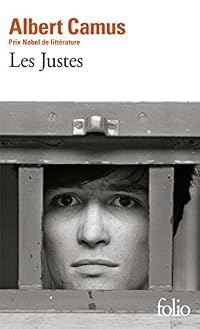
What we have here is an historical and philosophical treatment of the concept of the Rebel and of Rebellion. The history focuses primarily on the Russian and French rebellions and revolutionary movements, and assumes some knowlege of these. We learn that man has rebelled against different things – against God show more (Nietzsche, Voltaire), against the King (in France and Russia), and against bourgeois conventions. Camus discusses the philosophical motivations and problems of rebellion, including Nihilism (to which he was strongly opposed) and the challenge of creating something new out of the disorder and destruction that can be left behind. We also see the moral challenges that come with the violence implicit in rebellion, and the different ethical systems through which Rebels justify their actions. This is the main theme of Camus' play Les Justes, and though he does not discuss the play here, it provides a useful illustration to some of the themes here.
While there is much of worth here in this volume in terms of insight and scholarship, it is much wordier and carries less immediate impact than many of Camus' shorter essays and stories. That this is more of a comprehensive and in-depth work than we would normally expect from this author is not a criticism than can be levelled against this book fairly in its own terms though, but it explains why it is one of his less popular works.
However this is still a worthwhile read for the fan of Camus's Existentialism, or those who are particularly interested in topic of Rebellion, or in understanding Camus' life of which the idea of Revolt played a major part. There is a lot of stimulating thought here, but it would probably be off-putting to a lot of readers as an introduction to Camus. show less
What we have here is an historical and philosophical treatment of the concept of the Rebel and of Rebellion. The history focuses primarily on the Russian and French rebellions and revolutionary movements, and assumes some knowlege of these. We learn that man has rebelled against different things – against God show more (Nietzsche, Voltaire), against the King (in France and Russia), and against bourgeois conventions. Camus discusses the philosophical motivations and problems of rebellion, including Nihilism (to which he was strongly opposed) and the challenge of creating something new out of the disorder and destruction that can be left behind. We also see the moral challenges that come with the violence implicit in rebellion, and the different ethical systems through which Rebels justify their actions. This is the main theme of Camus' play Les Justes, and though he does not discuss the play here, it provides a useful illustration to some of the themes here.
While there is much of worth here in this volume in terms of insight and scholarship, it is much wordier and carries less immediate impact than many of Camus' shorter essays and stories. That this is more of a comprehensive and in-depth work than we would normally expect from this author is not a criticism than can be levelled against this book fairly in its own terms though, but it explains why it is one of his less popular works.
However this is still a worthwhile read for the fan of Camus's Existentialism, or those who are particularly interested in topic of Rebellion, or in understanding Camus' life of which the idea of Revolt played a major part. There is a lot of stimulating thought here, but it would probably be off-putting to a lot of readers as an introduction to Camus. show less
The Rebel by Albert Camus is not only a work which addresses The Rebel as universal idea but also details historical "rebels" which in some cases, the reigning version of history has forgotten. Individuals like Ivan Kalyayev, who Camus brings up in his essay, and later uses as a character in his play The Just Assassins, I had never heard of. While I was taking world history and even a Russian history class in high school, the important parts of Russian history were generally thought of as the reign of the Tsars clashing with the advent of the Soviet Union, with Lenin being portrayed as "idealistic" and "outdated" and Stalin being portrayed a murderer. What mainstream history always focuses on is The Revolution, whether it be the show more American Revolution, the French Revolution, the Russian Revolution(s), or the Chinese Cultural Revolution, as much of a sham as the latter was. Mainstream history, especially in middle and high school never focuses on the idea of The Rebel, the section of mankind who says "We rebel therefore we exist," and adds "And we are alone." Perhaps this seems nihilistic to the timid reader, but what Camus is essentially fighting in this essay is nihilism itself. It is only through a stark encounter with the death of the human spirit (whether it be through totalitarian, capitalist, or bureaucratic means) that mankind realizes that he must fight to retain that very spirit even in the face of his own physical death. Though adults often have trouble reading what is arguably Camus' most difficult work, I, personally, would love to distribute sections of this rather lengthy essay to high school Seniors in an AP English class in order to inspire them to "live through their work," not necessarily to preserve their legacy after death but to prove to themselves that they are currently using the full potential of their human spirit. The Rebel as an inspirational tool could be used in exercises such as writing short plays, poems, and essays, as well as drafts for novellas. I believe that the narcissism of today's youth can be utilized as an energy source for creativity; to transfer the ego of petty crime to the ego of art crime is a constructive way of saving kids and building the libraries of the future. show less
Members
- Recently Added By
Lists

Filosofía - Clásicos
217 works; 1 member

Unread books
1,063 works; 86 members

Existentialism
90 works; 11 members

Harold Bloom - The Western Canon: D. The Chaotic Age
833 works; 24 members

My TBR
371 works; 3 members
1,001 BYMRBYD Concensus
723 works; 27 members

Het laatste woord
27 works; 1 member

Books Referenced by Izetbegovic's Islam Between East and West
233 works; 2 members

Recommended Reading : 600 Classics Reviewed, Editors of Salem Press, 2015
634 works; 6 members

2024-2025 Ezra Klein Guest Recommendations
213 works; 5 members

el
1,139 works; 1 member

The Five Books That Represent Us
390 works; 147 members
Author Information

359+ Works 107,785 Members
Born in 1913 in Algeria, Albert Camus was a French novelist, dramatist, and essayist. He was deeply affected by the plight of the French during the Nazi occupation of World War II, who were subject to the military's arbitrary whims. He explored the existential human condition in such works as L'Etranger (The Outsider, 1942) and Le Mythe de Sisyphe show more (The Myth of Sisyphus, 1942), which propagated the philosophical notion of the "absurd" that was being given dramatic expression by other Theatre of the Absurd dramatists of the 1950s and 1960s. Camus also wrote a number of plays, including Caligula (1944). Much of his work was translated into English. He was awarded the Nobel Prize for Literature in 1957. Camus died in an automobile accident in 1960. (Bowker Author Biography) show less
Some Editions
Awards and Honors
Series
Belongs to Publisher Series
Work Relationships
Is contained in
Has as a student's study guide
Common Knowledge
- Canonical title*
- Ο επαναστατημένος άνθρωπος
- Original title
- L'Homme Révolté
- Original publication date
- 1951
- People/Characters
- Ivan Fyodorovich Karamazov; Lucretius; Epicurus, ca. 341-ca. 270 BC; John Milton; Comte de Lautréamont; Arthur Rimbaud (show all 30); Louis XVI, King of France; Rousseau, Jean-Jacques, 1712-1778; André Breton; Karl Marx; Alfred Jarry; Hegel, Georg Wilhelm Friedrich, 1770-1831; Louis Antoine de Saint-Just; Sergey Nechayev; Mikhail Bakunin; Dora Brilliant; Max Stirner; Alexander Herzen; Pyotr Tkachev; Dmitry Pisarev; Alfred Rosenberg; Hermann Göring; Ernst Jünger; Friedrich Engels; Ivan Kalyayev; Boris Savinkov; Shigalyov; Linton Heathcliff; Prometheus; Nietzsche, Friedrich Wilhelm, 1844-1900
- Epigraph*
- Και την καρδιά μου φανερά αφιέρωσα_στη σοβαρή και πονεμένη γη_και, μες στη νύχτα την ιερή,_συχνά της υποσχέθηκα να την αγαπώ_... (show all)πιστά μέχρι θανάτου_άφοβα,_με το βαρύ της μοίρας το φορτίο,_κι απ'τα αινίγματα της τίποτα να μην περιφρονώ._Έτσι μαζί της δέθηκα με θάνατου δεσμά._ΧΕΝΤΕΡΛΙΝ_Ο θάνατος του Εμπεδοκλή
- Dedication*
- Στον Ζαν Γκρενιέ
- First words
- What is a rebel? A man who says no, but whose refusal does not imply a renunciation.
- Quotations*
- Ο πρίγκιπας του κακού διάλεξε τον δρόμο του επειδή το καλό είναι μια καθορισμένη έννοια που χρησιμοποιήται από τον θεό για ... (show all)τα άδικα σχέδια του.
Γιατί ο σοσιαλισμός δεν αφορά μονο το εργατικό ζήτημα, αφορά κυρίως το ζήτημα του αθεϊσμού, της σύγχρονης ενσάρκωσης του, τÎ... (show all)¿ πρόβλημα του πύργου της βαβέλ που κτίζεται χωρίς θεό, όχι για υψωθεί από τη γη στα ουράνια, αλλά για να κατεβάσει τα ουράνια στη γή.
Να υποδουλώνεσαι στην ανθρωπότητα δεν αξίζει περισσότερο από το να υπηρετείς τον θεό. Εξάλου η αδελφοσύνη δεν είναι παρά "ο... (show all) κυριακάτικος τρόπος σκέψης των κομμουνιστών". Όλη την εβδομάδα τα αδέλφια γίνονται δούλοι.
"Και υπάρχουμε μόνοι"
Ο ανυπότακτος απορρίπτει τη δουλεία και επιβεβαιώνεται ως ίσος με τον αφέντη. Με τη σειρά του, θέλει να είναι αφέντης.
Το μέλλον είναι το μόνο είδος ιδιοκτησίας που οι αφέντες παραχωρούν με καλή θέληση στους σκλάβους.
Η βιομηχανική κοινωνία θα ανοίξει τους δρόμους ενός πολιτισμού, μόνο αν ξαναδώσει στον εργαζόμενο την αξιοπρέπεια του δημÎ... (show all)¹ουργού, προσαρμόζοντας δηλαδή το συμφέρον του και το πνεύμα του τόσο στην εργασία όσο και στο προϊόν της.
Θεωρητικά η λέξη επανάσταση διατηρεί την έννοια που έχει στην αστρονομία. Είναι ένα κίνημα που διαγράφει έναν πλήρη κύκλο, ... (show all)που περνά από μια κυβέρνηση στην άλλη, ύστερα από μια τέλεια μετατόπιση. Η αλλαγή του καθεστώτος ιδιοκτησίας, χωρίς αλλαγή της αντίστοιχης κυβέρνησης, δεν είναι επανάσταση αλλά μεταρρύθμιση. Δεν είναι οικονομική επανάσταση, είτε αιματηρή είτε ειρηνική, που να μην εμφανίζεται συνάμα και ως πολιτική. Έτσι, η επανάσταση ξεχωρίζει ήδη από την εξέγερση. Η περίφημη φράση: «Όχι, Μεγαλειότατε, δεν πρόκειται για εξέγερση, πρόκειται για επανάσταση» τονίζει τούτη την ουσιώδη διαφορά. Σημαίνει ακριβώς ότι έχουμε τη βεβαιότητα μιας νέας κυβέρνησης». Το κίνημα της εξέγερσης, αρχικά, φτάνει γρήγορα σε αδιέξοδο. Είναι μόνο μια μαρτυρία δίχως συνοχή. Αντίθετα, η επανάσταση αρχίζει από μια ιδέα. Για την ακρίβεια , είναι η εισαγωγή μιας ιδέας στην ιστορική εμπειρία, ενώ η εξέγερση είναι μόνο το κίνημα που οδηγεί από την ατομική εμπειρία στην ιδέα. Ενώ η ιστορία, ακόμη και η συλλογική, ενός κινήματος εξέγερσης είναι πάντα η ιστορία μιας ένταξης χωρίς διέξοδο στα γεγονότα, μιας ακαθόριστης διαμαρτυρίας που δεν δεσμεύει ούτε συστήματα ούτε αιτίες, η επανάσταση είναι μια προσπάθεια προσαρμογής της πράξης σε μια ιδέα για τη διαμόρφωση του κόσμου, σ’ ένα θεωρητικό πλαίσιο. Γι’ αυτό η εξέγερση σκοτώνει ανθρώπους, ενώ η επανάσταση καταστρέφει και ανθρώπους και αρχές. Για τους ίδιους όμως λόγους μπορούμε να πούμε ότι δεν έγινε ακόμη επανάσταση στην ιστορία. Μόνο μια θα μπορούσε να υπάρξει, αυτή που θα είναι οριστική επανάσταση. Το κίνημα που δείχνει να κλείνει τον κύκλο, ανοίγει ήδη έναν άλλο, τη στιγμή μάλιστα που σχηματίζεται η κυβέρνηση. Οι αναρχικοί, με τον Βαρλέ επικεφαλής, είδαν καθαρά ότι κυβέρνηση και επανάσταση είναι ασυμβίβαστες κατά μία άμεση έννοια. «Υπάρχει αντίφαση» γράφει ο Προυντόν «όταν λέμε πως μια κυβέρνηση μπορεί ποτέ να είναι επαναστατική• κι αυτό για τον απλό λόγο ότι είναι κυβέρνηση». Ας προσθέσουμε, χάρη στην εμπειρία μας, ότι δεν γίνεται η κυβέρνηση να είναι επαναστατική παρά μόνο ενάντια σε άλλες κυβερνήσεις. Όσο περισσότερο επεκτείνεται η επανάσταση, τόσο πιο σημαντικό είναι το διακύβευμα του πολέμου που προϋποθέτει. Η κοινωνία που προήλθε από το 1789 θέλει να πολεμήσει για την Ευρώπη. Αυτή που δημιουργήθηκε από το 1917 αγωνίζεται για την παγκόσμια κυριαρχία. Η ολική επανάσταση καταλήγει έτσι να διεκδικήσει-θα δούμε παρακάτω το γιατί- την παγκόσμια εξουσία. - Last words
- (Click to show. Warning: May contain spoilers.)Στο κορύφωμα της πιο μεγάλης έντασης θα ξεπηδήσει η ορμή ενός βέλους ευθύβολου με την πιο σταθερή κι ελεύθερη τροχιά.
- Original language
- French
*Some information comes from Common Knowledge in other languages. Click "Edit" for more information.
Classifications
- Genres
- Philosophy, Nonfiction
- DDC/MDS
- 303.64 — Society, Government, and Culture Social sciences, sociology & anthropology Social processes Conflict and conflict resolution ; Violence Civil war and revolution
- LCC
- HM281 .C3513 — Social sciences Sociology (General) Sociology These are obsolete numbers no longer used
- BISAC
Statistics
- Members
- 4,847
- Popularity
- 2,904
- Reviews
- 29
- Rating
- (3.98)
- Languages
- 24 — Catalan, Chinese, Czech, Danish, Dutch, English, Estonian, Finnish, French, German, Greek, Hebrew, Hungarian, Italian, Lithuanian, Norwegian (Bokmål), Polish, Portuguese, Romanian, Russian, Slovak, Spanish, Swedish, Turkish
- Media
- Paper, Audiobook, Ebook
- ISBNs
- 88
- ASINs
- 69