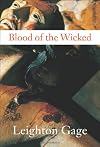
On This Page
Description
This "gripping crime fiction" is the first in the acclaimed police procedural series set in Brazil (Florida Sun-Sentinel).Chief Inspector Mario Silva of Brazil's federal police is a good cop in a bad system—Brazil's justice system is rife with corruption, and constantly a beat behind criminal elements. But Silva and his team of colorful sidekicks—baby-faced Gonçalves, who is irresistible to lady witnesses, chubby, crass Nuñes, and Mara Carta, the chief of intelligence with a soft show more spot for Silva—still manage to crack their difficult and sometimes ugly cases.
In the interior of Brazil, landless workers are battling the owners of vast fazendas. When a visiting archbishop is assassinated, Silva is called upon to investigate. Then a newspaper owner, a TV journalist, a landowner's son, and a priest are brutally killed, and Silva's team faces a challenge unlike any before . . .
. show less
Tags
Recommendations



















Member Reviews
Blood of the Wicked by Leighton Gage is the first book in the series featuring Chief Inspector Mario Silva of the Federal Police of Brazil. This is a book that reached out and totally grabbed me. A murder mystery wrapped in a layered, well written novel that shines a light on the plight of the poor and landless against the rich and landed. Involving priests, corrupt officials, political activists and journalists this was a roller coaster ride that informed as well as thrilled.
When a Catholic Bishop arrives to dedicate a new church in the city of Cascatas and is immediately murdered, Chief Inspector Mario Silva is sent to investigate. Silva and his team arrive at a time of political unrest in the area as first a local agitator and his show more family are horribly murdered, than in apparent retaliation, a wealthy landowners son goes missing. Meanwhile a group of poor farmers have taken over a portion of an estate and are trying to draw attention to the conditions they are having to live in. Trying to figure out if all these cases are connected has Silva desperately trying to fit the pieces together.
In Blood of the Wicked there are more than enough bad guys, but there is one that stands head and shoulders above the rest and I haven’t felt such hatred for a villain in a long time. I truly wanted this guy to not only be exposed but for him to come to a bad end as well. The story contains torture, rape, corruption, murder and violence and as such, would not be suitable for everyone. This is a tale of retribution, revenge and ultimately justice and, as a first book in a series, Blood of the Wicked had me riveted and now wanting to see what comes next after such an emotionally charged debut. show less
When a Catholic Bishop arrives to dedicate a new church in the city of Cascatas and is immediately murdered, Chief Inspector Mario Silva is sent to investigate. Silva and his team arrive at a time of political unrest in the area as first a local agitator and his show more family are horribly murdered, than in apparent retaliation, a wealthy landowners son goes missing. Meanwhile a group of poor farmers have taken over a portion of an estate and are trying to draw attention to the conditions they are having to live in. Trying to figure out if all these cases are connected has Silva desperately trying to fit the pieces together.
In Blood of the Wicked there are more than enough bad guys, but there is one that stands head and shoulders above the rest and I haven’t felt such hatred for a villain in a long time. I truly wanted this guy to not only be exposed but for him to come to a bad end as well. The story contains torture, rape, corruption, murder and violence and as such, would not be suitable for everyone. This is a tale of retribution, revenge and ultimately justice and, as a first book in a series, Blood of the Wicked had me riveted and now wanting to see what comes next after such an emotionally charged debut. show less
Bishop Dom Felipe Antunes arrives in the remote Brazilian town of Cascatas do Pontal to consecrate a newly built church and is shot by a sniper the moment he steps off his helicopter. Mario Silva, Chief Inspector for Criminal Matters for the Federal Police is sent to the town to investigate the high-profile death. What he finds is a corrupt local police force with friends in very high places and near-war brewing between wealthy landowners and the farmers who are fighting for the law which says that uncultivated land can be appropriated for genuine farming.
Upon arrival, Silva finds himself at odds with almost everyone, from the police department to the parish priests to the local residents, both rich and poor, who consider him an show more outsider. But Silva, together with his nephew Hector Costa, is determined to discover who killed the priest and why. When the adult son of one of the wealthiest men in the town disappears, tensions are raised another notch. Silva is under pressure from twice daily phone calls from his Director to sort out the mess which is playing badly in the media and also from local activists who are desperate for genuine justice to be implemented in their town.
Blood of the Wicked, is a compelling mystery set in modern Brazil and reflects the conflict between the few large land owners and the many landless in the country. This was a great introduction to the political and cultural system of Brazil, a country I admit I know virtually nothing about. It's definitely not for the faint hearted because there are numerous brutal deaths including innocent women and children. Mario Silva is a sympathetic protagonist, not without his own personal demons, and I really look forward to continuing this series. show less
Upon arrival, Silva finds himself at odds with almost everyone, from the police department to the parish priests to the local residents, both rich and poor, who consider him an show more outsider. But Silva, together with his nephew Hector Costa, is determined to discover who killed the priest and why. When the adult son of one of the wealthiest men in the town disappears, tensions are raised another notch. Silva is under pressure from twice daily phone calls from his Director to sort out the mess which is playing badly in the media and also from local activists who are desperate for genuine justice to be implemented in their town.
Blood of the Wicked, is a compelling mystery set in modern Brazil and reflects the conflict between the few large land owners and the many landless in the country. This was a great introduction to the political and cultural system of Brazil, a country I admit I know virtually nothing about. It's definitely not for the faint hearted because there are numerous brutal deaths including innocent women and children. Mario Silva is a sympathetic protagonist, not without his own personal demons, and I really look forward to continuing this series. show less
First Line: Something took the helicopter and shook it like a jackal worrying a carcass.
Chief Inspector Mario Silva of the Federal Police is called upon to travel to remote Cascatas to investigate the assassination of a bishop. When he arrives, he finds himself in a veritable vipers' nest of crime and corruption: the bishop's assassination, the disappearance of a wealthy landowner's son, the continuing conflict between the landowners and the Landless Workers League, the deaths of homeless street children, drugs... the list seems endless. With Colonel Ferraz of the State Police in Cascatas firmly against Silva, will the inspector be able to solve any of the crimes in this remote area of Brazil?
I was bowled over by this book. First and show more foremost, what impressed me was how thoroughly Gage immersed me in modern Brazil. Until picking up Blood of the Wicked, the books I'd read about this country centered on a bit of colonial history, and lots of Amazonian exploration. In reading about present-day Brazil, I became acquainted with favelas (shantytowns), with the fact that dead street children are referred to as "hams", with the age-old struggle between the Haves and the Have Nots, and with a degree of police corruption that made me ill.
Although the book is excellent armchair travel, it had to be coupled with believable characters and a strong story line to get this sort of reaction from me. Chief Inspector Mario Silva is a man of principle. As a young man facing total police disinterest in finding the men responsible for the deaths of his parents, Silva took the investigation-- and the law-- into his own hands. This serves a dual purpose. The reader does become unsure of Silva's reactions and methods in Cascatas, but there is also the belief that he will fight for justice in the face of any amount of corruption.
Another character stands head and shoulders above all others: State Police Colonel Ferraz. He literally became a man I loved to hate, and I couldn't wait to see what Silva had in store for him.
Blood of the Wicked can be very brutal-- murder, torture, the corruption of absolute power, the desperation of poverty-- but the depiction of the country and the dedication of Chief Inspector Mario Silva kept me mesmerized to the final page. show less
Chief Inspector Mario Silva of the Federal Police is called upon to travel to remote Cascatas to investigate the assassination of a bishop. When he arrives, he finds himself in a veritable vipers' nest of crime and corruption: the bishop's assassination, the disappearance of a wealthy landowner's son, the continuing conflict between the landowners and the Landless Workers League, the deaths of homeless street children, drugs... the list seems endless. With Colonel Ferraz of the State Police in Cascatas firmly against Silva, will the inspector be able to solve any of the crimes in this remote area of Brazil?
I was bowled over by this book. First and show more foremost, what impressed me was how thoroughly Gage immersed me in modern Brazil. Until picking up Blood of the Wicked, the books I'd read about this country centered on a bit of colonial history, and lots of Amazonian exploration. In reading about present-day Brazil, I became acquainted with favelas (shantytowns), with the fact that dead street children are referred to as "hams", with the age-old struggle between the Haves and the Have Nots, and with a degree of police corruption that made me ill.
Although the book is excellent armchair travel, it had to be coupled with believable characters and a strong story line to get this sort of reaction from me. Chief Inspector Mario Silva is a man of principle. As a young man facing total police disinterest in finding the men responsible for the deaths of his parents, Silva took the investigation-- and the law-- into his own hands. This serves a dual purpose. The reader does become unsure of Silva's reactions and methods in Cascatas, but there is also the belief that he will fight for justice in the face of any amount of corruption.
Another character stands head and shoulders above all others: State Police Colonel Ferraz. He literally became a man I loved to hate, and I couldn't wait to see what Silva had in store for him.
Blood of the Wicked can be very brutal-- murder, torture, the corruption of absolute power, the desperation of poverty-- but the depiction of the country and the dedication of Chief Inspector Mario Silva kept me mesmerized to the final page. show less
BLOOD OF THE WICKED opens with the assassination of a Catholic bishop. Moments after he steps off a helicopter in Cascatas to dedicate a church, Bishop Antunes is killed by a sniper’s shot. His death immediately pits the Landless Workers’ League, the poor, against the land owners, the very rich, who want to it believed that the murder was a plot by the League.
The church in Brazil is divided into those who follow the rules set by the Vatican and those who are still in sympathy with the principles of liberation theology. Gage makes reference to the murder of Archbishop Oscar Romero, who was shot while offering Mass in San Salvador. Romero was becoming increasingly supportive of the liberation theology movement, which interprets the show more teachings of Christ as calling for liberation from economic, political, and social conditions that deprive the poor of basic necessities and human decency. The military in San Salvador took responsibility for the death of Romero but which side, the landless workers or the land owners, had the most to gain by the clergyman’s death. Bishop Antunes, murdered before he stepped into the church building, was an unknown quantity. Did he support the Landless Workers’ League in violation of the directives from Rome or did he support the land owners who controlled the government?
Mario Silva, Chief Inspector for Criminal Matters for the federal police of Brazil, is called upon to bring the matter of the bishop’s murder to a quick and successful close. To the politicians who try to influence Silva, that means finding the killer among the landless workers. But, once in Cascatas, Silva’s case expands to include drug peddling, the emergence of a serial killer, the deaths of those who try to learn the truth, and a population in terror of its police.
There is a great deal of blood in this story and there is a seemingly endless parade of the wicked. There are few heroes either, including Silva, a man with a strong moral code but a code, nonetheless, that recognizes the corrupt and ineffectual justice system in his country. He is a man who has also been motivated by vengeance. There are heroes in unexpected places but even the heroes are bathed in the blood of the wicked.
Leighton Gage has written a story that demands that once started, must be finished without interruption. As flawed as Mario is, he is the image of right against might. When it seems that all the depravity has been revealed, there is still more. The church harbors saints and sinners and sometimes they are the same people. Those sworn to serve and protect the people are the worst perpetrators of violence against the innocent. Gage does what seems impossible and brings the story to an end that is real and just when there isn’t any hope for justice. show less
The church in Brazil is divided into those who follow the rules set by the Vatican and those who are still in sympathy with the principles of liberation theology. Gage makes reference to the murder of Archbishop Oscar Romero, who was shot while offering Mass in San Salvador. Romero was becoming increasingly supportive of the liberation theology movement, which interprets the show more teachings of Christ as calling for liberation from economic, political, and social conditions that deprive the poor of basic necessities and human decency. The military in San Salvador took responsibility for the death of Romero but which side, the landless workers or the land owners, had the most to gain by the clergyman’s death. Bishop Antunes, murdered before he stepped into the church building, was an unknown quantity. Did he support the Landless Workers’ League in violation of the directives from Rome or did he support the land owners who controlled the government?
Mario Silva, Chief Inspector for Criminal Matters for the federal police of Brazil, is called upon to bring the matter of the bishop’s murder to a quick and successful close. To the politicians who try to influence Silva, that means finding the killer among the landless workers. But, once in Cascatas, Silva’s case expands to include drug peddling, the emergence of a serial killer, the deaths of those who try to learn the truth, and a population in terror of its police.
There is a great deal of blood in this story and there is a seemingly endless parade of the wicked. There are few heroes either, including Silva, a man with a strong moral code but a code, nonetheless, that recognizes the corrupt and ineffectual justice system in his country. He is a man who has also been motivated by vengeance. There are heroes in unexpected places but even the heroes are bathed in the blood of the wicked.
Leighton Gage has written a story that demands that once started, must be finished without interruption. As flawed as Mario is, he is the image of right against might. When it seems that all the depravity has been revealed, there is still more. The church harbors saints and sinners and sometimes they are the same people. Those sworn to serve and protect the people are the worst perpetrators of violence against the innocent. Gage does what seems impossible and brings the story to an end that is real and just when there isn’t any hope for justice. show less
The righteous shall rejoice when he seeth the vengeance: he shall wash his feet in the blood of the wicked.
Psalms 58:10
The Bishop of Presidente Vargas, Dom Felipe Antunes, wanted to treat the people of the small agricultural town of Cascatas do Pontal to a rare sight - he was arriving to open the brand-new church of Nossa Senhora dos Milagros from the skies, like an angel of old - he was arriving by helicopter. The Great Window of the new church was almost five metres in diameter, had cost over 200,000 reais, and gleamed in the sunlight. On the ground the reception party of seven came under the crowd barrier, the children's choir sang a passage from the Messiah, and then Dom Felipe's head exploded.
The helicopter had been provided by show more Fertilbras, Brazil's largest fertiliser company, who had employed a photographer to capture the moments of Dom Filipe's arrival, and so he caught the moment of the assassination in glorious colour.
The investigation of the murder of a prelate can't be left to the local police, particularly when they have a reputation for slipshod work and even corruption.
Mario Silva, Chief Inspector for Criminal Matters, is sent to head the investigation Cascatas by his boss the Director of the Brazilian Federal Police. The Pope has phoned the President of Brazil to ensure that the investigation will be given highest priority. Dom Filipe was not just any bishop - he was on a fast track for promotion to cardinal. Brazil's reputation as a civilised country is at stake. The Director has his own eye on the Presidency and so success is of the utmost importance.
Just recently Cascatas do Pontal had seen another murder - that of an agricultural worker, his wife and their two kids. It has also been the scene of land wars, activities by the Landless Workers' League, attempting to wrest unused land from wealthy landowners and restore it to the hands of the people.
When Mario Silva and his nephew Delegado Hector Costa arrive in Cascatas to begin the federal investigation they find that the assassination of Dom Philipe is just the lid of the can of worms.
This was a most enjoyable read, but one with a serious message behind it. Just in case you miss that message, Leighton Gage spells it out in the last pages of the book. BLOOD OF THE WICKED is the first in the Mario Silva series. There is plenty of background about Silva and his nephew, and I would think that makes it imperative that you read the series in order. show less
Psalms 58:10
The Bishop of Presidente Vargas, Dom Felipe Antunes, wanted to treat the people of the small agricultural town of Cascatas do Pontal to a rare sight - he was arriving to open the brand-new church of Nossa Senhora dos Milagros from the skies, like an angel of old - he was arriving by helicopter. The Great Window of the new church was almost five metres in diameter, had cost over 200,000 reais, and gleamed in the sunlight. On the ground the reception party of seven came under the crowd barrier, the children's choir sang a passage from the Messiah, and then Dom Felipe's head exploded.
The helicopter had been provided by show more Fertilbras, Brazil's largest fertiliser company, who had employed a photographer to capture the moments of Dom Filipe's arrival, and so he caught the moment of the assassination in glorious colour.
The investigation of the murder of a prelate can't be left to the local police, particularly when they have a reputation for slipshod work and even corruption.
Mario Silva, Chief Inspector for Criminal Matters, is sent to head the investigation Cascatas by his boss the Director of the Brazilian Federal Police. The Pope has phoned the President of Brazil to ensure that the investigation will be given highest priority. Dom Filipe was not just any bishop - he was on a fast track for promotion to cardinal. Brazil's reputation as a civilised country is at stake. The Director has his own eye on the Presidency and so success is of the utmost importance.
Just recently Cascatas do Pontal had seen another murder - that of an agricultural worker, his wife and their two kids. It has also been the scene of land wars, activities by the Landless Workers' League, attempting to wrest unused land from wealthy landowners and restore it to the hands of the people.
When Mario Silva and his nephew Delegado Hector Costa arrive in Cascatas to begin the federal investigation they find that the assassination of Dom Philipe is just the lid of the can of worms.
This was a most enjoyable read, but one with a serious message behind it. Just in case you miss that message, Leighton Gage spells it out in the last pages of the book. BLOOD OF THE WICKED is the first in the Mario Silva series. There is plenty of background about Silva and his nephew, and I would think that makes it imperative that you read the series in order. show less
A bishop is assassinated in a Brazilian town and federal police who try to solve the murder instead find their investigation hampered by corrupt and violent cops. Gage depicts a country where violence is omnipresent, poverty is rampant, and the wealthy landowners rule with the assistance of the church and the police. You can't help but feel numbed with despair given the extreme disparity in wealth and the mix of violence and corruption. That said, it's a rare glimpse of a fascinating country.
This book spares no punches. It was my first introduction to Chief Inspector Mario Silva and to Mr. Gage's critically acclaimed series. Inspector Silva lives and works in Brazil. He is the man in charge of the Criminal Matters division in the Brazil Federal Police. He is directed to a small, remote village by the name of Cascatas do Pontal in order to investigate the assignation of a Bishop. Silva is assissted by his nephew and fellow federal policeman Hector Costa, and his preferred back up - Amaldo Nunes. Silva is an interesteing protagonist. My main complaint about the book is that Silva doesn't seem to do much. He sort of always arrives after the fact, and usually fate or some other person has taken care of the problem by the time show more he gets there. But I loved Amaldo, the beefy, street-smart cop with the heart of a lion and an unfailing faith in Silva. Silva and his two cohorts uncover a hotbed of corruption, greed, unrelenting poverty and a Brazil that we as tourists would never see. By the end of the book, a lot of people have been killed, and some of the killings are protrayed in graphic detail. The book though is realistic and gritty and looks to be a great start on a very promising series. show less
Members
- Recently Added By
Author Information

9+ Works 669 Members
Leighton Gage was born on May 13, 1942. He wrote the Chief Inspector Mario Silva Investigation series. The last book, The Ways of Evil Men, will be published in early 2014. He died from pancreatic cancer on July 26, 2013 at the age of 71. (Bowker Author Biography)

Leighton Gage is a LibraryThing Author, an author who lists their personal library on LibraryThing.
Series

Common Knowledge
- Canonical title
- Blood of the Wicked
- People/Characters
- Mario Silva
- Important places
- Brazil
Classifications
Statistics
- Members
- 263
- Popularity
- 123,587
- Reviews
- 20
- Rating
- (3.69)
- Languages
- Dutch, English, French, Italian
- Media
- Paper, Ebook
- ISBNs
- 7
- ASINs
- 3