On This Page
Description
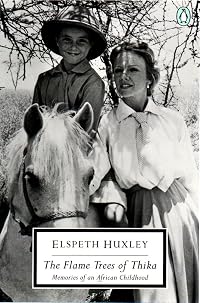
In an open cart, Elspeth Huxley set off with her parents to travel to Thika in Kenya. As pioneering settlers, they built a house of grass, ate off a damask cloth spread over packing cases, and discovered--the hard way--the world of the African. This book recounts Huxley's childhood on the small farm at a time when Europeans waged their fortunes on a land that was as harsh as it was beautiful. For a young girl, it was a time of adventure and freedom, and the author paints an unforgettable show more portrait of growing up among the Masai and Kikuyu people, discovering both the beauty and the terrors of the jungle, and enduring the rugged realities of the pioneer life. show lessTags
Recommendations




















Member Reviews
This seemed a little hard to get into, but maybe that was because of my mood rather than the writing, because when I picked it up again I found it beautifully lyrical: I kept wanting to copy sentences out but there were too many. Elspeth Huxley looks back at her childhood in Kenya, near Nairobi, when her parents left England to seek new fortunes on a plantation, in the early 20th century. The young Elspeth is observant, unprejudiced and headstrong, fearless or perhaps unaware of any dangers. She seems to be about 11, hovering between innocence and understanding of relationships that are hinted at but left unspoken. I was quite surprised to learn that the real Elspeth was only five or six when the family went to Kenya, so the memories show more must be cosmetically enhanced. It is a good book that made me laugh at times, and feel sad for many reasons; I just regret that I never found out the truth about that boomklops; I wonder if Elspeth did. I should mention that this is a very nicely produced hardback from Slightly Foxed, with a ribbon bookmark, creamy paper and just the right size for carrying around in my bag to read on the train. show less
Based on the author’s childhood in Kenya just before WWI, where her father was attempting to start a coffee plantation. Literally out in the middle of the bush- nobody else for miles around, a long rough journey by oxcart to reach the place. The story is about how they lived rough at first, then built a house and put in the coffee seedlings. Their difficulties in getting labor to help- most of the people from tribes nearby didn’t understand what they were trying to do, couldn’t comprehend the instructions (language barrier), had varying priorities and expectations about getting paid for their work (cultural differences), etc. Theft and intertribal conflicts were a constant problem. Differences between the Kikuyu and Masai, and a show more few other tribes they encountered. Eventually some other Europeans came out to develop land on other plots nearby, so they had neighbors of sorts.
The landscape is described beautifully and the encounters with wildlife are interesting. The attitudes not so much- there were frequent remarks about how the natives had not improved themselves or their land in thousands of years, and praising the Europeans for turning the country into something productive. Sad to read about how the tribesmen would bring their injured and sick in once they heard one of the neighbors was a nurse- but the ailments were often beyond her skill level or limited supplies. Most intriguing and also what makes this book a bit difficult, is that it’s written from the child’s viewpoint- you have to wonder how much is embellished as I can’t believe she recalled all those conversations so precisely. But then there is so much you have to gather by reading between the lines, from the half-understood comments the little girl heard from the sidelines.. Notably the love affair between two of the neighboring adults- one whose husband was usually absent, away on hunting trips.
And I also was also left wondering what was behind the boomklops– was it really a bird the man wanted to show her, or something sinister? show less
The landscape is described beautifully and the encounters with wildlife are interesting. The attitudes not so much- there were frequent remarks about how the natives had not improved themselves or their land in thousands of years, and praising the Europeans for turning the country into something productive. Sad to read about how the tribesmen would bring their injured and sick in once they heard one of the neighbors was a nurse- but the ailments were often beyond her skill level or limited supplies. Most intriguing and also what makes this book a bit difficult, is that it’s written from the child’s viewpoint- you have to wonder how much is embellished as I can’t believe she recalled all those conversations so precisely. But then there is so much you have to gather by reading between the lines, from the half-understood comments the little girl heard from the sidelines.. Notably the love affair between two of the neighboring adults- one whose husband was usually absent, away on hunting trips.
And I also was also left wondering what was behind the boomklops– was it really a bird the man wanted to show her, or something sinister? show less
4 stars, despite the unsavory subject: Europeans taking over Africans' lands, oppressing them to use as cheap labor, replacing/denigrating their culture.
The story is told through the voice of a young girl brought from England to outside of a small village in Kenya, in the years before the first World war. This young girl tries to make sense of the world of the adults that surround her: their racism towards the natives, the disregard for their culture, and the dynamics going on between them. The beauty of the land and the natives and the Flora and fauna of the area are what makes this book remarkable and thoroughly lovely.
Curiously, there was a link between the last book I read, "Our Mutual Friend," and the next book I'm reading, show more "Possessing the Secret of Joy." Ian is a character who is in love with Lettice, the wife of another man. Ian's dream is to be a lock warden on the Thames; in "Our Mutual Friend," a character is a lock warden. In "Possessing the Secret of Joy," Thikka, Kenya is the main setting of the books.
The Kukuru and Masai that the Whites live among wear very little clothes:
P.118
" 'nakedness doesn't seem to matter when people are black or brown, ' Lettice remarked. 'White bodies look like clay waiting to go into a kiln. Natives look as if they've been fired and finished; perhaps that's why they don't strike one as indecent.' "
Natives live close to the land, and only the passing seasons mark time for them:
P.187
" 'perhaps it's as bad to feel one isn't getting old fast enough, as to know that one is getting old too fast,' Lettice agreed. 'We are always trying to make time go at a different pace, as if it were an obstinate pony. Perhaps we should do better to let it amble along as it wishes, without taking much notice of it.' 'That is what the natives do,' Tilley said. 'And perhaps that is why they seem happier. Perhaps it is all a mistake, our trying to change them, and introduce new worries, like time's wingéd Chariot hurrying near...'
A nod is thrown out to those who care about the cruelty to animals, as many parts of this book describe scenes of cruelty to animals:
P.242
" 'The Dorobo will finish it off and gobble it up,' Kate Crawfurd said. 'How very carnivorous they are! But I suppose we are just as bad, only we cook it first, which makes everything a little more restrained, but doesn't affect the principle, that we all live on dead animals, like hyenas and lions. I used to think that vegetarians were cranks, but now I wonder; perhaps they have climbed a rung higher on the ladder of civilization. Perhaps it is more spiritual to live on beans and spinach, with possibly an egg now and then. Do you think we ought to try it, Humphrey, and give up being carnivores?' "
Humphrey does not. show less
The story is told through the voice of a young girl brought from England to outside of a small village in Kenya, in the years before the first World war. This young girl tries to make sense of the world of the adults that surround her: their racism towards the natives, the disregard for their culture, and the dynamics going on between them. The beauty of the land and the natives and the Flora and fauna of the area are what makes this book remarkable and thoroughly lovely.
Curiously, there was a link between the last book I read, "Our Mutual Friend," and the next book I'm reading, show more "Possessing the Secret of Joy." Ian is a character who is in love with Lettice, the wife of another man. Ian's dream is to be a lock warden on the Thames; in "Our Mutual Friend," a character is a lock warden. In "Possessing the Secret of Joy," Thikka, Kenya is the main setting of the books.
The Kukuru and Masai that the Whites live among wear very little clothes:
P.118
" 'nakedness doesn't seem to matter when people are black or brown, ' Lettice remarked. 'White bodies look like clay waiting to go into a kiln. Natives look as if they've been fired and finished; perhaps that's why they don't strike one as indecent.' "
Natives live close to the land, and only the passing seasons mark time for them:
P.187
" 'perhaps it's as bad to feel one isn't getting old fast enough, as to know that one is getting old too fast,' Lettice agreed. 'We are always trying to make time go at a different pace, as if it were an obstinate pony. Perhaps we should do better to let it amble along as it wishes, without taking much notice of it.' 'That is what the natives do,' Tilley said. 'And perhaps that is why they seem happier. Perhaps it is all a mistake, our trying to change them, and introduce new worries, like time's wingéd Chariot hurrying near...'
A nod is thrown out to those who care about the cruelty to animals, as many parts of this book describe scenes of cruelty to animals:
P.242
" 'The Dorobo will finish it off and gobble it up,' Kate Crawfurd said. 'How very carnivorous they are! But I suppose we are just as bad, only we cook it first, which makes everything a little more restrained, but doesn't affect the principle, that we all live on dead animals, like hyenas and lions. I used to think that vegetarians were cranks, but now I wonder; perhaps they have climbed a rung higher on the ladder of civilization. Perhaps it is more spiritual to live on beans and spinach, with possibly an egg now and then. Do you think we ought to try it, Humphrey, and give up being carnivores?' "
Humphrey does not. show less
Excellent writing, rich details, exotic historical setting, and memorable characters, as told from the POV of a child. Like all "creative non-fiction," much of it (obviously) had to be reconstructed and fictionalized to recreate such a rich story. But that did not take away the enjoyment of the book. I was swept away to a far-off place and time, and eager to keep turning pages.
The author recalls her childhood in colonial Kenya, just prior to the outbreak of WW1. It's a beautiful read, taking in the scenery, the wildlife and the people - from the servants, the local Kikuyu and Masai peoples, to the fellow settlers- adventurers, wives struggling with a tough life, and a love story...
"The green of the new grass was so intense and fierce that every hillside seemed afire with an emerald flame, rising to meet a sky of glutinous indigo."
The vivid descriptions bring the narrative to life.
"The green of the new grass was so intense and fierce that every hillside seemed afire with an emerald flame, rising to meet a sky of glutinous indigo."
The vivid descriptions bring the narrative to life.
This is a fictionalized autobiography of Elspeth Huxley's childhood years in Kenya immediately prior to WWl. Her parents were British upper class. Her father was a bit of an adventurer, having traveled widely and prospected for gold before choosing this venture--namely carving a coffee plantation from virgin bush in a remote area of Kenya.
Huxley is a beautiful writer leaving us with an intimate portrayal of the time and place. Yes, we do see the warts of British colonialism and paternalistic attitudes toward the Kikuyu and Maori tribes. But we also see love and respect and laughter and vivid portraits of the countryside and wildlife.
I would recommend this book to anyone, but especially to those who have enjoyed other stories of this show more period of African history, such as [[Beryl Markham]]'s [West With the Night]. In later years, Markham and Huxley knew each other and were in the same social group.
BBC made a seven part miniseries from this book and I would also recommend it highly. Except for the final installment, it followed the book quite closely. It was filmed on location in Kenya. The scenery, wildlife and depiction of the tribes were stunning. show less
Huxley is a beautiful writer leaving us with an intimate portrayal of the time and place. Yes, we do see the warts of British colonialism and paternalistic attitudes toward the Kikuyu and Maori tribes. But we also see love and respect and laughter and vivid portraits of the countryside and wildlife.
I would recommend this book to anyone, but especially to those who have enjoyed other stories of this show more period of African history, such as [[Beryl Markham]]'s [West With the Night]. In later years, Markham and Huxley knew each other and were in the same social group.
BBC made a seven part miniseries from this book and I would also recommend it highly. Except for the final installment, it followed the book quite closely. It was filmed on location in Kenya. The scenery, wildlife and depiction of the tribes were stunning. show less
The series was more story-like than the memoir, which was more a series of vingettes, but still very enjoyable and readable. I also reccomend the two following books of memoirs and her various other writings; murder mysteries set in Kenya, a novel of East African colonization from the African viewpoint, and even a story of English village life. She is an interesting writer, not very well known.
Members
- Recently Added By
Lists

Best African Books
126 works; 46 members

500 Great Books by Women
507 works; 60 members

Best Biographies of Notable Women
279 works; 101 members
Author Information

49+ Works 2,919 Members
Awards and Honors
Distinctions
Notable Lists
Series

Belongs to Publisher Series
Penguin Books (1715)
Work Relationships
Is contained in
Has the adaptation
Common Knowledge
- Original publication date
- 1959
- People/Characters
- Major Josceline Grant; Nellie Grant; Elspeth Huxley (nee Grant)
- Important places
- Africa; East Africa; Kenya
- Related movies
- The Flame Trees of Thika (1981 | IMDb)
- Dedication
- To the images of whom Robin and Tilly are reflections, amid the ghosts who sleep at Thika
- First words
- We set off in an open cart drawn by four whip-scarred little oxen and piled high with equipment and provisions.
- Last words
- (Click to show. Warning: May contain spoilers.)Ilooked through the open window at the undulating purple ridge-back of the Ngong hills, a haunt of lions and buffaloes, and was glad that I had kissed the four walls of the grass hut at Thika, and was bound to return.
- Original language
- English
Classifications
- Genre
- Biography & Memoir
- DDC/MDS
- 828.91209 — Literature & rhetoric English & Old English literatures English miscellaneous writings English miscellaneous writings 1900- English miscellaneous writings 1900-1999 English miscellaneous writings 1900-1945 Individual authors not limited to or chiefly identified with one specific form.
- LCC
- PR6015 .U92 .Z466 — Language and Literature English English Literature 1900-1960
- BISAC
Statistics
- Members
- 1,169
- Popularity
- 21,474
- Reviews
- 18
- Rating
- (3.97)
- Languages
- Danish, English, Finnish, Norwegian (Bokmål)
- Media
- Paper, Audiobook, Ebook
- ISBNs
- 28
- ASINs
- 39