The Rose of Sebastopol
by Katharine McMahon
On This Page
Description
In 1854, beautiful, adventurous Rosa Barr travels to the Crimean battlefield with Florence Nightingale's nursing corps--then disappears without a trace. When Mariella Lingwood, Rosa's cousin, leaves her surgeon husband's side to follow the trail of her elusive cousin to Sebastopol, she encounters Rosa's dashing stepbrother, a reckless cavalry officer whose complex past -- and future -- is inextricably bound up with her own.Tags
Recommendations













Member Reviews
Title: The Rose of Sebastopol
Author: Katharine McMahon
Genre: Historical Fiction
Love/Hate?: Love, ohmygod, love.
Rating: 5/5
Did you finish?: Yes. I couldn't stop reading!
One-sentence summary: Proper English woman, Mariella, goes to Crimea in search of her missing cousin Rosa.
Why did you get this book?: Frankly, because it was available in e-book form from the library at a moment when I was between books.
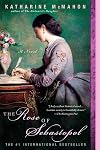
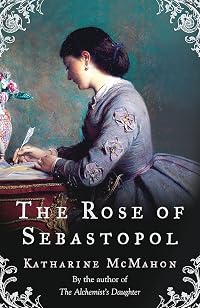
Do you like the cover?: Yes, the cover just grabs me.
First line from book: We arrived in Narni late on a Sunday evening.
Review: This is going to be another breathless, sputtering review as I literally finished this book minutes ago. I'm teary, all caught up in the emotion of the story and my love for the characters, which is the sign of a show more fantastic book.
I knew absolutely nothing about this book when I got it which meant I had no idea even of the plot, so it was a real delight to try to guess where the story was going. McMahon is a talented writer: she conveys the sense of the Crimean War without bogging the reader down in too much exposition or narrative about the war, and I found all the characters gripping. Her technique of flashing between the present to Mariella and Rosa's childhood years was lovely -- I found myself as in love with Mariella and Rosa as they were with each other.
The ending of the book was pitch perfect, even though I would have loved an Epilogue that neatly wrapped up the story for the characters (especially Mariella and Max). This is the kind of historical novel I adore and I can't rave about it enough.
Tropes?: Beautiful reckless girl that everyone is obsessed with, scoundrel soldiers show less
Author: Katharine McMahon
Genre: Historical Fiction
Love/Hate?: Love, ohmygod, love.
Rating: 5/5
Did you finish?: Yes. I couldn't stop reading!
One-sentence summary: Proper English woman, Mariella, goes to Crimea in search of her missing cousin Rosa.
Why did you get this book?: Frankly, because it was available in e-book form from the library at a moment when I was between books.
Do you like the cover?: Yes, the cover just grabs me.
First line from book: We arrived in Narni late on a Sunday evening.
Review: This is going to be another breathless, sputtering review as I literally finished this book minutes ago. I'm teary, all caught up in the emotion of the story and my love for the characters, which is the sign of a show more fantastic book.
I knew absolutely nothing about this book when I got it which meant I had no idea even of the plot, so it was a real delight to try to guess where the story was going. McMahon is a talented writer: she conveys the sense of the Crimean War without bogging the reader down in too much exposition or narrative about the war, and I found all the characters gripping. Her technique of flashing between the present to Mariella and Rosa's childhood years was lovely -- I found myself as in love with Mariella and Rosa as they were with each other.
The ending of the book was pitch perfect, even though I would have loved an Epilogue that neatly wrapped up the story for the characters (especially Mariella and Max). This is the kind of historical novel I adore and I can't rave about it enough.
Tropes?: Beautiful reckless girl that everyone is obsessed with, scoundrel soldiers show less
Hmmm.
I mostly liked this, but I had some problems with it.
Firstly the ending was almost completely unsatisfying for me. I didn't wade my way through this book just for Rosa to be dead.
Secondly, Rosa's sexuality. Does it really need to be danced around like that? It becomes pretty clear that Rosa is in love with Mariella, but it's never actually explicitly confirmed. I like to have my non-straight characters actively confirmed rather than hinted at. Oh, and of COURSE the woman with same-sex attraction dies, because they always fucking do.
But the writing was excellent and the story compelling. I'm just a little disappointed, because I loved Rosa, and thought she could be treated a little better by the narrative.
I mostly liked this, but I had some problems with it.
Firstly the ending was almost completely unsatisfying for me. I didn't wade my way through this book just for Rosa to be dead.
Secondly, Rosa's sexuality. Does it really need to be danced around like that? It becomes pretty clear that Rosa is in love with Mariella, but it's never actually explicitly confirmed. I like to have my non-straight characters actively confirmed rather than hinted at. Oh, and of COURSE the woman with same-sex attraction dies, because they always fucking do.
But the writing was excellent and the story compelling. I'm just a little disappointed, because I loved Rosa, and thought she could be treated a little better by the narrative.
This is going to be another breathless, sputtering review as I literally finished this book minutes ago. I'm teary, all caught up in the emotion of the story and my love for the characters, which is the sign of a fantastic book.
I knew absolutely nothing about this book when I got it which meant I had no idea even of the plot, so it was a real delight to try to guess where the story was going. McMahon is a talented writer: she conveys the sense of the Crimean War without bogging the reader down in too much exposition or narrative about the war, and I found all the characters gripping. Her technique of flashing between the present to Mariella and Rosa's childhood years was lovely -- I found myself as in love with Mariella and Rosa as they show more were with each other.
The ending of the book was pitch perfect, even though I would have loved an Epilogue that neatly wrapped up the story for the characters (especially Mariella and Max). This is the kind of historical novel I adore and I can't rave about it enough. show less
I knew absolutely nothing about this book when I got it which meant I had no idea even of the plot, so it was a real delight to try to guess where the story was going. McMahon is a talented writer: she conveys the sense of the Crimean War without bogging the reader down in too much exposition or narrative about the war, and I found all the characters gripping. Her technique of flashing between the present to Mariella and Rosa's childhood years was lovely -- I found myself as in love with Mariella and Rosa as they show more were with each other.
The ending of the book was pitch perfect, even though I would have loved an Epilogue that neatly wrapped up the story for the characters (especially Mariella and Max). This is the kind of historical novel I adore and I can't rave about it enough. show less
Actually read this in one day, had a train journey and got so hooked, I decided to finish it late in the night.
Mariella is a quiet girl, taught by to sew by her aunt, she has a flair for it. Her life is changed by the entrance of her cousins. First, Henry, a serious young man, who Mariella falls in love with and her lively cousin, Rosa. A modern girl, full of life and questions. The Crimea War brings danger and opportunity, Rosa is determined to be a nurse, her step brother Max a soldier and Mariella keeps a scrapbook. When Rosa goes missing in the Crimea, Mariella is forced to leave her quiet life in Clapham and go to find her.
Mariella is a quiet girl, taught by to sew by her aunt, she has a flair for it. Her life is changed by the entrance of her cousins. First, Henry, a serious young man, who Mariella falls in love with and her lively cousin, Rosa. A modern girl, full of life and questions. The Crimea War brings danger and opportunity, Rosa is determined to be a nurse, her step brother Max a soldier and Mariella keeps a scrapbook. When Rosa goes missing in the Crimea, Mariella is forced to leave her quiet life in Clapham and go to find her.
I've had to back-burner this book so many times that I'm not sure I can see it clearly anymore. At least I'm left feeling confused, because a lot of what I liked is also what I found problematic.
The first half of the book reads relatively slowly. Mariella is a pampered, sheltered girl who is a perfectly proper example of a lady in her time. She's a bit naive, she lacks a sense of adventure, and she's consumed with maintaining propriety. Although she's not a girl I'd like to hang with, she fits in her world and is sharply contrasted with her cousin, Rosa, who is strong-willed and impetuous and strains at the bonds of a proper life. The first half of the book, Mariella fits and it's Rosa who's jarring. Despite my belief, as a modern show more woman, that her impulses to career and education and travel were her absolute right, and despite the fact that I know that I would appreciate Rosa much more were we actually to meet, she comes across as grating and heedless. She doesn't fit this London life, while Mariella does.
Then the second half begins, and the tables are sharply turned. Rosa, who has gone to the Crimea as a nurse, disappears and Mariella goes to find her while also visiting her wounded fiancé. All of the sudden we are on the front in the Crimean War, where Rosa's independence and spirit are not only valuable, but downright necessary. And it's Mariella's focus on propriety and social position, her weakness in every respect, that's jarring. The second half of the book is not only much faster-paced, but is also the point where we get some serious character development from everyone concerned. It's sometimes uncomfortable and can be embarrassing or frustrating to read, but I also found it really satisfying.
This book, even though it exclusively follows Mariella's thoughts and movements, is about Rosa. Rosa is the lens through which we understand everything. Her family, the role of women, the horror of war. And so when she re-enters the story after her disappearance, the story ends. This is kind of a quest novel, and once we learn where Rosa went, the quest is finished. It feels abrupt, and I know a lot of people here didn't like it, but I found it strangely appropriate, and even satisfying. It fulfilled, for me, the Rosa of the first half, who always drew the attention of everyone around her, whether for good or bad. It also fulfills the Mariella of the second half, who for better or worse finally has a complete picture of her cousin. Once that's done, the rest is just details.
So, the slow first half made this book rough going for me, but I also think it's essential to the telling of the story. And the ending feels abrupt, but again... same thing. The very things that feel so unfulfilling also seem perfectly right. show less
The first half of the book reads relatively slowly. Mariella is a pampered, sheltered girl who is a perfectly proper example of a lady in her time. She's a bit naive, she lacks a sense of adventure, and she's consumed with maintaining propriety. Although she's not a girl I'd like to hang with, she fits in her world and is sharply contrasted with her cousin, Rosa, who is strong-willed and impetuous and strains at the bonds of a proper life. The first half of the book, Mariella fits and it's Rosa who's jarring. Despite my belief, as a modern show more woman, that her impulses to career and education and travel were her absolute right, and despite the fact that I know that I would appreciate Rosa much more were we actually to meet, she comes across as grating and heedless. She doesn't fit this London life, while Mariella does.
Then the second half begins, and the tables are sharply turned. Rosa, who has gone to the Crimea as a nurse, disappears and Mariella goes to find her while also visiting her wounded fiancé. All of the sudden we are on the front in the Crimean War, where Rosa's independence and spirit are not only valuable, but downright necessary. And it's Mariella's focus on propriety and social position, her weakness in every respect, that's jarring. The second half of the book is not only much faster-paced, but is also the point where we get some serious character development from everyone concerned. It's sometimes uncomfortable and can be embarrassing or frustrating to read, but I also found it really satisfying.
This book, even though it exclusively follows Mariella's thoughts and movements, is about Rosa. Rosa is the lens through which we understand everything. Her family, the role of women, the horror of war. And so when she re-enters the story after her disappearance, the story ends. This is kind of a quest novel, and once we learn where Rosa went, the quest is finished. It feels abrupt, and I know a lot of people here didn't like it, but I found it strangely appropriate, and even satisfying. It fulfilled, for me, the Rosa of the first half, who always drew the attention of everyone around her, whether for good or bad. It also fulfills the Mariella of the second half, who for better or worse finally has a complete picture of her cousin. Once that's done, the rest is just details.
So, the slow first half made this book rough going for me, but I also think it's essential to the telling of the story. And the ending feels abrupt, but again... same thing. The very things that feel so unfulfilling also seem perfectly right. show less
August's book club.
One of those books that a bit of a slow burner - took me several chapters of ploughing through to start to get into it. Jumps backwards & forwards between the present, 10 years ago and the recent past (if that makes sense). Tells of Mariella, a young girl who is very much a product of her upbringing in early 19C London. Father an engineer (of some description) while mother is involved in worthy causes - mainly a home for retired governesses. Mariella stitches. Lots. In the house is a second cousin type young man (Henry) it is telegraphed from early on that they are going to be an item. not necessarily due to any great passion (in fact he's a bit of a damp dishrag, if I'm honest)but because it's easy and sort of show more expected by both of them. And life is all very ordered (and frankly rather dull). However, Mariella has a cousin, Rose. And I can't say I like Rose any more than Mariella, as Rose is one of those people who are always full of ideas and enthusiasms that consume them. (I think I know a Rose - a conversation ends up being a bit like going 10 rounds with Frank Bruno)They're of an age and the flash backs to 10 years ago revolve around a visit to the home of Rose, her mother & step father & 2 step brothers. Rose is full of how she's going to change the world and how that means Mariella (and everyone else who gets in her way) has to bend over backwards to accommodate her. She strikes me as somewhat blinkered and selfish.
Rose's step father dies and Rose plus hypochondriac mother are turned out the house - turn up at Mariella's parent's house, expecting to stay. At the same time, Henry is making a name for himself as a surgeon while Rose conceives a desire to be a nurse. Then the Crimean war breaks out - and breaks into the ordered house in London. Henry goes off to solve the Cholera issue (single handedly, he's got such an inflated idea of himself) while Rose takes the first opportunity to head out as a Nurse. then silence. Rose vanishes, Henry falls ill & Mariella is dragged so far out of her comfort zone that she thinks she'll die as she heads out to find Henry, then Rose. As usual, you have no idea what you can do until pushed, and Mariella is pushed further than she ever expects, and has all sorts of squeamish fits over some of the things she has to do, but she does them, and her character becomes formed in this journey. She ends the book a very different person and in a very different situation than she starts it, or, indeed, from how she would have ended up, had the war not intervened.
Oddly, for a book where I spent a lot of it wanting to slap the lead characters, I actually quite enjoyed it! Mariella is a product of her age but comes on leaps and bounds as the book progresses. There is a completely believable cast of supporting characters to bolster the sometime quite claustrophobic relationship between Mariella and both Henry & Rose. Some nice touches of putting the fiction into a historical framework - although I suspect it is entirely a work of fiction in its details. I may well venture another of her books, based on this one. show less
One of those books that a bit of a slow burner - took me several chapters of ploughing through to start to get into it. Jumps backwards & forwards between the present, 10 years ago and the recent past (if that makes sense). Tells of Mariella, a young girl who is very much a product of her upbringing in early 19C London. Father an engineer (of some description) while mother is involved in worthy causes - mainly a home for retired governesses. Mariella stitches. Lots. In the house is a second cousin type young man (Henry) it is telegraphed from early on that they are going to be an item. not necessarily due to any great passion (in fact he's a bit of a damp dishrag, if I'm honest)but because it's easy and sort of show more expected by both of them. And life is all very ordered (and frankly rather dull). However, Mariella has a cousin, Rose. And I can't say I like Rose any more than Mariella, as Rose is one of those people who are always full of ideas and enthusiasms that consume them. (I think I know a Rose - a conversation ends up being a bit like going 10 rounds with Frank Bruno)They're of an age and the flash backs to 10 years ago revolve around a visit to the home of Rose, her mother & step father & 2 step brothers. Rose is full of how she's going to change the world and how that means Mariella (and everyone else who gets in her way) has to bend over backwards to accommodate her. She strikes me as somewhat blinkered and selfish.
Rose's step father dies and Rose plus hypochondriac mother are turned out the house - turn up at Mariella's parent's house, expecting to stay. At the same time, Henry is making a name for himself as a surgeon while Rose conceives a desire to be a nurse. Then the Crimean war breaks out - and breaks into the ordered house in London. Henry goes off to solve the Cholera issue (single handedly, he's got such an inflated idea of himself) while Rose takes the first opportunity to head out as a Nurse. then silence. Rose vanishes, Henry falls ill & Mariella is dragged so far out of her comfort zone that she thinks she'll die as she heads out to find Henry, then Rose. As usual, you have no idea what you can do until pushed, and Mariella is pushed further than she ever expects, and has all sorts of squeamish fits over some of the things she has to do, but she does them, and her character becomes formed in this journey. She ends the book a very different person and in a very different situation than she starts it, or, indeed, from how she would have ended up, had the war not intervened.
Oddly, for a book where I spent a lot of it wanting to slap the lead characters, I actually quite enjoyed it! Mariella is a product of her age but comes on leaps and bounds as the book progresses. There is a completely believable cast of supporting characters to bolster the sometime quite claustrophobic relationship between Mariella and both Henry & Rose. Some nice touches of putting the fiction into a historical framework - although I suspect it is entirely a work of fiction in its details. I may well venture another of her books, based on this one. show less
What an embarrassing read for the most part. How any of the characters could be in love with each other is a mystery, and spending so much time with Mariella, the narrator, is hard-going, she's such a sop, until the Irish nurse Nora giver her the verbal 'fecking' slap she needed and she bucks up. I picked it up because of the embroidery element, but this was no fabulous Penelope or Arachne story which I was hoping for, and the speed at which Mariella sews and embroiders is frustratingly not remotely credible. Still, once she's had her 'fecking' slap,the narrative improves and it's a fair old romp to the end - albeit a soppy one. Crimea wasn't badly depicted throughout, both at the scene and at home through the Times, which was a relief! show more But all in all, time spent with some hopefully forgettable characters. show less
Members
- Recently Added By
Lists

tell me where it hurts
36 works; 7 members
Author Information

12 Works 2,189 Members
Katharine McMahon was born in Britain. She is an author who has published nine novels. She is the bestselling author of "The Rose of Sebastopol" which was short listed for the Best Read Award at the Galaxy Book Awards in 2008. Her previous book "The Alchemist's Daughter" was one of Waterstone's Paperbacks of the Year in 2006. Her latest book, 'The show more Woman in the Picture", was released in 2014. (Bowker Author Biography) show less
Awards and Honors
Common Knowledge
- Canonical title
- The Rose of Sebastopol
- Original publication date
- 2009-03-05
- People/Characters
- Rosa Barr; Mariella Lingwood; Max Stukeley; Henry Thewell; Nora McCormack; Nursing Sisters (show all 10); Maria Lingwood; Isabella Stukeley; Richard Thewell; Euphemia Thewell
- Important places
- Crimean Peninsula; Sebastopol, Russia; Crimea
- Important events
- Crimean War (1853 | 1856)
- Dedication
- To Cheryl Gibson, Charonne Boulton and Mary Portas
- First words
- We arrived in Narni late on a Sunday evening.
- Last words
- (Click to show. Warning: May contain spoilers.)Our wet cheeks collided and our hands were gripped together as she led me in a wild dance until all I could see were sparks of water, the swirling sky, and her delighted, hungry eyes.
Classifications
Statistics
- Members
- 734
- Popularity
- 38,573
- Reviews
- 33
- Rating
- (3.42)
- Languages
- 5 — Dutch, English, Korean, Portuguese, Spanish
- Media
- Paper, Audiobook, Ebook
- ISBNs
- 25
- ASINs
- 11