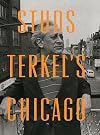
Chicago
by Studs Terkel
On This Page
Description
In a blend of history, memoir, and photography, the Pulitzer Prize winner paints a vivid portrait of this extraordinary American city. Chicago was home to the country's first skyscraper (a ten-story building built in 1884), and marks the start of the famed Route 66. It is also the birthplace of the remote control (Zenith) and the car radio (Motorola), and the first major American city to elect a woman (Jane Byrne) and then an African American man (Harold Washington) as mayor. Its literary show more and journalistic history is just as dazzling, and includes Nelson Algren, Mike Royko, and Sara Paretsky. From Al Capone to the street riots during the Democratic National Convention in 1968, Chicago, in the words of Studs Terkel, "has-as they used to whisper of the town's fast woman-a reputation." Chicago was also home to Terkel, the Pulitzer Prize-winning oral historian, who moved to Chicago in 1922 as an eight-year-old and who would make it his home until his death in 2008 at the age of ninety-six. This book is a splendid evocation of Studs Terkel's hometown in all its glory-and all its imperfection. show lessTags
Recommendations











Member Reviews
I read this to learn more about Chicago, and mostly what I learned is that Studs Terkel really loved Chicago. His highbrow/lowbrow style and the cast of characters he knew makes it engaging.
The book is a compilation of paragraphs and photos on people and places of Chicago. Public and private. Perfect.
Chicago
Studs Terkel (1986)
On City Streets: Chicago, 1964-2004
Gary Stochl
Every Chicagoan knows of the dual Chicago Terkel has chronicled throughout his lifetime—a city of history, progress and beauty but also brutality, corruption, and oppression, the city of the '68 convention, the city that inspired Richard Wright's Native Son. Mere meters away from the sun-drenched liveliness of Lake Shore Drive, downtown Chicago grows quickly gray and drab just a few blocks west of Michigan Avenue, the sun shielded by an army of skyscrapers that creates a cavern of concrete and steal.
After nearly forty years of snapping photos around town, Gary Stochl was discovered when he showed up, unannounced, at the office door of a Columbia College show more photography professor, a paper bag full of black and white prints in hand. Stochl's work dwells in that darkside of downtown Chicago, observing the people who trudge along its shadowy streets, their heads down and glances averted--some look at the camera but none make eye contact with other people. Stochl sensitively manages to preserve their individuality and humanity while providing a glimpse at their alienation and fear.
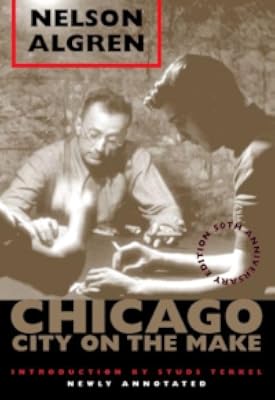
The complicated city both celebrated and mourned by Terkel and Stochl is vanishing, its culture, architecture, and life obscured behind the bland, generic face of gentrification. Terkel's prose, as always, drips with love for the city's vanishing history, the roller rinks, the union halls, the gin joints, the neighborhoods, many of which were dead or dying when Chicago was published . . . a few more have died off since. Chicago drips of both the love and hate the 95-year old Terkel has expressed for the city since his seminal work Division Street America back in the 1960s. Chicago is, by Terkel's admission, merely an afterword to Nelson Algren's Chicago: City on the Make. Algren is not merely imitated, he's channeled, and no one both hated and loved Chicago like Nelson Algren.
Chicago's stark photography also leaves a blistering impression, providing both history and commentary. The pictures of photojournalists Arthur Shay, Mark PoKempner, Archie Lieberman, and Steven Deutch, which are plentiful, rival those of Stochl's in terms honesty and sincerity. show less
Studs Terkel (1986)
On City Streets: Chicago, 1964-2004
Gary Stochl
Every Chicagoan knows of the dual Chicago Terkel has chronicled throughout his lifetime—a city of history, progress and beauty but also brutality, corruption, and oppression, the city of the '68 convention, the city that inspired Richard Wright's Native Son. Mere meters away from the sun-drenched liveliness of Lake Shore Drive, downtown Chicago grows quickly gray and drab just a few blocks west of Michigan Avenue, the sun shielded by an army of skyscrapers that creates a cavern of concrete and steal.
After nearly forty years of snapping photos around town, Gary Stochl was discovered when he showed up, unannounced, at the office door of a Columbia College show more photography professor, a paper bag full of black and white prints in hand. Stochl's work dwells in that darkside of downtown Chicago, observing the people who trudge along its shadowy streets, their heads down and glances averted--some look at the camera but none make eye contact with other people. Stochl sensitively manages to preserve their individuality and humanity while providing a glimpse at their alienation and fear.
The complicated city both celebrated and mourned by Terkel and Stochl is vanishing, its culture, architecture, and life obscured behind the bland, generic face of gentrification. Terkel's prose, as always, drips with love for the city's vanishing history, the roller rinks, the union halls, the gin joints, the neighborhoods, many of which were dead or dying when Chicago was published . . . a few more have died off since. Chicago drips of both the love and hate the 95-year old Terkel has expressed for the city since his seminal work Division Street America back in the 1960s. Chicago is, by Terkel's admission, merely an afterword to Nelson Algren's Chicago: City on the Make. Algren is not merely imitated, he's channeled, and no one both hated and loved Chicago like Nelson Algren.
Chicago's stark photography also leaves a blistering impression, providing both history and commentary. The pictures of photojournalists Arthur Shay, Mark PoKempner, Archie Lieberman, and Steven Deutch, which are plentiful, rival those of Stochl's in terms honesty and sincerity. show less
Ratings
Members
- Recently Added By
Lists

Chicago Books
87 works; 4 members

Used books to buy next
565 works; 1 member
Author Information

32+ Works 10,583 Members
Studs Terkel was an actor, writer, and radio host. He was born Louis Terkel on May 16, 1912 in New York City. He took his name from the James T. Farrell novel, Studs Lonigan. Terkel attended the University of Chicago and graduated with a law degree in 1934. Terkel acted in local stage productions and on radio dramas until he began one of the first show more television programs, an unscripted show called Studs Place in the early 1950s. In 1952, Terkel began Studs Terkel's Almanac on radio station WFMT in Chicago. Terkel compiled a series of books based on oral histories that defined America in the 20th Century. Working: People Talk About What They Do All Day and How They Feel About What They Do received a National Book Award nomination in 1975. The Good War: An Oral History of World War II won the Pulitzer Prize in nonfiction in 1985. Working was turned into a hit musical in 1978. Terkel was named the Communicator of the Year by the University of Chicago in 1969. He also won a Peabody Award for excellence in journalism in 1980 and the National Book Foundation Medal for contributions to American letters in 1997. He died on October 31, 2008 at the age of 96. (Bowker Author Biography) show less
Common Knowledge
- Important places
- Chicago, Illinois, USA
Classifications
- Genres
- Nonfiction, General Nonfiction, History, Biography & Memoir
- DDC/MDS
- 977.311 — History & geography History of North America North central United States Illinois Cook; Chicago Chicago
- LCC
- F548.5 .T37 — Local History of the United States, Canada and Latin America United States local history Illinois
- BISAC
Statistics
- Members
- 127
- Popularity
- 257,561
- Reviews
- 3
- Rating
- (3.85)
- Languages
- English, Hungarian, Swedish
- Media
- Paper, Ebook
- ISBNs
- 6
- ASINs
- 1