On This Page
Description
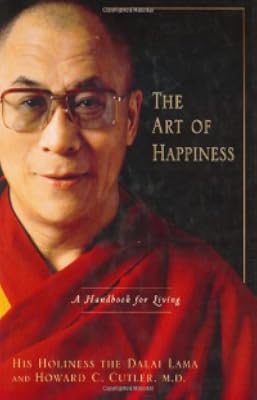
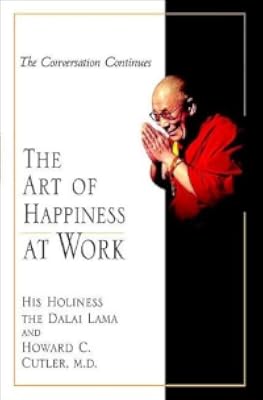
In this wonderful book, the great spiritual leader of Buddhism collaborates for the first time with a Western psychotherapist to share with us the secrets that have led him to inner peace and the attainment of happiness. By presenting specific forms of meditation and small everyday incidents, blending seamlessly the Buddhist tradition with modern Western psychology, the Dalai Lama shows us how to definitively overcome depression, melancholy, anxiety, anger, jealousy, and overall mental show more disharmony. He extensively discusses human relationships, health, family, and work, demonstrating how we can navigate life's obstacles and trials while maintaining our inner peace. show lessTags
Recommendations










Member Reviews
Here's a narrative based on conversations between the Dalai Lama and Howard C. Cutler, a Westerner and psychiatrist.
How to be happy? Well, happiness stem from within, a state of mind where one is able to ward off negativity and, instead, condition himself for positivity. Simple? Certainly not! This sharp yet accessible read is, in fact, a stark reminder of how tough such a recipe for a fulfilling life is to apply.
Now, sure, it's so accessible it may seem cliches. At times indeed, the Dalai Lama may come across, willingly or not, as a bit naïve. For example, acknowledging our closeness to all sentient beings he seems to be trapped in wishful thinking, believing gentleness to be a natural drive stronger than aggressiveness... Biology show more teaches us that it's more complicated than that. Empathy is certainly one of our strongest feature, yet it has its own limit; and it doesn't mean nature is not 'red in teeth and claws' too! His view on romantic relationships are, also, frankly basic common sense with not much insight. I understand this was to be expected from a celibate monk, of course, but then why grant him a whole chapter on the topic? Well…
These few reservations asides, though, there is no denying that 'goodness, kindness, compassion, caring' are powerful values to abide to, undeniably leading to inner contentment and peace of mind. Not only that, but it takes dedicated and never ending training and practices 'to get' such an outlook upon our condition. Lack of satisfaction, cravings, pain, suffering, anger and hate… Life is tough for all of us, and so all of us can benefit from the strength to be drawn out of his teaching. Here's therefore a great book if you want to roughly familiarise yourself with the Buddhist ethos. It's especially relevant to anyone, since it's NOT a book about Buddhism, but an insight into a way of going through life as inspired by Buddhism. Hence, no matter your background (religious or unbeliever) if you are strong enough in mind and heart to be open and undertake such journey, then this read might be powerfully life changing - or at least put you on the path of a new awareness.
Personally, what I particularly found striking (and it's a pity the author doesn't delve more on it) is the contrast in between how such ethos (or 'spirituality', if you prefer) is more often than not in plain contradiction with the values fuelling the West, to a point where such emphasis on gentleness is often completely misunderstood as a weakness, a fatalism, or, even, selfishness. It's none of that, but our differences has an impact on how we deal with the hazards of life; and so I firmly believe that we Westerners have a lot to learn in looking up at what Eastern philosophies have to offer. These 'conversations' may be just a very rough overview, but they can serve as a nice introduction to it all.
All in all, a very nice handbook. show less
How to be happy? Well, happiness stem from within, a state of mind where one is able to ward off negativity and, instead, condition himself for positivity. Simple? Certainly not! This sharp yet accessible read is, in fact, a stark reminder of how tough such a recipe for a fulfilling life is to apply.
Now, sure, it's so accessible it may seem cliches. At times indeed, the Dalai Lama may come across, willingly or not, as a bit naïve. For example, acknowledging our closeness to all sentient beings he seems to be trapped in wishful thinking, believing gentleness to be a natural drive stronger than aggressiveness... Biology show more teaches us that it's more complicated than that. Empathy is certainly one of our strongest feature, yet it has its own limit; and it doesn't mean nature is not 'red in teeth and claws' too! His view on romantic relationships are, also, frankly basic common sense with not much insight. I understand this was to be expected from a celibate monk, of course, but then why grant him a whole chapter on the topic? Well…
These few reservations asides, though, there is no denying that 'goodness, kindness, compassion, caring' are powerful values to abide to, undeniably leading to inner contentment and peace of mind. Not only that, but it takes dedicated and never ending training and practices 'to get' such an outlook upon our condition. Lack of satisfaction, cravings, pain, suffering, anger and hate… Life is tough for all of us, and so all of us can benefit from the strength to be drawn out of his teaching. Here's therefore a great book if you want to roughly familiarise yourself with the Buddhist ethos. It's especially relevant to anyone, since it's NOT a book about Buddhism, but an insight into a way of going through life as inspired by Buddhism. Hence, no matter your background (religious or unbeliever) if you are strong enough in mind and heart to be open and undertake such journey, then this read might be powerfully life changing - or at least put you on the path of a new awareness.
Personally, what I particularly found striking (and it's a pity the author doesn't delve more on it) is the contrast in between how such ethos (or 'spirituality', if you prefer) is more often than not in plain contradiction with the values fuelling the West, to a point where such emphasis on gentleness is often completely misunderstood as a weakness, a fatalism, or, even, selfishness. It's none of that, but our differences has an impact on how we deal with the hazards of life; and so I firmly believe that we Westerners have a lot to learn in looking up at what Eastern philosophies have to offer. These 'conversations' may be just a very rough overview, but they can serve as a nice introduction to it all.
All in all, a very nice handbook. show less
DNF @ 15%
I mistakenly thought this was a book by His Holiness the Dalai Lama, who is listed as one of the authors - or the only authors in some book databases - but it is not. This book was written by Howard C. Cutler, a psychiatrist, who spent one week with the Dalai Lama, and then used his interviews with the Dalai Lama as a basis for this book.
Now, once I found out that I was mislead by the book, I still wanted to read on and see what the author had to say. Unfortunately, I was quickly put off by two - in my opinion major - logical flaws in the construction of the book's premise:
1. The author provides the following motivation behind writing the book:
"When I initially conceived of this book, I envisioned a conventional self-help show more format in which the Dalai Lama would present clear and simple solutions to all life’s problems. I felt that, using my background in psychiatry, I could codify his views in a set of easy instructions on how to conduct one’s daily life. By the end of our series of meetings I had given up on that idea. I found that his approach encompassed a much broader and more complex paradigm, incorporating all the nuance, richness, and complexity that life has to offer."
You see, my problem is that the Dalai Lama's books, speeches and other communications are pretty easy to understand. He has a particular skill to explain complex issues in simple terms, but then simplicity is one of the essential elements in his way of life.
The other issue I had with the author's statement is that I find the approach of trying to create a dogma from a Buddhist point of view a rather ridiculous idea. If there ever was a spritual teaching whose essence is that it is wholly un-dogmatic and un-codified, it would be Buddhism, but then maybe I am just getting the wrong end of the stick.
2. The author's approach in this book is to try and combine Western science with the Dalai Lama's interpretations/teachings. Again, this is a flawed approach when early on in the book, the author includes the following quotation:
"In trying to determine the source of one’s problems, it seems that the Western approach differs in some respects from the Buddhist approach. Underlying all Western modes of analysis is a very strong rationalistic tendency – an assumption that everything can be accounted for. And on top of that, there are constraints created by certain premises that are taken for granted."
Basically, the Dalai Lama tried to explain that a Western approach which is mostly based on science is restricted in its understanding of the human condition. So, why the author tries to combine, or back up, the topics discussed from a Buddhist perspective in this book with references to Western scientific research (for which he often does not cite sources!!!) is totally beyond me.
Can't recommend this at all. show less
I mistakenly thought this was a book by His Holiness the Dalai Lama, who is listed as one of the authors - or the only authors in some book databases - but it is not. This book was written by Howard C. Cutler, a psychiatrist, who spent one week with the Dalai Lama, and then used his interviews with the Dalai Lama as a basis for this book.
Now, once I found out that I was mislead by the book, I still wanted to read on and see what the author had to say. Unfortunately, I was quickly put off by two - in my opinion major - logical flaws in the construction of the book's premise:
1. The author provides the following motivation behind writing the book:
"When I initially conceived of this book, I envisioned a conventional self-help show more format in which the Dalai Lama would present clear and simple solutions to all life’s problems. I felt that, using my background in psychiatry, I could codify his views in a set of easy instructions on how to conduct one’s daily life. By the end of our series of meetings I had given up on that idea. I found that his approach encompassed a much broader and more complex paradigm, incorporating all the nuance, richness, and complexity that life has to offer."
You see, my problem is that the Dalai Lama's books, speeches and other communications are pretty easy to understand. He has a particular skill to explain complex issues in simple terms, but then simplicity is one of the essential elements in his way of life.
The other issue I had with the author's statement is that I find the approach of trying to create a dogma from a Buddhist point of view a rather ridiculous idea. If there ever was a spritual teaching whose essence is that it is wholly un-dogmatic and un-codified, it would be Buddhism, but then maybe I am just getting the wrong end of the stick.
2. The author's approach in this book is to try and combine Western science with the Dalai Lama's interpretations/teachings. Again, this is a flawed approach when early on in the book, the author includes the following quotation:
"In trying to determine the source of one’s problems, it seems that the Western approach differs in some respects from the Buddhist approach. Underlying all Western modes of analysis is a very strong rationalistic tendency – an assumption that everything can be accounted for. And on top of that, there are constraints created by certain premises that are taken for granted."
Basically, the Dalai Lama tried to explain that a Western approach which is mostly based on science is restricted in its understanding of the human condition. So, why the author tries to combine, or back up, the topics discussed from a Buddhist perspective in this book with references to Western scientific research (for which he often does not cite sources!!!) is totally beyond me.
Can't recommend this at all. show less
The way to achieve happiness is a vague, seemingly impossible path that many avoid simply because they do not believe that they can reach this goal. Before reading The Art of Happiness, I wasn’t convinced that a book could tell me how to be content with my life—and I was right. Every human being, I believe, has a separate path leading to the same satisfaction and it takes a lot of mistakes, risks, and lessons to get to it. What I found while reading this book, however, was that the Dalai Lama feels the same. Throughout his conversation with Howard Cutler, which is what this “handbook” is comprised of, he taught many lessons that can apply to all—but there was no arrogance included. He did not try and dictate, and quite show more frankly, though this can be considered a “self help” book by more technical standards, there is no doctrine present in this except for what the reader gets out of it by individual interpretation. The Dalai Lama states his opinions about happiness with a very gentle firmness and confidence that doesn’t come across as anything but sage.
I enjoyed reading this because it was new for me—I don’t read nonfiction very often, particularly books with a message like this one, but I think that now I am going to look into them more. I took a lot of lessons out of this book that I can apply to my own life, and it was a pleasure to discover new depths of happiness that I had never ventured into before. It was also a great read along with Siddhartha, Herman Hesse’s novel, because I could follow the themes in the novel more closely with the help of the teachings of the Dalai Lama, and pick out the aspects of Buddhism long before they were fully introduced. I would definitely recommend this. show less
I enjoyed reading this because it was new for me—I don’t read nonfiction very often, particularly books with a message like this one, but I think that now I am going to look into them more. I took a lot of lessons out of this book that I can apply to my own life, and it was a pleasure to discover new depths of happiness that I had never ventured into before. It was also a great read along with Siddhartha, Herman Hesse’s novel, because I could follow the themes in the novel more closely with the help of the teachings of the Dalai Lama, and pick out the aspects of Buddhism long before they were fully introduced. I would definitely recommend this. show less
Having just seen the Dalai Lama teach at Gillette Stadium in Massachusetts, I wanted to pick up one of his books and read further after being reinvigorated at his wonderful teaching. I picked this up partially because it was the only one available at the library I work at, and also because I bought it for my mother years ago and she'd never read it. It works as a secular meditation on the method to improve your relationship with yourself and the people around you through cultivating happiness and compassion, but of course comes from a Buddhist perspective. It was written from interviews that Howard Cutler, a psychologist, had with the Dalai Lama over the course of a few years, and Dr. Cutler brings to the table not only his professional show more background but his experience as a human trying to integrate the Dalai Lama's teachings into his life. At points Dr. Cutler portrays himself as being impatient and a little peevish, which is great because it provides opportunities for him to recount that it's not always easy to cultivate this type of compassion, and serves to ground the work and make it more approachable. show less
The Art of Happiness combines the calm words of the exiled spiritual leader of Tibet with the trained observations of an American psychiatrist. Howard Cutler relays conversations, stories, and meditations in such a way that he brings an understanding analysis of Tibetan Buddhism, and its leader, to the reader without clinically removing its peaceful soul.
The enduring image of the Dalai Lama is that of his beautiful smile. This Nobel Peace Prize winner's smile lights up his entire face—and it quickly spreads to the faces of those nearby. The book's subtitle, A Handbook for Living, is apt for a book that tells of the purpose of life--happiness. The Dalai Lama has the ability to connect easily with most everyone with whom he comes in show more contact. He focuses not on the differences that separate us, but to see what it is that we all share. One story that has stayed with me is one of a hotel maid who runs into the Dalai Lama on his way to an “important” meeting, but he stops and takes the time to speak to her. Each day that follows, as the spiritual leader is being lead to other meetings, the maid waits in the same location, and brings more and more of her fellow maids. And, each day, the Dalai Lama takes the time to bow and speak with each of the maids, including many who can' t speak the same language. He's made a spiritual connection with these people as important as any he will make that day. The Dali Lama's smile and laugh are the very definition of contagious.
(4/99) show less
The enduring image of the Dalai Lama is that of his beautiful smile. This Nobel Peace Prize winner's smile lights up his entire face—and it quickly spreads to the faces of those nearby. The book's subtitle, A Handbook for Living, is apt for a book that tells of the purpose of life--happiness. The Dalai Lama has the ability to connect easily with most everyone with whom he comes in show more contact. He focuses not on the differences that separate us, but to see what it is that we all share. One story that has stayed with me is one of a hotel maid who runs into the Dalai Lama on his way to an “important” meeting, but he stops and takes the time to speak to her. Each day that follows, as the spiritual leader is being lead to other meetings, the maid waits in the same location, and brings more and more of her fellow maids. And, each day, the Dalai Lama takes the time to bow and speak with each of the maids, including many who can' t speak the same language. He's made a spiritual connection with these people as important as any he will make that day. The Dali Lama's smile and laugh are the very definition of contagious.
(4/99) show less
At first, I felt like I wouldn't read the whole book. The co-author didn't seem like a good fit with the Dalai Lama, but he grew on me the more I read. The DL supplied a lot of practical wisdom, and for that alone the book was worth reading to the end. My favorite chapters cam at the end with the discussions around anger, then around anxiety.
This was a pretty interesting read and a good, light introduction to the philosophy of the Dalai Lama that doesn't lean too heavily on the more religious or mystical elements of Buddhism. At times it felt like the interviewer got in the way a bit, and to be honest, his own examples didn't really add that much to my understanding of what I felt were concepts that were clearly explained in the Dalai Lama's own words. A lot of the philosophical ideas discussed were really interesting, and, moreover, practical too - I definitely found the chapters on anger and anxiety helpful in framing my attitude towards these emotions. Worth a look - and I'll be reading more in this area.
Members
- Recently Added By
Published Reviews
ThingScore 75
The Art of Happiness is the result of collaboration between psychiatrist Howard Cutler and His Holiness the Dalai Lama. It is a blend of the Dalai Lama’s thoughts on various issues and Cutler’s personal and scientific reflections on them.
added by mikeg2
Lists

Best Self Help Books
87 works; 18 members


Books in English
14 works; 1 member
Author Information

1,143+ Works 42,717 Members
The exiled 14th Dalai Lama was born on July 6, 1935 to a peasant family living in a former Tibetan village. He was recognized as the reincarnation of the previous spiritual leader of his nation at the age of two and enthroned on February 22, 1940. In 1959 he and 100,000 followers fled the country following a failed revolt against the Communist show more Chinese forces that had occupied Tibet for almost a decade. Since that time, the Dalai Lama has met with numerous world leaders and U. N. officials in a tireless effort to free his country and preserve the traditional Tibetan way of life. He received the Nobel Peace Prize in 1989 and has been awarded honorary citizenships by many international cities and countries, as well as multiple honorary degrees and human rights awards. In 2007 the Dalai Lama received the United States Congressional Gold Medal. He has written many books and lectures around the world. His book, My Spiritual Journey, made the iBooks bestseller list in 2016. He is the author of the best seller, The Book of Joy: Lasting Happiness in a Changing World, with the Desmond Tutu and Douglas Carlton Abrams. (Bowker Author Biography) show less

6 Works 6,890 Members
Awards and Honors
Awards
Distinctions
Series

Belongs to Publisher Series
Aider la vie (1999)
Inspira (2)
Common Knowledge
- Canonical title
- The Art of Happiness: A Handbook for Living
- Original title
- The Art of Happiness: A Handbook for Living
- Original publication date
- 1998
- Dedication
- Dedicated to the Reader:
May you find happiness. - First words
- I believe that the very purpose of our life is to seek happiness.
- Last words
- (Click to show. Warning: May contain spoilers.)It was as if he had ceased to be a visible object and had simply become a felt presence.
- Original language
- English
Classifications
- Genres
- Religion & Spirituality, Philosophy, General Nonfiction, Nonfiction
- DDC/MDS
- 294.3444 — Religion Other religions Dharmic religions Buddhism Buddhism - practice Religious experience, life, practice Religious life and practice
- LCC
- BQ7935 .B774 .A78 — Philosophy, Psychology and Religion Buddhism Buddhism Modifications, schools, etc. Tibetan Buddhism (Lamaism)
- BISAC
Statistics
- Members
- 5,970
- Popularity
- 2,162
- Reviews
- 57
- Rating
- (4.01)
- Languages
- 19 — Catalan, Czech, Danish, Dutch, English, Finnish, French, German, Greek, Hungarian, Italian, Korean, Norwegian (Bokmål), Norwegian, Portuguese, Russian, Spanish, Swedish, Tamil
- Media
- Paper, Audiobook, Ebook
- ISBNs
- 87
- UPCs
- 2
- ASINs
- 35