On This Page
Description
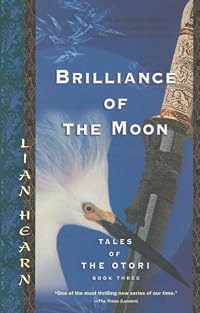
In the final installment of the Tales of the Otori, the young Takeo meets his destiny, fulfilling the prophesy: "You were born into the Hidden, but your life ... is no longer your own." The stage is set: Takeo and his new bride Kaede are on the brink of starting a war to reclaim the lands that are her rightful claim by birth, with a thousand loyal warriors by their side. But much more is at stake, with Takeo sworn to avenge the death of his adoptive father. Kaede, a not-at-all helpless show more damsel, has also cast a first stone by renouncing the powerful Lord Fujiwara, who considers her his first wife. An imaginary feudal Japan is vividly reconstructed in this magical tale filled with clan rivalries, supernatural powers, shadowy tribes, and true love. show lessTags
Recommendations



Member Reviews
This is the end of the main part of the trilogy, and it picks up largely where the last one left off. Here, we have the culmination of the prophecy, all of the battles that were foretold, and the two lead characters' winding course around each other. In this book, we also get a couple of chapters told with Kaede's maid and confidant as the POV, but these were probably necessary to get across a couple of plot points that would have seemed fairly contrived otherwise. It does bring the majority of threads in the series to a close, although there are a couple left at the end for the sequel set significantly later, which I will not be reading right now.
On the whole, the plot is pretty solid; there are still some good twists, and the show more characterization, particularly of the two leads but also of the main supporting cast, is sharp, with some nice touches. Even particular passages take on a style that depends on the circumstances of the character, not an easy feat. The only problem I really had with it is that the battle scenes, which are some of the most pivotal parts of the book, aren't really well served by Hearn's style; she's better at one-on-one fight description than a battle between armies, and I think that she knows that, which is why some of the battle descriptions are quite short. Still, if you just count the power of what happens in the battles as the main part, it's fine.
Bottom line, this trilogy worked quite well, and stayed pretty tight from end to end. I'm looking forward to reading the last one (and then the prequel about Takeo's adoptive father, whose influence in the books are great, once it's in paperback, but not until then), but it can wait a bit. I need a break with something else. show less
On the whole, the plot is pretty solid; there are still some good twists, and the show more characterization, particularly of the two leads but also of the main supporting cast, is sharp, with some nice touches. Even particular passages take on a style that depends on the circumstances of the character, not an easy feat. The only problem I really had with it is that the battle scenes, which are some of the most pivotal parts of the book, aren't really well served by Hearn's style; she's better at one-on-one fight description than a battle between armies, and I think that she knows that, which is why some of the battle descriptions are quite short. Still, if you just count the power of what happens in the battles as the main part, it's fine.
Bottom line, this trilogy worked quite well, and stayed pretty tight from end to end. I'm looking forward to reading the last one (and then the prequel about Takeo's adoptive father, whose influence in the books are great, once it's in paperback, but not until then), but it can wait a bit. I need a break with something else. show less
Spurred on by the desire to find out what happens, and by James’s comment on the last Otori post, I moved on to Brilliance of the Moon: the third and final instalment in Hearn’s series. To some extent it lived up to my expectations, as Takeo is confronted with the five prophesied battles that will shape his future (‘four to win and one to lose‘). The plot picked up its heels as we approached the conclusion; though the actual battle scenes felt rushed and anaemic after all the build-up. And that wasn’t the only problem. The characterisation still had issues and I was left feeling, somehow, unsatisfied. In short, this has been an enjoyable but ultimately flawed series, rich in concept but not always completely successful in show more execution...
For the rest of my review, please see my blog:
https://theidlewoman.net/2017/07/25/brilliance-of-the-moon-lian-hearn/ show less
For the rest of my review, please see my blog:
https://theidlewoman.net/2017/07/25/brilliance-of-the-moon-lian-hearn/ show less
I was even less satisfied with this book than I was with the other two in the series. I am upset with a lot of things, such as the resolution and the character "development," but what upset me the most was probably Kaede's treatment as a character. It was evident in the other books, but it really came to a head here.
Despite the previous two books alternating frequently between Kaede and Takeo, this one gives Kaede only two chapters. We don't get anything from her perspective until 150 pages in. And when we do, it's because she's bemoaning the absence of Takeo. The formerly powerful, fiery girl who was taking her life into her own hands is reduced to something small, lonely, petty and jealous. Her character has completely changed, and show more not at all for the better. A woman whose main concerns were formerly for the well-being of her people, her sisters and her domain becomes obsessed with nothing more than being a "good wife," which she defines as being able to bear children.
Just overall I felt that the series had an interesting story idea, but the execution was ultimately inadequate. The story was smothered in romance and then hacked off rudely at the end with an unsatisfying conclusion.
Also, it should tell you something that death I grieved about most, rather than just being angry and confused at the writing, was that of Raku. I was far more excited to meet his foals at the end than I was concerned with the sappy reunion of Takeo and Kaede.
And can we talk about that earthquake? Okay no, I don't want to talk about it. I understand that deus ex machina is a legitimate literary device but that doesn't mean I can't regard this use of it as lazy. Oh, what's that? An entire army bothering you? Here let me swallow them up in a single paragraph. There, all better.
Despite the previous two books alternating frequently between Kaede and Takeo, this one gives Kaede only two chapters. We don't get anything from her perspective until 150 pages in. And when we do, it's because she's bemoaning the absence of Takeo. The formerly powerful, fiery girl who was taking her life into her own hands is reduced to something small, lonely, petty and jealous. Her character has completely changed, and show more not at all for the better. A woman whose main concerns were formerly for the well-being of her people, her sisters and her domain becomes obsessed with nothing more than being a "good wife," which she defines as being able to bear children.
Just overall I felt that the series had an interesting story idea, but the execution was ultimately inadequate. The story was smothered in romance and then hacked off rudely at the end with an unsatisfying conclusion.
Also, it should tell you something that death I grieved about most, rather than just being angry and confused at the writing, was that of Raku. I was far more excited to meet his foals at the end than I was concerned with the sappy reunion of Takeo and Kaede.
And can we talk about that earthquake? Okay no, I don't want to talk about it. I understand that deus ex machina is a legitimate literary device but that doesn't mean I can't regard this use of it as lazy. Oh, what's that? An entire army bothering you? Here let me swallow them up in a single paragraph. There, all better.
The third volume in the trilogy starts where the second left off. Kaede and Takeo are now married in defiance of the norms of their culture and without the permission of Arai the powerful warlord who now controls a great part of the country. Takeo needs to fulfil his destiny as described to him by the holy woman in book 2, and to avenge his adopted father and uncle Shigeru. Kaede needs to travel to the domain she inherited from Shigeru's deceased lover and assert her claim, especially as the inheritance through the female line, operating only in that domain, is being challenged on all sides.
They arrive and start to organise the area but are aware that they are threatened by a number of different forces, including Arai and the Otori show more uncles who usurped his title to his domain. Takeo begins to build alliances with some unlikely groups, meeting resistence even from his close friend when this means treating the outcast Hidden (among whom Takeo was raised) as human beings. To nearly everyone else they are despised at best and at worst viewed as contaminations and subhumans to be exterminated.
In the course of negotiating with some old friends who have now turned pirate due to the oppression of the uncles, he learns of foreign barbarians (who sound European from the description, despite this being a fantasy based upon Japan rather than historical) and the firearms they use which would overcome the swords and bows of his own people. This eventually has a major role to play. However, his absence results in Kaede falling into terrible danger.
I did not enjoy this volume as much as the previous two unfortunately. A lot of it does consist of fighting from Takeo's viewpoint. As before, the sections where Kaede is the main character are in the third person which is a bit distancing, and despite her strength of character, which we saw in book 1 when she was often facing some pretty hopeless situations, in this she is reduced to powerlessness. The gender politics, based on the real position of women in Japan (and elsewhere) at this period means that, even before this happens, men defer to her husband all the time and do not take her seriously in any authoritative role despite this being historically the position in the domain she inherits. And her fighting skills, so prominent in book 1, are no use to her.
The body count in this series continues to be high with various characters being killed off, though some off stage, and there is a particularly sad fate for some of the horses.
I felt the ending relied on some lucky last minute rescues by minor characters rather than the lead characters being able to solve their own difficulties. And I was a bit thrown by the inclusion of an afterword set about fifteen years afterwards. So I found the situation in which they were left at the end of the actual story rather skated over. For all these reasons I am awarding this volume 3 stars. show less
They arrive and start to organise the area but are aware that they are threatened by a number of different forces, including Arai and the Otori show more uncles who usurped his title to his domain. Takeo begins to build alliances with some unlikely groups, meeting resistence even from his close friend when this means treating the outcast Hidden (among whom Takeo was raised) as human beings. To nearly everyone else they are despised at best and at worst viewed as contaminations and subhumans to be exterminated.
In the course of negotiating with some old friends who have now turned pirate due to the oppression of the uncles, he learns of foreign barbarians (who sound European from the description, despite this being a fantasy based upon Japan rather than historical) and the firearms they use which would overcome the swords and bows of his own people. This eventually has a major role to play. However, his absence results in Kaede falling into terrible danger.
I did not enjoy this volume as much as the previous two unfortunately. A lot of it does consist of fighting from Takeo's viewpoint. As before, the sections where Kaede is the main character are in the third person which is a bit distancing, and despite her strength of character, which we saw in book 1 when she was often facing some pretty hopeless situations, in this she is reduced to powerlessness. The gender politics, based on the real position of women in Japan (and elsewhere) at this period means that, even before this happens, men defer to her husband all the time and do not take her seriously in any authoritative role despite this being historically the position in the domain she inherits. And her fighting skills, so prominent in book 1, are no use to her.
The body count in this series continues to be high with various characters being killed off, though some off stage, and there is a particularly sad fate for some of the horses.
I felt the ending relied on some lucky last minute rescues by minor characters rather than the lead characters being able to solve their own difficulties. And I was a bit thrown by the inclusion of an afterword set about fifteen years afterwards. So I found the situation in which they were left at the end of the actual story rather skated over. For all these reasons I am awarding this volume 3 stars. show less
These books certainly walk the spectrum of love, hate, hope, grief, despair, subterfuge, cruelty, destiny, and prophecy in this sweeping action series set in a medieval Japan, though I had to remind myself of this when I tired of people over the course of the books being told to, or thinking of, killing themselves to regain their honour even though it’s fitting for the marvellous world Lian Hearn has created. This world feels real, as do the characters. Though the books don’t recount all the warfare, there’s enough action for the reader to visualise an immense battle and although I felt distanced from the brutality, this is understandable when considering this series is for the YA market. Still, there’s plenty here for adults to show more enjoy; indeed, some may prefer the simplistic storytelling, which still ignites the imagination. show less
The third book in this cycle of the Otori picks up where the second ended seamlessly, continuing the ongoing romance... and subsequent tragedies (yes, plural) that befall them.
Mostly Kaede, I think. She and all women have it the hardest in these books.
But that's kinda the point. Feudal Shogunate-ish as this is, with a sprinkling of fantasy clan magic makes it feel more like ninja action than anything else. But unlike Naruto, this doesn't have that many happy moments to balance out the dark and sad.
Let's hear it for realism!
This is a tragedy. We know it is a romantic tragedy. So why is it so hard to keep going with this?
Perhaps because I've gotten to love these characters.
I kinda loved to see a lot of these other people die. Bunch of show more thugs. The politics is only barely better than the outright bloodshed. Are all men this evil? Or is it just how I feel after reading this book?
Anyway. A delightful read, if difficult and disturbing. The author does have a way with words. show less
Mostly Kaede, I think. She and all women have it the hardest in these books.
But that's kinda the point. Feudal Shogunate-ish as this is, with a sprinkling of fantasy clan magic makes it feel more like ninja action than anything else. But unlike Naruto, this doesn't have that many happy moments to balance out the dark and sad.
Let's hear it for realism!
This is a tragedy. We know it is a romantic tragedy. So why is it so hard to keep going with this?
Perhaps because I've gotten to love these characters.
I kinda loved to see a lot of these other people die. Bunch of show more thugs. The politics is only barely better than the outright bloodshed. Are all men this evil? Or is it just how I feel after reading this book?
Anyway. A delightful read, if difficult and disturbing. The author does have a way with words. show less
As often happens with series, I'm reluctant to finish reading the last book because I hate for the saga to end. In this last of a fantasy trilogy based on medieval Japan, the plot threads woven in the first two books come together as Takeo, a young man of mixed heritage, fulfills his destiny. His mother was one of the Hidden, an outcast religious sect, and his father had been a Tribe assassin. But Takeo is also heir to the Otori domain, and with the love of his life, Kaede, heir to the Mauyama domain, he uses his preternatural talents and his cunning to lead a patched together army against a variety of enemies to unite the Three Kingdoms in peace.
It's so hard to sum up a series like this because it's so much more and I don't want to show more spoil any of it. It's a tale of betrayal, battles, love, suffering, coming of age experiences, death, honor, and more. Only a couple of years are covered in the three books, yet it feels like so much more time passes as Takeo matures, finds his place in his world, and accepts his destiny while accepting the consequences, good and bad, that are part of it.
If you haven't read this series, give it a try. The fantasy element is minimal. It's more an alternate history with a touch of magic, told in a clear, straightfoward manner that aims right for the heart. show less
It's so hard to sum up a series like this because it's so much more and I don't want to show more spoil any of it. It's a tale of betrayal, battles, love, suffering, coming of age experiences, death, honor, and more. Only a couple of years are covered in the three books, yet it feels like so much more time passes as Takeo matures, finds his place in his world, and accepts his destiny while accepting the consequences, good and bad, that are part of it.
If you haven't read this series, give it a try. The fantasy element is minimal. It's more an alternate history with a touch of magic, told in a clear, straightfoward manner that aims right for the heart. show less
Members
- Recently Added By
Lists

Fantasy by Women Who Broke Away from Europe
144 works; 12 members

Books Read in 2015
3,299 works; 129 members

Books Read in 2019
4,052 works; 110 members
Author Information

79+ Works 17,566 Members
Some Editions
Awards and Honors
Awards
Series

Belongs to Publisher Series
Gallimard, Folio (4263)
Work Relationships
Common Knowledge
- Canonical title
- Brilliance of the Moon
- Original title
- Brilliance of the moon
- Original publication date
- 2004
- People/Characters
- Otori Takeo; Shirakawa Kaede; Muto Shizuka; Muto Kenji; Lord Fujiware; Kubo Makoto (show all 7); Jo-An
- Epigraph
- Others too, in far-flung villages, Will no doubt be gazing at this moon. That never asks which watcher claims the night . . .
Loud on the unseen mountain wind, A stag's cry quivers in the heart, And somewhere a twig lets o... (show all)ne leaf fall. --- Zeami, The Fulling Block (Kinuta) - Dedication
- To B.
- First words
- The feather lay in my palm
- Last words
- (Click to show. Warning: May contain spoilers.)But my death is another tale of the Otori, and one that cannot be told by me.
- Original language*
- Englisch
*Some information comes from Common Knowledge in other languages. Click "Edit" for more information.
Classifications
Statistics
- Members
- 2,721
- Popularity
- 6,789
- Reviews
- 32
- Rating
- (3.85)
- Languages
- 18 — Danish, Dutch, English, Estonian, Finnish, French, German, Greek, Hungarian, Italian, Korean, Lithuanian, Norwegian (Bokmål), Norwegian, Polish, Portuguese, Spanish, Swedish
- Media
- Paper, Audiobook, Ebook
- ISBNs
- 78
- UPCs
- 2
- ASINs
- 25