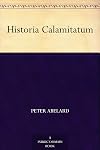
Historia Calamitatum
by Petrus Abaelardus
On This Page
Description
Peter Abaelards Autobiographie, die Historia calamitatum, gehört zu den bekanntesten Texten des Mittelalters, insbesondere wegen der Liebesgeschichte zu Heloise, von der sie berichtet. In den letzten Jahrzehnten wurde øber die Echtheit der Dokumente, die Abaelard und Heloise betreffen, so viel gestritten, da© die literaturwissenschaftliche Deutung des Werkes ganz in den Hintergrund trat. Aus dieser Sackgasse bietet das vorliegende Buch einen Ausweg. Es macht den berøhmten Text zum show more Gegenstand einer Reihe exemplarischer Analysen aus der Perspektive von sieben verschiedenen Literaturtheorien des 20. Jahrhunderts (Rezeptionsästhetik, Foucault, Gender Studies, Rhetorische Stilanalyse, Literaturpsychologie, Kulturwissenschaft, Dekonstruktion). Diesen Analysen vorangestellt ist der lateinische Text der Historia calamitatum mit einer neuen, in modernem Deutsch gehaltenen ©bersetzung. Damit wird die Historia calamitatum erstmals in einer zweisprachigen Ausgabe erschlossen. Peter Abelard's autobiography, the Historia calamitatum, is one of the best-known medieval texts, especially because of the story of his love for Heloise which it recounts. In recent decades, there was so much controversy about the authenticity of the documents concerning Abelard and Heloise that the critical interpretation of the texts was relegated to the sidelines. The present volume provides a way out of this impasse. In it, the famous text is subjected to a series of exemplary analyses from the perspectives of seven different 20th century literary theories (aesthetics of reception, Foucault, Gender Studies, Rhetorical Stylistic Analysis, Psychology of Literature, Cultural Studies, Deconstruction). The analyses are preceded by the Latin text of the Historia calamitatum with a modern German translation. This is thus the first time that the Historia calamitatum has been presented in a bilingual edition. show lessTags
Recommendations


















Member Reviews
Like watching video of a wreck, in slow motion, played over and over again. The greatest misfortune of the logician and theologian, Pierre Abelard, was his compulsion to humiliate the rich and powerful, despite the severe penalties for doing so in 12th Century France.
Sadly, the legend of his love for Heloise also suffers in his retelling. He seems more concerned with his reputation than her welfare. Would've been better for his reputation if he'd never written this short memoir.
Sadly, the legend of his love for Heloise also suffers in his retelling. He seems more concerned with his reputation than her welfare. Would've been better for his reputation if he'd never written this short memoir.
This work was undertaken by a twelfth century philosopher and aesthetic holy man, but doesn't really delve much into philosophy, or theology. Instead, it is the story of his life, and a detailing of his enemies. It reads like a catalog of offenses, naming names of people who have done him wrong, and railing against the grievous harms done to him. Apparently written as a letter to a friend (posited in the afterword as possibly his former lover, Heloise), it stands as the autobiography of a man who has become the stuff of legends. Even as he seeks to vindicate himself in the face of his enemies, he comes off as rather vindictive, and not all that likable, a whiny child begging mommy to take his side against the other kids. Still, it is a show more fascinating look at the world through his eyes, and can be read quickly, not being as dense as many similar works of the time. This work makes it difficult to see him as the humble aesthete he seems to believe himself, as he brags continually about his great fame and his great insight, and many of the scriptural references he make appear to obliquely put him on a par with Jesus, St. Jerome, and other figures revered in Christian history. The introduction of this edition is quite amusing; apparently written in 1922 by a man who is presented as a name without any bio to tell us who he was, there are numerous historical howlers apparently intended to build up the idea of the Catholic Church as the spiritual center of peaceful society in a time when Catholicism had lost much of its hold on Western thought and policy. show less
A brief, astonishing autobiography by a man most remembered for his romance and subsequent castration than for his philosophical struggles and persecution. The story is fascinating to read, even for the layperson with little interest in the ins and outs of medieval religious argument, and regardless of how one views his personality (stubborn, self-absorbed, courageous, all of the above), his own account of his choices, mistakes and persecutions is beautifully written and absorbing.
Ever since I read "Heloise and Abelard: A New Biography" by James Burge, I've wanted to read something written by Peter Abelard, touted as one of the greatest intellectuals of the 12th century. He was certainly a brilliant man, almost too smart for his own good and apparently one of those people who makes everyone aware he is smarter than they. "Historia Calamitatum" is basically Abelard's autobiography and leaves the reader thinking, "he may be smart, but what a whiner". The entire book is replete with examples of people who were out to get him or did him harm. I have no doubt that he was, in fact, persecuted to a large degree but he seems to feel himself a complete innocent when he brought much of his troubles on himself. Even so, show more it's an interesting read. show less
Historia Calamitatum is not only remarkably readable for a medieval text, but it made for a pretty captivating read. Abelard's incredible bad luck is a bit of a downer at times, but interesting none the less.
The famous story of Abelard and Heloise is a romantic one, but if you're looking for a grand medieval love story don't only read Historia Calamitatum. Abelard's retelling of the relationship is rather cold and systematic--don't expect any flowery verse here. Heloise and Abelard's letters have been published and are likely more in that vein. Historia Calamitatum is still a worthwhile story of course, but only in addition to other works if you are interested in Abelard and Heloise's whole history.
The famous story of Abelard and Heloise is a romantic one, but if you're looking for a grand medieval love story don't only read Historia Calamitatum. Abelard's retelling of the relationship is rather cold and systematic--don't expect any flowery verse here. Heloise and Abelard's letters have been published and are likely more in that vein. Historia Calamitatum is still a worthwhile story of course, but only in addition to other works if you are interested in Abelard and Heloise's whole history.
I actually read this book online through Project Gutenburg. It is a memoir telling the story of Abelard's life and adventures, with particular focus on his epic romance. But, of course, this is a story which took place during the 12th century AD, adding an interesting layer of historical interest to what otherwise reads as a rather modern tale.
If I could find a penny for each time Abelard got kicked out of an institution and accused everyone of persecuting him I'd be the richest man in the world.
Members
- Recently Added By
Lists

Heloise & Abelard
22 works; 1 member

Edad Media
33 works; 1 member
Author Information

Peter Abelard is considered to be the founder of the University of Paris. He studied under the nominalist Roscelin de Compiegne and the realist William of Champeaux. Disagreement with William led Abelard to withdraw to the provinces and set up his own school at Melun, in northern France, in 1104. He returned to Paris in 1116 to teach. A disastrous show more love affair with the brilliant and sensitive Heloise followed in 1118. Abelard had been hired as her tutor, and, after the birth of their son, they were secretly married. They later separated, and Abelard became a monk and Heloise a nun. Their correspondence during their years of separation is a literary classic. After the separation Abelard withdrew to Brittany and wrote The Theologia Summi Boni, which was condemned at Soissons in 1121. When he returned once more to Paris in 1136 to teach, his theology was condemned at Sens, chiefly because of the influence of Bernard of Clairvaux. Peter the Venerable of Cluny mediated the dispute between the two while Abelard was on his deathbed. Abelard spent his last days peacefully and was buried near Heloise. (Bowker Author Biography) show less
Some Editions
Series
Belongs to Publisher Series
Work Relationships
Is contained in
Common Knowledge
- Canonical title
- Historia Calamitatum
- Original title
- La Philosophie au Moyen Age
- Alternate titles
- The Story of My Misfortunes
- Original publication date
- c. 1130
- People/Characters
- Peter Abelard (1079-1142); Héloïse; William of Champeaux; Fulbert; Bernard of Clairvaux; Norbert of Xanten
- Important places
- Paris, Île-de-France, France; Melun, Seine-et-Marne, Île-de-France, France; Corbeil, Grand-Est, France; Laon, Aisne, Hauts-de-France, France; Argenteuil, Val d'Oise, Île-de-France, France; Saint-Gildas-de-Rhuys, Morbihan, Brittany, France
- Important events
- Castration of Peter Abelard
Classifications
- Genres
- Nonfiction, History, Biography & Memoir, Religion & Spirituality, Philosophy
- DDC/MDS
- 189.4 — Philosophy & psychology Ancient, medieval & eastern philosophy Medieval western philosophy Scholastic: Scotus, Aquinas, Anselm, Abelard
- LCC
- PA8201 .H4 — Language and Literature Greek language and literature. Latin language and literature Medieval and modern Latin literature Individual authors
- BISAC
Statistics
- Members
- 273
- Popularity
- 118,768
- Reviews
- 11
- Rating
- (3.50)
- Languages
- 8 — Chinese, English, French, German, Hungarian, Latin, Portuguese, Spanish
- Media
- Paper, Ebook
- ISBNs
- 35
- ASINs
- 13