
Étienne Gilson (1884–1978)
Author of The Christian Philosophy of St. Thomas Aquinas
About the Author
Born in Paris, Etienne Gilson was educated at the University of Paris. He became professor of medieval philosophy at the Sorbonne in 1921, and in 1932 was appointed to the chair in medieval philosophy at the College de France. In 1929 he cooperated with the members of the Congregation of Priests of show more St. Basil, in Toronto, Canada, to found the Pontifical Institute of Medieval Studies in association with St. Michael's College at the University of Toronto. Gilson served as professor and director of studies at the institute. Like his fellow countryman Jacques Maritain, Etienne Gilson was a neo-Thomist for whom Christian revelation is an indispensable auxiliary to reason, and on faith he accepted Christian doctrine as advocated by the Roman Catholic church. At the same time, like St. Thomas Aquinas, he accorded reason a wide compass of operation, maintaining that it could demonstrate the existence of God and the necessity of revelation, with which he considered it compatible. Why anything exists is a question that science cannot answer and may even deem senseless. Gilson found the answer to be that "each and every particular existing thing depends for its existence on a pure Act of existence." God is the supreme Act of existing. An authority on the Christian philosophy of the Middle Ages, Gilson lectured widely on theology, art, the history of ideas, and the medieval world. (Bowker Author Biography) show less
Series
Works by Étienne Gilson
From Aristotle to Darwin & Back Again: A Journey in Final Causality, Species and Evolution (1971) 137 copies
John Duns Scotus: Introduction to his fundamental Positions (Illuminating Modernity) (2007) 33 copies
Por que São Tomás Criticou Santo Agostinho. Avicena e o Ponto de Partida de Duns Escoto (1986) 6 copies
Introduction Aux Arts Du Beau: Qu'est-Ce Que Philosopher Sur L'Art? (Essais D'Art Et de Philosophie,) (French Edition) (1998) 3 copies
Three Quests of Philosophy: The Education of a Philosopher, in Quest of Species, in Quest of Matter (The Etienne Gilson Series) (2008) 3 copies
Mass Society and Its Culture, and Three Essays concerning Etienne Gilson on Bergson, Christian Philosophy, and Art (2023) 2 copies
Bernard of Clairvoux's Mysticism (Great Christian Mystical Writings Book 7) (2014) 2 copies, 1 review
Etienne Gilson 1 copy
Bůh a filozofie 1 copy
Bytí a někteří filozofové 1 copy
Realizm tomistyczny 1 copy
God and Philosohpy 1 copy
Il filosofo e la teologia 1 copy
Problemi d'oggi. Il tomismo e la sua situazione attuale. Il caso Teilhard de Chardin - il dialogo difficile. (1967) 1 copy
Jean Duns Scot 1 copy
Filosofia în Evul Mediu 1 copy
Biofilosofia: da Aristotele a Darwin e ritorno: saggio su alcune costanti della biofilosofia (2003) 1 copy
Le Thomisme, Vol. 1 (Classic Reprint): Introduction au Système de Saint Thomas d'Aquin (French Edition) (2018) 1 copy
Το ον και η ουσία: το πρόβλημα της ύπαρξης στη δυτική φιλοσοφία από την αρχαιότητα ως τον εικοστό… (2009) 1 copy
Disputed Questions in Education Vol. 3 - V: The Place of History in Catholic Education (1955) 1 copy
El amor a la sabiduria 1 copy
Linguistique et philosophie 1 copy
Filosofía moderna 1 copy
Associated Works
The church speaks to the modern world; the social teachings of Leo XIII (2021) — Editor — 109 copies
The Doctrine of Being in the Aristotelian 'Metaphysics': A Study in the Greek Background of Mediaeval Thought (1951) — Preface, some editions — 69 copies, 1 review
The Sheed and Ward Anthology of Catholic Philosophy (A Sheed & Ward Classic) (2005) — Contributor — 34 copies
Tagged
Common Knowledge
- Canonical name
- Gilson, Étienne
- Legal name
- Gilson, Étienne Henri
- Other names
- Gilson, Etienne
- Birthdate
- 1884-06-13
- Date of death
- 1978-09-19
- Gender
- male
- Education
- Sorbonne University
Collège de France (PhD ∙ 1906) - Occupations
- philosopher
historian of philosophy
professor - Organizations
- College de France
University of Paris
University of Strasbourg
University of Lille
Pontifical Institute of Mediaeval Studies (Toronto, Ontario -- founder)
Harvard University - Awards and honors
- Académie française (1946)
Légion d'Honneur (Grand officier)
American Philosophical Society (International Member, 1948)
American Academy of Arts and Sciences (1929)
Membre de l'Académie Royale de Belgique (1958)
Croix de Guerre (1914-1918) (show all 7)
Gulbenkian prize for philosophy (1972) - Relationships
- Gandillac, Maurice de (Elève)
Lévy-Bruhl, Lucien (Directeur de thèse)
Gilson, Paul (Neveu) - Cause of death
- Naturelle (Vieillesse)
- Nationality
- France
- Birthplace
- Paris, Île-de-France, France
- Places of residence
- Paris, Île-de-France, France
- Place of death
- Auxerre, Yonne, Bourgogne-Franche-Comté, France
- Map Location
- France
Members
Reviews

The Tragic self-destruction of Scholastic Philosophy, March 27, 2006
This work tells several stories, and tells them well; it is my intention, in this review, to concentrate on one. This story is the dissolution of the scholastic world for reasons that were not inherent to it. While, as has been noted in many places, one can say that with the birth (and death) of Christ History ceased to be a Tragedy and became (in Dante's sense) a Comedy, - that is, the direction of History was now rising, show more no longer falling - the actual history of Christian thought remained, in at least one way, a Tragedy for Etienne Gilson. The tragedy is the missed opportunity represented (for Gilson) by Thomism, which was (more or less) abandoned, in the wake of the ill-conceived Condemnation of 1277, for the (so-thought) `doctrinally sound' via moderna.
The deep cause of the Great Condemnation was the importing of Arabic (or Islamic) philosophy, most especially the philosophy of Averroes, into the Latin West. Now, in my opinion, Gilson, while understanding correctly that the Latins mainly learned from the Islamic philosophers (Falasifa) and not the Islamic (Ash'arite) theologians, overestimates the piety of the falasifa. His work, on this point, is dated - it lacks, for instance, the relatively recent editing/publishing of some crucial works of Farabi - but, nevertheless, he gives an intelligent, and essentially correct, reconstruction of how the Latins understood their Islamic predecessors. Gilson correctly notes that men like "Alfarabi, Avicenna or Averroes, who were neither theologians nor even what the West would have called clerics, were not to be seen at the universities of Paris, of Oxford, nor, in fact, anywhere in Europe in the middle ages." The importation of such an alien stance into Western scholasticism was to have remarkable consequences.
The specific (or greatest) problem, I think, boils down to the understanding of the relationship between Philosophy and Theology as taught by Averroes. Gilson is well aware of this (for him) troubling understanding. Averroes, Gilson explains, is trying to both safeguard philosophy from those unworthy of it while, at the same time, trying to protect the faithful from philosophy. Gilson notes that Averroes "saw the remedy in an exact definition of the various levels of comprehension" of revealed texts and the shepherding of each reader to his exact level. Broadly speaking, according to Averroes, there are three types of people; those capable of understanding philosophical demonstration, those satisfied with probable explanations, i.e. dialectics, and lastly, those that can only respond to exhortation, rhetoric, imagination and passion. Not to put too fine a point on it; theologians are incapable, according to Averroes, of rising above dialectics.
Averroes main point here, according to Gilson, "is that each spirit has the right and the duty to understand the Koran in the most perfect way of which it is capable." Now, thanks to these three levels of comprehension, "[t]wo consequences follow immediately from this principle. The first is that a mind should never seek to raise itself above the degree of interpretation of which it is capable; the second is that one should never divulge to inferior classes of minds the interpretation reserved for superior classes." In fact, as Gilson notes, "according to Averroes, theology is the worst type of speculation precisely because it is neither faith nor philosophy, but, rather, a corruption of both." You can see how dangerous, to Christianity and its theologians, such an interpretation necessarily is. The frank teaching of the necessary superiority of philosophy to theology could only wreak havoc in the midst of a scholastic culture where philosophy was always but a tool of theology.
It did, in spite of the tremendous effort of Aquinas to make Aristotelianism safe for Christianity. The problem is the Latin Averroists. Men like Siger of Brabant and Boetius of Dacia continued to hold, in the Parisian Faculty of Arts, verboten Averroistic positions. It must be remembered that Averroes is not, in fact, the be-all and end-all of Aristotelian interpretation. As Gilson says, `{t}o speak of an Avicennian, an Averroistic or a Thomistic Aristotle is to point out three different interpretations of a fourth one." The Latin Averroists insisted upon the conclusions of (an Averroistic) philosophy even in the face of Revelation and Dogma. They are, according to Gilson, guilty of "identifying Averroes with Aristotle, and Aristotle himself with philosophy" and furthermore, maintaining, "that necessary philosophical conclusions could contradict the teaching of Christian revelation."
"Averroism was pitting the universe of the "philosophers" against that of the "theologians," and even though it expressly maintained that the universe of the theologians was the true one, it also maintained that the universe of the philosophers was that of natural reason." There are two crucial points here that one must note: first, we see the so-called double-truth theory in all its naked `splendor' and, secondly, we see that Reason and Faith are viewed here as irreconcilable and necessary opposites. It is inconceivable that there would be no reaction. There was: first in 1270, a condemnation of 13 articles by the Bishop of Paris, Etienne Tempier. The tide was turning; for instance, Aquinas himself, at this time, writes `On the Unity of the Intellect against the Averroists".
Gilson's handling of the Great Condemnation of 1277 is itself interesting. "[W]ithout consulting the Pope even by messenger, Etienne Tempier is supposed to have proceeded motu proprio to a doctrinal condemnation." Gilson seems to imply that the Papacy approved this condemnation even though no evidence has ever been found. Perhaps, since one of the targets of the condemnation -Aquinas- was later canonized, the documentation was `conveniently' lost.
Be that as it may, the condemnation had dire consequences for any attempt at a unified view of reason and revelation. It is no wonder that, from 1277 on, the belief in the rational demonstration of metaphysical Christian tenets declines, they are now though to be "only knowable in the light of revelation." As Gilson correctly observes, "Scotism and Ockhamism are dominated by the desire to insure the freedom of the Christian God with respect to the world of things. Greek necessitarianism is the Carthage they are eager to destroy." Gilson goes on to say a little later, to "the necessitarianism of the Greeks Scotus will oppose the contingency of the operations of God ad extra and, within man, the radical indetermination of the will. The omnipotent God of Ockham will be another devastating attack against the determinism of the Greeks." In attacking Greek necessitarianism and determinism (i.e., Aristotelianism) the Latin Schoolmen turned away from the via antiqua and towards the via moderna; i.e., the God of Will and his nominalistic world. ...Insofar as this maneuver led to the modern world, we are all still reeling from the consequences of this.
This is a first rate study, with superb notes (over 250 pages), that I heartily recommend. Do not shrink from the tragic story it tells. It is shameful that this book hasn't been reprinted. show less
This work tells several stories, and tells them well; it is my intention, in this review, to concentrate on one. This story is the dissolution of the scholastic world for reasons that were not inherent to it. While, as has been noted in many places, one can say that with the birth (and death) of Christ History ceased to be a Tragedy and became (in Dante's sense) a Comedy, - that is, the direction of History was now rising, show more no longer falling - the actual history of Christian thought remained, in at least one way, a Tragedy for Etienne Gilson. The tragedy is the missed opportunity represented (for Gilson) by Thomism, which was (more or less) abandoned, in the wake of the ill-conceived Condemnation of 1277, for the (so-thought) `doctrinally sound' via moderna.
The deep cause of the Great Condemnation was the importing of Arabic (or Islamic) philosophy, most especially the philosophy of Averroes, into the Latin West. Now, in my opinion, Gilson, while understanding correctly that the Latins mainly learned from the Islamic philosophers (Falasifa) and not the Islamic (Ash'arite) theologians, overestimates the piety of the falasifa. His work, on this point, is dated - it lacks, for instance, the relatively recent editing/publishing of some crucial works of Farabi - but, nevertheless, he gives an intelligent, and essentially correct, reconstruction of how the Latins understood their Islamic predecessors. Gilson correctly notes that men like "Alfarabi, Avicenna or Averroes, who were neither theologians nor even what the West would have called clerics, were not to be seen at the universities of Paris, of Oxford, nor, in fact, anywhere in Europe in the middle ages." The importation of such an alien stance into Western scholasticism was to have remarkable consequences.
The specific (or greatest) problem, I think, boils down to the understanding of the relationship between Philosophy and Theology as taught by Averroes. Gilson is well aware of this (for him) troubling understanding. Averroes, Gilson explains, is trying to both safeguard philosophy from those unworthy of it while, at the same time, trying to protect the faithful from philosophy. Gilson notes that Averroes "saw the remedy in an exact definition of the various levels of comprehension" of revealed texts and the shepherding of each reader to his exact level. Broadly speaking, according to Averroes, there are three types of people; those capable of understanding philosophical demonstration, those satisfied with probable explanations, i.e. dialectics, and lastly, those that can only respond to exhortation, rhetoric, imagination and passion. Not to put too fine a point on it; theologians are incapable, according to Averroes, of rising above dialectics.
Averroes main point here, according to Gilson, "is that each spirit has the right and the duty to understand the Koran in the most perfect way of which it is capable." Now, thanks to these three levels of comprehension, "[t]wo consequences follow immediately from this principle. The first is that a mind should never seek to raise itself above the degree of interpretation of which it is capable; the second is that one should never divulge to inferior classes of minds the interpretation reserved for superior classes." In fact, as Gilson notes, "according to Averroes, theology is the worst type of speculation precisely because it is neither faith nor philosophy, but, rather, a corruption of both." You can see how dangerous, to Christianity and its theologians, such an interpretation necessarily is. The frank teaching of the necessary superiority of philosophy to theology could only wreak havoc in the midst of a scholastic culture where philosophy was always but a tool of theology.
It did, in spite of the tremendous effort of Aquinas to make Aristotelianism safe for Christianity. The problem is the Latin Averroists. Men like Siger of Brabant and Boetius of Dacia continued to hold, in the Parisian Faculty of Arts, verboten Averroistic positions. It must be remembered that Averroes is not, in fact, the be-all and end-all of Aristotelian interpretation. As Gilson says, `{t}o speak of an Avicennian, an Averroistic or a Thomistic Aristotle is to point out three different interpretations of a fourth one." The Latin Averroists insisted upon the conclusions of (an Averroistic) philosophy even in the face of Revelation and Dogma. They are, according to Gilson, guilty of "identifying Averroes with Aristotle, and Aristotle himself with philosophy" and furthermore, maintaining, "that necessary philosophical conclusions could contradict the teaching of Christian revelation."
"Averroism was pitting the universe of the "philosophers" against that of the "theologians," and even though it expressly maintained that the universe of the theologians was the true one, it also maintained that the universe of the philosophers was that of natural reason." There are two crucial points here that one must note: first, we see the so-called double-truth theory in all its naked `splendor' and, secondly, we see that Reason and Faith are viewed here as irreconcilable and necessary opposites. It is inconceivable that there would be no reaction. There was: first in 1270, a condemnation of 13 articles by the Bishop of Paris, Etienne Tempier. The tide was turning; for instance, Aquinas himself, at this time, writes `On the Unity of the Intellect against the Averroists".
Gilson's handling of the Great Condemnation of 1277 is itself interesting. "[W]ithout consulting the Pope even by messenger, Etienne Tempier is supposed to have proceeded motu proprio to a doctrinal condemnation." Gilson seems to imply that the Papacy approved this condemnation even though no evidence has ever been found. Perhaps, since one of the targets of the condemnation -Aquinas- was later canonized, the documentation was `conveniently' lost.
Be that as it may, the condemnation had dire consequences for any attempt at a unified view of reason and revelation. It is no wonder that, from 1277 on, the belief in the rational demonstration of metaphysical Christian tenets declines, they are now though to be "only knowable in the light of revelation." As Gilson correctly observes, "Scotism and Ockhamism are dominated by the desire to insure the freedom of the Christian God with respect to the world of things. Greek necessitarianism is the Carthage they are eager to destroy." Gilson goes on to say a little later, to "the necessitarianism of the Greeks Scotus will oppose the contingency of the operations of God ad extra and, within man, the radical indetermination of the will. The omnipotent God of Ockham will be another devastating attack against the determinism of the Greeks." In attacking Greek necessitarianism and determinism (i.e., Aristotelianism) the Latin Schoolmen turned away from the via antiqua and towards the via moderna; i.e., the God of Will and his nominalistic world. ...Insofar as this maneuver led to the modern world, we are all still reeling from the consequences of this.
This is a first rate study, with superb notes (over 250 pages), that I heartily recommend. Do not shrink from the tragic story it tells. It is shameful that this book hasn't been reprinted. show less

A solid, quick read about different ways to conceive the relationship between philosophy and theology, with, as the title cunningly suggests, the middle ages as a focus. The most interesting idea here was that there is a kind of tradition of Christian thinkers using the cutting edge extra-theological thought of their time to do theology, starting with Augustine and his Platonism, and moving on to, e.g., Anselm and his logic. It's no coincidence that these gentlemen tend to be the most show more interesting of Christian thinkers (just as non-Christian thinkers who use Christian resources tend to be the most interesting of non-Christians thinkers). It's a shame that Gilson didn't accept what his categories demand, i.e., that Aquinas was, with his Aristotle, one of these men, and not sui generis. That doesn't do much harm to Gilson's main point, which is that Aquinas found the best solution to the problem of reason and revelation in his time, and that if you care about the problem, you should care about him. show less
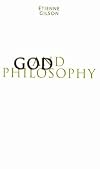
Brilliant lecture series given at Indiana University by French Thomist Gilson. I've always like his style of writing and the easy way in which Aquinas was introduced as an important thinker among all notables ancient, medieval and modern. This book gives Gilson's position that all modern scientists may try to give a scientific answer to whether God exists but that avenue has already been negatively exhausted by the logical positivists. The correct answer for the modern mind, one that show more incorporates all that modern science has to offer, must be a philosophical answer to the metaphysical question of God's existence. In essence the answer must be a new formulation of Thomas Aquinas' answer as a metaphysican but with all new scientific data to which Aquinas could never have imagined. Gilson argues that scientists must adopt a metaphysical approach to the question of God's existence lest the God they define be a pantheistic god. Process Theology has not met with any acceptance. Gilson says that the then perfect rational god of Spinoza has already been proposed and passed over. Logical positivism collapsed upon itself and now we are still left at the time of God and Philosophy's printing (1941) with nothing to replace the Thomistic synthesis. Beautiful writing even though English is not his first language. Gilson definitely holds out scientists (probably cosmologists and theoretical physicists) as the people most likely to advance human knowing in the most important ways. Gilson was a Roman Catholic layman.
Four chapters, Index. show less
Four chapters, Index. show less
I did not choose wisely. The book is divided into three chapter (lectures) and after the first I went MEGO and I rushed through the rest of the book because I wanted to break a monthly reading quota. The book isn’t dull, it’s interesting and informative, and the central premise is one worth considering- there are two paths to wisdom: Reason and revelation. I just sat in the back of the room and daydreamed and now it’s exam day.
Reason is wisdom obtained through logic and revelation the show more Divine word. St. Augustine provided for both when he said that in order to understand, you must first believe then the rest will be revealed to you if you seek it. (The fear of G-d is the beginning of wisdom.) The two are not intrinsically exclusive, but a schism has been long-standing and sometime during the early Renaissance the discussion was abandoned and secularism gained moved to the fore.
I’ll go back to this one day, maybe pair it with Snow’s ‘The Two Cultures.’
Do not do as I, dear reader, and plow through to meet a quota. As Yoda said, Do or do not, there is no try. Not just pretty words. show less
Reason is wisdom obtained through logic and revelation the show more Divine word. St. Augustine provided for both when he said that in order to understand, you must first believe then the rest will be revealed to you if you seek it. (The fear of G-d is the beginning of wisdom.) The two are not intrinsically exclusive, but a schism has been long-standing and sometime during the early Renaissance the discussion was abandoned and secularism gained moved to the fore.
I’ll go back to this one day, maybe pair it with Snow’s ‘The Two Cultures.’
Do not do as I, dear reader, and plow through to meet a quota. As Yoda said, Do or do not, there is no try. Not just pretty words. show less
Lists
Awards

You May Also Like


Associated Authors
Statistics
- Works
- 150
- Also by
- 6
- Members
- 5,009
- Popularity
- #5,003
- Rating
- 4.0
- Reviews
- 38
- ISBNs
- 268
- Languages
- 14
- Favorited
- 8


