
Jacques Maritain (1882–1973)
Author of An Introduction to Philosophy
About the Author
T. S. Eliot once called Jacques Maritain "the most conspicuous figure and probably the most powerful force in contemporary philosophy." His wife and devoted intellectual companion, Raissa Maritain, was of Jewish descent but joined the Catholic church with him in 1906. Maritain studied under Henri show more Bergson but was dissatisfied with his teacher's philosophy, eventually finding certainty in the system of St. Thomas Aquinas. He lectured widely in Europe and in North and South America, and lived and taught in New York during World War II. Appointed French ambassador to the Vatican in 1945, he resigned in 1948 to teach philosophy at Princeton University, where he remained until his retirement in 1953. He was prominent in the Catholic intellectual resurgence, with a keen perception of modern French literature. Although Maritain regarded metaphysics as central to civilization and metaphysically his position was Thomism, he took full measure of the intellectual currents of his time and articulated a resilient and vital Thomism, applying the principles of scholasticism to contemporary issues. In 1963, Maritain was honored by the French literary world with the national Grand Prize for letters. He learned of the award at his retreat in a small monastery near Toulouse where he had been living in ascetic retirement for some years. In 1967, the publication of "The Peasant of the Garonne" disturbed the French Roman Catholic world. In it, Maritain attacked the "neo-modernism" that he had seen developing in the church in recent decades, especially since the Second Vatican Council. According to Jaroslav Pelikan, writing in the Saturday Review of Literature, "He laments that in avant-garde Roman Catholic theology today he can 'read nothing about the redeeming sacrifice or the merits of the Passion.' In his interpretation, the whole of the Christian tradition has identified redemption with the sacrifice of the cross. But now, all of that is being discarded, along with the idea of hell, the doctrine of creation out of nothing, the infancy narratives of the Gospels, and belief in the immortality of the human soul." Maritain's wife, Raissa, also distinguished herself as a philosophical author and poet. The project of publishing Oeuvres Completes of Jacques and Raissa Maritain has been in progress since 1982, with seven volumes now in print. (Bowker Author Biography) show less
Series
Works by Jacques Maritain
The peasant of the Garonne; an old layman questions himself about the present time (1966) 197 copies, 5 reviews
The Philosopher and the Provocateur: The Correspondence of Jacques Maritain and Saul Alinsky (1994) 11 copies
Exiles and fugitives : the letters of Jacques and Raïssa Maritain, Allen Tate, and Caroline Gordon (1992) 11 copies
América 4 copies
Messages. 4 copies
The Maritain volume of the Thomist : dedicated to Jacques Maritain on the occasion of his sixtieth anniversary (1978) 4 copies
Réponse à Jean Cocteau 3 copies
La fine del machiavellismo 3 copies
El alcance de la razón. 3 copies
Diario de Raïsa. 3 copies
IL FILOSOFO NELLA SOCIETA' 2 copies
Son oeuvre philosophique. 2 copies
Une société sans argent 2 copies
alla ricerca di dio 2 copies
Preface to Metaphysics 2 copies
Du règime temporel et de la liberté. 2 copies
AZIONE E CONTEMPLAZIONE 2 copies
Pisma filozoficzne 2 copies
Lapersona e il bene comune 1 copy
Introduccion a la Filosofia 1 copy
NJERIU DHE SHTETI 1 copy
Reflexions Sur L Amerique 1 copy
Existence and the Existent 1 copy
Los grados del saber 1 copy
Primacía de lo espiritual 1 copy
The Loss of the University 1 copy
LS VOIE DE LA PAIX 1 copy
Le peche de l'ange 1 copy
Israels hemmelighed 1 copy
Cuaderno de notas 1 copy
Lettre sur l'indépendance 1 copy
Peguy au porche de l'Eglise: correspondance inedite Jacques Maritain - Dom Louis Baillet (1997) 1 copy
The Man who loved Wisdom 1 copy
A travers le désastre 1 copy
Katolík dnes vo svete 1 copy
Jacques et Raïssa Maritain : Oeuvres complètes, 1945-1960: Volume 15 (1945-1960): Volume XV (1995) 1 copy
Sort de l'homme 1 copy
Cristianisme et démocratie 1 copy
Le philosophe dans la cité 1 copy
Por que no somos racistas ni antisemitas : el mito racista y el verdadero significado del racismo 1 copy
Judeus, Os 1 copy
Associated Works
The Sheed and Ward Anthology of Catholic Philosophy (A Sheed & Ward Classic) (2005) — Contributor — 34 copies
The fall of France, 1940: Causes and responsibilities (Problems in European civilization) (1965) — Contributor, some editions — 13 copies
Tagged
Common Knowledge
- Canonical name
- Maritain, Jacques
- Birthdate
- 1882-11-19
- Date of death
- 1973-04-28
- Gender
- male
- Education
- Sorbonne University
- Occupations
- theologian
philosopher
diplomat - Organizations
- Roman Catholic Church
- Awards and honors
- Campion Award (1955)
Grand Prix de Littérature de l'Académie française (1961)
American Academy of Arts and Letters - Relationships
- Maritain, Raissa (wife)
- Nationality
- France
- Birthplace
- Paris, Île-de-France, France
- Places of residence
- Paris, France
Toulouse, Haute-Garonne, Occitanie, France - Place of death
- Toulouse, France
- Burial location
- Kolbsheim, Alsace, France
- Associated Place (for map)
- France
Members
Reviews
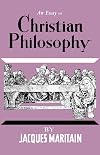
Summary: Explores what is distinctive about Christian philosophy with notes on apologetics and moral philosophy.
Can there be any such thing as a “Christian” philosophy, and if so, in what does it consist? In 1931 Jacques Maritain, a Catholic philosopher delivered a paper at a conference at the University of Louvain. He addresses these questions in the context of a dialogue between Etienne Gilson, Emile Brehier, and Maurice Blondel. This occupies the first part of the essay, in which the show more question of whether philosophy and faith have anything to do with one another.
Maritain argues that Christian belief can enrich philosophy in offering new ideas for rational consideration including that of creation, of God subsisting in God’s self, and unique perspectives on the question of the person raised by the Triune revelation of God. Maritain argues that such insights are not removed from reason but may enrich it. He proposes that reasoning from nature provides knowledge of the existence of God but this is enriched by revealed insights.
At the same time, he contends that philosophy is always ancillary, or a handmaid, to theology. Moreover, he contends that moral philosophy in a fallen world is subalternate to theological ethics. In all this he draws heavily on both Aristotle and Thomas Aquinas, believing the latter’s work provides a foundation for Christian philosophical work.
This work also includes brief essays on Maritain’s ideas on the role of faith-informed reason in the work of apologetics, and further elaborating the ideas already touched on concerning moral philosophy.
I found this a challenging read. Some has to do with Maritain’s context, unfamiliar to me. The writing is also dense, laden with philosophical jargon. This edition helps with providing a glossary of many of the technical terms Maritain uses. This is an academic paper, given for other specialists. I hope at some point that someone will produce an annotated version. The ideas are important as a model of what it means to think Christianly about anything. Maritain significantly influenced John Paul II’s personalism. This essay is a concise summary of a significant part of his thought. It is worthy of explication. show less
Can there be any such thing as a “Christian” philosophy, and if so, in what does it consist? In 1931 Jacques Maritain, a Catholic philosopher delivered a paper at a conference at the University of Louvain. He addresses these questions in the context of a dialogue between Etienne Gilson, Emile Brehier, and Maurice Blondel. This occupies the first part of the essay, in which the show more question of whether philosophy and faith have anything to do with one another.
Maritain argues that Christian belief can enrich philosophy in offering new ideas for rational consideration including that of creation, of God subsisting in God’s self, and unique perspectives on the question of the person raised by the Triune revelation of God. Maritain argues that such insights are not removed from reason but may enrich it. He proposes that reasoning from nature provides knowledge of the existence of God but this is enriched by revealed insights.
At the same time, he contends that philosophy is always ancillary, or a handmaid, to theology. Moreover, he contends that moral philosophy in a fallen world is subalternate to theological ethics. In all this he draws heavily on both Aristotle and Thomas Aquinas, believing the latter’s work provides a foundation for Christian philosophical work.
This work also includes brief essays on Maritain’s ideas on the role of faith-informed reason in the work of apologetics, and further elaborating the ideas already touched on concerning moral philosophy.
I found this a challenging read. Some has to do with Maritain’s context, unfamiliar to me. The writing is also dense, laden with philosophical jargon. This edition helps with providing a glossary of many of the technical terms Maritain uses. This is an academic paper, given for other specialists. I hope at some point that someone will produce an annotated version. The ideas are important as a model of what it means to think Christianly about anything. Maritain significantly influenced John Paul II’s personalism. This essay is a concise summary of a significant part of his thought. It is worthy of explication. show less

A difficult read indeed. My interest in the evolution of Catholic thought, Thomas Aquinas, and Aristotle were discussed within the context of Bergsonian philosophy. If understood correctly and oversimplified, that reality is found through intuition, by by-passing the intellect. It goes against everything I have been taught but this was the height of philosophical discussion in 1911.
Did enjoy his appendix on Aristotle.
Did enjoy his appendix on Aristotle.

Mauritain (1882-1973) is an important lettered French author of books on political science and Thomist theology, and these are lectures he gave in Chicago after WWII. The surprise is the amount of optimism he carries to this subject matter - as he evaluates the State and "authority", and the dangers to justice and public safety. He argues that the State is a tool of the people--vox populi--to secure justice and safety, and is evil when it is adored, because there is a Higher Law derived from show more reason and nature. The Catholic martyrs defied evil oppressors because of their freedom and spirit, and loygalty to a Higher law. [Ch VI].
The medieval Thomist (1225-1274) approach is freshened. Filled with unsupported historical claims and contradiction. For example, he finds the establishment of the American Constitution "peerless" for its significance for political philosophy, but without specification, finds it "repugnant to the idea of making human society stand aloof from God" and religious faith [183-4], although we all know that it does not mention God and forbids the "establishment" of a Church by the State.
Critic of Hobbes, and the Machiavellian "Prince" powers, Although he writes in service to the Church and he literally served as Ambassador of the Vatican (1948-1951), Maritain is of little help to the plutocrats who would use the Government/State as their own device for oppression and monopoly. He is an apologist for democracy and social justice, all the way, every time. show less
The medieval Thomist (1225-1274) approach is freshened. Filled with unsupported historical claims and contradiction. For example, he finds the establishment of the American Constitution "peerless" for its significance for political philosophy, but without specification, finds it "repugnant to the idea of making human society stand aloof from God" and religious faith [183-4], although we all know that it does not mention God and forbids the "establishment" of a Church by the State.
Critic of Hobbes, and the Machiavellian "Prince" powers, Although he writes in service to the Church and he literally served as Ambassador of the Vatican (1948-1951), Maritain is of little help to the plutocrats who would use the Government/State as their own device for oppression and monopoly. He is an apologist for democracy and social justice, all the way, every time. show less
Difficult to read, but the last chapter in particular makes the struggle worthwhile
Lists
Awards

You May Also Like


Associated Authors
Statistics
- Works
- 214
- Also by
- 6
- Members
- 5,314
- Popularity
- #4,684
- Rating
- 3.7
- Reviews
- 58
- ISBNs
- 283
- Languages
- 11
- Favorited
- 4
