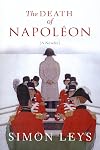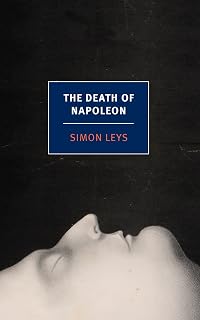
The Death of Napoleon
by Simon Leys
On This Page
Description
""Ladies and gentlemen, alas! The Emperor is dead." The news from St. Helena goes out across Europe, but in fact Napoleon has not died. By means of an ingenious escape, he has returned to the Continent, leaving an impersonator on St. Helena, and it is this double who has unexpectedly and very problematically passed away. Traveling incognito, the emperor experiences a series of bizarre adventures that bring him face-to-face with the myth of Napoleon as it is disconcertingly played out in show more everyday life. After a visit to Waterloo and a near arrest at the French border, he eventually arrives in Paris, where he falls in with some veteran Bonapartists and visits an asylum where most of the inmates are laboring under the mistaken impression that they are he. Will Napoleon ever recapture his true identity? Who, in the end, is he, now that "the Emperor is dead"? Simon Leys's truculent, delightful fable poses these and other questions in a rare work of fiction that is continually surprising and effervescent"-- show lessTags
Recommendations






































Member Reviews
A novella set in an alternate past, where Napoleon escapes St Helena, leaving a body double in his place and returning disguised to Europe in the hopes of regaining his throne. His plans go awry, and Napoleon gets a bit of a comeuppance since he cannot assert his identity without being thought mad. This is a wryly melancholic piece that plays with idea of celebrity, humanity, and identity: Napoleon, who really is Napoleon, is nevertheless delusional in thinking he could be Napoleon once more. Simon Leys' prose is mostly pleasurable, but I wish the translator had made a different choice in how to render the names of one of the characters into English—"Nègre-Nicolas" could have been translated in a less uncomfortable way or a more show more uncomfortable way, and the translator opted for the second way even though I don't think it added anything to the narrative or even made for more verisimilitude. show less
“For the first time, he began to see himself as he really was, naked and defenseless at the center of a universal debacle, buffeted this way and that by events, threatened on every side by an all-pervasive decay, sinking slowly into the quicksands of failed resolutions, and finally disappearing into the ultimate morass against which no honor could prevail.”
― Simon Leys, The Death of Napoleon
Such lyrical, precise language, a cross between extended prose poem and novelistic meditation on the nature of identity, glory and history, both whimsically light and philosophically deep. Such graceful fiction from scholar/essayist/sinologist/quirky renaissance man Simon Leys (1935-2014).
"What a pleasure to read a real writer. The Death of show more Napoleon is utterly satisfying sentence by sentence and scene by scene, but it is also compulsively readable." These are the words of renowned literary critic Gabriel Josipovici, words with which I wholeheartedly agree. And to underscore my agreement, I’ll serve up a few slices of Leys poetic, that is, three quotes from scenes in Chapter One that chronicle Napoleon’s voyage on board a ship carrying the world-famous emperor from St. Helena back to his beloved France. And, yes, of course, this is imaginative alternate history.
A snippet of the author’s description of the ship’s cook: “He was tall, but a good half century spend over stoves in low-ceilinged galleys had broken him up into several angular segments, like a half-folded pocket rule. Without really being fat, his body swelled out arbitrarily in places, giving him the shape of a semi-deflated balloon. His face was split by a huge gaping mouth; in this grotto, as black and dirty as the maw of his stove, there emerged one or two teeth, like slimy rocks protruding at low tide. The ruined state of his teeth made his speech, already bizarre, all the harder to understand, endowing his rare utterances with a kind of oracular force – as befits a black cook on a sailing ship who, to be true to type, must naturally have a smattering of occult sciences.” Wow! I mean, Super-Wow! -- exquisite visual images; expressive vivid metaphors.
“Every evening, crushed by the fatigue of the day’s work, Napoleon would escape for a moment from the stuffy atmosphere of the forecastle and lean against the bulwark in the bows to watch the first stars come out. The softness of the tropical azure giving way slowly to the velvet of night, and the glittering of the lonely stars which seem so close to us when they begin to shine in the dusk, left him perfectly cold.” If you have never had an opportunity to stand on the deck of a ship at sea and watch tropical azure give way slowly to the velvet of night, here is your opportunity to not only experience via your imagination but to join Napoleon in doing so.
Napoleon assumes the identity of a cabin boy by the name of Eugène in order to escape from St. Helena. At one point we read of Napoleon’s self-reflection: “During this time in limbo, and until the day when Napoleon’s sun would rise again, he had to survive by relying upon wretched Eugène's purely physical existence. Only the slenderest thread was leading him back toward the hypothetical dawn of his future. So far, at every stage of his journey, a new, unknown messenger had emerged from the shadows to show him the route to follow.” Again, on one level Simon Leys’ slim novel is a meditation on the nature of time and identity. And what an identity! After all, he is Napoleon.
Thank you, New York Review Books (NYRB) for reprinting this slim classic. And thanks to Patricia Clancy for joining Mr. Leys in translating from the French into English. 130 pages of large font – this novella can be read in three hours. Treat yourself to a day of literary ecstasy. I have four times over and counting, but then again, when it comes to ecstasy I admit that I have never observed moderation. show less
“For the first time, he began to see himself as he really was, naked and defenseless at the center of a universal debacle, buffeted this way and that by events, threatened on every side by an all-pervasive decay, sinking slowly into the quicksands of failed resolutions, and finally disappearing into the ultimate morass against which no honor could prevail.”
― Simon Leys, The Death of Napoleon
Such lyrical, precise language, a cross between extended prose poem and novelistic meditation on the nature of identity, glory and history, both whimsically light and philosophically deep. Such graceful fiction from scholar/essayist/sinologist/quirky renaissance man Simon Leys (1935-2014).
"What a pleasure to read a real writer. The Death of show more Napoleon is utterly satisfying sentence by sentence and scene by scene, but it is also compulsively readable." These are the words of renowned literary critic Gabriel Josipovici, words with which I wholeheartedly agree. And to underscore my agreement, I’ll serve up a few slices of Leys poetic, that is, three quotes from scenes in Chapter One that chronicle Napoleon’s voyage on board a ship carrying the world-famous emperor from St. Helena back to his beloved France. And, yes, of course, this is imaginative alternate history.
A snippet of the author’s description of the ship’s cook: “He was tall, but a good half century spend over stoves in low-ceilinged galleys had broken him up into several angular segments, like a half-folded pocket rule. Without really being fat, his body swelled out arbitrarily in places, giving him the shape of a semi-deflated balloon. His face was split by a huge gaping mouth; in this grotto, as black and dirty as the maw of his stove, there emerged one or two teeth, like slimy rocks protruding at low tide. The ruined state of his teeth made his speech, already bizarre, all the harder to understand, endowing his rare utterances with a kind of oracular force – as befits a black cook on a sailing ship who, to be true to type, must naturally have a smattering of occult sciences.” Wow! I mean, Super-Wow! -- exquisite visual images; expressive vivid metaphors.
“Every evening, crushed by the fatigue of the day’s work, Napoleon would escape for a moment from the stuffy atmosphere of the forecastle and lean against the bulwark in the bows to watch the first stars come out. The softness of the tropical azure giving way slowly to the velvet of night, and the glittering of the lonely stars which seem so close to us when they begin to shine in the dusk, left him perfectly cold.” If you have never had an opportunity to stand on the deck of a ship at sea and watch tropical azure give way slowly to the velvet of night, here is your opportunity to not only experience via your imagination but to join Napoleon in doing so.
Napoleon assumes the identity of a cabin boy by the name of Eugène in order to escape from St. Helena. At one point we read of Napoleon’s self-reflection: “During this time in limbo, and until the day when Napoleon’s sun would rise again, he had to survive by relying upon wretched Eugène's purely physical existence. Only the slenderest thread was leading him back toward the hypothetical dawn of his future. So far, at every stage of his journey, a new, unknown messenger had emerged from the shadows to show him the route to follow.” Again, on one level Simon Leys’ slim novel is a meditation on the nature of time and identity. And what an identity! After all, he is Napoleon.
Thank you, New York Review Books (NYRB) for reprinting this slim classic. And thanks to Patricia Clancy for joining Mr. Leys in translating from the French into English. 130 pages of large font – this novella can be read in three hours. Treat yourself to a day of literary ecstasy. I have four times over and counting, but then again, when it comes to ecstasy I admit that I have never observed moderation. show less
Although this book is very short, it more than compensates for in style. Amusing, thought provoking and ultimately enigmatic, this work is one of my favourites. The premise that Napoleon came to regret his role in shaping history, and that he could have been humbled through his relationships with some of the 'ordinary' people whose lives were so affected by his actions is startling and also moving. As he begins to slip into obscurity, he seems to become more human, more vulnerable and begins to recognise that death is the ultimate leveller.
The Death of Napoleon is a 1991 novella by Belgian author Simon Leys (pseudonym) which won the Independent Foreign Fiction Prize in 1992. On the surface it is a comic alternative history that imagines Napoleon escaping from prison only to live out his days as a Everyman selling fruit on the streets of Paris. This is a bourgeois fantasy of the Emperor getting his comeuppance making us non-Bonapartists giggle with egalitarian delight. But it's a deeper novel, also about identity and celebrity, specifically the horror of losing ones identity and existing in a living death. The loss of identity is obvious in the form of Napoleon himself, and living death can be found throughout: the conspiracy of collaborators who can not communicate show more because the founder has died but the conspiracy goes on existing, the rotting fruit Napoleon must sell, the old man at the battlefield, the 20 crazy Napoleons, Napoleon who fears telling anyone his identity for fear of being committed, etc.. Likewise, living death is at the center of the cult of celebrity- think of Michael Jackson or Elvis Presley who were subsumed by their own image - they may be technically alive but their true selves are long dead. Interestingly, living death and loss of identity is at the core of post-colonialism, those who are subjugated by more powerful forces - African slaves for example - loose their identity, thus it is no accident the misshapen black shipboard cook and the former celebrity Napoleon find a common bond, thus the novels final sentence. This common connection between high and low, between the marginalized and the celebrity, is well done and once again appealing to the Democratic bourgeois in us all (Bonapartists excluded once again, of course!).
--Review by Stephen Balbach, via CoolReading (c) 2008 cc-by-nd show less
--Review by Stephen Balbach, via CoolReading (c) 2008 cc-by-nd show less
A delightful piece of alternative history as Napoleon escapes from exile in plan carefully constructed by his loyalists. The plan goes awry and he must make his way alone. Once in Paris, he finds that he has changed so much that he is unrecognizable and he must improvise and try to accept that his days of glory are past.
This was a fun, novella based on the mythical premise that Napoleon was able to escape his imprisonment at St. Helena. The narrative moves swiftly snd entertainingly.
The story is that an exact double of Napoleon has takenhis place in St. Helena, with the help of some obscure people, many apparently, who are interested in restoring Napoleon and France to its esarlier glory.
Napoleon is taken disguised on a ship and a the ports of call there is a person who expects him, and has instructions for the next stage. None of the people know each other, so there is maximum secrecy. All is going well until he is to arrive at Bourdeaux, but bad weather forces the captain to take the ship to Antwerp. This is where all the excitement begins. He has show more lost contact with the people who are supposed to return him to the throne, but doesn't know them or how to reach them.
He manages to return to Paris and finds lodging with a widow whose husband had fought under Napoleon. There is a group of former soldiers friends of the widow who come visit, one or two actually reside there. Napoleon, under his assumed name, befriends them. The lady gets shipments of cantalopes that tries to sell with thehelp of her children; but theydon't make progress and the cantalopes rot, some of them. Napoleon organizes the children and the soldiers and develops a plan to sell the cantalopes, using his knowledge of military tactics. They are successful.
All is well until he discloses to one of the soldiers, who is a doctor, that he is Napoleon. The doctor takes him at night to a building outside the city, surrounded by a wall, where he sees a lot of people, who turns out were claiming they were Napoleon and this place is in fact a looney house.
He runs away and all is well until he hints to the widow, by this time he is sharing the bed with him, that he is Napoleon. She suspects thst he is nut and brings a doctor without telling Napoleon. He realizes that this doctor is the onehe'd seen at the sanatorium, so he decides that it'sbest to shut up.
Later on he dies peacefully, but does not regain his former position and nobody lnows he was the real Napoleon. show less
The story is that an exact double of Napoleon has takenhis place in St. Helena, with the help of some obscure people, many apparently, who are interested in restoring Napoleon and France to its esarlier glory.
Napoleon is taken disguised on a ship and a the ports of call there is a person who expects him, and has instructions for the next stage. None of the people know each other, so there is maximum secrecy. All is going well until he is to arrive at Bourdeaux, but bad weather forces the captain to take the ship to Antwerp. This is where all the excitement begins. He has show more lost contact with the people who are supposed to return him to the throne, but doesn't know them or how to reach them.
He manages to return to Paris and finds lodging with a widow whose husband had fought under Napoleon. There is a group of former soldiers friends of the widow who come visit, one or two actually reside there. Napoleon, under his assumed name, befriends them. The lady gets shipments of cantalopes that tries to sell with thehelp of her children; but theydon't make progress and the cantalopes rot, some of them. Napoleon organizes the children and the soldiers and develops a plan to sell the cantalopes, using his knowledge of military tactics. They are successful.
All is well until he discloses to one of the soldiers, who is a doctor, that he is Napoleon. The doctor takes him at night to a building outside the city, surrounded by a wall, where he sees a lot of people, who turns out were claiming they were Napoleon and this place is in fact a looney house.
He runs away and all is well until he hints to the widow, by this time he is sharing the bed with him, that he is Napoleon. She suspects thst he is nut and brings a doctor without telling Napoleon. He realizes that this doctor is the onehe'd seen at the sanatorium, so he decides that it'sbest to shut up.
Later on he dies peacefully, but does not regain his former position and nobody lnows he was the real Napoleon. show less
Members
- Recently Added By
Lists

Best Alternate History
111 works; 60 members
Author Information

47+ Works 1,604 Members
Pierre Ryckmans was born on September 28, 1935 in Brussels, Belgian. He studied law and art history at the Catholic University of Louvain. At the age of 19, he was one of a delegation of young Belgians invited to China on a trip that included a meeting with Zhou Enlai, the premier under Mao. He spent 12 years in the Far East, where he became an show more expert on Chinese painting, calligraphy and poetry. In Hong Kong, he monitored the Chinese press on behalf of Belgian diplomats. He taught at the Australian National University in Canberra in 1970. He primarily wrote under the pen name Simon Leys. He criticized Mao's cultural revolution in his first two books, Les Habits Neufs du Président Mao (The Chairman's New Clothes) and Ombres Chinoises (Chinese Shadows). His other works included The Death of Napoleon and The Wreck of the Batavia. He died of cancer on August 11, 2014 at the age of 78. (Bowker Author Biography) show less
Some Editions
Awards and Honors
Series
Belongs to Publisher Series
Common Knowledge
- Original title
- La mort de Napoléon
- Original publication date
- 1986
- People/Characters
- Napoleon Bonaparte
- Important places
- France
- Related movies
- The Emperor's New Clothes (2001 | IMDb)
- Original language
- French
- Canonical DDC/MDS
- 848.9933
Classifications
- Genres
- General Fiction, Fiction and Literature, Historical Fiction, Science Fiction
- DDC/MDS
- 848.9933 — Literature & rhetoric French Literature French miscellaneous writings 1900- French-language literature outside of France (Francophone) Belgium Fiction
- LCC
- PQ2672 .E99 .M6713 — Language and Literature French, Italian, Spanish and Portuguese literatures French literature Modern literature 1961-2000
- BISAC
Statistics
- Members
- 333
- Popularity
- 95,100
- Reviews
- 11
- Rating
- (3.82)
- Languages
- English, French, Portuguese, Spanish
- Media
- Paper, Ebook
- ISBNs
- 23
- ASINs
- 3