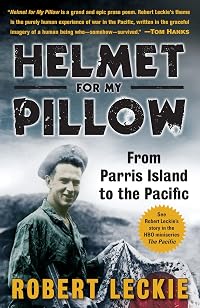
Helmet for My Pillow: From Parris Island to the Pacific
by Robert Leckie
On This Page
Description
Here is one of the most riveting first-person accounts ever to come out of World War II. Robert Leckie enlisted in the United States Marine Corps in January 1942, shortly after the Japanese attack on Pearl Harbor. In Helmet for My Pillow, we follow his odyssey, from basic training on Parris Island, South Carolina, all the way to the raging battles in the Pacific, where some of the war's fiercest fighting took place. Recounting his service with the 1st Marine Division and the brutal action on show more Guadalcanal, New Britain, and Peleliu, Leckie spares no detail of the horrors and sacrifices of war, painting an unvarnished portrait of how real warriors are made, fight, and often die in the defense of their country. From the live-for-today rowdiness of marines on leave to the terrors of jungle warfare against an enemy determined to fight to the last man, Leckie describes what war is really like when victory can only be measured inch by bloody inch. Woven throughout are Leckie's hard-won, eloquent, and thoroughly unsentimental meditations on the meaning of war and why we fight. Unparalleled in its immediacy and accuracy, Helmet for My Pillow will leave no one untouched. This is a book that brings you as close to the mud, the blood, and the experience of war as it is safe to come. Now producers Tom Hanks, Steven Spielberg, and Gary Goetzman, the men behind Band of Brothers, have adapted material from Helmet for My Pillow for HBO's epic miniseries The Pacific, which will thrill and edify a whole new generation. show lessTags
Recommendations
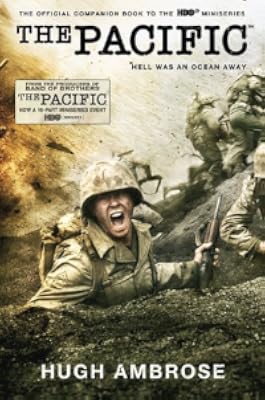
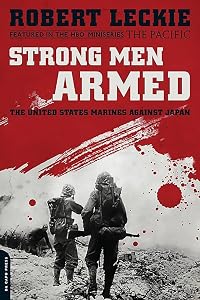

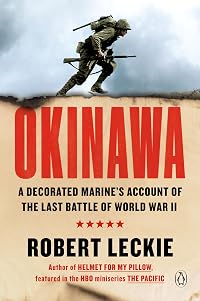
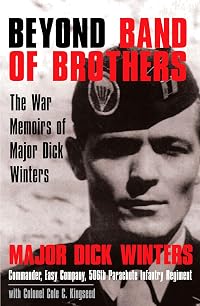

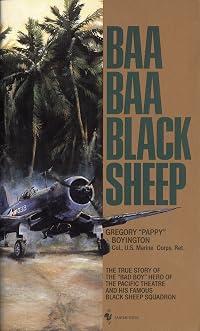
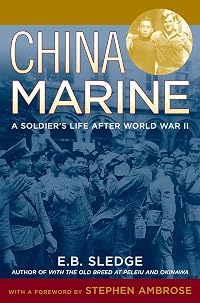

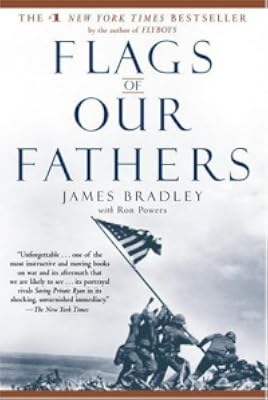
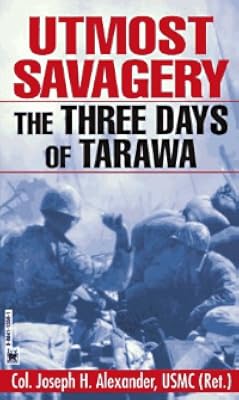







Member Recommendations
Member Reviews
Leckie’s memoir of his experiences in the Pacific campaign of WW2 is one my favorite memoirs. Why? Because it is so well written. His vivid descriptions of combat impress on the reader a true sense of reality, of being there in that foxhole.
“I think of Judgment Day. I think of Götterdämmerung; I think of the stars exploding, of the planets going off like fireworks; I think of a volcano; I think of a roaring and an energy unbelievable; I think, of holocaust; and again I think of night reeling from a thousand scarlet slashes and I see the red eye of hell winking in her wounds—I think of all these, and I cannot tell you what I have seen, the terrible spectacle I witnessed from that hillside.”
Leckie's emotional descriptions and show more writing style, rather than the storyline, are the primary reasons for my 5 star review. This is not your everyday ghost-written war memoir, describing a litany of deeds written in essay style. Leckie lyrically emphasizes his objection to war, maybe not realized while experienced, but certainly at the time of writing.
The Epilogue poignantly describes Leckie's experience of the end of the war in the pacific and is asking us the question if the end really justified the means: Leckie answers in his final sentence, "... dear Father, forgive us for that awful cloud." show less
“I think of Judgment Day. I think of Götterdämmerung; I think of the stars exploding, of the planets going off like fireworks; I think of a volcano; I think of a roaring and an energy unbelievable; I think, of holocaust; and again I think of night reeling from a thousand scarlet slashes and I see the red eye of hell winking in her wounds—I think of all these, and I cannot tell you what I have seen, the terrible spectacle I witnessed from that hillside.”
Leckie's emotional descriptions and show more writing style, rather than the storyline, are the primary reasons for my 5 star review. This is not your everyday ghost-written war memoir, describing a litany of deeds written in essay style. Leckie lyrically emphasizes his objection to war, maybe not realized while experienced, but certainly at the time of writing.
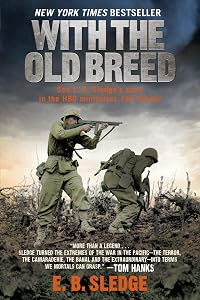
I watched ‘The Pacific’ a few years ago and was very impressed with it. I enjoyed the initial episodes then found the last few harrowing (as befits the subject matter). Soon afterwards I read one of the memoirs on which it is based, [b:With the Old Breed: At Peleliu and Okinawa|771332|With the Old Breed At Peleliu and Okinawa|Eugene B. Sledge|https://images.gr-assets.com/books/1297640051s/771332.jpg|757389] by Eugene Sledge. This is the other, by Robert Leckie. I was fascinated by the differences between the two accounts, which were knitted together very neatly in the TV series. Sledge’s title refers to the professional, old school soldiers he met and admired during the war. Although Sledge experienced as many horrors as Leckie in show more the Pacific theatre, he emphasises the importance of the brotherhood between soldiers, supporting each other through intolerable conditions, and deeply respects his commanding officers. Leckie, by contrast, is contemptuous of his commanders and considerably less rule-abiding. Like Sledge he has a group of particular friends, although in Leckie’s case they seem to be the troublemakers. This made for an interesting and entertaining contrast. Leckie gets sent to the brig several times, put on bread and water, and once goes through court martial. On the other hand, the similarities between the two experiences are the appalling conditions and amazing bravery.
I liked Leckie’s writing style, which is conversational but sometimes falls into reverie. The narrative is sprinkled about evenly with classical allusions and absurd anecdotes that undermine the dignity of all involved. Delightfully, these are sometimes combined: ‘Like Achilles, the Artist sulked in his tent.’ (Everyone is referred to by a nickname.) The descriptions of actual battle are dwelt on perhaps less than I remember from Sledge’s book, but are just as vividly horrible. Leckie also mentions the natives of the Pacific island being viciously fought over, which as I recall neither Sledge’s book or ‘The Pacific’ really did. The snippets of colonialism in the midst of war were striking. Indeed, the whole book is readable and engrossing. A much more jaded view than Sledge’s, but an excellent complement to it. I only give it three stars instead of four because I would have appreciated it more if I'd read it sooner. I'm not in such a war memoir mood these days. show less
I liked Leckie’s writing style, which is conversational but sometimes falls into reverie. The narrative is sprinkled about evenly with classical allusions and absurd anecdotes that undermine the dignity of all involved. Delightfully, these are sometimes combined: ‘Like Achilles, the Artist sulked in his tent.’ (Everyone is referred to by a nickname.) The descriptions of actual battle are dwelt on perhaps less than I remember from Sledge’s book, but are just as vividly horrible. Leckie also mentions the natives of the Pacific island being viciously fought over, which as I recall neither Sledge’s book or ‘The Pacific’ really did. The snippets of colonialism in the midst of war were striking. Indeed, the whole book is readable and engrossing. A much more jaded view than Sledge’s, but an excellent complement to it. I only give it three stars instead of four because I would have appreciated it more if I'd read it sooner. I'm not in such a war memoir mood these days. show less
From time to time someone writes a war memoir that is self-glorifying drivel. Those memoirs are worthless. Of the others, there really is no way to say that one is any more "true" than another as an account of military history; after all, they are not histories, they are personal narratives, and 100 people in the same place at the same time will have 100 unique experiences and interpretations of it.
With that said, I found that Leckie's memoir rang truer to my own experience of service and combat than any other war memoir I have read. Leckie's insights reflected a co-incidence of interests between me and him, and a commonality of how we interpreted much of what we have seen. The "polite deprecation" of civilians toward soldiers; the show more significance and pervasiveness of caste within the military structure; the counterintuitive value of "brig-rats" railing against that caste system; and simultaneously the disgust with those in the higher castes who, upon hearing the "shibboleth" of intellect, show pity toward you for the misfortune of serving in the infantry.
That life is full of contradictions--anger against the separation of classes, but pride in knowing oneself fit to be peers with the brass, yet choosing to be a private in the line. Having more in common with officers than with your fellow enlisted-men, yet looking down upon those officers for the weakness of moral character evidenced by their needing the privileges of rank.
And these ironies: excuses. All contradictory. All self-protective. All self-serving. All rationalizations. Most self-deceiving. But without them, how could one function in that world? show less
With that said, I found that Leckie's memoir rang truer to my own experience of service and combat than any other war memoir I have read. Leckie's insights reflected a co-incidence of interests between me and him, and a commonality of how we interpreted much of what we have seen. The "polite deprecation" of civilians toward soldiers; the show more significance and pervasiveness of caste within the military structure; the counterintuitive value of "brig-rats" railing against that caste system; and simultaneously the disgust with those in the higher castes who, upon hearing the "shibboleth" of intellect, show pity toward you for the misfortune of serving in the infantry.
That life is full of contradictions--anger against the separation of classes, but pride in knowing oneself fit to be peers with the brass, yet choosing to be a private in the line. Having more in common with officers than with your fellow enlisted-men, yet looking down upon those officers for the weakness of moral character evidenced by their needing the privileges of rank.
And these ironies: excuses. All contradictory. All self-protective. All self-serving. All rationalizations. Most self-deceiving. But without them, how could one function in that world? show less
Newspaper reporter’s narrative of his life in the Marines during WWII, which is a lot more boredom and hunger than terror, though there is a fair amount of horror and death. Also a lot of racism; “Japs” is the only word ever used for the Japanese, and the various indigenous people of the Pacific appear as mostly silent and/or ridiculous, plus there’s the Southern racist whose charming quirk is how much he hates black people, but you had to like him anyway because “you” was a bunch of white guys. Takeaway: it’s possible to be a sharp observer of certain white/military foibles without being reflective in other ways.
Well written account by a Marine in 1st Division who was present until wounded on Peleliu. It is not always pleasant or feel good in nature, which is appropriate for the subject matter. He was not a conformist and had a temper which lands him in the brig, which makes this account a bit more unique. The confusion and chaos that was the Pacific campaign is brought home painfully. There is a fair amount of bitterness in his story which I dont begrudge but do mention for those looking for a more light or heroic tale. Reccommended reading, especially for those interested in the Pacific campaign.
Another library sale find, HELMET FOR MY PILLOW (2010 reprint edition) Robert Leckie's memoir of his time In the Marines in the Pacific Theater of WWII, immediately caught my eye because it's a book I remember being passed around between a group of high school classmates my senior year of high school (1961-62). And these were guys who hated school and normally didn't do ANY extracurricular reading. And four of those guys dropped out of school before graduation and enlisted in the Marine Corps. That's how influential this book was, and maybe still is. It was first published in 1957, and has, I think, remained in print ever since in various editions. Leskie, an award-winning newspaperman and writer, was a machine gunner and scout with the show more First Marines and fought in Guadalcanal, after which he enjoyed a rowdy R&R in Melbourne, made stops in New Guinea, New Britain and Goodenough Island, then fought in the bloody battle for Peleliu, before being invalided home for a severe case of shell shock. A Catholic boy from New Jersey, Leckie tells his story vividly, from Boot Camp at Parris Island all the way to a rehab hospital in West Virginia. Leckie wrote dozens of other books, mostly war histories, including books for YA readers.. He died in 2001. HELMET is a good book, a classic of the Second World War, and a valuable addition to my war lit collection. Very highly recommended.
- Tim Bazzett, author of the Cold War memoir, SOLDIER BOY: AT PLAY IN THE ASA show less
- Tim Bazzett, author of the Cold War memoir, SOLDIER BOY: AT PLAY IN THE ASA show less
I first learned of this book when I read that it was being used as one of the sources for a new miniseries about the Pacific theater in the Second World War. Having enjoyed the other source material being used, E. B. Sledge’s superb memoir, [b:With the Old Breed: At Peleliu and Okinawa|771332|With the Old Breed At Peleliu and Okinawa|Eugene B. Sledge|https://images.gr-assets.com/books/1297640051s/771332.jpg|757389], I decided to track down a copy of Leckie’s account and read it for myself. Because of this, I found myself comparing the two works as I read it, which influenced my overall opinion of the book.
In many ways, the experiences of the two men were similar. Both were civilians prior to the Second World War; Leckie enlisted in show more the Marines a month after the Japanese attack on Pearl Harbor. His account of basic training feels incredibly authentic, in part because of his attention to details. Leckie captures much of the mundane minutiae of learning how to be a Marine, from the bureaucratic experience of inoculation to the quest for a good time on leave. This sense of authenticity continues as he describes his deployment to Guadalcanal with the First Marine Division and his engagement with the war there. These experiences form the best part of the book, as his initial encounter with life as a Marine in both training and war reflect his interest in the novelty of it all.
From Guadalcanal, Leckie’s unit was returned to Australia for rest and refitting. This transformation into what he calls a “lotus-eater” also bears a real sense of verisimilitude, as unlike many memoirs of war he does not gloss over the search for release that often characterized breaks from the battles. It is here, though, that his account flags a little, and his return to combat in New Britain as part of Operation Cartwheel was perhaps the least interesting part of the book. The book improves with his subsequent experiences in the hospital in Banika and his final, abbreviated deployment to Peleliu, which ended with his injury and return to the States for the duration of the war.
Reading this book, it is easy to see why it stands out as an account of the Second World War. Leckie’s prose brings alive both the mundane routines of service and the violence of combat. It is when he is between the two that the book suffers, as his efforts at evocative prose about his surroundings in the jungle suffer from being a little overwrought, particularly in comparison to Sledge’s plainer, more straightforward descriptions. Yet both need to be read for a fascinating portrait of what the war was like for the “new boots” who gave up their lives as civilians to fight in the humid jungles and barren islands of the Pacific. show less
In many ways, the experiences of the two men were similar. Both were civilians prior to the Second World War; Leckie enlisted in show more the Marines a month after the Japanese attack on Pearl Harbor. His account of basic training feels incredibly authentic, in part because of his attention to details. Leckie captures much of the mundane minutiae of learning how to be a Marine, from the bureaucratic experience of inoculation to the quest for a good time on leave. This sense of authenticity continues as he describes his deployment to Guadalcanal with the First Marine Division and his engagement with the war there. These experiences form the best part of the book, as his initial encounter with life as a Marine in both training and war reflect his interest in the novelty of it all.
From Guadalcanal, Leckie’s unit was returned to Australia for rest and refitting. This transformation into what he calls a “lotus-eater” also bears a real sense of verisimilitude, as unlike many memoirs of war he does not gloss over the search for release that often characterized breaks from the battles. It is here, though, that his account flags a little, and his return to combat in New Britain as part of Operation Cartwheel was perhaps the least interesting part of the book. The book improves with his subsequent experiences in the hospital in Banika and his final, abbreviated deployment to Peleliu, which ended with his injury and return to the States for the duration of the war.
Reading this book, it is easy to see why it stands out as an account of the Second World War. Leckie’s prose brings alive both the mundane routines of service and the violence of combat. It is when he is between the two that the book suffers, as his efforts at evocative prose about his surroundings in the jungle suffer from being a little overwrought, particularly in comparison to Sledge’s plainer, more straightforward descriptions. Yet both need to be read for a fascinating portrait of what the war was like for the “new boots” who gave up their lives as civilians to fight in the humid jungles and barren islands of the Pacific. show less
Members
- Recently Added By
Lists

r/History Recommended Reading List
603 works; 12 members
Author Information

60+ Works 4,291 Members
Robert Leckie was born in 1920 in Philadelphia, Pennsylvania. At the age of 16, he began a career as a sportswriter for The Record of Hackensack. He also later worked as a reporter with the Associated Press, the Buffalo Courier Express, the New York Journal American, the New York Daily News and The Star-Ledger. The day after the attack on Pearl show more Harbor, Leckie joined the Marines. He became a machine gunner and scout in the 1st Marine Division in the Pacific and participated in all of the Marine campaigns except Okinawa. He was awarded the Naval Commendation Medal with Combat V, the Purple Heart and five battle stars. Leckie was on active duty for three years and participated in six campaigns. It is because of his experience in the war that he chose to write about American military history. Most of his books trace American war history from the French and Indian War to Desert Storm. Leckie's first book was published in 1957, and was a personal narrative of his experiences in World War II. It was entitled "Helmet for My Pillow." His books covered the Civil War in "None Died in Vain: The Saga of the American Civil War," another World War II book called "Delivered from Evil: The Saga of World War II" and his one volume history entitled "The Wars of America." Leckie adapted many of his books for a younger audience and also wrote some fiction books. In 1969, the Leckies founded The Sportstman's Club at Lake Hopatcong, a physical fitness facility in New Jersey. The family owned the club until about eighteen months before Leckie's death. Robert Leckie died on December 24, 2001. He was 81 years old. (Bowker Author Biography) show less
Some Editions
Series
Belongs to Publisher Series
Work Relationships
Is contained in
Is abridged in
Common Knowledge
- Original publication date
- 1957
- People/Characters
- Robert Leckie
- Important places
- Cape Gloucester, New Britain, Papua New Guinea; Guadalcanal, Solomon Islands; Melbourne Cricket Ground, Victoria, Australia; New Britain, Papua New Guinea; Papua New Guinea; Parris Island, South Carolina, USA (show all 10); Peleliu, Palau; Solomon Islands; South Pacific Ocean; Victoria, Australia
- Important events
- World War II (1939 | 1945); World War II, Pacific Theater (1941-12-07 | 1945-09-02); Guadalcanal Campaign (1942-08-07 | 1943-02-09); Battle of Peleliu (1944); Battle of Cape Gloucester (1943 | 1944); New Guinea Campaign (1942-01-23 | 1945-08)
- Related movies
- The Pacific (HBO Miniseries)
- Dedication*
- To Those Who Fell
- First words*
- A cutting wind slanted up Church Street in the cheerless dawn of January 5, 1942.
- Last words*
- (Click to show. Warning: May contain spoilers.)I, whom you have seen as irreverent and irreligious, now pray in the name of Chuckler and Hoosier and Runner, in the name of Smoothface, Gentleman, Amish and Oakstump, Ivy.League and Big-Picture, in the name od all those who suffered in the jungles and on the beaches, from Anzio to Normandy - and in the name of the immolated: of Texas, Rutherford, Chicken, Loudmouth, od the Artist and White-Man, souvenirs and Racehorse, Dreadnought and Commando - of all these and the others, dear Father, forgive us for that awful cloud.
*Some information comes from Common Knowledge in other languages. Click "Edit" for more information.
Classifications
- Genres
- History, Nonfiction, Biography & Memoir, General Nonfiction
- DDC/MDS
- 940.548173 — History & geography History of Europe History of Europe 1918- Military history of World War II Other Topics Memories and autobiographies
- LCC
- D811 .L3547 .A3 — History of Europe, Asia, Africa and Oceania History (General) World War II (1939-1945)
- BISAC
Statistics
- Members
- 1,285
- Popularity
- 19,032
- Reviews
- 33
- Rating
- (3.88)
- Languages
- English, Italian, Spanish
- Media
- Paper, Audiobook, Ebook
- ISBNs
- 30
- ASINs
- 22