On This Page
Description
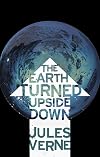
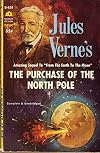
A story of a world in which energy shortages lead a group of Americans to devise a radical solution, for their own gain, which puts the whole earth at risk. The Gun Club of Baltimore once used a giant cannon to send a spacecraft to the moon. Now, the gun is brought into use again to achieve an equally ambitious aim-- to tilt the earth's axis so that the North Pole is displaced to the tropics. The plotters believe there are limitless resources of coal at the North Pole and their cunning plan show more will allow them to exploit these resources to become rich. show lessTags
Recommendations














































Member Reviews
The cover design of this book snagged me as I was browsing at the Strand. It's practically everything I want in a book -- striking cover, small format, French flaps! I mean, it is Jules Verne, who I always feel I should like, but still I'd never managed to successfully finish reading one of his books. But I'd never heard of this one. Then I looked at the synopsis, and it sounded like polar fiction to me! Of course I had to buy it.
As the main characters of the story are the Gun Club of Baltimore, who, when we last saw them, managed to send men to the moon and back using a giant cannon, it seemed at first that we should be rooting for them. But also, from the very beginning, the story felt like a cautionary tale against unrestrained show more capitalism. The Gun Club buys the North Pole, which they expect to be a treasure trove of coal, if only one could mine it. But, of course, they have a plan -- to use even large cannons this time, to turn the entire Earth and give it a new axis of rotation.
Other than one section where I gave myself a headache trying to envision the result of their little adjustment (picturing 3D rotations not being my strong suit), for a good portion of the book what I most wanted was to hunt down all the members of the Gun Club and shake them within an inch of their lives. Because they can do this thing, and it will benefit them, there's never any question of whether they should do it, even when they predict that large inhabited areas of the earth will then be underwater. That's somebody else's problem. Especially since this whole thing is a scheme to get more coal, it's easy to image this all as a modern climate change allegory. There, to, there's a few people I'd like to see rounded up and put in jail.
Anyway, for all that, the book was surprisingly enjoyable. Pushed through the dry parts (Oh, Verne has some dry parts!) just fine. Maybe now it's time to retry some of the more classic Verne stories? show less
As the main characters of the story are the Gun Club of Baltimore, who, when we last saw them, managed to send men to the moon and back using a giant cannon, it seemed at first that we should be rooting for them. But also, from the very beginning, the story felt like a cautionary tale against unrestrained show more capitalism. The Gun Club buys the North Pole, which they expect to be a treasure trove of coal, if only one could mine it. But, of course, they have a plan -- to use even large cannons this time, to turn the entire Earth and give it a new axis of rotation.
Other than one section where I gave myself a headache trying to envision the result of their little adjustment (picturing 3D rotations not being my strong suit), for a good portion of the book what I most wanted was to hunt down all the members of the Gun Club and shake them within an inch of their lives. Because they can do this thing, and it will benefit them, there's never any question of whether they should do it, even when they predict that large inhabited areas of the earth will then be underwater. That's somebody else's problem. Especially since this whole thing is a scheme to get more coal, it's easy to image this all as a modern climate change allegory. There, to, there's a few people I'd like to see rounded up and put in jail.
Anyway, for all that, the book was surprisingly enjoyable. Pushed through the dry parts (Oh, Verne has some dry parts!) just fine. Maybe now it's time to retry some of the more classic Verne stories? show less
It had an interesting steampunk-esque feel to the story. I enjoyed the "logical" arguments why there was coal-rich land under the Arctic snow/ice!? I was shocked by the callousness shown to people in regions affected by their plans.
(34) Sans dessus dessous (The Purchase of the North Pole, aka Topsy-Turvy, 1889) (1 volume) 48K words
The 34th Extraordinary Voyage brings us another science fiction tale. The members of the Baltimore Gun Club (who previously appeared in "From the Earth to the Moon" and "Around The Moon") make their third and last appearance. This time, twenty years after their famous trip to the Moon, they are back with an even more ambitious scheme.
First read or reread?: First read for me.
What is it about?: Through a public auction that captures the attention of the world, the North Polar Practical Association intends to purchases all the territory north of the 84th parallel. It turns out that the members of the Baltimore Gun Club are the ones behind show more this enigmatic society, including Secretary J.T. Maston, President Impy Barbicane and Captain Nicholl. Thanks to the generosity of Mrs. Angelina Scorbitt, the association is successful in its bid for this region of the globe. The world wonders why they have paid so much for this inhospitable region, given that no human being has ever succeeded in reaching that far north. With the property secure, the association makes their plans known: they intend on altering the axis of the earth, so that this Artic region will obtain a more temperate climate, allowing them access to the large coal deposits they expect to find there.
Even though many of the characters are the same, this novel tells a standalone story and can be read independently. However, there are many references to the trip to the Moon, so it would make sense to read "From the Earth to the Moon" and "Around the Moon" before this one. A couple of other Verne novels are also mentioned (the auction in "Godfrey Morgan" and Hector Servadac's journey in "Off on a Comet").
This book resembles "From the Earth to the Moon" in many ways. It is written with irony and humor. Verne clearly was having a good time in both cases. Both the artillery-obsessed members of the club and the reactions from the different countries of the world are satirized. Besides, there's not a lot of action. Like in "From the Earth to the Moon", most of this novel is in the build-up to the big moment, the scientific calculations, the interaction of the characters, the changes in the public opinion... The moment when the plans are carried out comes right at the end.
However, there are also important differences. The members of the Gun Club have always been eccentric, but in "From the Earth to the Moon" they were eccentric in a heroic way, the recipients of public admiration. Here, the novel starts in the same way. However, as the world gradually becomes aware of the likely catastrophic consequences of the scheme, they become something like supervillains, their scientific obsession bordering the criminally insane, to the point that they have to escape and go into hiding so as not to be stopped by the authorities and the enraged masses.
This is representative of a certain change in tone in the second half of Verne's career. The interest in science persists, but it's often accompanied by an awareness of its potential abuse and the dangers of unchecked technological progress.
The Gun Club's plot is quite outlandish, but Verne keeps it relatively grounded in science, despite taking some liberties like the invention of a fictitious explosive more powerful than the ones known at the time. This realism is also shown in the novel's final twist. This is a lightweight story, but the themes feel relevant from the point of view of the 21st century: an attempt to modify the climate of the Earth, and all of it motivated by the demand for coal.
Another prescient technological element in the novel is the use of the recently-invented telephone for trivial everyday purposes, like the mostly one-sided flirting between Mrs. Angelina Scorbitt and J.T. Maston.
The novel is quite short, and if the author didn't dwell so much on the buildup it might have been a short story, but it's precisely the building up that makes it fun to read.
Enjoyment factor: I enjoyed it. A nice chance of pace after the gloomy "Family Without a Name". One of the reasons "From the Earth to the Moon" is so successful is that it sounds plausible enough to suspend disbelief and go along for the amazing ride. Compared to that, this novel suffers because the plot is more outlandish, although Verne still tries to keep it somewhat scientifically grounded, as opposed to the more fantastic "Off on a Comet".
Next up: César Cascabel
See all my Verne reviews here: https://www.sffworld.com/forum/threads/reading-vernes-voyages-extraordinaires.58... show less
The 34th Extraordinary Voyage brings us another science fiction tale. The members of the Baltimore Gun Club (who previously appeared in "From the Earth to the Moon" and "Around The Moon") make their third and last appearance. This time, twenty years after their famous trip to the Moon, they are back with an even more ambitious scheme.
First read or reread?: First read for me.
What is it about?: Through a public auction that captures the attention of the world, the North Polar Practical Association intends to purchases all the territory north of the 84th parallel. It turns out that the members of the Baltimore Gun Club are the ones behind show more this enigmatic society, including Secretary J.T. Maston, President Impy Barbicane and Captain Nicholl. Thanks to the generosity of Mrs. Angelina Scorbitt, the association is successful in its bid for this region of the globe. The world wonders why they have paid so much for this inhospitable region, given that no human being has ever succeeded in reaching that far north. With the property secure, the association makes their plans known: they intend on altering the axis of the earth, so that this Artic region will obtain a more temperate climate, allowing them access to the large coal deposits they expect to find there.
Even though many of the characters are the same, this novel tells a standalone story and can be read independently. However, there are many references to the trip to the Moon, so it would make sense to read "From the Earth to the Moon" and "Around the Moon" before this one. A couple of other Verne novels are also mentioned (the auction in "Godfrey Morgan" and Hector Servadac's journey in "Off on a Comet").
This book resembles "From the Earth to the Moon" in many ways. It is written with irony and humor. Verne clearly was having a good time in both cases. Both the artillery-obsessed members of the club and the reactions from the different countries of the world are satirized. Besides, there's not a lot of action. Like in "From the Earth to the Moon", most of this novel is in the build-up to the big moment, the scientific calculations, the interaction of the characters, the changes in the public opinion... The moment when the plans are carried out comes right at the end.
However, there are also important differences. The members of the Gun Club have always been eccentric, but in "From the Earth to the Moon" they were eccentric in a heroic way, the recipients of public admiration. Here, the novel starts in the same way. However, as the world gradually becomes aware of the likely catastrophic consequences of the scheme, they become something like supervillains, their scientific obsession bordering the criminally insane, to the point that they have to escape and go into hiding so as not to be stopped by the authorities and the enraged masses.
This is representative of a certain change in tone in the second half of Verne's career. The interest in science persists, but it's often accompanied by an awareness of its potential abuse and the dangers of unchecked technological progress.
The Gun Club's plot is quite outlandish, but Verne keeps it relatively grounded in science, despite taking some liberties like the invention of a fictitious explosive more powerful than the ones known at the time. This realism is also shown in the novel's final twist. This is a lightweight story, but the themes feel relevant from the point of view of the 21st century: an attempt to modify the climate of the Earth, and all of it motivated by the demand for coal.
Another prescient technological element in the novel is the use of the recently-invented telephone for trivial everyday purposes, like the mostly one-sided flirting between Mrs. Angelina Scorbitt and J.T. Maston.
The novel is quite short, and if the author didn't dwell so much on the buildup it might have been a short story, but it's precisely the building up that makes it fun to read.
Enjoyment factor: I enjoyed it. A nice chance of pace after the gloomy "Family Without a Name". One of the reasons "From the Earth to the Moon" is so successful is that it sounds plausible enough to suspend disbelief and go along for the amazing ride. Compared to that, this novel suffers because the plot is more outlandish, although Verne still tries to keep it somewhat scientifically grounded, as opposed to the more fantastic "Off on a Comet".
Next up: César Cascabel
See all my Verne reviews here: https://www.sffworld.com/forum/threads/reading-vernes-voyages-extraordinaires.58... show less
One of his more ridiculous and just not very interesting stories. It involves the same protagonists who in Voyage to the Moon fired the cannon that launched the projectile to the Moon; here they are proposing to fire a mighty cannon downwards into the surface of the Earth so as to cause a mighty explosion and displacement of land and sea that will change the planet's polar axis and thereby cause the sun to melt the North polar icecap so they can discover and lay claim to the land they think is beneath it. But they get their calculations wrong! Full of dry technical babble about the mechanics of it and the usual ridiculous 19th century racial stereotypes, which seem even more evident than usual in the absence of any kind of decent story.
I was annoyed that Ms. Scorbitt couldn't possibly understand the math, but her money was good enough to accept.
I enjoyed how every one is in a panicky about the plan to change the earth's rotation.
I loved how it ended. It made me laugh.
I enjoyed how every one is in a panicky about the plan to change the earth's rotation.
I loved how it ended. It made me laugh.
I found this book to be lacking in effort and determination. Although the idea is not bad in itself, its execution is dubious and the characters felt more like cutouts rather than fully fledged ones. Overall, I do not recommend this book. Even Verne enthusiasts would be hard pressed to really enjoy this one.
2 stars.
2 stars.
Podle názoru amerického Gun Clubu se pod věčným ledem Arktidy ukrývají nepředstavitelně bohatá ložiska uhlí. Jsou sice nedostupná, ale některé vědecké výpočty naznačují, že by stačilo postavit v Africe obrovské dělo, které by výstřelem trochu vychýlilo zemskou osu, čímž by se klimatické podmínky na pólech změnily. A když jsou ve hře obrovské zisky z těžby nerostného bohatství, tak i ten nejšílenější nápad najde příznivce… Moderní věda dala autorovi částečně za pravdu. Dnes víme, že v Arktidě jsou velké zásoby ropy i zemního plynu, které v dnešní době mají podobně významnou roli, jako mělo uhlí za časů Julese Verna.
Jul 16, 2024Czech
Members
- Recently Added By
Lists

Books Read in 2014
2,343 works; 89 members
Author Information

Jules Verne was born on February 8, 1828 in Nantes, France. He wrote for the theater and worked briefly as a stockbroker. He is considered by many to be the father of science fiction. His most popular novels included Journey to the Center of the Earth, Twenty Thousand Leagues Under the Sea, and Around the World in Eighty Days. Several of his works show more have been adapted into movies and TV mini-series. In 1892, he was made a Chevalier of the Legion of Honor in France. He died on March 24, 1905 at the age of 77. (Bowker Author Biography) Jules Verne (1828-1905) is the author of numerous adventure stories grounded in popularizations of science. (Publisher Provided) show less
Some Editions
Series


Belongs to Publisher Series
Work Relationships
Common Knowledge
- Canonical title
- The Secret of Wilhelm Storitz; The Purchase of the North Pole
- Original title
- Le secret de Wilhelm Storitz; Sans dessus dessous
- Alternate titles
- Topsy-Turvy; The Earth Turned Upside Down
- Original publication date
- 1901; 1890
- People/Characters
- Impey Barbicane; J. T. Maston; Captain Nicholl; Ms. Evangelina Scorbitt
- Important places
- North Pole
- First words
- 'And do come as soon as you can my dear Henri; I am waiting impatiently for you.....
In Which The North Polar Practical Association Rushes a Document Across Two Worlds..... "Then, Mr. Maston, you pretend that a woman has never been able to make mathematical or experimental-science progress?" - Last words
- (Click to show. Warning: May contain spoilers.)Heaven grant, and this shall be my last word, that nobody ever rediscovers the execrable secret of Wilhelm Storitz!
(Click to show. Warning: May contain spoilers.)It is not meet that mere humanity should change anything in the order established by our Creator in the system of the universe. - Original language
- French
Classifications
Statistics
- Members
- 281
- Popularity
- 114,974
- Reviews
- 8
- Rating
- (3.39)
- Languages
- 11 — Czech, Dutch, English, French, German, Hungarian, Japanese, Polish, Russian, Spanish, Swedish
- Media
- Paper, Ebook
- ISBNs
- 60
- ASINs
- 21