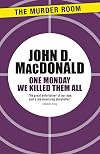
One Monday We Killed Them All
by John D. MacDonald
On This Page
Description
"At a stark outpost in the Kandahar mountain range, a team of American soldiers watches a young Afghan woman approach. She has come to beg for the return of her brother's body. The camp's tense, claustrophobic atmosphere comes to a boil as the men argue about what to do next. Taking its cues from the Antigone myth, this significant, eloquent novel recreates the chaos, intensity, and immediacy of war, and conveys the inevitable repercussions felt by the soldiers, their families, and by one show more sister"-- show lessTags
Recommendations









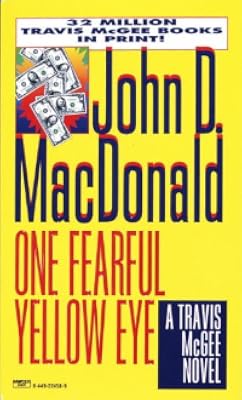








Member Reviews
I can always rely on John D. MacDonald to provide an intense and frightening story. In One Monday We Killed Them All he provides the story but then he slows the book down with some ponderous ramblings on law enforcement and the penal system as the main character, police detective Fenn Hillyer does some internal searching for the best way to handle his brother-in-law, Dwight McAran.
McAran has just been released from five years in prison and Fenn can see that he is bitter and angry. Fenn’s wife only sees the brother that she helped to raise. She believes he has been given a raw deal and that now he will settle down and become a model citizen. But Dwight McAran is a psychopath who has already slapped one woman to death and raped another. show more He has joined forces with some other criminals and they are obviously planning something big.
Although One Monday We Killed Them All isn’t my favorite John D. MacDonald book, it was a solid hard-boiled story that led to an exciting climax. There was perhaps a little too much musing on legal ethics and I thought that the wife was rather too oblivious to her brother’s actual personality to be believable, but as always, if it’s a trip to the dark side that you are looking for, you can’t go wrong with John D. MacDonald. show less
McAran has just been released from five years in prison and Fenn can see that he is bitter and angry. Fenn’s wife only sees the brother that she helped to raise. She believes he has been given a raw deal and that now he will settle down and become a model citizen. But Dwight McAran is a psychopath who has already slapped one woman to death and raped another. show more He has joined forces with some other criminals and they are obviously planning something big.
Although One Monday We Killed Them All isn’t my favorite John D. MacDonald book, it was a solid hard-boiled story that led to an exciting climax. There was perhaps a little too much musing on legal ethics and I thought that the wife was rather too oblivious to her brother’s actual personality to be believable, but as always, if it’s a trip to the dark side that you are looking for, you can’t go wrong with John D. MacDonald. show less
The first of 18 Macdonald non-Travis McGee novels I ordered from Ebay. I have read a decent number of McGee novels (mostly 25+ years ago) plus a few assorted non-series titles. While I enjoy the McGee novels, they are a bit cartoonish and dated with their rugged superman hero and the bevy of damsels in distress he jumps into bed with during each new adventure. My opinion is that the non-series books are generally better and reading One Monday... did nothing to change that.
This books reminds me a bit of another Macdonald title, The Executioners, which was the basis for the Cape Fear films. Both concern a bitter man getting out of prison and bringing hell to an innocent family, though in this case it is his own family, kind of: his show more half-sister, her cop husband and their son.
I've never considered Macdonald a master of prose--his is usually pretty dry. It gets the job done in a simple fashion. Although that is the case for most of this novel, there were multiple passages that were, if not exactly poetic then at least very well-crafted and thoughtful. I also appreciated that the hero was an emotionally stifled man who finally let's loose as opposed to the super-macho Travis McGee type.
A great tale of suspense. show less
This books reminds me a bit of another Macdonald title, The Executioners, which was the basis for the Cape Fear films. Both concern a bitter man getting out of prison and bringing hell to an innocent family, though in this case it is his own family, kind of: his show more half-sister, her cop husband and their son.
I've never considered Macdonald a master of prose--his is usually pretty dry. It gets the job done in a simple fashion. Although that is the case for most of this novel, there were multiple passages that were, if not exactly poetic then at least very well-crafted and thoughtful. I also appreciated that the hero was an emotionally stifled man who finally let's loose as opposed to the super-macho Travis McGee type.
A great tale of suspense. show less
It couldn't sit on my shelf forever with a title like this--but not too surprisingly, it doesn't deliver all the goods. I think this is the third MacDonald book in a row I have read that has a scene where the bad guys spill most of their plans in unlikely conversations with each other when they don't know the book's hero is around (or maybe he's around, but unconscious, as in the last Travis McGee I read.) The hero here is a detective in a small city whose wife's half-brother happens to be a murderer (or manslaughterer, to be more exact, or womanslaughterer to be precise.) He has just been released from prison and is definitely up to something. The story follows the detective as he tries to figure out what it is. This book does have show more some interesting insights on policing and living with a certain level of corruption, but the only way it grabs you is with overemotional schmaltz--which tends to work for me, I must admit. The plot builds up to a big finale, but not quite as big as MacDonald could have made it. At the end, you feel vaguely relieved that it is all over, and not nearly so depressed as reading the rest of this dark, cynical book makes you feel. show less
MacDonald is reaching his stride as a story teller. As always his stories are about explorations of the human psyche and soul. This is the story of a policeman and his wife. She grew up in the hill country and after the death of her parents raised her half brother. It turns out he was an evil soul and he ended up convicted of manslaughter after beating a banker’s daughter to death.
The book starts at the time he is released from prison. His brother in law, the police detective is picking him up from penitentiary at his release. He is to come home to live with his sister and the policeman. The policeman accepts that obligation out of respect for his wife who can’t believe her brother is a bad man. He served his whole sentence so show more wasn’t on parole. He had sworn to get revenge on the town that had convicted him and sent him to prison.
The siser wouldn’t accept the evil intentions of her brother.
Through the eyes of the ploiceman we see that the brother continues to engage in violent and antisocial acts, even raping a young woman in the privacy of her own home.
The story evolves to the plot her brother and acquaintances he made in prison plot major mayhem. They stage a prison riot and arrange the escape of 4 convicts during the riot. They then go to hid out in the hill country.
The story revolves around the detectives efforts to apprehend his brother in law and his wife’s ambivalence about her brother’s nature.
The subplot is the evolution of the sister’s personality into being more objective about her brother, and the detective’s efforts to become a warmer person.
While the excitement is well handled and described the more lasting impression on me was the impact it had on the personalities of the characters. show less
The book starts at the time he is released from prison. His brother in law, the police detective is picking him up from penitentiary at his release. He is to come home to live with his sister and the policeman. The policeman accepts that obligation out of respect for his wife who can’t believe her brother is a bad man. He served his whole sentence so show more wasn’t on parole. He had sworn to get revenge on the town that had convicted him and sent him to prison.
The siser wouldn’t accept the evil intentions of her brother.
Through the eyes of the ploiceman we see that the brother continues to engage in violent and antisocial acts, even raping a young woman in the privacy of her own home.
The story evolves to the plot her brother and acquaintances he made in prison plot major mayhem. They stage a prison riot and arrange the escape of 4 convicts during the riot. They then go to hid out in the hill country.
The story revolves around the detectives efforts to apprehend his brother in law and his wife’s ambivalence about her brother’s nature.
The subplot is the evolution of the sister’s personality into being more objective about her brother, and the detective’s efforts to become a warmer person.
While the excitement is well handled and described the more lasting impression on me was the impact it had on the personalities of the characters. show less
JDM has done it again! His characters are solid and vivid and the story line keeps you going because sometimes JDM goes places with the story writers are not supposed to go. He writes as a cop better than he does as a beach bum, and his observations in this piece precede Travis McGees tomes.
Hard, bitter MacDonald.
Ratings
Members
- Recently Added By
Lists

Books Read in 2025
4,091 works; 97 members
Author Information

230+ Works 31,891 Members
John D. MacDonald was born in Sharon, Pennsylvania on July 24, 1916. He received a B.S. from Syracuse University in 1938 and an M.B.A. from the Harvard Graduate School of Business Administration in 1939. During World War II, he served in the Army. His first novel, Brass Cupcake, was published in 1950. He wrote about 70 books during his lifetime show more including the Travis McGee series, Condominium, No Deadly Drug, Nothing Can Go Wrong, and A Friendship: The Letters of Dan Rowan and John Dann MacDonald. A Flash of Green was adapted into a movie by the same name and The Excuse was adapted into a movie entitled Cape Fear. He received numerous awards including the Ben Franklin Award for the best American short story in 1955, the Grand Prix de Litterature Policiere for A Key to the Suite in 1964, the Mystery Writers of America's Grand Master Award in 1972, the American Book Award for The Green Ripper in 1980. He died from complications of an earlier heart bypass surgery on December 28, 1986 at the age of 70. (Bowker Author Biography) show less
Common Knowledge
- Original publication date
- 1961
- People/Characters
- Dwight McAran
- First words
- When you can count the time you have left in big numbers, count it in years; whole weeks can go by when you never think of it.
- Last words
- (Click to show. Warning: May contain spoilers.)But yours is beyond reproach.
Classifications
Statistics
- Members
- 122
- Popularity
- 266,396
- Reviews
- 6
- Rating
- (3.60)
- Languages
- English, German
- Media
- Paper, Ebook
- ISBNs
- 6
- ASINs
- 10