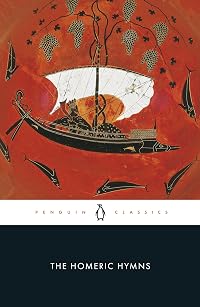
The Homeric Hymns
by Homer
On This Page
Description
The Homeric Hymns have survived for two and a half millennia because of their captivating stories, beautiful language, and religious significance. Well before the advent of writing in Greece, they were performed by traveling bards at religious events, competitions, banquets, and festivals. These thirty-four poems invoking and celebrating the gods of ancient Greece raise questions that humanity still struggles with-questions about our place among others and in the world. Known as "Homeric" show more because they were composed in the same meter, dialect, and style as Homer's Iliad and Odyssey, these hymns were created to be sung aloud. In this superb translation by Diane J. Rayor, which deftly combines accuracy and poetry, the ancient music of the hymns comes alive for the modern reader. Here is the birth of Apollo, god of prophecy, healing, and music and founder of Delphi, the most famous oracular shrine in ancient Greece. Here is Zeus, inflicting upon Aphrodite her own mighty power to cause gods to mate with humans, and here is Demeter rescuing her daughter Persephone from the underworld and initiating the rites of the Eleusinian Mysteries. This updated edition incorporates twenty-eight new lines in the first Hymn to Dionysos, along with expanded notes, a new preface, and an enhanced bibliography. With her introduction and notes, Rayor places the hymns in their historical and aesthetic context, providing the information needed to read, interpret, and fully appreciate these literary windows on an ancient world. As introductions to the Greek gods, entrancing stories, exquisite poetry, and early literary records of key religious rituals and sites, the Homeric Hymns should be read by any student of mythology, classical literature, ancient religion, women in antiquity, or the Greek language. show lessTags
Recommendations







Member Reviews
This is a beautiful addition to Penguin's compilation of texts from Greek antiquity. Alongside the Iliad, Odyssey, and Theogony, these hymns add another hue of perspective as to how the ancients related to the gods in the course of day to day public life (or, at very least, a glimpse into some of the traditions and beliefs that they followed).
Jules Cashford's translation aims principally for readability above literality. The result is a mesmerizing taste of another world, but yet a world that is that unlike of that of our own, where the wills and whims of powerful deities drag humanity into confusion, conflict... and meaning, and hope that an answer exists for the plight of human suffering. "As for human beings, I shall harm one and show more help another," says Apollo, "greatly bewildering the unenviable tribes of the human race." (541-542, p83) Evidently, we have been quite enthralled with the idea of "God's will" for a very long time. show less
Jules Cashford's translation aims principally for readability above literality. The result is a mesmerizing taste of another world, but yet a world that is that unlike of that of our own, where the wills and whims of powerful deities drag humanity into confusion, conflict... and meaning, and hope that an answer exists for the plight of human suffering. "As for human beings, I shall harm one and show more help another," says Apollo, "greatly bewildering the unenviable tribes of the human race." (541-542, p83) Evidently, we have been quite enthralled with the idea of "God's will" for a very long time. show less
29. The Homeric Hymns translated by Jules Cashford
with an introduction and notes by Nicholas Richardson
composition: Guesses are 600’s and 500’s bce, with the Hymn to Ares dating c400 ce
format: 208 page Paperback
acquired: December 2013 (influenced by review by StevenTX)
read: May 25-30
rating: 4.5 stars
I'm a little a loss to explain why I liked these so much or explain what I liked about them. Maybe I'm just fond of Greek mythology and any riff on them that made it through the vagaries of time will catch my interest. But there does seem to be something extra here. There is a reason Percy Bysshe Shelley translated so many of these, as did Chapman. Maybe it's just how the opening fragment to Dionysos says something to the affect: some show more people say you come of this place or that place, but, "I say they lie." Maybe is was the second poem on Demeter mourning lost Persephone, or just the brief description of Persephone grabbing the fated narcissus, "the flower shown so wondrously." Maybe it was the very ancient feel to the opening to Apollo's hymn describing him entering Olympus for the first time, arrow in bow, stretching the bow:
I shall remember,
may I not forget,
Apollo the archer.
The gods tremble at him
when he enters the house of Zeus,
they spring up when he comes near them,
they all spring up from their seats
when he stretches back his bow.
Only Leto waits beside Zeus who loves the thunder
She unstrings the bow, she closes the quiver,
taking it off his hands
off his strong shoulders,
...
But this excerpt is unique here. There is really nothing else in this collection that feels quote so ancient and bare as these first several lines to Apollo.
The Homeric Hymns don't have any clear origin. They follow the same poetic structure as the Iliad and the Odyssey, and there are apparent links to something like a school of Homer in the unreliable historical hints. But they have the feel of a collection of scraps leftover from something much more vast and mostly lost. Some of the poems are just a few lines, where as only five of them extend past 200 lines. The opening hymns to Dionysos and Demeter come from one text found in the 18th century and would otherwise be lost too - and most of that hymn to Dionysos is lost. They are a curious thing, a curious remnant. And they are also surprising resonant and often bring more color to these gods then Homer or Hesiod. There is a section on Hermes introducing Apollo to the lyre, in order to save his own skin, and Apollos first impression of this musical wonder. In another hymn Dionysos turns a boat in to a grape vine full of grapes...and the sailors into dolphins (hence to cover.) Ares's hymn appears to date from another era altogether, maybe 400 ad. But then he was no Greek favorite. Maybe they forgot him.
As I mentioned above, there are famous translations of these hymns and I suspect they put any modern, scholarly accurate translator to shame. Jules Cashford keeps it simple and, apparently, as accurate as she can. In doing so, she provided a nice intro and she preserves some aspects the texture of the texts. I think she did a very nice job. But then I also can't help thinking what a shame she didn't go farther. These poems really beg to be inspirations to poetry, not something merely to get translated right.
2016
https://www.librarything.com/topic/220674#5599452 show less
with an introduction and notes by Nicholas Richardson
composition: Guesses are 600’s and 500’s bce, with the Hymn to Ares dating c400 ce
format: 208 page Paperback
acquired: December 2013 (influenced by review by StevenTX)
read: May 25-30
rating: 4.5 stars
I'm a little a loss to explain why I liked these so much or explain what I liked about them. Maybe I'm just fond of Greek mythology and any riff on them that made it through the vagaries of time will catch my interest. But there does seem to be something extra here. There is a reason Percy Bysshe Shelley translated so many of these, as did Chapman. Maybe it's just how the opening fragment to Dionysos says something to the affect: some show more people say you come of this place or that place, but, "I say they lie." Maybe is was the second poem on Demeter mourning lost Persephone, or just the brief description of Persephone grabbing the fated narcissus, "the flower shown so wondrously." Maybe it was the very ancient feel to the opening to Apollo's hymn describing him entering Olympus for the first time, arrow in bow, stretching the bow:
I shall remember,
may I not forget,
Apollo the archer.
The gods tremble at him
when he enters the house of Zeus,
they spring up when he comes near them,
they all spring up from their seats
when he stretches back his bow.
Only Leto waits beside Zeus who loves the thunder
She unstrings the bow, she closes the quiver,
taking it off his hands
off his strong shoulders,
...
But this excerpt is unique here. There is really nothing else in this collection that feels quote so ancient and bare as these first several lines to Apollo.
The Homeric Hymns don't have any clear origin. They follow the same poetic structure as the Iliad and the Odyssey, and there are apparent links to something like a school of Homer in the unreliable historical hints. But they have the feel of a collection of scraps leftover from something much more vast and mostly lost. Some of the poems are just a few lines, where as only five of them extend past 200 lines. The opening hymns to Dionysos and Demeter come from one text found in the 18th century and would otherwise be lost too - and most of that hymn to Dionysos is lost. They are a curious thing, a curious remnant. And they are also surprising resonant and often bring more color to these gods then Homer or Hesiod. There is a section on Hermes introducing Apollo to the lyre, in order to save his own skin, and Apollos first impression of this musical wonder. In another hymn Dionysos turns a boat in to a grape vine full of grapes...and the sailors into dolphins (hence to cover.) Ares's hymn appears to date from another era altogether, maybe 400 ad. But then he was no Greek favorite. Maybe they forgot him.
As I mentioned above, there are famous translations of these hymns and I suspect they put any modern, scholarly accurate translator to shame. Jules Cashford keeps it simple and, apparently, as accurate as she can. In doing so, she provided a nice intro and she preserves some aspects the texture of the texts. I think she did a very nice job. But then I also can't help thinking what a shame she didn't go farther. These poems really beg to be inspirations to poetry, not something merely to get translated right.
2016
https://www.librarything.com/topic/220674#5599452 show less
These were surprisingly enjoyable. Well, I guess it is silly to be surprised – anything that is still in print well over a thousand years after its composition has probably got some fine qualities. But many of these poems/songs tell really compelling stories in beautiful, intense language. (I realize that part of the credit for the loveliness of the poetry goes to the translator, and, while admitting that I have no basis whatsoever for comparison, I think Thelma Sargent did a first class job here!)
I've seen The Homeric Hymns and Hesiod's Theogony mentioned regularly over the years in books about ancient literature, and I've tended to confuse the two. Hesiod's Works and Days & Theogony is now near the top of my TBR stack, but just show more flipping through it I can now see how the two differ. For starters, The Homeric Hymns are supposed, traditionally, to have been written by -- Homer. Sargent tells us in the short introduction that they are now believed to have been written a bit (maybe a hundred years or so?), later. Anyway, both tell stories about the Greek gods and goddesses in poetic form. Both invoke the aid of the Muses to tell their stories. Theogony tells the story of the birth of the cosmos and also of the gods, starting with Gaia and following through the coming to power of Zeus and the other Oympian gods. The Homeric Hymns sticks to the Olympians, and, rather than telling one “long” story (both books are actually quite short), it is a collection of individual poems to various gods, in no particular order that I could see. Of the thirty-three poems, eight are long-ish (I think the longest is “To Hermes,” at sixteen pages) and tell engaging, action- packed stories, and the remaining twenty-five are short and feel more like invocations or addresses – Sargent suggests that the short ones might have preceded longer recitations.
Some of the stories were familiar, such as that of Demeter and Persephone, though even that was an especially lovely telling. Others were less familiar, such as that of Aphrodite and Anchises, the father of Aeneas. I knew the basics of that one, from the Aeneid, I think, but here I got the intimate details (nothing graphic!) of Aphrodite's seduction of Anchises, and of her deeply conflicted feelings about her feelings of lust for a mortal. And the story of Apollo's founding of the oracle at Delphi was new to me, at least in the form told here. “To Hermes” and “To Demeter” were both particularly good – vivid and exciting – but all the eight story-length poems are good. Despite the current opinion that these were not written by Homer, they would go nicely with a study of the Iliad and the Odyssey. The shorter pieces seem fairly negligible, but the longer ones are lovely and memorable. show less
I've seen The Homeric Hymns and Hesiod's Theogony mentioned regularly over the years in books about ancient literature, and I've tended to confuse the two. Hesiod's Works and Days & Theogony is now near the top of my TBR stack, but just show more flipping through it I can now see how the two differ. For starters, The Homeric Hymns are supposed, traditionally, to have been written by -- Homer. Sargent tells us in the short introduction that they are now believed to have been written a bit (maybe a hundred years or so?), later. Anyway, both tell stories about the Greek gods and goddesses in poetic form. Both invoke the aid of the Muses to tell their stories. Theogony tells the story of the birth of the cosmos and also of the gods, starting with Gaia and following through the coming to power of Zeus and the other Oympian gods. The Homeric Hymns sticks to the Olympians, and, rather than telling one “long” story (both books are actually quite short), it is a collection of individual poems to various gods, in no particular order that I could see. Of the thirty-three poems, eight are long-ish (I think the longest is “To Hermes,” at sixteen pages) and tell engaging, action- packed stories, and the remaining twenty-five are short and feel more like invocations or addresses – Sargent suggests that the short ones might have preceded longer recitations.
Some of the stories were familiar, such as that of Demeter and Persephone, though even that was an especially lovely telling. Others were less familiar, such as that of Aphrodite and Anchises, the father of Aeneas. I knew the basics of that one, from the Aeneid, I think, but here I got the intimate details (nothing graphic!) of Aphrodite's seduction of Anchises, and of her deeply conflicted feelings about her feelings of lust for a mortal. And the story of Apollo's founding of the oracle at Delphi was new to me, at least in the form told here. “To Hermes” and “To Demeter” were both particularly good – vivid and exciting – but all the eight story-length poems are good. Despite the current opinion that these were not written by Homer, they would go nicely with a study of the Iliad and the Odyssey. The shorter pieces seem fairly negligible, but the longer ones are lovely and memorable. show less
Recensione sul blog: http://thereadingpal.blogspot.it/2017/10/recensione-143-homeric-hymns.html
Questa è una recensione davvero molto personale. È raccomandato (anzi, quasi obbligatorio) per noi politeisti ellenici, approcciarsi ai testi antichi. L'ho fatto e lo sto facendo. Volevo comprare una copia degli inni da tempo, e non trovandola in italiano ho preso questa.
Gli "Inni Omerici" sono una serie di Inni agli dei ellenici, di cui potete leggere la storia sia online che in questo libro. Ovviamente non sono davvero scritti da Omero, ma hanno una metrica simile tra loro.
Gli inni sono davvero stupendi. La traduzione li rende vicini agli originali e da davvero la sensazione di essere vicini ai Theoi. Penso che la userò nei momenti di show more preghiera, perché la traduzione su theoi.com non mi piace granché, proprio come per gli inni Orfici. Anche quello da rimediare...
Lascio qui la traduzione dell'Inno ad Hestia, dea del focolare. È uno dei miei preferiti!
24. Hymn to Hestia
Hestia, you tend the sacred hearth
of far-shooting Lord Apollo in holy Phyto,
anointing-oil ever dripping from your braids-
come to this house, come, sharing your heart
with cunning Zeus: bestow grace on my song.
Molti inni sono brevi, alcuni invece sono lunghi, e molti versi sono mancanti. Spero che un giorno potremo leggerli completi. Davvero mi sento più vicina ai Theoi, e attraverso questi inni possiamo rivivere alcuni miti a loro legati. Miti che io adoro, e che contengono vari insegnamenti!
Uno dei miei preferiti è sicuramente il numero 2, dedicato a Demetra, e che potrebbe essere stato scritto da una donna. Riprende il mito del rapimento di Persefone e davvero pare da un punto di vista femminile. La disperazione di Demetra e di Persefone è quasi palpabile.
Mi domando come potevano davvero essere, cantati dagli aedi, e le sensazione che potevano suscitare.
Forse la cosa che mi ha lasciata un po' perplessa di questa versione è il fatto che non è presente il testo originale dell'inno. Personalmente credo che c'è sempre il bisogno di inserirlo, in modo che si possa controllare da sé la traduzione.
Un po' l'unica pecca è quella. Insomma, gli inni contengono molte informazioni storiche e culturali dei greci, e anche le persone che sono meno avezze a questo tipo di testi o al background storiografico trovano tutte le informazioni necessarie nelle note ai singoli inni. Note che sono parecchio interessanti e che mi hanno dato informazioni in più rispetto alla creazione e alla storia degli inni stessi.
La Rayor fornisce anche una biografia selezionata ed un glossario. Per quanto riguarda la bibliografia, spero di poter trovare quei testi e leggerli per conto mio, per sapere di più su questi testi sacri e sugli studi che li riguardano.
Nel complesso sono contenta di questo acquisto e sono felice di avere potuto leggerli! show less
Questa è una recensione davvero molto personale. È raccomandato (anzi, quasi obbligatorio) per noi politeisti ellenici, approcciarsi ai testi antichi. L'ho fatto e lo sto facendo. Volevo comprare una copia degli inni da tempo, e non trovandola in italiano ho preso questa.
Gli "Inni Omerici" sono una serie di Inni agli dei ellenici, di cui potete leggere la storia sia online che in questo libro. Ovviamente non sono davvero scritti da Omero, ma hanno una metrica simile tra loro.
Gli inni sono davvero stupendi. La traduzione li rende vicini agli originali e da davvero la sensazione di essere vicini ai Theoi. Penso che la userò nei momenti di show more preghiera, perché la traduzione su theoi.com non mi piace granché, proprio come per gli inni Orfici. Anche quello da rimediare...
Lascio qui la traduzione dell'Inno ad Hestia, dea del focolare. È uno dei miei preferiti!
24. Hymn to Hestia
Hestia, you tend the sacred hearth
of far-shooting Lord Apollo in holy Phyto,
anointing-oil ever dripping from your braids-
come to this house, come, sharing your heart
with cunning Zeus: bestow grace on my song.
Molti inni sono brevi, alcuni invece sono lunghi, e molti versi sono mancanti. Spero che un giorno potremo leggerli completi. Davvero mi sento più vicina ai Theoi, e attraverso questi inni possiamo rivivere alcuni miti a loro legati. Miti che io adoro, e che contengono vari insegnamenti!
Uno dei miei preferiti è sicuramente il numero 2, dedicato a Demetra, e che potrebbe essere stato scritto da una donna. Riprende il mito del rapimento di Persefone e davvero pare da un punto di vista femminile. La disperazione di Demetra e di Persefone è quasi palpabile.
Mi domando come potevano davvero essere, cantati dagli aedi, e le sensazione che potevano suscitare.
Forse la cosa che mi ha lasciata un po' perplessa di questa versione è il fatto che non è presente il testo originale dell'inno. Personalmente credo che c'è sempre il bisogno di inserirlo, in modo che si possa controllare da sé la traduzione.
Un po' l'unica pecca è quella. Insomma, gli inni contengono molte informazioni storiche e culturali dei greci, e anche le persone che sono meno avezze a questo tipo di testi o al background storiografico trovano tutte le informazioni necessarie nelle note ai singoli inni. Note che sono parecchio interessanti e che mi hanno dato informazioni in più rispetto alla creazione e alla storia degli inni stessi.
La Rayor fornisce anche una biografia selezionata ed un glossario. Per quanto riguarda la bibliografia, spero di poter trovare quei testi e leggerli per conto mio, per sapere di più su questi testi sacri e sugli studi che li riguardano.
Nel complesso sono contenta di questo acquisto e sono felice di avere potuto leggerli! show less
I realised I didn't have a copy of this for my Greek literature Oddysey, so I bought this translation off trademe. It was more expensive, but I hoped it would be worth it for the notes.
The hymns were pretty good, my favourite was the hymn to Demeter, and the whole battle of masculine vs feminine power was an interesting interpretation. I also enjoyed the insights into later Greek culture and how some of these ancient beliefs and practices became syncretised into Greek Christianity.
The notes section at the back also contains a basic introduction to each hymn, and I really think these would have been better placed with the hymns themselves, to minimise flipping back and forth. I suppose some people may just want to let the hymns stand on show more their own. show less
The hymns were pretty good, my favourite was the hymn to Demeter, and the whole battle of masculine vs feminine power was an interesting interpretation. I also enjoyed the insights into later Greek culture and how some of these ancient beliefs and practices became syncretised into Greek Christianity.
The notes section at the back also contains a basic introduction to each hymn, and I really think these would have been better placed with the hymns themselves, to minimise flipping back and forth. I suppose some people may just want to let the hymns stand on show more their own. show less
Sarah Ruden's translation is clear, lean, intelligent, and delightfully readable. The notes provide guidance without encumbring the text. This will book is marvelous for classroom use, for reading aloud, or simply for reading for pleasure.
It's an ancient collection of poetry, with pieces for just about every Olympian god, that's only a little less questionably hymns then Homeric. Rather than springing from one poet's quill, they date from nigh as old as the Iliad to as young as the Roman Empire. Quite a variety of styles, ranging from a long (and currently fragmented) hymn to Demeter, telling the story of Persephone and how Demeter reacted, to short hymns to Asclepius and Ares, the later offering an unusual request that Ares protected the poet or singer from their own rage and battle. It's a bit of a mess, but you get the ancient texts that are handed down to you.
As for the translation, I own Boer's and Sargent's, and have read parts of Evelyn-White's "Hesiod, The show more Homeric Hymns and Homerica". Evelyn-White's prose translations make work as cribs, but they hardly carry the original. Boer's free verse doesn't inspire in me the feeling of ancient religion, nor do they reflect the original dactylic hexameter well. (Yes, yes, carrying the original meter is difficult and may cause sacrifices, but free verse goes far further then needed.) Sargent is somewhat closer to the original, stylistically. (I will note her insistence that Demeter set the child down, not threw the child down, and find it a moderately more plausible reading.) show less
As for the translation, I own Boer's and Sargent's, and have read parts of Evelyn-White's "Hesiod, The show more Homeric Hymns and Homerica". Evelyn-White's prose translations make work as cribs, but they hardly carry the original. Boer's free verse doesn't inspire in me the feeling of ancient religion, nor do they reflect the original dactylic hexameter well. (Yes, yes, carrying the original meter is difficult and may cause sacrifices, but free verse goes far further then needed.) Sargent is somewhat closer to the original, stylistically. (I will note her insistence that Demeter set the child down, not threw the child down, and find it a moderately more plausible reading.) show less
Members
- Recently Added By
Lists

100 Books to Read in a Lifetime (That Are Older Than 200 Years)
415 works; 175 members

CCE 1000 Good Books List
1,033 works; 12 members

Poetry Corner
187 works; 15 members

euripides ranked
23 works; 1 member
Author Information

1,805+ Works 130,311 Members
Homer is the author of The Iliad and The Odyssey, the two greatest Greek epic poems. Nothing is known about Homer personally; it is not even known for certain whether there is only one true author of these two works. Homer is thought to have been an Ionian from the 9th or 8th century B.C. While historians argue over the man, his impact on show more literature, history, and philosophy is so significant as to be almost immeasurable. The Iliad relates the tale of the Trojan War, about the war between Greece and Troy, brought about by the kidnapping of the beautiful Greek princess, Helen, by Paris. It tells of the exploits of such legendary figures as Achilles, Ajax, and Odysseus. The Odyssey recounts the subsequent return of the Greek hero Odysseus after the defeat of the Trojans. On his return trip, Odysseus braves such terrors as the Cyclops, a one-eyed monster; the Sirens, beautiful temptresses; and Scylla and Charybdis, a deadly rock and whirlpool. Waiting for him at home is his wife who has remained faithful during his years in the war. Both the Iliad and the Odyssey have had numerous adaptations, including several film versions of each. (Bowker Author Biography) show less
Some Editions
Series
Belongs to Publisher Series
Work Relationships
Common Knowledge
- Canonical title
- The Homeric Hymns
- Original publication date
- ca. 700-500 BC; 1970 (English: Boer) (English: Boer); 1976 (English: Athanassakis) (English: Athanassakis)
- People/Characters
- Aeolus; Agenor; Hermes
- Important events
- Classical Antiquity
- Dedication
- Antidôron to John and Kirsten (Athanassakis translation)
- First words
- Some, O divine Eiraphiotes, say that Drakanon was your birthplace,
but others claim it was at the wind-swept island of Ikaros, others at Naxos,
and others by the deep-eddying river Alpheios
that Semele conceived and ... (show all)bore you to Zeus who delights in thunder;
And, O lord, some liars say you were born
at Thebes when in truth the father of gods and men
gave birth to you and kept you well out of the sight of men and of white-armed Hera.
(Athanassakis translation) - Last words
- (Click to show. Warning: May contain spoilers.)Have respect for him who longs for your gifts and your houses,
all you who dwell in the lofty city of Hera, the lovely-faced nymph,
at the foot of towering Saidene.
drinking the divine water of the fair-flowing river,
the tawny Hermos, whom immortal Zeus sired.
(Athanassakis translation) - Blurbers
- Russo, Joseph; Bennett, Alva W.
- Original language
- Greek
Classifications
- Genres
- Poetry, Fiction and Literature
- DDC/MDS
- 883.01 — Literature & rhetoric Classical & modern Greek literatures Classical Greek epic poetry and fiction Pseudo-Callisthenes
- LCC
- PA4025 .H8 .A8 — Language and Literature Greek language and literature. Latin language and literature Greek literature Individual authors Homer
- BISAC
Statistics
- Members
- 2,056
- Popularity
- 10,100
- Reviews
- 17
- Rating
- (3.78)
- Languages
- 10 — Catalan, Dutch, English, Finnish, French, German, Greek (Ancient), Italian, Multiple languages, Spanish
- Media
- Paper, Ebook
- ISBNs
- 47
- UPCs
- 1
- ASINs
- 19