On This Page
Description
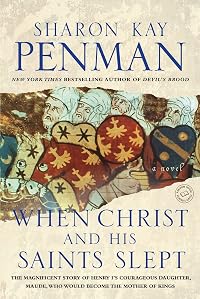
In the wake of King Henry I's death in 1135, the Countess of Anjou, his beautiful daughter, prepares to claim the throne despite the reservations of the late ruler's barons, but her position is usurped by her cousin. As church bells tolled for the death of England's King Henry I, his barons faced the unwelcome prospect of being ruled by a woman: Henry's beautiful daughter Maude, Countess of Anjou. But before Maude could claim her throne, her cousin Stephen seized it. In their long and bitter show more struggle, all of England bled and burned. Sharon Kay Penman's magnificent fifth novel summons to life a spectacular medieval tragedy whose unfolding breaks the heart even as it prepares the way for splendors to come--the glorious age of Eleanor of Aquitaine and the Plantagenets that would soon illumine the world. show lessTags
Recommendations




Member Recommendations
Member Reviews
This book covers a turbulent, gruelling period in English history: the battle for the succession to the throne after Henry I, here referred to as "the old king", dies. Henry wanted his daughter, Maude, to be the next ruler and demanded that his barons recognize her as queen. However, Henry's nephew, Stephen of Blois, seizes the crown instead, despite promising that he would support Maude's queenship. The resulting civil war is bloody, horrific and very often stalemated, and given the devastation it wrought, the end means that many died in vain.
Overall, I found this book fascinating. I have a passing familiarity with the major historical personages through reading various histories of the kings and queens of England, and Pillars of the show more Earth, by Ken Follett, also covers this period. This made it a bit easier for me to engage with the story. The book does provide a family tree at the beginning, but some people mentioned in the story don't show up on the tree due to space constraints, yet some people mentioned on the family tree don't really show up at all. For the most part, though, the family tree is not strictly necessary. Penman provides plenty of information to orient the reader. One particularly excellent decision is her standardizing the names: some figures in the story went by multiple names, and some people had the same names, so in this book everyone gets a different name. For example, Stephen's wife is named Matilda, and his rival to the throne was also named Matilda. But his rival also went by Maude, so to make things clearer she is referred to as Maude here.
Throughout this highly information-packed story, both Maude and Stephen receive even-handed treatment. Both are portrayed with virtues and flaws: Stephen is a generous, good-natured man but unable to be the ruthless king required of that time period, while Maude has her father's blessing but can be blunt and unforgiving (traits that men are not prepared to accept in women). But these are more the concerns of the barons and other nobility who throw their support behind one or the other; the average townsperson doesn't care who's on the throne as long as they personally are not having their houses torched, their food stolen and their families killed if they stand in the way of the looting soldiers. Penman is pretty unflinching in portraying the ugly side of war, although mercifully she does not go into too much detail about what may happen to women unfortunate enough to be caught as spoils of war.
Female characters in general are fairly believable here. A few have somewhat "modern" attitudes, in that they're not about to take nonsense from men just because men are deemed superior by law, but I don't think it's overly modern. Maude and her eventual daughter-in-law, Eleanor of Aquitaine, of course, are the best examples of women determined to wield power just as any man might. There is also an interesting contrast between English and Welsh society: where England is very much under the influence of the Church and women do not have many rights, especially in terms of marriage, Wales is more secular and both men and women have an equal right to walk away from an unhappy marriage. But even so, we still see a fairly accurate picture of what women went through in those times.
Humour is also present in this book: many characters, both male and female, enjoy amusing banter and repartee, with some remarks causing me to laugh out loud. It helped to leaven the book a bit, which is very densely packed with facts. Some of the dialogue thus comes off as a bit exposition-laden, but it is pretty much unavoidable with this sort of novel; the trick is to present it in as natural a way as possible, and I think for the most part Penman succeeds.
I definitely recommend this book if you have an interest in English history -- the fiction format presents the facts in an entertaining manner and is well worth the time invested. show less
Overall, I found this book fascinating. I have a passing familiarity with the major historical personages through reading various histories of the kings and queens of England, and Pillars of the show more Earth, by Ken Follett, also covers this period. This made it a bit easier for me to engage with the story. The book does provide a family tree at the beginning, but some people mentioned in the story don't show up on the tree due to space constraints, yet some people mentioned on the family tree don't really show up at all. For the most part, though, the family tree is not strictly necessary. Penman provides plenty of information to orient the reader. One particularly excellent decision is her standardizing the names: some figures in the story went by multiple names, and some people had the same names, so in this book everyone gets a different name. For example, Stephen's wife is named Matilda, and his rival to the throne was also named Matilda. But his rival also went by Maude, so to make things clearer she is referred to as Maude here.
Throughout this highly information-packed story, both Maude and Stephen receive even-handed treatment. Both are portrayed with virtues and flaws: Stephen is a generous, good-natured man but unable to be the ruthless king required of that time period, while Maude has her father's blessing but can be blunt and unforgiving (traits that men are not prepared to accept in women). But these are more the concerns of the barons and other nobility who throw their support behind one or the other; the average townsperson doesn't care who's on the throne as long as they personally are not having their houses torched, their food stolen and their families killed if they stand in the way of the looting soldiers. Penman is pretty unflinching in portraying the ugly side of war, although mercifully she does not go into too much detail about what may happen to women unfortunate enough to be caught as spoils of war.
Female characters in general are fairly believable here. A few have somewhat "modern" attitudes, in that they're not about to take nonsense from men just because men are deemed superior by law, but I don't think it's overly modern. Maude and her eventual daughter-in-law, Eleanor of Aquitaine, of course, are the best examples of women determined to wield power just as any man might. There is also an interesting contrast between English and Welsh society: where England is very much under the influence of the Church and women do not have many rights, especially in terms of marriage, Wales is more secular and both men and women have an equal right to walk away from an unhappy marriage. But even so, we still see a fairly accurate picture of what women went through in those times.
Humour is also present in this book: many characters, both male and female, enjoy amusing banter and repartee, with some remarks causing me to laugh out loud. It helped to leaven the book a bit, which is very densely packed with facts. Some of the dialogue thus comes off as a bit exposition-laden, but it is pretty much unavoidable with this sort of novel; the trick is to present it in as natural a way as possible, and I think for the most part Penman succeeds.
I definitely recommend this book if you have an interest in English history -- the fiction format presents the facts in an entertaining manner and is well worth the time invested. show less
When Christ and His Saints Slept - Penman
4.5 stars
I enjoy historical fiction. Most of my knowledge of world history begins with an interest generated from a good novel. So my knowledge of this medieval civil war came initially from a fondness for Ellis Peters’ Brother Cadfael. I knew about Maud and Stephen’s competing claims for the English throne. I knew that Maud was the mother of the second Henry. That was about it. I was not prepared for the feminist slant given to Penman’s massive plotting of this conflict. I wasn’t prepared for the weird way this medieval history would strangely dovetail with the feminist issues in my recent nonfiction reading.
Maud was an empress. She was a queen. She was forced into a bad marriage and show more not only was she forced to obey her egotistical, self-serving, abusive husband, none of her (ostensibly) loyal Dukes and Barons, really believed that she was capable of ruling a kingdom. Penman captured her angry frustration and poured it into every disastrous decision of Maud’s attempts to reign over England. And then, there was Stephen’s Matilda. The conflict was over. Stephen was a prisoner, under lock and key. So, Queen Matilda gathers the troops, backs Maud into a corner and forces Stephen’s release. (Even though Matilda has serious doubts about her husband’s ability to rule, and even less faith in her son.) It was quite a chess game, if you could overlook the pain and suffering it caused for the powerless innocents caught up in the game.
Penman does not overlook that pain and suffering. She gives Maud, Ranulf, a fictional half-brother. Ranulf connects the story to some of the more down to earth suffering of the common people. He also helped to move the plot along. I was always relieved to see him pop back into the story when I found myself getting lost among the endless battles, similar or duplicated names, and continuously changing loyalties.
The book ends, of course, as the war finally ends, with Maud’s son, Henry II and his Eleanor of Aquitaine. It took me almost 20 years to get around to reading this first book in Penman’s Plantagenet series. I’m very glad that I read it, but I’m not ready to tackle the next one, not yet. show less
4.5 stars
I enjoy historical fiction. Most of my knowledge of world history begins with an interest generated from a good novel. So my knowledge of this medieval civil war came initially from a fondness for Ellis Peters’ Brother Cadfael. I knew about Maud and Stephen’s competing claims for the English throne. I knew that Maud was the mother of the second Henry. That was about it. I was not prepared for the feminist slant given to Penman’s massive plotting of this conflict. I wasn’t prepared for the weird way this medieval history would strangely dovetail with the feminist issues in my recent nonfiction reading.
Maud was an empress. She was a queen. She was forced into a bad marriage and show more not only was she forced to obey her egotistical, self-serving, abusive husband, none of her (ostensibly) loyal Dukes and Barons, really believed that she was capable of ruling a kingdom. Penman captured her angry frustration and poured it into every disastrous decision of Maud’s attempts to reign over England. And then, there was Stephen’s Matilda. The conflict was over. Stephen was a prisoner, under lock and key. So, Queen Matilda gathers the troops, backs Maud into a corner and forces Stephen’s release. (Even though Matilda has serious doubts about her husband’s ability to rule, and even less faith in her son.) It was quite a chess game, if you could overlook the pain and suffering it caused for the powerless innocents caught up in the game.
Penman does not overlook that pain and suffering. She gives Maud, Ranulf, a fictional half-brother. Ranulf connects the story to some of the more down to earth suffering of the common people. He also helped to move the plot along. I was always relieved to see him pop back into the story when I found myself getting lost among the endless battles, similar or duplicated names, and continuously changing loyalties.
The book ends, of course, as the war finally ends, with Maud’s son, Henry II and his Eleanor of Aquitaine. It took me almost 20 years to get around to reading this first book in Penman’s Plantagenet series. I’m very glad that I read it, but I’m not ready to tackle the next one, not yet. show less
I find Penman's prose difficult to read - it's solid enough, to the point of stodginess. In all other regards, she is astonishing, taking events that are plagued by the arbitrary, the disastrous, the astonishingly foolish, the utterly unnecessary and more than a few bolts from the blue, and builds her novel around them with amazing skill. The fictional characters she creates out of historical personalities live and breathe, such that their responses to the unpredictable, and their own self-inflicted disasters, flow smoothly and naturally. She somehow weaves the book through a history that is often mistfying and even repetitive without the pace ever flagging or becoming unmoored. Beginning with the nation-breaking disaster of the White show more Ship and all the subsequent bad decisions, unhappy marriages, cheerful arrogance and entitlement, grim determination, rage and betrayal and widespread suffering and destruction, the narrative is epic, sweeping and spellbinding. show less
When King Henry I’s only legitimate son William dies, the whole of England is dismayed when the king names his daughter Maude as heir to the throne. Despite Maude’s royal blood and her father’s endorsement, the people of England worry about her ability to rule: not only has she lived much of her life abroad, but she is also a woman and thus unfit to rule. In addition, the people will not accept her husband, the hotheaded and sometimes cruel Geoffrey of Anjou, as an acceptable king. So when Maude’s first cousin Stephen lays claim to the throne of England, he finds many supporters despite his own blunders and cluelessness as a politician. Maude is enraged by Stephen’s power grab and promptly retaliates, and soon the entire show more country is at war. This novel tells the epic story of the civil war between Stephen and Maude and the birth of the Plantagenet dynasty, as well as painting portraits of the most influential historical figures of the time.
This novel is extremely long and epic in scope, embracing scores of characters – some real, some fictional – as they navigate their way through one of the most turbulent times in English history. In a sense, the book is a tough read, because there’s not one clear protagonist; instead, the myriad characters all have their own stories, which weave in and out of the larger historical tapestry. However, between the intrigues and battles, politics and lovemaking, friendships and jealousy, it is also a very entertaining read. Penman makes the Middle Ages come to life: she re-creates the world of twelfth-century England in vivid detail, and she makes the dusty old historical figures seem like real people. One of my favorite sections of the book was the description of Stephen’s attack on Shrewsbury, because it also provides the backdrop for one of my favorite books, Ellis Peters’ One Corpse Too Many. Though I may need a short break before continuing with the Plantagenet trilogy, I’ll definitely be returning to it soon! show less
This novel is extremely long and epic in scope, embracing scores of characters – some real, some fictional – as they navigate their way through one of the most turbulent times in English history. In a sense, the book is a tough read, because there’s not one clear protagonist; instead, the myriad characters all have their own stories, which weave in and out of the larger historical tapestry. However, between the intrigues and battles, politics and lovemaking, friendships and jealousy, it is also a very entertaining read. Penman makes the Middle Ages come to life: she re-creates the world of twelfth-century England in vivid detail, and she makes the dusty old historical figures seem like real people. One of my favorite sections of the book was the description of Stephen’s attack on Shrewsbury, because it also provides the backdrop for one of my favorite books, Ellis Peters’ One Corpse Too Many. Though I may need a short break before continuing with the Plantagenet trilogy, I’ll definitely be returning to it soon! show less
I have meant for some years to read this author's long novel about Richard III, so when this one instead appeared in a charity shop was tempted. I didn't know much about the period it covers other than remembering that the war between King Stephen and Empress/would-be Queen Maude (aka Matilda) forms the background to the Cadfael series by Ellis Peters.
I enjoyed this book in parts, principally when the scenes developed naturally with some nice interaction between historical characters such as Henry, future King, and Eleanor of Aquitaine. And the book was educational as I certainly know more about the period than beforehand. I wasn't so keen on the huge chunk that revolved around the imaginary character Ranulf and his friends/relations show more and his strung out hopeless love affair. I can see the point of putting such a character in scenes to interact with the real historical characters, to give a third party onlooker with whom the reader can identify and who can perhaps help to convey key facts, but there were extended interludes based around this character's misadventures elsewhere. I felt that the section in Wales was put in to allow the author to display her research about medieval Welsh society. In an already very long book, Ranulf's interactions away from the historical events must have added at least 200 pages of padding.
I also wasn't keen on certain aspects of the book's structure. There was a repeated style of scene where characters are discussing the events of the day and then someone bursts in, either with a message or to announce the arrival of a messenger. This was repeated so often I came to expect it whenever people were sitting down having a discussion. It made for a certain staleness and sense of deja vu. There were also quite a few places where someone explains all about something or someone to another character in an extended infodump, quite often done between made up characters who only appear for that purpose.
I also appreciate that there were a lot of characters in the real history, and many had the same or similar names, but it did get quite confusing at times and I just couldn't remember who someone from among the minor characters was, especially if they had been out of the picture for a few chapters. The list of characters at the start of the book only lists the main ones plus Ranulf and his invented friends and relations.
These issues made it a bit of a struggle to get through the book although I did persevere as I did want to know what happened and found the character of the future Henry II attractive. Therefore my overall rating balances out at 3 stars. show less
I enjoyed this book in parts, principally when the scenes developed naturally with some nice interaction between historical characters such as Henry, future King, and Eleanor of Aquitaine. And the book was educational as I certainly know more about the period than beforehand. I wasn't so keen on the huge chunk that revolved around the imaginary character Ranulf and his friends/relations show more and his strung out hopeless love affair. I can see the point of putting such a character in scenes to interact with the real historical characters, to give a third party onlooker with whom the reader can identify and who can perhaps help to convey key facts, but there were extended interludes based around this character's misadventures elsewhere. I felt that the section in Wales was put in to allow the author to display her research about medieval Welsh society. In an already very long book, Ranulf's interactions away from the historical events must have added at least 200 pages of padding.
I also wasn't keen on certain aspects of the book's structure. There was a repeated style of scene where characters are discussing the events of the day and then someone bursts in, either with a message or to announce the arrival of a messenger. This was repeated so often I came to expect it whenever people were sitting down having a discussion. It made for a certain staleness and sense of deja vu. There were also quite a few places where someone explains all about something or someone to another character in an extended infodump, quite often done between made up characters who only appear for that purpose.
I also appreciate that there were a lot of characters in the real history, and many had the same or similar names, but it did get quite confusing at times and I just couldn't remember who someone from among the minor characters was, especially if they had been out of the picture for a few chapters. The list of characters at the start of the book only lists the main ones plus Ranulf and his invented friends and relations.
These issues made it a bit of a struggle to get through the book although I did persevere as I did want to know what happened and found the character of the future Henry II attractive. Therefore my overall rating balances out at 3 stars. show less
"And so began for the wretched people of England, a time of suffering so great that they came to fear "Christ and his saints slept."
Now I understand what the fuss on this book is about! It is a clear-cut narration of historical events leading to the Anarchy and what it was like for people from all standing to live through and suffer the tribulations of this particular period, starting from the day Stephen and Empress Maude fought over England’s crown. Reading this is like poring over a history book sans the lackluster and languorous style; we read the characters’ minds and envision them talking, laughing or crying. The narration is detailed and cleverly-written it seems like Penman has come straight from the Middle Ages and show more witnessed the dark years of the Anarchy firsthand.
The story is told from different points of view, which for me gives an objective representation of history. I learned more about Stephen’s chivalrous nature but fragile leadership, Empress Maude’s determination and astuteness that were often overlooked because of her gender, Henry II’s indomitable spirit and competence, Eleanor of Aquitaine’s guile and timeless beauty, the vassals whose loyalty depended on whether which side offered the better part of the bargain, clergymen who profited immensely from political meddling, and the masses, who, sadly, were the expendable pawns in times of war. There is an interchange of viewpoint from the characters—particularly Stephen and Maude’s—that gives a neutral feel to the story and somehow encourages the readers not to take sides. I find myself sympathizing with Maude as a woman, yet I am also drawn to Stephen’s often flawed gallantry. I can’t blame them for the unpopular decision that brought England to almost two decades of civil war for they both had their reasons, although I still wonder sometimes what would have happened if Maude was allowed to rule or Stephen did not claim the crown.
A number of stark realities of living in this period are also captured in this book: women, notwithstanding their rank, were always regarded as inferior; the Catholic Church was a major player in making or breaking a kingdom; most noblemen changed allegiance because of their vested interest; the ordinary people cared less who ruled them as long as they had food to eat; innocent deaths were inevitable in a war; starvation was rampant, and emotional scars were forever imprinted in the hearts of those who survived. It also showed that at the heart of this ugly war were remarkable women like Empress Maude, Queen Matilda and Eleanor who proved feudal Europe that women are not to be taken lightly, honorable men like Brian Fitz Count who remained a loyal ally until the end, and the resilient masses who rebuilt their lives with optimism and a call for peace.
I was truly impressed with the author’s writing style. She narrates historical events in a manner that is agreeable and easy to read, and adds interesting tidbits or trivia as well. She has made 12th century England/France an exciting period to delve into even to a non-English/European reader like myself. She actually reminds me of another historical fiction writer, Elizabeth Chadwick, with her fluent grasp of medieval life and great love for reliving historical icons.
I also liked that the author gave life to a few fictional characters—mostly ordinary people—and showed us what it was like for them to be trapped in someone else’s war. I especially adored the most prominent imaginary character in the book, Empress Maude’s half-brother, Ranulf. I loved his character because he serves his own conscience and treats the common people with deference the way a person of his rank never will. He is not corrupted by the dictates of his society as he acknowledges and learns from other people’s way of life. And he is so bursting with sentimentality that he has become a pleasant change to everyone’s grim temperament and indifference.
I’m glad I have finally read a Sharon Kay Penman work; this book is historical fiction at its finest and another reason why I find it truly hard to leave this genre just yet.
(Note: This review was first posted on Goodreads) show less
Now I understand what the fuss on this book is about! It is a clear-cut narration of historical events leading to the Anarchy and what it was like for people from all standing to live through and suffer the tribulations of this particular period, starting from the day Stephen and Empress Maude fought over England’s crown. Reading this is like poring over a history book sans the lackluster and languorous style; we read the characters’ minds and envision them talking, laughing or crying. The narration is detailed and cleverly-written it seems like Penman has come straight from the Middle Ages and show more witnessed the dark years of the Anarchy firsthand.
The story is told from different points of view, which for me gives an objective representation of history. I learned more about Stephen’s chivalrous nature but fragile leadership, Empress Maude’s determination and astuteness that were often overlooked because of her gender, Henry II’s indomitable spirit and competence, Eleanor of Aquitaine’s guile and timeless beauty, the vassals whose loyalty depended on whether which side offered the better part of the bargain, clergymen who profited immensely from political meddling, and the masses, who, sadly, were the expendable pawns in times of war. There is an interchange of viewpoint from the characters—particularly Stephen and Maude’s—that gives a neutral feel to the story and somehow encourages the readers not to take sides. I find myself sympathizing with Maude as a woman, yet I am also drawn to Stephen’s often flawed gallantry. I can’t blame them for the unpopular decision that brought England to almost two decades of civil war for they both had their reasons, although I still wonder sometimes what would have happened if Maude was allowed to rule or Stephen did not claim the crown.
A number of stark realities of living in this period are also captured in this book: women, notwithstanding their rank, were always regarded as inferior; the Catholic Church was a major player in making or breaking a kingdom; most noblemen changed allegiance because of their vested interest; the ordinary people cared less who ruled them as long as they had food to eat; innocent deaths were inevitable in a war; starvation was rampant, and emotional scars were forever imprinted in the hearts of those who survived. It also showed that at the heart of this ugly war were remarkable women like Empress Maude, Queen Matilda and Eleanor who proved feudal Europe that women are not to be taken lightly, honorable men like Brian Fitz Count who remained a loyal ally until the end, and the resilient masses who rebuilt their lives with optimism and a call for peace.
I was truly impressed with the author’s writing style. She narrates historical events in a manner that is agreeable and easy to read, and adds interesting tidbits or trivia as well. She has made 12th century England/France an exciting period to delve into even to a non-English/European reader like myself. She actually reminds me of another historical fiction writer, Elizabeth Chadwick, with her fluent grasp of medieval life and great love for reliving historical icons.
I also liked that the author gave life to a few fictional characters—mostly ordinary people—and showed us what it was like for them to be trapped in someone else’s war. I especially adored the most prominent imaginary character in the book, Empress Maude’s half-brother, Ranulf. I loved his character because he serves his own conscience and treats the common people with deference the way a person of his rank never will. He is not corrupted by the dictates of his society as he acknowledges and learns from other people’s way of life. And he is so bursting with sentimentality that he has become a pleasant change to everyone’s grim temperament and indifference.
I’m glad I have finally read a Sharon Kay Penman work; this book is historical fiction at its finest and another reason why I find it truly hard to leave this genre just yet.
(Note: This review was first posted on Goodreads) show less
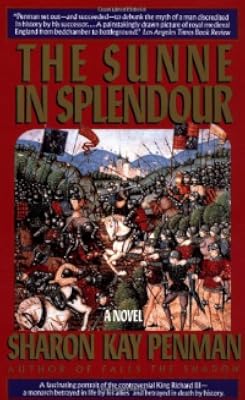
I'm a great fan of Sharon Kay Penman's The Sunne in Splendour, about Richard III and Here Be Dragons set in medieval Wales. They're two of my favorite books of historical friction, both unforgettable and moving me to tears. Here Be Dragons, despite being rooted soundly in history also is one of the most moving love stories I'd ever read. The last Penman novel I read though, based on Richard the Lionhearted, was a disappointment. It dragged. Frankly, through much of it I was bored.
So I started this book with some trepidation-but I found this was more the Penman of old, not the one that disappointed. This didn't for me quite reach the heights of those two favorite books--but it was still a terrific read that made me feel for the show more characters and feel transported to another time. It wasn't an easy read at times--not because of style or skill--but because I know English history too well to know this would end well. And Penman has a gift for making you care--even as you're exasperated with her characters. A character describes the battling cousins flaws pretty aptly. King Stephen too easily influenced and not resolute enough; Empress Maud incapable of listening to anyone and way too stubborn. And poor England caught in the middle. The tragedy of it all being, at least as Penman presents it, is that Maud *did* learn from her mistakes--and if she had received the kind of support she deserved and would have gotten had she been male--from her father, her husband, Stephen himself, might have made a decent monarch. I wound up feeling for both. And her picture of the young Henry II and Eleanor of Acquitaine and the early, happy part of their marriage was involving, even fascinating.
And frankly happy to follow characters I didn't know about, either because they're historically obscure or fictional. Because history doesn't leave much room for happy endings with real lives sadly enough. This one is well worth the read. show less
So I started this book with some trepidation-but I found this was more the Penman of old, not the one that disappointed. This didn't for me quite reach the heights of those two favorite books--but it was still a terrific read that made me feel for the show more characters and feel transported to another time. It wasn't an easy read at times--not because of style or skill--but because I know English history too well to know this would end well. And Penman has a gift for making you care--even as you're exasperated with her characters. A character describes the battling cousins flaws pretty aptly. King Stephen too easily influenced and not resolute enough; Empress Maud incapable of listening to anyone and way too stubborn. And poor England caught in the middle. The tragedy of it all being, at least as Penman presents it, is that Maud *did* learn from her mistakes--and if she had received the kind of support she deserved and would have gotten had she been male--from her father, her husband, Stephen himself, might have made a decent monarch. I wound up feeling for both. And her picture of the young Henry II and Eleanor of Acquitaine and the early, happy part of their marriage was involving, even fascinating.
And frankly happy to follow characters I didn't know about, either because they're historically obscure or fictional. Because history doesn't leave much room for happy endings with real lives sadly enough. This one is well worth the read. show less
Members
- Recently Added By
Lists

Best Historical Fiction
620 works; 261 members

Historical Fiction
889 works; 91 members

Books Read in 2023
5,547 works; 145 members

History novels (not too romancey)
37 works; 5 members

Set in the Middle Ages
42 works; 9 members

al.vick-parents books
301 works; 1 member

Books Read in 2019
4,052 works; 110 members

al.vick-series
381 works; 2 members

Daniel S. Burt's recommended historical novels
8 works; 1 member

THE WAR ROOM
813 works; 24 members
Talk Discussions
Past Discussions
2013 GROUP READ Dicussion - When Christ and His Saints Slept in 2013 Category Challenge (February 2013)
Author Information

20+ Works 18,960 Members
Sharon Kay Penman was born in New York City on August 13, 1945. She received a bachelor's degree in history from the University of Texas at Austin and a Juris Doctor degree from Rutgers University School of Law. She worked as a tax lawyer before becoming a full-time writer. She wrote The Sunne in Splendour, which chronicled the life of Richard show more III, while she was a student and a tax lawyer. After finishing the manuscript, her only copy was stolen from her car. She eventually rewrote the book and it was published in 1982. Her other works include Here Be Dragons, The Reckoning, When Christ and His Saints Slept, The Queen's Man, Cruel as the Grave, Dragon's Lair, Prince of Darkness, Lionheart and A King's Ransom. She won the 2001 Career Achievement Award for Historical Mysteries from Romantic Times. (Bowker Author Biography) show less

Sharon Kay Penman is a LibraryThing Author, an author who lists their personal library on LibraryThing.
Awards and Honors
Notable Lists
Series

Common Knowledge
- Canonical title
- When Christ and His Saints Slept
- Original publication date
- 1994-10-27
- People/Characters
- Empress Maud (as Matilda, Empress, Countess of Anjou, shadow Queen of England); Henry I, King of England; Stephen, King of England; Geoffrey V, Count of Anjou; Henry II, King of England; Eleanor of Aquitaine (show all 13); Louis VII, King of France; Robert FitzRoy, 1st Earl of Gloucester (as Robert Fitz Roy); Ranulf Flambard (as Ranulf Fitz Roy); Ranulf le Meschin, 3rd Earl of Chester (as Randolph, Earl of Chester); William Marshal, 1st Earl of Pembroke; Matilda of Boulounge; John FitzGilbert Marshal (Marshal of England)
- Important events
- Nineteen Year Winter (1135 | 1154); Battle of Lincoln (1141); Siege of Winchester (1141)
- Epigraph
- Never before had there been greater wretchedness in the country ... And they said openly that Christ and His saints slept.
The Peterborough Chronicle - Dedication
- To Valerie Ptak LaMont
- First words
- Stephen was never to forget his fifth birthday, for that was the day he lost his father.
- Last words
- (Click to show. Warning: May contain spoilers.)They waved as Ranulf turned, and that was to be the memory he would carry into Wales: the two of them, standing together in the bright winter sunlight, smiling, sure that the world, like the English crown, was theirs for the taking.
Classifications
Statistics
- Members
- 2,227
- Popularity
- 9,048
- Reviews
- 64
- Rating
- (4.23)
- Languages
- English
- Media
- Paper, Audiobook, Ebook
- ISBNs
- 14
- ASINs
- 23