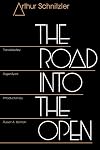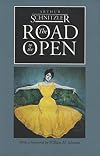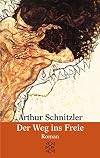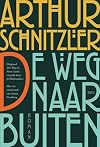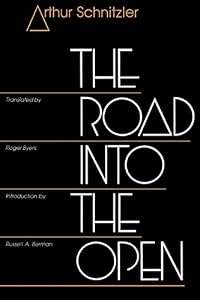
The Road to the Open
by Arthur Schnitzler
On This Page
Description
On the outset, 'The Road to The Open' is about a talented young composer suffering from a lack of inspiration. It is, however, a brilliant description of a slice of pre-World War I Viennese society, especially its intelligentsia. The novel dexterously showcases 'fin-de-sie?cle Austria' - the veritable Austria of the salons, cafes and musical concertTags
Recommendations
















Member Reviews
The Road into the Open is an unnerving and prescient indictment of early 20th century Vienna and the disintegration of a civilization’s culture. Schnitzler uses, I believe, the symbolism of child/parent to describe, both literally and figuratively, the hopelessness and demise of a once thriving, industrious and creative culture. That the book was written in 1908, pre-dating both world wars is truly astonishing.
The novel follows Baron Georg von Wergenthin, an aristocratic young composer over the course of a year that begins with the death of his father and ends with the stillborn birth of his illegitimate son. During this time, we meet his friends and acquaintances and many of their parents. We witness firsthand the growing and ominous show more development of overt anti-Semitism. We also observe the birth of Zionism as well as expansion of socialism.
The characters in the book (and there are so many that it’s tough to keep up initially) all are deeply rooted in the customs and mores of the time but many – most prominently the book’s protagonist - seem to languish in those customs without a sense of direction or purpose. Others see something threatening in Vienna’s political and societal direction and become either desperate or look for escape. The overriding sense of looming menace is pervasive throughout the novel.
This is a fascinating book on so many levels – as a work of fiction, as a psychological and cultural study and finally, as a peek into the times. It is a gloomy and sad book, but one that I found I couldn’t put down. show less
The novel follows Baron Georg von Wergenthin, an aristocratic young composer over the course of a year that begins with the death of his father and ends with the stillborn birth of his illegitimate son. During this time, we meet his friends and acquaintances and many of their parents. We witness firsthand the growing and ominous show more development of overt anti-Semitism. We also observe the birth of Zionism as well as expansion of socialism.
The characters in the book (and there are so many that it’s tough to keep up initially) all are deeply rooted in the customs and mores of the time but many – most prominently the book’s protagonist - seem to languish in those customs without a sense of direction or purpose. Others see something threatening in Vienna’s political and societal direction and become either desperate or look for escape. The overriding sense of looming menace is pervasive throughout the novel.
This is a fascinating book on so many levels – as a work of fiction, as a psychological and cultural study and finally, as a peek into the times. It is a gloomy and sad book, but one that I found I couldn’t put down. show less
I appreciated learning what life was like for European Jews in the early 20th century in Austria. The characters are intellectuals, professionals, and artists. However, the characters were very 2-dimensional and each represented a certain idea. There were also too many characters presented for me to be able to remember each well.
un grand classique, remarquablement mené et écrit
Nov 21, 2009French
Ratings
Members
- Recently Added By
Lists

German Literature
518 works; 55 members
Author Information

449+ Works 7,580 Members
Arthur Schnitzler, Viennese playwright, novelist, short story writer, and physician, was a sophisticated writer much in vogue in his time. He chose themes of an erotic, romantic, or social nature, expressed with clarity, irony, and subtle wit. Reigen, a series of ten dialogues linking people of various social classes through their physical desire show more for one another, has been filmed many times as La Ronde. As a Jew, Schnitzler was sensitive to the problems of anti-Semitism, which he explored in the play Professor Bernhardi (1913), seen in New York in a performance by the Vienna Burgtheater in 1968. Henry Hatfield calls Schnitzler "second only to Hofmannsthal among the Austrian writers of his generation and one of the most underrated of German authors... . He combined the naturalist's devotion to fact with the impressionist's interest in nuance; in other words, he told the truth" (Modern German Literature). In his most famous story, Lieutenant Gustl (1901), Schnitzler employs the stream-of-consciousness technique in an exposition of the follies and gradual disintegration of society in fin de siecle Vienna. Schnitzler has also been linked with Freud (see Vols. 3 and 5) and is credited with consciously introducing elements of modern psychology into his works. (Bowker Author Biography) show less
Some Editions
Awards and Honors
Notable Lists
Series
Belongs to Publisher Series
Work Relationships
Is contained in
Common Knowledge
- Canonical title
- The Road to the Open
- Original title
- Das erzählerische Werk. Bd. 4
- Alternate titles*
- Das erzählerische Werk. Bd. 4; Erzählende Schriften. Bd. 3
- Original publication date
- 1908 (Duits) (Duits); 2021 (Nederlands) (Nederlands)
- People/Characters*
- Georg von Wergenthin
- Important places*
- Wenen, Oostenrijk
- Related movies
- Der Weg ins Freie (1983 | TV | IMDb)
- First words
- Georg von Wergenthin sat all alone at the table today.
- Last words*
- (Click to show. Warning: May contain spoilers.)In Georgs Seele war ein mildes Abschiednehmen von mancherlei Glück und Leid, die er in dem Tal, das er nun für lange verließ, gleichsam verhallten hörte; und zugleich ein Grüßen unbekannter Tage, die aus der Weite der Welt seiner Jugend entgegenklangen.
- Blurbers
- Schorske, Carl; Weiner, Marc A.
- Original language
- German
*Some information comes from Common Knowledge in other languages. Click "Edit" for more information.
Classifications
Statistics
- Members
- 280
- Popularity
- 114,757
- Reviews
- 3
- Rating
- (3.50)
- Languages
- 8 — Dutch, English, French, German, Italian, Portuguese, Spanish, Yiddish
- Media
- Paper, Ebook
- ISBNs
- 40
- ASINs
- 7