On This Page
Description
This assessment of the performance of the southern soldiers in the American Civil War of 1861 deals with every aspect of an army from its senior officer to the lowliest private, following every process as the soldier tried to adapt to military life, train, and overcome the enemy.Tags
Recommendations









Member Reviews
This review also appears on my blog.
I've read a good number of Star Trek books, over the years. Since I came rather late to the Star Trek universe, I'm quite used to thinking of the expanded universe as a sprawling thing, composed of many books by a similarly vast number of authors. Of course, it wasn't always this way. Once, there were no Star Trek books at all.
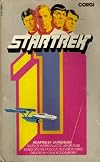
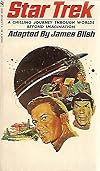
And then, there was one: Star Trek by James Blish.
Star Trek is a collection of seven short story adaptations of television episodes, namely "Charlie's Law" (aired as "Charlie X"), "Dagger of the Mind", "The Unreal McCoy" (aired as "The Man Trap"), "Balance of Terror", "The Naked Time", "Miri", and "The Conscience of the King".
Blish's adaptations were based on early draft scripts show more of the episodes, so the stories in this collection are not exactly the same as those that aired, though the differences tend to be minor.
The quality of the stories varies. For the most part, they are clearly uninspired adaptions of television scripts: lots of dialogue, limited description, and very little of anything else. They serve well enough as summaries of the episodes, but they're not particularly engaging, and I don't think they give enough detail for readers who haven't already seen the episodes.
The stories are inferior to the television episodes, too, in those cases where the acting is particularly noteworthy: Morgan Woodward's performance as Simon van Gelder in "Dagger of the Mind" and Arnold Moss's performance as Karidian in "The Conscience of the King" brought the characters to life in a way the lifeless dialogue in the short stories cannot match.
The book does have one good point, however: the adaptation of "Balance of Terror" is substantially better than the other stories. Indeed, it's so different that I'd have guessed it was written by another author entirely. Where the other adaptations are soulless collections of dialogue and stage direction, "Balance of Terror" takes some time to consider the import of events and the relationships between the characters, and gives more detail than is strictly required to understand the events. This added flavor places it head and shoulders above the rest: it's a satisfying and entertaining short story.
Blish's book was apparently very popular. Published in January 1967, it was in its fifth printing by June of that year, and in its eighth printing by June 1968. My copy is from a 25th printing in February 1977 and claims "Over 8 million copies in print.", though that might possibly be including the later books in the series. At any rate, it was popular enough that the series was gathered into two different omnibus sets.
However interesting this book may be as a window into the past, I cannot recommend it. I don't regret the time spent reading it, but those simply interested in reading a work of science fiction should probably choose a different book. show less
I've read a good number of Star Trek books, over the years. Since I came rather late to the Star Trek universe, I'm quite used to thinking of the expanded universe as a sprawling thing, composed of many books by a similarly vast number of authors. Of course, it wasn't always this way. Once, there were no Star Trek books at all.
And then, there was one: Star Trek by James Blish.
Star Trek is a collection of seven short story adaptations of television episodes, namely "Charlie's Law" (aired as "Charlie X"), "Dagger of the Mind", "The Unreal McCoy" (aired as "The Man Trap"), "Balance of Terror", "The Naked Time", "Miri", and "The Conscience of the King".
Blish's adaptations were based on early draft scripts show more of the episodes, so the stories in this collection are not exactly the same as those that aired, though the differences tend to be minor.
The quality of the stories varies. For the most part, they are clearly uninspired adaptions of television scripts: lots of dialogue, limited description, and very little of anything else. They serve well enough as summaries of the episodes, but they're not particularly engaging, and I don't think they give enough detail for readers who haven't already seen the episodes.
The stories are inferior to the television episodes, too, in those cases where the acting is particularly noteworthy: Morgan Woodward's performance as Simon van Gelder in "Dagger of the Mind" and Arnold Moss's performance as Karidian in "The Conscience of the King" brought the characters to life in a way the lifeless dialogue in the short stories cannot match.
The book does have one good point, however: the adaptation of "Balance of Terror" is substantially better than the other stories. Indeed, it's so different that I'd have guessed it was written by another author entirely. Where the other adaptations are soulless collections of dialogue and stage direction, "Balance of Terror" takes some time to consider the import of events and the relationships between the characters, and gives more detail than is strictly required to understand the events. This added flavor places it head and shoulders above the rest: it's a satisfying and entertaining short story.
Blish's book was apparently very popular. Published in January 1967, it was in its fifth printing by June of that year, and in its eighth printing by June 1968. My copy is from a 25th printing in February 1977 and claims "Over 8 million copies in print.", though that might possibly be including the later books in the series. At any rate, it was popular enough that the series was gathered into two different omnibus sets.
However interesting this book may be as a window into the past, I cannot recommend it. I don't regret the time spent reading it, but those simply interested in reading a work of science fiction should probably choose a different book. show less
I was given the first six books of this series one Christmas in the early 1970s. That same Christmas I was given an LP record of Beethoven's Fifth Symphony. I spent most of that (Australian) summer reading Star Trek and listening to Beethoven's Fifth. To this day, every time I hear that Symphony I think of kirk, Scotty, McCoy and the rest (especially Yeoman Janice Rand...).Those were the days before Star Trek: The Next Generation, and Deep space Nine, and Voyager, and so on... so these were the only way we could keep the memory of Star Trek alive. Sure, the stories had their flaws, but a lot of the time the flaws of the story were fewer than the flaws in the original shows. I loved reading them, and when I re-red them recently in e-book show more format, I loved them all over again.Recommended... nay, required, reading for any trekker. show less
I want to start off by saying that to really enjoy these Star Trek books, you need to be a fan or have at least watched the original series by Gene Roddenberry. It's assumed you're familiar with the characters and their personalities, and that you will willingly suspend disbelief from beginning to end.
It's a collection of seven short stories and each is an episode with the requisite crisis and the no name guy who always dies on the away mission. Aliens and new planets abound and Spock and McCoy are still at odds. Kirk, good old Kirk. He's the ladies man, the no nonsense captain, and the last word on the Enterprise. And, bonus, he sounds like William Shatner in my head thanks to the show!
Here's what I liked best about these books besides show more being the fun and quick reads that they are --- the tag lines on each which I plan to share because they're amusing.
Book 1 – Seven tales of intergalactic intrigue
Book 2 – The ultimate trip to worlds beyond
Book 3 – Seven eerie excursions
Book 4 – Dazzling exploits by the dynamic crew of the Enterprise
Book 5 – More thrilling adventures
Well, the fifth is not as entertaining but each title made me giggle and the artwork on each is so retro with floating heads and cheesy moons that it screams Star Trek. I'm finding these short tales very fun and a great little treat for lunch time and train reading. As a side note, in book 3, The Trouble with Tribbles episode makes an appearance. I can't wait. show less
It's a collection of seven short stories and each is an episode with the requisite crisis and the no name guy who always dies on the away mission. Aliens and new planets abound and Spock and McCoy are still at odds. Kirk, good old Kirk. He's the ladies man, the no nonsense captain, and the last word on the Enterprise. And, bonus, he sounds like William Shatner in my head thanks to the show!
Here's what I liked best about these books besides show more being the fun and quick reads that they are --- the tag lines on each which I plan to share because they're amusing.
Book 1 – Seven tales of intergalactic intrigue
Book 2 – The ultimate trip to worlds beyond
Book 3 – Seven eerie excursions
Book 4 – Dazzling exploits by the dynamic crew of the Enterprise
Book 5 – More thrilling adventures
Well, the fifth is not as entertaining but each title made me giggle and the artwork on each is so retro with floating heads and cheesy moons that it screams Star Trek. I'm finding these short tales very fun and a great little treat for lunch time and train reading. As a side note, in book 3, The Trouble with Tribbles episode makes an appearance. I can't wait. show less
Well, that's it! I've now read every book Blish published.
Really not much different from the other ten volumes of adaptations Blish did (don't ask how I ended up reading the first one last - I don't know myself) except for the lack of a foreword. It was the release of this volume that created a deluge of fan mail that Blish would address in his forewords to subsequent volumes.
As usual the quality varies with the quality of the adapted original script. Interesting to note that the iconic image of Sulu brandishing a fencing foil has him wearing an undershirt here- he's famously bare chested in the episode. There's another go round for the Shakespeare inspired trope, along with the child with god-like powers.
Really not much different from the other ten volumes of adaptations Blish did (don't ask how I ended up reading the first one last - I don't know myself) except for the lack of a foreword. It was the release of this volume that created a deluge of fan mail that Blish would address in his forewords to subsequent volumes.
As usual the quality varies with the quality of the adapted original script. Interesting to note that the iconic image of Sulu brandishing a fencing foil has him wearing an undershirt here- he's famously bare chested in the episode. There's another go round for the Shakespeare inspired trope, along with the child with god-like powers.
Back when I discovered these, I read and reread them to pieces. It's a tv show... it doesn't need the epic adventures and trilogies that I see published nowadays. It's Star Trek, and so it has to have a point (theme) and it has to get to it.
Honestly, while there is some merit to reading these to find out how the episodes were changed from script to screen, I'd say watching the episodes is a better way to experience these stories.
The first of 12 volumes of ST:TOS adaptations by James Blish, all 12 can pretty much be reviewed at once. Being based on TV scripts, Blish's efforts tend to be heavy on dialogue and low on action and sub-text. There are some individual exceptions but for the most part these adaptations date from a time before VCR's became ubiquitous and they are somewhat redundant under modern technology.
"Charlie's Law" (aired as "Charlie X") S01E02
"Dagger of the Mind" S01E09
"The Unreal McCoy" (aired as "The Man Trap") S01E01
"Balance of Terror" S01E14
"The Naked Time" S01E04
"Miri" S01E08
"The Conscience of the King" S01E13
"Charlie's Law" (aired as "Charlie X") S01E02
"Dagger of the Mind" S01E09
"The Unreal McCoy" (aired as "The Man Trap") S01E01
"Balance of Terror" S01E14
"The Naked Time" S01E04
"Miri" S01E08
"The Conscience of the King" S01E13
Members
- Recently Added By
Lists

Book Worlds We'd Like To Visit
322 works; 158 members

Writers In Public Domain 2026
90 works; 1 member
Author Information

James Benjamin Blish was born on May 23, 1921 in East Orange, N.J. Blish trained as a biologist at Rutgers and Columbia University, and spent 1942 - 1944 as a medical technician in the United States Army. After the war he became the science editor for the Pfizer pharmaceutical company. His first published story appeared in 1940, and his writing show more career progressed until he gave up his job to become a professional writer. From 1962 to 1968, he worked for the Tobacco Institute. Between 1967 and his death from lung cancer in 1975, Blish wrote authorized short story collections based upon the 1960s TV series Star Trek. He wrote 11 volumes adapting episodes of the series. He died midway through writing Star Trek 12. Perhaps Blish's most famous works were the "Okies" stories, known collectively as Cities in Flight, published in the science-fiction digest magazine Astounding Science Fiction. Some of James Blish's other works include The Vanished Jet, And All the Stars a Stage, The Quincunx of Time, and Flight of Eagles. (Bowker Author Biography) show less
All Editions
Some Editions
Series

Work Relationships
Common Knowledge
- Canonical title
- Star Trek 1
- Original title
- Star Trek 1; Star Trek: naar de gelijknamige televisie-serie van Gene Roddenberry, 1.
- Alternate titles
- Star Trek 1
- Original publication date
- 1967-01 (eng.) (eng.); 1974 (nld.) (nld.)
- People/Characters
- James T. Kirk (Captain); Leonard McCoy (Bones); Spock
- Important places
- USS Enterprise NCC-1701
- Related movies
- Star Trek (1966 | IMDb); Charlie X (1966 | IMDb); Dagger of the Mind (1966 | IMDb); The Man Trap (1966 | IMDb); Balance of Terror (1966 | IMDb); The Naked Time (1966 | IMDb) (show all 8); Miri (1966 | IMDb); The Conscience of the King (1966 | IMDb)
- First words
- Though as Captain of the starship Enterprise James Kirk had the final authority over four hundred officers and crewmen, plus a small and constantly shifting population of passengers, and though in well more than twenty... (show all) years in space he had had his share of narrow squeaks, he was firmly of the opinion that no single person ever gave him more trouble than one seventeen-year-old boy.
- Last words
- (Click to show. Warning: May contain spoilers.)"Kodos is dead...but I think she may walk in her sleep."
- Disambiguation notice
- This should not be combined with Star Trek: The Classic Episodes, Volume 1 (1991).
ISBN 0767830059 is likely a DVD or VHS release.
Per the Global Register of Publishers the ISBN prefix 978-0-7678 is assigned to Sony Home E... (show all)ntertainment (formerly Columbia/Tri-Star).
Classifications
Statistics
- Members
- 774
- Popularity
- 36,252
- Reviews
- 11
- Rating
- (3.43)
- Languages
- Dutch, English, German, Turkish
- Media
- Paper, Ebook
- ISBNs
- 16
- ASINs
- 23