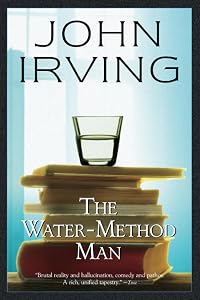
The Water-Method Man
by John Irving
On This Page
Description
The main character of John Irving's second novel, written when the author was twenty-nine, is a perpetual graduate student with a birth defect in his urinary tract--and a man on the threshold of committing himself to a second marriage that bears remarkable resemblance to his first...."Three or four times as funny as most novels."THE NEW YORKER "From the Paperback edition."Tags
Recommendations











Member Recommendations
Member Reviews
Hilarious coming of age type novel and the only Irving I can stand. Full of really weird characters and bizzare situations, this is great farce. Fred 'Bogus' Trumper (aka Thump-Thump) goes from bad to worse in the attempt to get his shit together. His long-suffering wife Biggie, old friend Cuth and deranged boss Ralph Packer alternately make things better and worse. Then there is the mysterious Merrill Overturf - did he really exist? Was there really a pee-cup incident? And just how does his current girlfriend Tulpen find the strength to stick around when Ralph decides Bogus's failure of an existence would make a smashing film? Side trips through Bogus's translation of an epic poem in "Old Low Norse" make for really great counterpoints show more in the overall story. show less
The Water-Method Man, John Irving's second novel, published before Irving became a best-selling author, is likely a book sought out by those, like me, who have been long time Irving fans. As an early work it is amazing to see how much of Irving's style was already established at this stage, and maintained throughout his long career. Like many of Irving's novel's, the main character here shares lots of Irving's biography: attended Exeter, did two trips to Iowa's creative writing workshop, grew up in New England, wrestled, writes, father abandons mother and child, etc. In this one there's even an adviser who may share characteristics with Irving's adviser, Kurt Vonnegut. It's always a guessing game where the autobiographical matters ends show more and the imaginary parts begins. In this one Irving teases us by having the main character, in the last few pages of the book, think up what turns out to be the opening sentences of this book "Her gynecologist recommended him to me. Ironic: the best urologist in New York is French. Dr. Claude Vigneron: ONLY BY APPOINTMENT. So I made one."
The main character is named Fred Trumper but throughout the book all call him by his nickname, Bogus. Everyone has figured out that he is often lying and making things up. Not a great personality trait for someone we're going to follow throughout the book. Normally we want to see the main character in a more positive light. That's hard to do here. This guy is definitely dysfunctional and prone to doing things which hurt people, such as abandoning his wife and kid. Eventually we realize how totally dysfunctional he is. He can never make any important decision, he is afraid of many things most would consider simple. We realize the lying is his way of defending himself from people thinking even worse of him. In some sense he becomes lovable as people realize he's not actually trying to be mean. He's just in hyper avoidance mode.
The book weaves back and forth between several subplots. He has a gynecological condition which he tries to avoid by drinking excessive amounts of water which will allow him to avoid facing up to his need for surgery. He avoids getting serious about a career by becoming a perpetual comparative literature student. He chooses a thesis topic that no one can judge him on so he makes up parts of it whole cloth. He translates an ancient saga which we get in bits and pieces and eventually want to know where it's going. He reads Moby Dick to his son and we see at the very end that Bogus identifies with the Whale. He is estranged from his wealthy parents and their expectations of him. He has a diabetic friend in Austria who disappears. He has another friend who makes films. And another who is a caretaker in Maine. Lots of ways to keep us intrigued.
And of course there's sex, breasts, lots of breasts, penises, pubic hairs, whores, virgins, nipples, orgasms, clap, and adultery. Amazingly beyond a couple of guys who enjoyed being with him Bogus was able to show enough of his softer side to attract women who found him lovable. He wins over the woman who has just become the best woman downhill skier in the world. She also has a nickname, Biggie. She indeed was a large woman standing taller than Bogus but when an interviewer asks why people call her Biggie she pushes her large breasts into his face to make her point. She immediately finds herself pregnant, marries Bogus and goes with him to Iowa. Eventually even her tolerance runs out telling him to get out and he immediately abandons her and their child and runs to Austria. Bogus tells no one where he is for six months. Biggie gives up on him and marries his childhood friend. Once again tangled relationships and abandonment. Plot thickens when Bogus returns and realizes what he's lost. He goes to NYC and works as the soundman on indi movies with an old friend from Iowa. Again a beautiful woman finds him lovable. Eventually he abandons her as well.
This continues getting even weirder but you get the picture, It's a worthwhile read. show less
The main character is named Fred Trumper but throughout the book all call him by his nickname, Bogus. Everyone has figured out that he is often lying and making things up. Not a great personality trait for someone we're going to follow throughout the book. Normally we want to see the main character in a more positive light. That's hard to do here. This guy is definitely dysfunctional and prone to doing things which hurt people, such as abandoning his wife and kid. Eventually we realize how totally dysfunctional he is. He can never make any important decision, he is afraid of many things most would consider simple. We realize the lying is his way of defending himself from people thinking even worse of him. In some sense he becomes lovable as people realize he's not actually trying to be mean. He's just in hyper avoidance mode.
The book weaves back and forth between several subplots. He has a gynecological condition which he tries to avoid by drinking excessive amounts of water which will allow him to avoid facing up to his need for surgery. He avoids getting serious about a career by becoming a perpetual comparative literature student. He chooses a thesis topic that no one can judge him on so he makes up parts of it whole cloth. He translates an ancient saga which we get in bits and pieces and eventually want to know where it's going. He reads Moby Dick to his son and we see at the very end that Bogus identifies with the Whale. He is estranged from his wealthy parents and their expectations of him. He has a diabetic friend in Austria who disappears. He has another friend who makes films. And another who is a caretaker in Maine. Lots of ways to keep us intrigued.
And of course there's sex, breasts, lots of breasts, penises, pubic hairs, whores, virgins, nipples, orgasms, clap, and adultery. Amazingly beyond a couple of guys who enjoyed being with him Bogus was able to show enough of his softer side to attract women who found him lovable. He wins over the woman who has just become the best woman downhill skier in the world. She also has a nickname, Biggie. She indeed was a large woman standing taller than Bogus but when an interviewer asks why people call her Biggie she pushes her large breasts into his face to make her point. She immediately finds herself pregnant, marries Bogus and goes with him to Iowa. Eventually even her tolerance runs out telling him to get out and he immediately abandons her and their child and runs to Austria. Bogus tells no one where he is for six months. Biggie gives up on him and marries his childhood friend. Once again tangled relationships and abandonment. Plot thickens when Bogus returns and realizes what he's lost. He goes to NYC and works as the soundman on indi movies with an old friend from Iowa. Again a beautiful woman finds him lovable. Eventually he abandons her as well.
This continues getting even weirder but you get the picture, It's a worthwhile read. show less
I was pleasantly surprised in reading this early John Irving novel to find so many precursors of the documentary style I first encountered in The World According to Garp. In addition to both first-person and third-person passages of narrative, the book is filled with letters, bits of film scripts, translations of a supposed Nordic epic, and other bits of ephemera. Irving's liberal doses of humor, much of it morose if not actually dark, are also on display, as is his skill at creating memorable, unusual characters and complex comic scenarios.
Because I have so enjoyed his later works, I was glad to discover that these elements were well developed even in this, his second novel. Though why I didn't expect them to be is a mystery to me. I show more suppose early novels often fail to measure up to later ones, which is of course natural, and if one comes to the early works late, then they feel like examples of an author's waning powers, when of course they're hints of what was to come later.
While The Water-Method Man is clearly the work of a writer building up to something even greater, it holds up quite well on its own. If I had stopped reading it 3/4 of the way through, I think I would have rated it higher than I did, because it was only the final stretch of the book that I felt the pace falter, and I wished for something more out of the final chapters. In part this is because the structure of the book, in which the main character's current relationship, earlier marriage, and even earlier courtship, are relayed in alternating chapters. By the time one reads enough to ties those strands together thoroughly, it feels as if there should be a resolution already close at hand, but there is a further development yet to come, and as a reader, I was by that time just as annoyed with the protagonist's inability to commit himself to anything as were all the people he'd left behind.
Maybe this was intentional, but it made the last part of the book less enjoyable than the first part. The protagonist certainly doesn't do much in most of the book to engender anyone's good will, apart from his often amusing antagonism and his tendency toward failure in spite of his obvious intellectual gifts. So after he has fled from all those who have tried to help him throughout most of the novel, it's hard to root for his success. Yet he does succeed, and while that success is proportional to his efforts, it does not feel as hard-won as one might expect. His frank, self-effacing failure has simply been too well-catalogued. His redemption, by comparison, seems a little too easy.
Still, I'll remember this novel for a long time to come, and that's an important distinction when so many books fade from memory. And I'll very likely try the other few early Irving novels I haven't read, because I trust there are treasures there to find. show less
Because I have so enjoyed his later works, I was glad to discover that these elements were well developed even in this, his second novel. Though why I didn't expect them to be is a mystery to me. I show more suppose early novels often fail to measure up to later ones, which is of course natural, and if one comes to the early works late, then they feel like examples of an author's waning powers, when of course they're hints of what was to come later.
While The Water-Method Man is clearly the work of a writer building up to something even greater, it holds up quite well on its own. If I had stopped reading it 3/4 of the way through, I think I would have rated it higher than I did, because it was only the final stretch of the book that I felt the pace falter, and I wished for something more out of the final chapters. In part this is because the structure of the book, in which the main character's current relationship, earlier marriage, and even earlier courtship, are relayed in alternating chapters. By the time one reads enough to ties those strands together thoroughly, it feels as if there should be a resolution already close at hand, but there is a further development yet to come, and as a reader, I was by that time just as annoyed with the protagonist's inability to commit himself to anything as were all the people he'd left behind.
Maybe this was intentional, but it made the last part of the book less enjoyable than the first part. The protagonist certainly doesn't do much in most of the book to engender anyone's good will, apart from his often amusing antagonism and his tendency toward failure in spite of his obvious intellectual gifts. So after he has fled from all those who have tried to help him throughout most of the novel, it's hard to root for his success. Yet he does succeed, and while that success is proportional to his efforts, it does not feel as hard-won as one might expect. His frank, self-effacing failure has simply been too well-catalogued. His redemption, by comparison, seems a little too easy.
Still, I'll remember this novel for a long time to come, and that's an important distinction when so many books fade from memory. And I'll very likely try the other few early Irving novels I haven't read, because I trust there are treasures there to find. show less
I love John Irving and finally decided to search out his earlier works which I'd never read. In The Water-Method Man, we meet Fred "Bogus" Trumper, who is struggling to "grow up": his thesis is unfinished, he has problems committing to his wife and child, he remains drawn to a friend with whom he shared some wild times in Europe. John Irving's ability to write scenes that are both funny and sad is already evident in this book. Quirky characters, but real life.
Seine Frau will raus; seine Geliebte will ein Kind. Die Beschwerden, die er sich bei seiner einstigen Babysitterin geholt hat, machen ihm das Lieben zur Qual. Der Filmemacher, für den er arbeitet, will sein Leben verfilmen: als Dokumentation eines Fehlschlags. Dies ist die Geschichte des fluchbeladenen Fred Bogus Trumper, eines Schlawiners und Schwindlers, eines Nichtstuers voller Charme und guter Vorsätze.
Fred 'Bogus' Trumper suffers an embarrassing complaint that he is encouraged to try to solve without the intervention of surgery, but hat is not his only problem. With one failed marriage behind him he is now in another relationship, he has a young son by his former wife and his new girl wants a family too. But as with all things in Bogus' life he finds it difficult to make a decisions and commitments.
The Water-Method Man is no doubt the funniest of John Irving's novels that I have read, but it is much more than that (just as well for I do not generally read books for the humour - I have a problem seeing the humour when I read to myself - but I know that if I heard it read aloud I would find it very funny indeed!). The relatively
small show more cast of characters is easy to warm to despite their individual failings, and one is soon hoping that they will be able to sort out all their problems. show less
The Water-Method Man is no doubt the funniest of John Irving's novels that I have read, but it is much more than that (just as well for I do not generally read books for the humour - I have a problem seeing the humour when I read to myself - but I know that if I heard it read aloud I would find it very funny indeed!). The relatively
small show more cast of characters is easy to warm to despite their individual failings, and one is soon hoping that they will be able to sort out all their problems. show less
den var seg och tråkig : jag har läst flera av John Irvings böcker och jag tycker hans äldre böcker är skrivna på ett slarvigare sätt, svårare att komma in i och lättare att tappa bort sig. Självaste handlingen är rolig och lättsam.
Members
- Recently Added By
Lists

Best Laugh Out Loud Books
143 works; 48 members

Llibres que he llegit el 2017
49 works; 1 member

Books With Water Words in the Title
186 works; 12 members

Lucy's Long List
69 works; 1 member
Author Information

61+ Works 96,585 Members
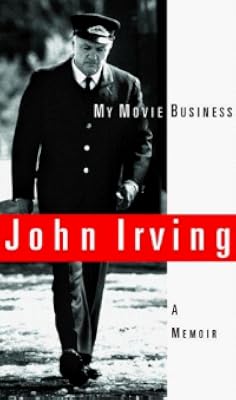
John Irving published his first novel at the age of twenty-six. He has received awards from the Rockefeller Foundation, the National Endowment for the Arts, and the Guggenheim Foundation; he has won an O. Henry Award, a National Book Award, and an Academy Award. (Publisher Provided) John Irving was born John Wallace Blunt, Jr. on March 2, 1942 in show more Exeter, New Hampshire. His named was changed to John Winslow Irving when his stepfather adopted him at the age of six. He was a dyslexic child and it took him five years to get through Exeter Academy, which is where his adoptive father taught Russian history. He received a B.A. (cum laude) from the University of New Hampshire in 1965 and an M.F.A. from the Iowa Writers' Workshop, in 1967, where he studied with Kurt Vonnegut Jr. His first novel was Setting Free the Bears (1969) but it wasn't until The World According to Garp was published in 1978, that he became a literary star. The novel spent six months on the bestseller list and won the American Book Award in 1980. It was also made into a movie in 1982 starring Robin Williams and costarring Glenn Close and John Lithgow. In 1981, he received an O. Henry Award for the short story Interior Space. Some of his other novels were also made into movies including The Hotel New Hampshire starring Jodie Foster and Rob Lowe; A Prayer for Owen Meany, which was titled Simon Birch starring Jim Carrey; and The Cider House Rules starring Michael Caine. He won the Oscar for Best Adapted Screenplay for The Cider House Rules in 2000. Irving also wrote two memoirs; one detailing his wrestling adventures entitled The Imaginary Girlfriend, and another concerning his novels made into Hollywood films entitled My Movie Business: A Memoir. (Bowker Author Biography) show less
Some Editions
Series
Belongs to Publisher Series
Work Relationships
Is contained in
Common Knowledge
- Canonical title
- The Water-Method Man
- Original title
- The Watermethode Man
- Original publication date
- 1972
- People/Characters
- Fred "Bogus" Trumper; Ralph Packer; Sue "Biggie" Trumper; Cuthbert Bennett; Merrill Overturf
- Important places
- Vienna, Austria; Iowa City, Iowa, USA; USA; Iowa, USA
- Dedication*
- Voor Shyla
- First words*
- Haar gynaecoloog had hem bij me aanbevolen.
- Last words*
- (Click to show. Warning: May contain spoilers.)Zich bewust van zijn littekens, zijn oude harpoenen en zo, glimlachte Bogus Trumper voorzichtig naar al het goede vlees rondom hem.
- Original language*
- Engels
*Some information comes from Common Knowledge in other languages. Click "Edit" for more information.
Classifications
Statistics
- Members
- 2,640
- Popularity
- 7,159
- Reviews
- 21
- Rating
- (3.29)
- Languages
- 14 — Czech, Danish, Dutch, English, Estonian, Finnish, French, German, Italian, Japanese, Polish, Russian, Spanish, Swedish
- Media
- Paper, Audiobook, Ebook
- ISBNs
- 56
- ASINs
- 16