On This Page
Description
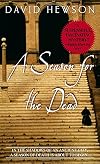
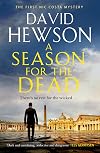
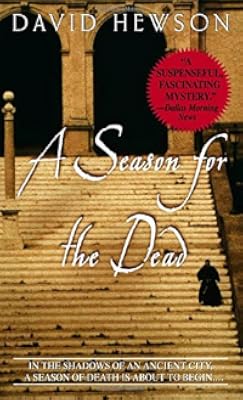
Fiction. Mystery. Suspense. Thriller. HTML:In a hushed Vatican reading room, the scene was shocking: a crazed professor shot dead after brandishing evidence of a grisly crime. Moments later, two bodies are found in a nearby church, each with a gruesome calling card from the killer. Thus begins David Hewson's elegant and electrifying new novel. Set amidst a bizarre killing spree in modern Rome, it is a bewitching blend of history and drama, sensuality and suspense.As the August heat takes show more Rome in its fiery grip, the news of two brutal murders holds the city in thrall. And as the media gathers and Vatican officials close ranks, a young detective is sent to the forefront of the case. Nic Costa is the son of an infamous Italian Communist, a connoisseur of Caravaggio , and a cop who barely looks his 27 years of age. Thrust into the heart of a killing spree that will rattle his city down to its ancient bones, Nic meets a woman who will soon dominate both his consciousness and his investigation.
A cool, beautiful professor of early Christianity, Sara Farnese was in the Vatican library on that fateful day, a witness to her colleague's strange outburst and death. But her role will become even more puzzling as more bodies are found: Each victim killed in a gory tableau of Christian martyrdom. And each victim had intimately known Sara, whose silence Costa cannot quite crack and whose carnal history becomes more lurid and unfathomable with every revelation.
Soon, a nightmarish chase is implicating politicians and priests -- while at the heart of the matter remains the woman Costa is both investigating and guarding. Wanting to believe in Sara's innocence, Nic still cannot turn his eyes from the truths he is uncovering. Even as the secrets of a woman, a killer and a city begin to unravel...with devastating consequences.
A beguiling mystery, a dazzling treat for the senses, and a fascinating tour of the streets and alleyways of Rome, Nic Costa's relentlessly suspenseful debut is a masterpiece of suspense fiction.?
From the Hardcover edition.. show less
Tags
Recommendations





Member Recommendations
rbtanger Thematic and stylistic similarities, although I think Lost Girls of Rome is better. They also both take place in Rome and have secret society plot lines.
Member Reviews
Nic Costa is a young cop in Rome, trying to unravel a baffling case: an insane man appears to be on an unholy mission to recreate the martyrdoms of early Christians, each murdered in horrific ways. Nic’s search for the truth leads to the Vatican, the politics of Rome, and the truth about a very beautiful, and very mysterious, woman…. This is the first in the Nic Costa mystery series written in the early 2000s, which is when I first read it; now, having visited Rome, I found that I wanted to refresh my memory of the book because I had seen some of the places described. I had forgotten a couple of things: one, how grisly and gruesome parts of the story are and two, what an elegant writer David Hewson is; there are passages here that show more simply sing. Definitely not for the squeamish, and probably I’ll take my time in re-reading the rest of the series (I have them all, but have not read them all), but for the sheer pleasure of the language and the depiction of the ancient city, definitely recommended. show less
This is the first in a series featuring Nic Costa and Inspector Falcone. Sara Faranese is studying in the Vatican library when a colleague rushes in and frankly whispers, "In the blood of the martyrs is the seed of the church." He then displays a pistol and a bag containing the skin of a human being. Fearing for her safety a Swiss guard shoots him dead, much to Sara's consternation, because she realized he wasn't trying to kill her, but to convey a message. Realizing that the flayed skin may have some reference to St. Bartholome and she drags Coasta and his partner Rossi to that saints church where they discover two more flayed bodies, her erstwhile lover and Stefano Rinaldi's wife. Soon others are being killed and posed in bizarre ways show more that suggest a link to early martyrs.
Lots of fascinating detail about Rome, Italian customs and how to flay a body. There is a rather gross description of just how to do it (might take about an hour and requires lots of anatomical knowledge and strength) not to mention a reference to some cultures that tried to do it while the victims remained alive. And by the way, now that I have your attention, some Italians enjoy eating offal, prepared in all sorts of garlicy ways. This is apparently from the days when the clergy got all the good parts and the rest were thrown to the proletariat who discovered ways to make it more than palatable. There is a nifty (hmm, perhaps bad choice of words) scene where Costa is invited to dinner with the brilliant pathologist, "crazy" Theresa, and they eat at one of these restaurants. Costa is a vegetarian.
I liked this book, but it does seem that some of the tantalizing leads, for example the "seed of the church" comment above that appears to be significant early on, never gets linked to anything later on. Lots of neat conspiracy stuff. While the inter-connectivity of some of the characters might stretch one's credibility, the shades of gray in the characterizations are what I found most intriguing about the book.
Caravaggio's paintings play an important role that I enjoyed. This is probably the book that Dan Brown wishes he could have written. Of other Italian location writers, I would place him closest to Michael Dibdin, if perhaps not quite as intellectual. show less
Lots of fascinating detail about Rome, Italian customs and how to flay a body. There is a rather gross description of just how to do it (might take about an hour and requires lots of anatomical knowledge and strength) not to mention a reference to some cultures that tried to do it while the victims remained alive. And by the way, now that I have your attention, some Italians enjoy eating offal, prepared in all sorts of garlicy ways. This is apparently from the days when the clergy got all the good parts and the rest were thrown to the proletariat who discovered ways to make it more than palatable. There is a nifty (hmm, perhaps bad choice of words) scene where Costa is invited to dinner with the brilliant pathologist, "crazy" Theresa, and they eat at one of these restaurants. Costa is a vegetarian.
I liked this book, but it does seem that some of the tantalizing leads, for example the "seed of the church" comment above that appears to be significant early on, never gets linked to anything later on. Lots of neat conspiracy stuff. While the inter-connectivity of some of the characters might stretch one's credibility, the shades of gray in the characterizations are what I found most intriguing about the book.
Caravaggio's paintings play an important role that I enjoyed. This is probably the book that Dan Brown wishes he could have written. Of other Italian location writers, I would place him closest to Michael Dibdin, if perhaps not quite as intellectual. show less
Hot, sunny Rome is dark
Someone is murdering people in Rome and draping their bodies in artistic ways imitating stories of early Christian martyrdom. It's weird and also terrifying, and young police detective Nic Costa and his partner, veteran police officer Luca Rossi get pulled into the center of the crime spree.
This is the beginning of a new series by David Hewson and I'm a bit ambivalent about it. The murders are gruesome, the multiple POV don't appeal to me much, and the revolting story of the crimes revolts me. Mr. Hewson makes some plotting decisions I'm not sure are the strongest.
I think that if I knew Rome and its churches better I would have enjoyed this book more. At least it would have been more personal.
I received a review show more copy of " A Season for the Dead" by David Hewson from Black Thorn press through NetGalley.com. show less
Someone is murdering people in Rome and draping their bodies in artistic ways imitating stories of early Christian martyrdom. It's weird and also terrifying, and young police detective Nic Costa and his partner, veteran police officer Luca Rossi get pulled into the center of the crime spree.
This is the beginning of a new series by David Hewson and I'm a bit ambivalent about it. The murders are gruesome, the multiple POV don't appeal to me much, and the revolting story of the crimes revolts me. Mr. Hewson makes some plotting decisions I'm not sure are the strongest.
I think that if I knew Rome and its churches better I would have enjoyed this book more. At least it would have been more personal.
I received a review show more copy of " A Season for the Dead" by David Hewson from Black Thorn press through NetGalley.com. show less
A terrific first book in a mystery story series set in Rome, featuring Nic Costa as the police detective a little too idealistic for his job. This story involves the Vatican, the aftereffects of the dot-com crash, a serial killer, at least one beautiful woman, and Rome itself. I can't wait to read the next one.
A SEASON FOR THE DEAD is grisly, almost obscene in its violence. It is a fantastic book. It is the kind of book that I would have closed after the first few pages. It is a book that I just read for the second time.
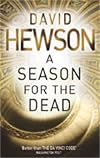
The cover of one edition proclaims it better than the DA VINCI CODE. It is nothing like the DA VINCI CODE. It is about religious fanaticism, the secrecy of the Vatican, and a quote from a writer of church history, but it makes sense. Fanaticism and fantasy are not the same thing.
The Publishers’ Weekly review, found on Amazon, pretty much gives the opening of the book away so readers who don’t want the grisly opening can read the PW review and move on to the next chapter but the first chapter establishes one of the central show more characters, Sara Farnese, a scholar with the coveted access to the reading room of the Vatican Library.
On a brutally hot day in August, Sara is engrossed in her research when the quiet is broken by library personel and Swiss Guards who are trying to stop Stefano Rinaldi as he walks toward Sara carrying a supermarket shopping bag. When he reaches her, he empties the contents of the shopping bag onto her desk and says, “The blood of the martyrs is the seed of the Church.” The quote is from Tertullian, and early theologian of the church. Rinaldi is also carrying a gun. Softly, he says, “She’s still there, Sara….You must go….Think of Bartholomew. You must know.”
Nic Costa and his partner, Luca Rossi, are patrolling St. Peter’s square, looking for pickpockets. Nic is twenty-seven years old and looks seventeen. In a city awash is some of the most extraordianry art ever produced, Nic knows the location of every Caravaggio painting in Rome. Nic tells Rossi of the painting known as the “Madonna of the Pilgrims”, barely a six-minute walk from the square. Rossi asks, “It’s good?” Nic responds, “The feet are really dirty. The Vatican hated it.” [ This picture can be found in the review of CARAVAGGIO'S ANGEL written by Ruth Brandon. A link to the review is on the Authors and Books page of this blog].
It is well-known that Vatican City is a country taking up a great deal of space in the city of Rome. Costa and Rossi have no authority in Vatican City but Nic always took his small scanner when he was assigned to the square. He never heard much but on this day he hears the commotion generated by a shooting in the Library Reading Room. Nic insists they need to take a look even if they can’t act. It is in taking the look, that Nic and Rossi meet Sara who knows the Swiss Guards won’t help her. She knows what Rinaldi meant in his mention of Bartholomew and the two Roman police officers are more than willing to assist her.
As bodies mount, it becomes clear that the killer is using the paintings of the apocryphal stories about the deaths of the early Christian martyrs as depicted in the churches that bear their names. Stefano Rinaldi and Sara Farnese had been lovers and a link is established between Sara and the victims of the killer. Religion, insanity, and the sexual history of a woman are driving the actions of a madman.
Hewson makes frequent reference to Caravaggio’s “Martyrdom of St. Matthew”, a painting hanging in a church where a body is found. In the very back of the painting, over the right shoulder of the killer, is the face of a man who is shocked and appalled by what he is witnessing. It is the face of Caravaggio, a self-portrait, that is mentioned frequently in the story. Is the man who sends the killer on his missions appalled by what he has started? [This small plot connection gives me the opportunity to insert another picture of a Caravaggio masterpiece. The locations of the paintings as mentioned in the story are the actual locations of the paintings in the churches in Rome].
In A SEASON FOR THE DEAD, there is murder and fraud and sexual misconduct tied to the hierarchy of the Church. Cardinal Michael Denney is the real villain of the piece because he uses people in furtherance of his own ends without thought to the consequences for those he uses.
Costa, Rossi, and their boss, Inspector Falcone, come late to an understanding of the lines, “As I was going to St. Ives, I met a man with seven wives….” A SEASON FOR THE DEAD is a brutal story. The killer is not the worst of the characters. The author writes that every season is a season for the dead, even the hot days of a Roman August. The characters are interesting and very believable. This book is the first in a series, all of which I have read as they were published. A SEASON FOR THE DEAD is a story that is too good to be ignored. Scanning will help get past the worst details. Focusing on the plot and the characters will send the reader to the next in the series THE VILLA OF MYSTERIES. show less
The cover of one edition proclaims it better than the DA VINCI CODE. It is nothing like the DA VINCI CODE. It is about religious fanaticism, the secrecy of the Vatican, and a quote from a writer of church history, but it makes sense. Fanaticism and fantasy are not the same thing.
The Publishers’ Weekly review, found on Amazon, pretty much gives the opening of the book away so readers who don’t want the grisly opening can read the PW review and move on to the next chapter but the first chapter establishes one of the central show more characters, Sara Farnese, a scholar with the coveted access to the reading room of the Vatican Library.
On a brutally hot day in August, Sara is engrossed in her research when the quiet is broken by library personel and Swiss Guards who are trying to stop Stefano Rinaldi as he walks toward Sara carrying a supermarket shopping bag. When he reaches her, he empties the contents of the shopping bag onto her desk and says, “The blood of the martyrs is the seed of the Church.” The quote is from Tertullian, and early theologian of the church. Rinaldi is also carrying a gun. Softly, he says, “She’s still there, Sara….You must go….Think of Bartholomew. You must know.”
Nic Costa and his partner, Luca Rossi, are patrolling St. Peter’s square, looking for pickpockets. Nic is twenty-seven years old and looks seventeen. In a city awash is some of the most extraordianry art ever produced, Nic knows the location of every Caravaggio painting in Rome. Nic tells Rossi of the painting known as the “Madonna of the Pilgrims”, barely a six-minute walk from the square. Rossi asks, “It’s good?” Nic responds, “The feet are really dirty. The Vatican hated it.” [ This picture can be found in the review of CARAVAGGIO'S ANGEL written by Ruth Brandon. A link to the review is on the Authors and Books page of this blog].
It is well-known that Vatican City is a country taking up a great deal of space in the city of Rome. Costa and Rossi have no authority in Vatican City but Nic always took his small scanner when he was assigned to the square. He never heard much but on this day he hears the commotion generated by a shooting in the Library Reading Room. Nic insists they need to take a look even if they can’t act. It is in taking the look, that Nic and Rossi meet Sara who knows the Swiss Guards won’t help her. She knows what Rinaldi meant in his mention of Bartholomew and the two Roman police officers are more than willing to assist her.
As bodies mount, it becomes clear that the killer is using the paintings of the apocryphal stories about the deaths of the early Christian martyrs as depicted in the churches that bear their names. Stefano Rinaldi and Sara Farnese had been lovers and a link is established between Sara and the victims of the killer. Religion, insanity, and the sexual history of a woman are driving the actions of a madman.
Hewson makes frequent reference to Caravaggio’s “Martyrdom of St. Matthew”, a painting hanging in a church where a body is found. In the very back of the painting, over the right shoulder of the killer, is the face of a man who is shocked and appalled by what he is witnessing. It is the face of Caravaggio, a self-portrait, that is mentioned frequently in the story. Is the man who sends the killer on his missions appalled by what he has started? [This small plot connection gives me the opportunity to insert another picture of a Caravaggio masterpiece. The locations of the paintings as mentioned in the story are the actual locations of the paintings in the churches in Rome].
In A SEASON FOR THE DEAD, there is murder and fraud and sexual misconduct tied to the hierarchy of the Church. Cardinal Michael Denney is the real villain of the piece because he uses people in furtherance of his own ends without thought to the consequences for those he uses.
Costa, Rossi, and their boss, Inspector Falcone, come late to an understanding of the lines, “As I was going to St. Ives, I met a man with seven wives….” A SEASON FOR THE DEAD is a brutal story. The killer is not the worst of the characters. The author writes that every season is a season for the dead, even the hot days of a Roman August. The characters are interesting and very believable. This book is the first in a series, all of which I have read as they were published. A SEASON FOR THE DEAD is a story that is too good to be ignored. Scanning will help get past the worst details. Focusing on the plot and the characters will send the reader to the next in the series THE VILLA OF MYSTERIES. show less
I would call this one a quasi-literary mystery. No cozy material here -- if you're expecting a quick read, forget it. It is tangled & convoluted, very much into character development (as a first in a series should be) and the mystery itself is at times a bit complicated. I thought it was an excellent book, myself, a very intelligent thriller.
plot review, no spoilers
Set in Rome, the story opens in the reading room of the Vatican Library, where professor Sara Farenese is thinking about her upcoming dinner date while reading. The next thing she knows, a friend of hers comes in, dumps the contents of a bag table and out comes the flayed skin of a human being. Thus begins a mystery that involves the Vatican, the police in Rome, and our first show more introduction to the main characters of this series: young Nic Costa and his older partner Luca Rossi.
Some of the scenes in the novel are kind of grisly, but the author doesn't dwell on them for too long. Season for the Dead is a suspenseful police procedural that will keep you reading for a long time. show less
plot review, no spoilers
Set in Rome, the story opens in the reading room of the Vatican Library, where professor Sara Farenese is thinking about her upcoming dinner date while reading. The next thing she knows, a friend of hers comes in, dumps the contents of a bag table and out comes the flayed skin of a human being. Thus begins a mystery that involves the Vatican, the police in Rome, and our first show more introduction to the main characters of this series: young Nic Costa and his older partner Luca Rossi.
Some of the scenes in the novel are kind of grisly, but the author doesn't dwell on them for too long. Season for the Dead is a suspenseful police procedural that will keep you reading for a long time. show less
This was a gripping reading. I love Nic Costa's series very much but never read the first of this series earlier. This series is set in Rome and there is always a lot of historical facts but also lots of religion backgrounds. This story starts off at the Vatican but takes the assassin to different churches in Rome. The homicides are always arranged in the same way in front of an alatarpiece which show a martyr. There is also lots of corruption around the church but also the police. It takes Nic Costa a lot of twist and turns to solve the puzzle even though not to his perfect satisfaction.
Members
- Recently Added By
Lists

Books Read in 2016
4,666 works; 197 members

Books Read in 2018
4,360 works; 110 members
Author Information

Some Editions
Awards and Honors
Notable Lists
Series

Common Knowledge
- Canonical title
- A Season for the Dead
- Original title
- A season for the dead
- Alternate titles*
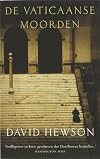
- De Vaticaanmoorden
- Original publication date
- 2004
- People/Characters
- Nic Costa; Sara Farnese; Gianni Peroni; Leo Falcone; Teresa Lupo
- Important places
- Rome, Italy; Vatican City
- First words
- The heat was palpable, alive. Sara Farnese sat at her desk in the Reading Room of the Vatican Library and stared out of the window, out into the small rectangular courtyard, struggling to concentrate.
- Last words
- (Click to show. Warning: May contain spoilers.)Nic Costa felt no wiser. Just a little stronger, perhaps, and that, in the circumstances, was as much as he could bear.
- Original language*
- Engels
- Canonical DDC/MDS
- 813.6
*Some information comes from Common Knowledge in other languages. Click "Edit" for more information.
Classifications
Statistics
- Members
- 689
- Popularity
- 41,647
- Reviews
- 29
- Rating
- (3.37)
- Languages
- 10 — Czech, Danish, Dutch, English, Finnish, French, German, Russian, Spanish, Swedish
- Media
- Paper, Audiobook, Ebook
- ISBNs
- 45
- ASINs
- 11