2BR02B
by Kurt Vonnegut
On This Page
Description
2BR02B is a satiric short story that imagines life & death in a future world where aging has been "cured" & population control is mandated and administered by the government..
Tags
Recommendations

















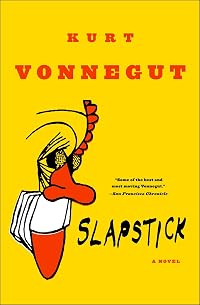
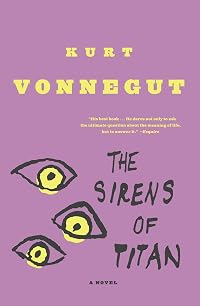





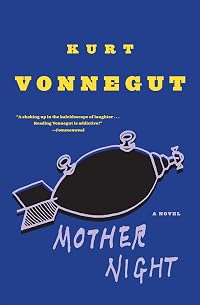
Member Recommendations
Member Reviews
This very Vonnegut vision of the future was quite interesting and disturbing. Originally published in “Worlds of If” magazine in 1962, it predates Vonnegut’s most popular book, and the only other work of his that I have read, Slaughterhouse-Five, by about five years. After reading it twice, I think it is a short story well deserving of the fine press treatment. And Sharp Teeth Press has done an admirable job of giving it just that.
This is a vision of a future population control institutionalized to keep the population constant after medical breakthroughs eliminated aging. The story begins:
Everything was perfectly swell.
There were no prisons, no slums, no insane asylums, no cripples, no poverty, no wars.
All diseases were conquered. show more So was old age.
Death, barring accidents, was an adventure for volunteers.
Well that does sound swell, right? But there’s a catch. Now if you wanted to have a child, or I suppose if you accidently got pregnant and wanted to keep the baby, you had to find someone willing to die so that the child could take that persons’ place. Otherwise the child would be terminated. And this was all bureaucratically provided for by the swell sounding Ethical Suicide Studios, part of the Federal Bureau of Termination. People being people, of course, there were much more colorful names for the facilities. Vonnegut describes it as
an institution whose fanciful sobriquets included: “Automat”, “Birdland”, “Cannery”, “Catbox”, “De-louser”, “Easy-go”, “Good-by, Mother”, “Happy Hooligan”, “Kiss-me-quick”, “Lucky Pierre”, “Sheepdip”, “Waring Blender”, “Weep no-more” and “Why Worry?”.
There are even popular songs that celebrate the usefulness of such an institution in curing the blues:
If you don’t like my kisses, honey,
Here’s what I will do:
I’ll go see a girl in purple,
Kiss this sad world toodle-oo
If you don’t want my lovin’
Why should I take up all this space?
I’ll get off this old planet,
Let some sweet baby have my place.
It kind of reminds me of another dumb solution imposed on a society in a Star Trek episode. In that scenario, two planets had replaced war with a computer simulation because it was “too messy”. So the simulation would come up with the number of people killed in each virtual battle, come up with a list of names, and you would be required to show up and be terminated. But just because these visions of the future sound dumb, doesn’t mean that they couldn’t happen. Well intentioned laws and solutions sometimes have unintended and ridiculous consequences.
There is plenty of Vonnegut humor packed into this story. Such as his description of what happens to the attractive women they hire at the Ethical Suicide Studios:
The woman had a lot of facial hair—an unmistakable mustache, in fact. A curious thing about gas-chamber hostesses was that, no matter how lovely and feminine they were when recruited, they all sprouted mustaches within five years or so.
I also liked the irony of the scene where the painter is talking to the orderly, a title that suggests order:
“The world could do with a good deal more mess, if you ask me,” he [the painter] said.
The orderly laughed and moved on.
I’ll leave you to enjoy the details of the story on your own without spoiling it here.
The Sharp Teeth press has created a very attractive edition for this story that I think Vonnegut would be happy with. I’m not sure what the paper is but it is quite nice to the touch and nicely textured. The website simply describes it as “fine German paper”. The illustrations by Jesse Balmer follow the story very well. I especially love the full-page spread illustration of the painter and his painting. Balmer has really captured a fitting imagining of the painting as described by Vonnegut. The illustrations are printed in magenta and provide a eye-catching contrast to the neon green endpapers and the black text. The book is hand-bound with a rendition of a badge for the U.S. Department of Termination stamped into the vinyl-like cover. A paper wrapper band around the book with a short description is another elegant touch in the design of the edition.
This is the third title I’ve reviewed for TWBE and I’m looking forward to more from Sharp Teeth. I hope they keep up the good work and the quirky selection of titles.
AVAILABILITY: Printed in an edition of 80. Copies still available directly from the press.
NOTE: The Whole Book Experience would like to thank David Johnston and the Sharp Teeth Press for the generosity that made this review possible.
For the complete book review, including images of the physical book, visit my blog The Whole Book Experience at http://www.thewholebookexperience.com/ show less
This is a vision of a future population control institutionalized to keep the population constant after medical breakthroughs eliminated aging. The story begins:
Everything was perfectly swell.
There were no prisons, no slums, no insane asylums, no cripples, no poverty, no wars.
All diseases were conquered. show more So was old age.
Death, barring accidents, was an adventure for volunteers.
Well that does sound swell, right? But there’s a catch. Now if you wanted to have a child, or I suppose if you accidently got pregnant and wanted to keep the baby, you had to find someone willing to die so that the child could take that persons’ place. Otherwise the child would be terminated. And this was all bureaucratically provided for by the swell sounding Ethical Suicide Studios, part of the Federal Bureau of Termination. People being people, of course, there were much more colorful names for the facilities. Vonnegut describes it as
an institution whose fanciful sobriquets included: “Automat”, “Birdland”, “Cannery”, “Catbox”, “De-louser”, “Easy-go”, “Good-by, Mother”, “Happy Hooligan”, “Kiss-me-quick”, “Lucky Pierre”, “Sheepdip”, “Waring Blender”, “Weep no-more” and “Why Worry?”.
There are even popular songs that celebrate the usefulness of such an institution in curing the blues:
If you don’t like my kisses, honey,
Here’s what I will do:
I’ll go see a girl in purple,
Kiss this sad world toodle-oo
If you don’t want my lovin’
Why should I take up all this space?
I’ll get off this old planet,
Let some sweet baby have my place.
It kind of reminds me of another dumb solution imposed on a society in a Star Trek episode. In that scenario, two planets had replaced war with a computer simulation because it was “too messy”. So the simulation would come up with the number of people killed in each virtual battle, come up with a list of names, and you would be required to show up and be terminated. But just because these visions of the future sound dumb, doesn’t mean that they couldn’t happen. Well intentioned laws and solutions sometimes have unintended and ridiculous consequences.
There is plenty of Vonnegut humor packed into this story. Such as his description of what happens to the attractive women they hire at the Ethical Suicide Studios:
The woman had a lot of facial hair—an unmistakable mustache, in fact. A curious thing about gas-chamber hostesses was that, no matter how lovely and feminine they were when recruited, they all sprouted mustaches within five years or so.
I also liked the irony of the scene where the painter is talking to the orderly, a title that suggests order:
“The world could do with a good deal more mess, if you ask me,” he [the painter] said.
The orderly laughed and moved on.
I’ll leave you to enjoy the details of the story on your own without spoiling it here.
The Sharp Teeth press has created a very attractive edition for this story that I think Vonnegut would be happy with. I’m not sure what the paper is but it is quite nice to the touch and nicely textured. The website simply describes it as “fine German paper”. The illustrations by Jesse Balmer follow the story very well. I especially love the full-page spread illustration of the painter and his painting. Balmer has really captured a fitting imagining of the painting as described by Vonnegut. The illustrations are printed in magenta and provide a eye-catching contrast to the neon green endpapers and the black text. The book is hand-bound with a rendition of a badge for the U.S. Department of Termination stamped into the vinyl-like cover. A paper wrapper band around the book with a short description is another elegant touch in the design of the edition.
This is the third title I’ve reviewed for TWBE and I’m looking forward to more from Sharp Teeth. I hope they keep up the good work and the quirky selection of titles.
AVAILABILITY: Printed in an edition of 80. Copies still available directly from the press.
NOTE: The Whole Book Experience would like to thank David Johnston and the Sharp Teeth Press for the generosity that made this review possible.
For the complete book review, including images of the physical book, visit my blog The Whole Book Experience at http://www.thewholebookexperience.com/ show less
The "0" in the title is pronounced "naught," of course, and is the number that people dial when they are ready for an assisted suicide. This is common in this future earth since people pretty much live indefinitely and that means terrible overpopulation. To control this population problem, anytime a child is born, the parents must secure someone to dial the number or the child cannot live. In this story, the father-to-be is having triplets but has only one person to dial 2BR02B.
In the vein of so many other science fiction stories, science and technology has advanced beyond our wildest dreams (humans are nearly immortal), but it comes at a great cost (people must be killed in order to make room for new births) and society in general show more accepts this as okay and doesn't at all question the morality of the situation. It's an overly practical resolution to a serious problem: if the earth reaches its human saturation point and people no longer die natural deaths, what can be done?
This story is extremely short but nevertheless contains classic Vonnegut dry humor and weary outlook on the fate of humanity with just a trace of hope. If you're a fan of Vonnegut, look this story up. show less
In the vein of so many other science fiction stories, science and technology has advanced beyond our wildest dreams (humans are nearly immortal), but it comes at a great cost (people must be killed in order to make room for new births) and society in general show more accepts this as okay and doesn't at all question the morality of the situation. It's an overly practical resolution to a serious problem: if the earth reaches its human saturation point and people no longer die natural deaths, what can be done?
This story is extremely short but nevertheless contains classic Vonnegut dry humor and weary outlook on the fate of humanity with just a trace of hope. If you're a fan of Vonnegut, look this story up. show less
So, I...uh...had a deal with spenke I was supposed to be knifing open the satsuma plum of my Vonnegut chastity belt with [b:Breakfast of Champions|4980|Breakfast of Champions|Kurt Vonnegut|http://d.gr-assets.com/books/1327934446s/4980.jpg|2859378]. But, you know, patience hasn't been coded into my DNA, let alone cultivated as one of my virtues (sic).
In 1999, Kurt Vonnegut was asked to write an an epitaph for the 20th century. His response?
"I have written it: The good Earth — we could have saved it, but we were too damn cheap and lazy."
2 B R 0 2 B (RIP Shakespeare) is a flash fiction he wrote in 1962. Back in the good ol' days of closed, equilibrium state systems, Friedman economics, white male supremacy and the little lady at home, show more burgeoning consumerism as the slipslide into "utopia", and "Duck and Cover" as your friendly neighbourhood mantra in the event of a nuclear warhead coming to a cinema near you.
Vonnegut extrapolated into a future and you know, he wasn't too far wrong. It's not so much his vision that was imperfect, as the fact that physics had yet to pronounce to all and sundry that although the status quo is infinite and everywhere, like wave-particle duality when seen from the perspective of the observer it doesn't behave independently or even with necessary predictability. So what we have sixty years after Vonnegut's peek into our future is ineffective population control in the face of population growth, rather than the demand = supply steady state scenario of his story, and a continuation of resource appropriation enforced via an oligopoly of corporation-states, as opposed to the euphoric prosperity for all that is the corollary of that steady state.
"Everything was perfectly swell.
There were no prisons, no slums, no insane asylums, no cripples, no poverty, no wars. All diseases were conquered. So was old age.
Death, barring accidents, was an adventure for volunteers."
That's the opening scene. But Vonnegut doesn't go for the global perspective, he bats the ball straight into middle class suburbia and takes out a father obliged to choose which one of his three new born offspring will survive, since only his own father has offered to partake of euthanasia in order to maintain the balanced equation.
This is witnessed by the artist who is painting a garden mural - think Hieronymus Bosch' Garden of Earthly Delights and the ambiguity of what Bosch intended with his triptych - to be populated by the likenesses of the medical staff responsible for delivering life and simultaneously extinguishing it. The painter, two hundred years old, displays a callousness that indicates his contempt not just for the society in which he lives, but for the society which will follow him should he choose to commit suicide: "...express[ing] with an obscenity his lack of concern for the tribulations of his survivors."
In the aftermath of the means the father uses to resolve his state-imposed moral and emotional quandary, the painter "...ponder[s] the mournful puzzle of life demanding to be born and...fruitful...to multiply and to live as long as possible...on a very small planet that would have to last forever. All the answers...were grim." He reneges on his professed disdain and schedules himself to be euthanised, and is thus eulogised by the terminating staff: "Your city thanks you; your country thanks you; your planet thanks you. But the deepest thanks of all is from future generations."
It's not something we can expect from ours, given that we've been too damn insular and apathetic. show less
An older Vonnegut story, “2BR02B” has a premise that sounds a bit familiar: in order to keep overpopulation in check now that people no longer age, the government has decided that all babies will be killed unless the parents can find an older individual who will volunteer for suicide. I don’t generally find dystopian premises like this to be all that threatening, since the easy solution would be “Let’s not organize our society that way.” As long as we don’t do that, we can avoid this scenario completely.
What bothered me about this story was its lack of imagination. It doesn’t offer much more than all the other works that tread this same ground. The mistake people too often make, especially in fiction (movies like Hobbes show more & Shaw or Kingsman come to mind), is assuming that the only conceivable solutions to the issue of overpopulation are to limit freedom and give the government total power, or kill a bunch of people - that discussing overpopulation at all will automatically lead to totalitarianism or genocide or eugenics. That simply isn’t true. People think of the “One child” policy as an example, but that’s not the only way to address this; there are other possibilities that don't involve murder or living in a police state.
The mistake is in assuming that all pregnancies are wanted, which they are not. There are plenty of pregnancies that don’t need to happen, and wouldn’t if people had the choice. By providing free condoms, birth control, and vasectomies worldwide, you would greatly reduce the amount of unwanted pregnancies (especially in poor areas where citizens cannot access or afford these solutions), thereby reducing the population, and grant people the freedom to better control their own destinies, and those of their children.
I realize some people (mostly religious folks) think increases in population are good, or that condoms are evil. I don’t agree, but I’m not interested in debating the merits of procreation - if you want to have a lot of kids, but all means, go for it. I simply want to give humans, no matter where they live, the same ability to prevent pregnancy that wealthy westerners enjoy. I think overpopulation is a real problem, and yet I’m not in favor of creating a totalitarian state led by Thanos. I want to give people free access to contraception and family planning, thereby increasing freedom across economic classes, all while tackling the problem of overpopulation. To arrive at a solution like that, you just have to think a bit. A story like Vonnegut’s, unfortunately, lacks this type of consideration, which is why it is ultimately forgettable. He offers little more than “Hey, what if the government forced you to either kill your kid or kill someone else,” to which my answer would be, “well, let’s not elect that government, then.” It’s not a bad story, but not a particularly memorable one, either. 2.5 stars. show less
What bothered me about this story was its lack of imagination. It doesn’t offer much more than all the other works that tread this same ground. The mistake people too often make, especially in fiction (movies like Hobbes show more & Shaw or Kingsman come to mind), is assuming that the only conceivable solutions to the issue of overpopulation are to limit freedom and give the government total power, or kill a bunch of people - that discussing overpopulation at all will automatically lead to totalitarianism or genocide or eugenics. That simply isn’t true. People think of the “One child” policy as an example, but that’s not the only way to address this; there are other possibilities that don't involve murder or living in a police state.
The mistake is in assuming that all pregnancies are wanted, which they are not. There are plenty of pregnancies that don’t need to happen, and wouldn’t if people had the choice. By providing free condoms, birth control, and vasectomies worldwide, you would greatly reduce the amount of unwanted pregnancies (especially in poor areas where citizens cannot access or afford these solutions), thereby reducing the population, and grant people the freedom to better control their own destinies, and those of their children.
I realize some people (mostly religious folks) think increases in population are good, or that condoms are evil. I don’t agree, but I’m not interested in debating the merits of procreation - if you want to have a lot of kids, but all means, go for it. I simply want to give humans, no matter where they live, the same ability to prevent pregnancy that wealthy westerners enjoy. I think overpopulation is a real problem, and yet I’m not in favor of creating a totalitarian state led by Thanos. I want to give people free access to contraception and family planning, thereby increasing freedom across economic classes, all while tackling the problem of overpopulation. To arrive at a solution like that, you just have to think a bit. A story like Vonnegut’s, unfortunately, lacks this type of consideration, which is why it is ultimately forgettable. He offers little more than “Hey, what if the government forced you to either kill your kid or kill someone else,” to which my answer would be, “well, let’s not elect that government, then.” It’s not a bad story, but not a particularly memorable one, either. 2.5 stars. show less
This is a very short story, set in a future world that I'll call "dystopian utopia." Vonnegut sets the stage succinctly:
Sounds utopian, right? But there is, of course, a catch. Do yourself a favor and spend twenty minutes reading this story, and think about what makes some lives more valuable than others, and how we make the same kinds of decisions today, just in more subtle ways, on more macroscopic levels.
Everything was perfectly swell. There were no prisons, no slums, no insane asylums, no cripples, no poverty, no wars. All diseases were conquered. So was old age. Death, barring accidents, was an adventure for volunteers.
Sounds utopian, right? But there is, of course, a catch. Do yourself a favor and spend twenty minutes reading this story, and think about what makes some lives more valuable than others, and how we make the same kinds of decisions today, just in more subtle ways, on more macroscopic levels.
While the concept was interesting, this story is proof that concept in and of itself is simply not enough to sustain a story, even one as short as this. The tension that would've made it interesting was nonexistent, and the way Vonnegut shamelessly info-dumped via stilted dialogue was positively criminal. This could've potentially been very thought-provoking, but the writing just makes it all so... insular. It feels like a story, like a fiction, it feels contrived, and so divorced from logic that it's impossible for me to entertain the question, "What if this ever became a reality?"
On a more positive note, it reminded me that I really need to finish Hamlet.
Read it here.
On a more positive note, it reminded me that I really need to finish Hamlet.
Read it here.
This is my idea of a great short story--Dystopian in nature, with a twist ending. I wish I could say it sounded impossible, but I’m sorry to say it sounded like the future we might be headed for. Human life seems to have less and less worth to us as a society, and we seem to be happy to be less and less in control of our own destinies.
Members
- Recently Added By
Lists

Best Dystopias
280 works; 277 members

Survey of Classic Dystopias
29 works; 4 members
Shakespeare Quote Titles
112 works; 12 members

Books Read in 2015
3,299 works; 129 members

Books Read in 2017
4,249 works; 129 members

Books Read in 2023
5,638 works; 147 members

Best Sellers / Popular 1968
237 works; 5 members
Author Information

296+ Works 201,528 Members
The appeal of Kurt Vonnegut, especially to bright younger readers of the past few decades, may be attributed partly to the fact that he is one of the few writers who have successfully straddled the imaginary line between science-fiction/fantasy and "real literature." He was born in Indianapolis and attended Cornell University, but his college show more education was interrupted by World War II. Captured during the Battle of the Bulge and imprisoned in Dresden, he received a Purple Heart for what he calls a "ludicrously negligible wound." After the war he returned to Cornell and then earned his M.A. at the University of Chicago.He worked as a police reporter and in public relations before placing several short stories in the popular magazines and beginning his career as a novelist. His first novel, Player Piano (1952), is a highly credible account of a future mechanistic society in which people count for little and machines for much. The Sirens of Titan (1959), is the story of a playboy whisked off to Mars and outer space in order to learn some humbling lessons about Earth's modest function in the total scheme of things. Mother Night (1962) satirizes the Nazi mentality in its narrative about an American writer who broadcasts propaganda in Germany during the war as an Allied agent. Cat's Cradle (1963) makes use of some of Vonnegut's experiences in General Electric laboratories in its story about the discovery of a special kind of ice that destroys the world. God Bless You, Mr. Rosewater (1965) satirizes a benevolent foundation set up to foster the salvation of the world through love, an endeavor with, of course, disastrous results. Slaughterhouse-Five; or The Children's Crusade (1969) is the book that marked a turning point in Vonnegut's career. Based on his experiences in Dresden, it is the story of another Vonnegut surrogate named Billy Pilgrim who travels back and forth in time and becomes a kind of modern-day Everyman. The novel was something of a cult book during the Vietnam era for its antiwar sentiments. Breakfast of Champions (1973), the story of a Pontiac dealer who goes crazy after reading a science fiction novel by "Kilgore Trout," received generally unfavorable reviews but was a commercial success. Slapstick (1976), dedicated to the memory of Laurel and Hardy, is the somewhat wacky memoir of a 100-year-old ex-president who thinks he can solve society's problems by giving everyone a new middle name. In addition to his fiction, Vonnegut has published nonfiction on social problems and other topics, some of which is collected in Wampeters, Foma and Granfalloons (1974). He died from head injuries sustained in a fall on April 11, 2007. (Bowker Author Biography) show less
Work Relationships
Is contained in
Novels & Stories 1950-1962: Player Piano / The Sirens of Titan / Mother Night / Stories by Kurt Vonnegut
The Ultimate Science Fiction Mega Collection: 24 of the Best Sci-Fi Books of All Time: A Journey to the Center of the Earth, 20,000 Leagues Under the Sea, Around the World in 80 Days, John Carter of Mars Trilogy, The War of the Worlds, The Time Machine, Frankenstein, Dr. Jekyll and Mr. Hyde, 3 Ray Bradbury Stories, Flatland, & More by Jules Verne
Common Knowledge
- Original publication date
- 1962-01
- People/Characters
- Edward K. Wehling, Jr.; Dr. Benjamin Hitz; Leora Duncan
- First words
- Everything was perfectly swell.
- Last words
- (Click to show. Warning: May contain spoilers.)"Thank you, sir," said the hostess. "Your city thanks you; your country thanks you; your planet thanks you. But the deepest thanks of all is from future generations."
Classifications
Statistics
- Members
- 765
- Popularity
- 36,730
- Reviews
- 35
- Rating
- (3.71)
- Languages
- English
- Media
- Paper, Audiobook, Ebook
- ISBNs
- 47
- ASINs
- 24