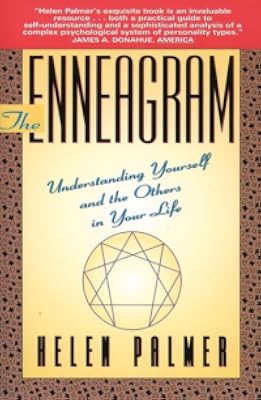
The Enneagram: Understanding Yourself and the Others In Your Life
by Helen Palmer
On This Page
Description
We do not all experience the world or each other in the same way. The joys and sorrows of relationship and career can be understood only through the eyes of the beholder. On Helen Palmer's The Enneagram, you will learn a vital system of sacred psychology capable of stunning insights into our lives and loves. The enneagram is one of the world's oldest models for understanding how humans relate to each other and the divine. In different forms, Buddhists, Sufis, and Christians have used it for show more many centuries. Today we use it, not only as a tool for greater self-knowing, but also to see how loved ones, coworkers, and others face the difficulties in life. It is a way of sacred wisdom that can help you break out of your trance-like state of limited awareness and open to the gifts of the spirit. Derived from the Greek words ennea (nine) and gram (model), the term refers to the nine central passions that recur in spiritual traditions. The Enneagram allows you to identify which type of passion dominates your personality. This is your key to overcoming the veil of illusion that limits your perception to only one-ninth of reality. Join this eminent scholar and teacher of the enneagram for more than eight hours of in-depth instruction. Topics include: - The nine personality types - History and origins - How to recognize your type - The role of attention and awareness in type - How your type can give you spiritual direction - Dynamics of type interaction - And much more There is no more vigorous, useful model of human psychology than this sacred way of seeing into yourself and through the eyes of others. Highlights: Origins of the Enneagram Spiritual tradition and the Enneagram The oral tradition of the system Meditation practice and the Enneagram The nine passions and the nine virtues Personality and the False Self How psychological defenses emerge The teachings of Gurdjieff The three triads: anger (self-forgetting), feeling, and fear How the nine types react under stress Reactions when feeling secure and loved The Enneagram sub-types: sexual, social, and self-survival Intimate relationships and the nine types Keys to typing yourself How to avoid mis-typing others Spiritual conversion of habit energy Types, awareness, and attention Gender differences among types Detailed descriptions of each type, including strengths, weaknesses, and potentials Awakening the Inner Observer Building energy through meditation practice and much, much more. show lessTags
Recommendations







Member Reviews
It seemed like everyone around me was talking about their Enneagram number so, after a mini teach-in at work that gave an outline of the philosophy, I checked out this book from the library to learn more. And, y'all, I think I'm an Enneagram person now.
This particular book is pretty dated and comes from a psychology perspective that is a little off-putting (particularly in strongly tying each type to a childhood trauma) so unless you are a very very patient reader like me, I don't think I'd start here. Still, I found the author's description of the history of the Enneagram and its growth in the United States to be interesting and her descriptions of the nine types were comprehensive and interesting, particularly with the incorporation show more of transcriptions from in-person workshops with well-articulated folks from the different types reflecting on their experiences.
I'm drawn to this system because it isn't just a "personality test" and it is based on core motivations instead of actions or preferences. Instead of taking a multiple choice test, a person attends a workshop or reads a whole book on the Enneagram and then comes to a conclusion about what type they are. I kind of doubted that until I read Type 2 (with a Type 1 wing for sure) and it just clicked. Not every single thing she said, but a lot of it. And in a way that helped me kind of stand away from my own mind and think about how it worked. And the cool thing is that since you don't only focus on your own type, you also read about people whose motivations are *different* from yours and then have a better understanding of how they tick. YMMV, but I'm embracing my sometimes embarrassing self-help/new age side and I predict there are more Enneagram books in my future! show less
This particular book is pretty dated and comes from a psychology perspective that is a little off-putting (particularly in strongly tying each type to a childhood trauma) so unless you are a very very patient reader like me, I don't think I'd start here. Still, I found the author's description of the history of the Enneagram and its growth in the United States to be interesting and her descriptions of the nine types were comprehensive and interesting, particularly with the incorporation show more of transcriptions from in-person workshops with well-articulated folks from the different types reflecting on their experiences.
I'm drawn to this system because it isn't just a "personality test" and it is based on core motivations instead of actions or preferences. Instead of taking a multiple choice test, a person attends a workshop or reads a whole book on the Enneagram and then comes to a conclusion about what type they are. I kind of doubted that until I read Type 2 (with a Type 1 wing for sure) and it just clicked. Not every single thing she said, but a lot of it. And in a way that helped me kind of stand away from my own mind and think about how it worked. And the cool thing is that since you don't only focus on your own type, you also read about people whose motivations are *different* from yours and then have a better understanding of how they tick. YMMV, but I'm embracing my sometimes embarrassing self-help/new age side and I predict there are more Enneagram books in my future! show less
"The idea that we are blind to much of our own basic character is commonly accepted in our time," says Helen Palmer. That was at the time she wrote the book, but now this is no longer how most people understand their world. People seem predominantly focused outward believing they are "evidence based" yet rarely examining the instrument with which the evidence is gathered--their own awareness. Sure we acknowledge cognitive biases but only as exceptions to the rule. We like to be reminded that we are not as rational as we think we are and thus think that makes us even more rational.
The enneagram is easily mistaken for a parlor game, akin to a newspaper's (remember newspapers?) daily horoscope but it is meant to be a DSM, which, if you show more don't know, is the book of diagnoses of mental illnesses. If we take as true Ms. Palmer's statement above, that we are blind to ourselves, it makes sense that we would all get diagnosed, not just those who can't function and go see a doctor.
The DSM itself is something like a checklist akin to those online tests that one could take to determine one's enneagram. In the preface to the book, Charles T. Tart, Ph.D. Professor of Psychology University of California at Davis extols its use as a powerful tool and adds "When the nature of my type was explained to me, it was one of the most insightful moments of my life".
However, later in the same preface, he also says "Used as The Truth, used as a substitute for actual observation of ourselves and others, the Enneagram system, like any conceptual system, can degenerate into one more way of stereotyping ourselves and others". Like the warning on a pack of cigarettes, it is easy to miss and the system is presented with the authority of capital T Truth despite qualifications such as "each of us has the potentials of all nine types". What's more it didn't work for me as a method of understanding myself and others. It seemed too uncomplicated for the kind of people I tried to apply it to, e.g. me. I found that I and the others I tried to classify could fit parts of several types while we failed to fit any one completely. The underlying principle that we each have a "chief feature" didn't seem to apply.
But, then, I never found the DSM itself all that useful either. I find it better not to consider people as collections of symptoms but rather focus on how I experience them in the context of our relationship. You might find that attitude typical of enneagram type 9. show less
The enneagram is easily mistaken for a parlor game, akin to a newspaper's (remember newspapers?) daily horoscope but it is meant to be a DSM, which, if you show more don't know, is the book of diagnoses of mental illnesses. If we take as true Ms. Palmer's statement above, that we are blind to ourselves, it makes sense that we would all get diagnosed, not just those who can't function and go see a doctor.
The DSM itself is something like a checklist akin to those online tests that one could take to determine one's enneagram. In the preface to the book, Charles T. Tart, Ph.D. Professor of Psychology University of California at Davis extols its use as a powerful tool and adds "When the nature of my type was explained to me, it was one of the most insightful moments of my life".
However, later in the same preface, he also says "Used as The Truth, used as a substitute for actual observation of ourselves and others, the Enneagram system, like any conceptual system, can degenerate into one more way of stereotyping ourselves and others". Like the warning on a pack of cigarettes, it is easy to miss and the system is presented with the authority of capital T Truth despite qualifications such as "each of us has the potentials of all nine types". What's more it didn't work for me as a method of understanding myself and others. It seemed too uncomplicated for the kind of people I tried to apply it to, e.g. me. I found that I and the others I tried to classify could fit parts of several types while we failed to fit any one completely. The underlying principle that we each have a "chief feature" didn't seem to apply.
But, then, I never found the DSM itself all that useful either. I find it better not to consider people as collections of symptoms but rather focus on how I experience them in the context of our relationship. You might find that attitude typical of enneagram type 9. show less
I've been reading this book for, probably, about a year now, off and on. The Enneagram is a lesser-known personality system than Myers-Briggs, dividing the population into nine broad categories, based not on personality preferences, but core failings and desires.
The style is a bit heavy, but not too academic, and there are some fairly good pictures of each of the types, along with pointers for growth, and things to be aware of. I could certainly see myself in 'type 9', as well as (in part) in the other types.. but I'm not sure I really learned anything that couldn't be found in other books on the same topic. Still, worth reading for a factual look at this system from the viewpoint of one of the acknowledged experts.
The style is a bit heavy, but not too academic, and there are some fairly good pictures of each of the types, along with pointers for growth, and things to be aware of. I could certainly see myself in 'type 9', as well as (in part) in the other types.. but I'm not sure I really learned anything that couldn't be found in other books on the same topic. Still, worth reading for a factual look at this system from the viewpoint of one of the acknowledged experts.
Sumário:
[006] Nota aos leitores;
[007] Prefácio;
[015] Prefácio à Edição Brasileira
(.)
[021] I - ORIENTAÇÃO PARA O ENEAGRAMA
[023] 01. Antecedentes dos Sistema e uma Introdução co Conceito de Tipo;
[048] 02. Atenção, Intuição e Tipo;
[059] 03. Estrutura do Diagrama do Eneagrama;
[071] 04. Contribuições ao Sistema.
(.)
[093] II - OS NOVE PONTOS DO ENEAGRAMA
[095] 05. Introdução aos Pontos;
[098] 06. Ponto Um: O Perfeiccionista;
[128] 07. Pondo Dois: O Dador;
[163] 08. Ponto Três : O Desempenhador;
[197] 09. Ponto Quatro : O Romântico Trágico;
[234] 10. Ponto Cinco : O Observador;
[268] 11. Ponto Seis : O Patrulheiro;
[307] 12. Ponto Sete : O Epicurista;
[339] 13. Ponto Oito : O Patrão;
[379] 14. Ponto Nove : O Mediador.
(.)
[415] show more Apêndice: Pesquisa Empírica sobre o Eneagrama. show less
[006] Nota aos leitores;
[007] Prefácio;
[015] Prefácio à Edição Brasileira
(.)
[021] I - ORIENTAÇÃO PARA O ENEAGRAMA
[023] 01. Antecedentes dos Sistema e uma Introdução co Conceito de Tipo;
[048] 02. Atenção, Intuição e Tipo;
[059] 03. Estrutura do Diagrama do Eneagrama;
[071] 04. Contribuições ao Sistema.
(.)
[093] II - OS NOVE PONTOS DO ENEAGRAMA
[095] 05. Introdução aos Pontos;
[098] 06. Ponto Um: O Perfeiccionista;
[128] 07. Pondo Dois: O Dador;
[163] 08. Ponto Três : O Desempenhador;
[197] 09. Ponto Quatro : O Romântico Trágico;
[234] 10. Ponto Cinco : O Observador;
[268] 11. Ponto Seis : O Patrulheiro;
[307] 12. Ponto Sete : O Epicurista;
[339] 13. Ponto Oito : O Patrão;
[379] 14. Ponto Nove : O Mediador.
(.)
[415] show more Apêndice: Pesquisa Empírica sobre o Eneagrama. show less
Dec 25, 2023Portuguese (Brazil)
Librería 2. Estante 3.
Jul 17, 2019Spanish
Ratings
Members
- Recently Added By
Lists

Mo's Reading List
218 works; 1 member

Healing Art Resources
67 works; 1 member
Author Information
15+ Works 1,396 Members
Helen Palmer conducts extended workshops, seminars, and training sessions on the Enneagram in the San Francisco Bay Area and around the country.
Common Knowledge
- Original publication date
- 1988
- First words
- I’ve never met anyone who wasn’t interested in personality, particularly in finding out more about their own personality or type.
Classifications
- Genres
- Nonfiction, General Nonfiction, Religion & Spirituality
- DDC/MDS
- 155.264 — Philosophy & psychology Psychology Differential and developmental psychology Individual Psychology Personality Types Modern Systems of Typology
- LCC
- BF698.3 .P35 — Philosophy, Psychology and Religion Psychology Psychology Personality
- BISAC
Statistics
- Members
- 779
- Popularity
- 35,788
- Reviews
- 5
- Rating
- (3.46)
- Languages
- 8 — Chinese, English, French, German, Polish, Portuguese, Serbian, Spanish
- Media
- Paper, Audiobook, Ebook
- ISBNs
- 18
- UPCs
- 1
- ASINs
- 4