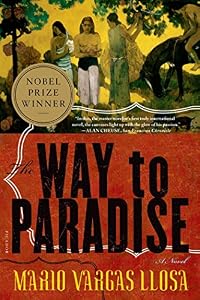
The Way to Paradise
by Mario Vargas Llosa
On This Page
Description
A "New York Times" Notable BookFlora Tristan, the illegitimate child of a wealthy Peruvian father and French mother, grows up in poverty and journeys to Peru to demand her inheritance. On her return in 1844, she makes her name as a champion of the downtrodden, touring the French countryside to recruit members for her Workers' Union.In 1891, Flora's grandson, struggling painter and stubborn visionary Paul Gauguin, abandons his wife and five children for life in the South Seas, where his show more dreams of paradise are poisoned by syphilis, the stifling forces of French colonialism, and a chronic lack of funds, though he has his pick of teenage Tahitian lovers and paints some of his greatest works.Flora died before her grandson was born, but their travels and obsessions unfold side by side in this double portrait, a rare study in passion and ambition, as well as the obstinate pursuit of greatness in the face of illness and death. show lessTags
Recommendations














Member Recommendations
Member Reviews
Párhuzamos életrajzok.
Először is bemutatnám Flora Tristant, aki a XIX. század derekán állt neki megváltani a világot. Csak hát a Megváltók esetében kifejezetten hendikeppnek minősült, ha szoknyában gyürkőztek az efféle férfias feladatoknak. Ráadásul Flora ezt a megváltást a szegények felkarolásával kívánta elérni, Munkásszövetségek megalakítását propagálta, amelyeken keresztül holmi proletár utópiát kívánt megvalósítani. No most már akkoriban is úgy volt, hogy mindenki marhára kereszténynek vallotta magát, de ezt összeegyeztethetőnek tartották azzal, hogy az empátiát meg a szolidaritást valami ördögtől való dolognak tekintsék, hirdetőit pedig lendületből lekomcsizzák. show more Szóval Flora is kap hideget-meleget. De kemény csaj, bírja. Nem hátrál meg, küzd az igazságért, kompromisszumok nélkül. Én bírom. Ahogy Vargas Llosa is. Az elképzeléseit bizonyos tekintetben naivnak, megvalósíthatatlannak tartom, de lényegileg egyetértek vele: egy olyan közösség, ahol a közösség szerencsésebb tagjai megalázzák, kihasználják és szenvedésre ítélik a kevésbé szerencséseket, nem érdemli meg a közösség nevet. Ha egy nemzet így képzeli el a rendet, akkor inkább ne is legyen. Szűnjön meg, fújja el a történelem szele. Vargas Llosa részvéttel és energikusan vezet minket végig e bátor asszony életén, miközben gyorstalpalót tart az 1840-es évek munkásmozgalmaiból és utópistáiból, ami egy bizonyos olvasói rétegnek talán unalmas lesz, másokban pedig esetleg rossz emlékeket ébreszt, de ettől függetlenül erős, megkapó szöveg. Engem arra késztetett, hogy hálát érezzek Flora iránt. Mert amivel ő szembeszállt, az egy borzasztó világ volt. Ha a férfi a nyílt utcán verte bucira a feleségét, hivatkozhatott arra, hogy ez törvény adta joga, ha pedig megerőszakolta a saját kiskorú gyerekét, az legfeljebb apró botlásnak, magánügynek minősült. A gyárosok minden további nélkül a húst is lezabálhatták a munkásaikról, az állam pedig nem érezte kötelességének, hogy polgárait megmentse az éhenhalástól. Az, hogy mindez a XX. századra némiképp megváltozott, az olyan rohadt bátraknak köszönhető, mint Flora.
(Hadd jegyezzem meg: megszoktuk, hogy ez az állapot állandó. Szívat ugyan a főnök, de azt azért mégsem teheti meg, hogy indoklás nélkül felére csökkenti a fizunkat, vagy nulla védőfelszerelés nélkül beküld valami mérges gőzbe dolgozni, ami egy éven belül szétmarja a tüdőnket. Mert van Munka Törvénykönyve. Ha farigcsálják is. Hisz farigcsálják. Mert akinél a pénz van, az folyton farigcsálni akarja azoknak a jogát, akiktől még több pénzt préselhet ki. Ezért szükség van időnként azokra a bátrakra, akik hangosan, jól artikulálva kimondják, hogy ez így nem jó, bátya. Akik belefeszülnek, és tesznek valamit. Szóval akármennyire is berzenkedik valaki az efféle radikális szocialista aktivistáktól, gondoljon bele, a hozzájuk hasonló arcok neki is előkészítették mindazt, ami ma evidens, de 150 éve még elképzelhetetlennek tűnt. Amikor azt hallja, „szocializmus”, ne rögtön Leninre meg Sztálinra gondoljon, hanem Flora Tristanra is, meg utódaira, akik elintézték neki, hogy a munkanapja ne húsz, hanem csak nyolc órás legyen. Nem kell szocialistának lenni, Isten ments, én se vagyok az, de fogadja el, hogy az ő hangjukra is bizony szükség van a többi hang mellett.)
Na de hagyjuk a politikát. Beszéljünk inkább az impresszionistákról. Gauguinről mondjuk. Mert ő e párhuzamos életrajz másik fele. Na őkelmét nem kívánom hosszasan bemutatni, régi ismerősünk. Otthagyott csapot-papot, és elment Polinéziába vadembernek, hogy kiteljesedjen. Llosa iránta is felébreszti bennünk a szánalmat, de azért leszögezném, ha Gauguin az edény, ami a nagyszerű művészetet hordozza, akkor ez a nagyszerű művészet választhatott volna tisztább tárolóeszközt is magának. De hát ilyen a művészet: kifürkészhetetlenek az útjai. Mert hát igazán csecse dolog fittyet hányni a konvencióknak, és tökig elmerülni a szabadságban, de amikor már a konvenciók felrúgása a pedofília formáját ölti, akkor ott én már megtorpannék. És bizony Gauguin simán átlépi ezt a határt. Oké, Tahitin mások a szokások, és minden kultúra egyenértékű, de azért attól még, hogy polinéznek vallod magad, még nem lesz kevésbé ocsmány, amit teszel, kedves Paul. És hát nem tudsz annyi fasza képet festeni, hogy efölött szemet hunyhatnék. Arról ne is beszéljünk, hány lányt fertőztél meg a nemi bajoddal. Komolyan, hogy gondoltad ezt?
A szöveg milyenségéről nincs mit mondani. Tiszta, profi munka, kvázi semlegességében tökéletes eszköz arra, hogy Llosa elmondja, amit akar. És ő két emberről kíván beszélni, akikben az a közös, hogy egy ideáért odadobtak mindent, karriert, családot*, egy normális élet ígéretét. Megfizették az árát, mindketten idő előtt haltak meg, Flora Tristan bélgyulladásban, amit súlyosbított egy testében hordozott ki nem operált golyó is, Gauguint pedig a „néven nem nevezhető” betegség, a szifilisz falta fel lépésről lépésre. Llosa mindkettejük döntését bámulatosnak tartja, olyasminek, ami méltó az írói fantázia alapanyagául, ezt pedig azzal is jelzi, hogy lépten-nyomon megszólítja őket a szövegben, mintha nem tudna ellenállni annak, hogy személyes ismerőseivé változtassa őket. Megértem ezt a késztetést, mert valóban, nagyon impozáns életutakról van szó. Olyan életutakról, amelyek tragédiától szaglanak, hisz mind Flora, mind Paul kínok közt halt meg, és amikor lehunyták szemüket, könnyen hihették: kudarcot vallottak, ideájuk megcsalta őket. De így vagy úgy, haláluk után örökségük virágot bontott. Nyilván ők ebből aligha profitáltak, legfeljebb mi. Hogy ennek fényében megérte-e nekik ezt az utat választani, azt mindenki döntse el magának.
* Mondhatni, mindketten következetesen alkalmazták a jézusi ukázt, miszerint hagyd ott a családot, ha követni akarsz. Hát ők otthagyták. Vissza se néztek. show less
Először is bemutatnám Flora Tristant, aki a XIX. század derekán állt neki megváltani a világot. Csak hát a Megváltók esetében kifejezetten hendikeppnek minősült, ha szoknyában gyürkőztek az efféle férfias feladatoknak. Ráadásul Flora ezt a megváltást a szegények felkarolásával kívánta elérni, Munkásszövetségek megalakítását propagálta, amelyeken keresztül holmi proletár utópiát kívánt megvalósítani. No most már akkoriban is úgy volt, hogy mindenki marhára kereszténynek vallotta magát, de ezt összeegyeztethetőnek tartották azzal, hogy az empátiát meg a szolidaritást valami ördögtől való dolognak tekintsék, hirdetőit pedig lendületből lekomcsizzák. show more Szóval Flora is kap hideget-meleget. De kemény csaj, bírja. Nem hátrál meg, küzd az igazságért, kompromisszumok nélkül. Én bírom. Ahogy Vargas Llosa is. Az elképzeléseit bizonyos tekintetben naivnak, megvalósíthatatlannak tartom, de lényegileg egyetértek vele: egy olyan közösség, ahol a közösség szerencsésebb tagjai megalázzák, kihasználják és szenvedésre ítélik a kevésbé szerencséseket, nem érdemli meg a közösség nevet. Ha egy nemzet így képzeli el a rendet, akkor inkább ne is legyen. Szűnjön meg, fújja el a történelem szele. Vargas Llosa részvéttel és energikusan vezet minket végig e bátor asszony életén, miközben gyorstalpalót tart az 1840-es évek munkásmozgalmaiból és utópistáiból, ami egy bizonyos olvasói rétegnek talán unalmas lesz, másokban pedig esetleg rossz emlékeket ébreszt, de ettől függetlenül erős, megkapó szöveg. Engem arra késztetett, hogy hálát érezzek Flora iránt. Mert amivel ő szembeszállt, az egy borzasztó világ volt. Ha a férfi a nyílt utcán verte bucira a feleségét, hivatkozhatott arra, hogy ez törvény adta joga, ha pedig megerőszakolta a saját kiskorú gyerekét, az legfeljebb apró botlásnak, magánügynek minősült. A gyárosok minden további nélkül a húst is lezabálhatták a munkásaikról, az állam pedig nem érezte kötelességének, hogy polgárait megmentse az éhenhalástól. Az, hogy mindez a XX. századra némiképp megváltozott, az olyan rohadt bátraknak köszönhető, mint Flora.
(Hadd jegyezzem meg: megszoktuk, hogy ez az állapot állandó. Szívat ugyan a főnök, de azt azért mégsem teheti meg, hogy indoklás nélkül felére csökkenti a fizunkat, vagy nulla védőfelszerelés nélkül beküld valami mérges gőzbe dolgozni, ami egy éven belül szétmarja a tüdőnket. Mert van Munka Törvénykönyve. Ha farigcsálják is. Hisz farigcsálják. Mert akinél a pénz van, az folyton farigcsálni akarja azoknak a jogát, akiktől még több pénzt préselhet ki. Ezért szükség van időnként azokra a bátrakra, akik hangosan, jól artikulálva kimondják, hogy ez így nem jó, bátya. Akik belefeszülnek, és tesznek valamit. Szóval akármennyire is berzenkedik valaki az efféle radikális szocialista aktivistáktól, gondoljon bele, a hozzájuk hasonló arcok neki is előkészítették mindazt, ami ma evidens, de 150 éve még elképzelhetetlennek tűnt. Amikor azt hallja, „szocializmus”, ne rögtön Leninre meg Sztálinra gondoljon, hanem Flora Tristanra is, meg utódaira, akik elintézték neki, hogy a munkanapja ne húsz, hanem csak nyolc órás legyen. Nem kell szocialistának lenni, Isten ments, én se vagyok az, de fogadja el, hogy az ő hangjukra is bizony szükség van a többi hang mellett.)
Na de hagyjuk a politikát. Beszéljünk inkább az impresszionistákról. Gauguinről mondjuk. Mert ő e párhuzamos életrajz másik fele. Na őkelmét nem kívánom hosszasan bemutatni, régi ismerősünk. Otthagyott csapot-papot, és elment Polinéziába vadembernek, hogy kiteljesedjen. Llosa iránta is felébreszti bennünk a szánalmat, de azért leszögezném, ha Gauguin az edény, ami a nagyszerű művészetet hordozza, akkor ez a nagyszerű művészet választhatott volna tisztább tárolóeszközt is magának. De hát ilyen a művészet: kifürkészhetetlenek az útjai. Mert hát igazán csecse dolog fittyet hányni a konvencióknak, és tökig elmerülni a szabadságban, de amikor már a konvenciók felrúgása a pedofília formáját ölti, akkor ott én már megtorpannék. És bizony Gauguin simán átlépi ezt a határt. Oké, Tahitin mások a szokások, és minden kultúra egyenértékű, de azért attól még, hogy polinéznek vallod magad, még nem lesz kevésbé ocsmány, amit teszel, kedves Paul. És hát nem tudsz annyi fasza képet festeni, hogy efölött szemet hunyhatnék. Arról ne is beszéljünk, hány lányt fertőztél meg a nemi bajoddal. Komolyan, hogy gondoltad ezt?
A szöveg milyenségéről nincs mit mondani. Tiszta, profi munka, kvázi semlegességében tökéletes eszköz arra, hogy Llosa elmondja, amit akar. És ő két emberről kíván beszélni, akikben az a közös, hogy egy ideáért odadobtak mindent, karriert, családot*, egy normális élet ígéretét. Megfizették az árát, mindketten idő előtt haltak meg, Flora Tristan bélgyulladásban, amit súlyosbított egy testében hordozott ki nem operált golyó is, Gauguint pedig a „néven nem nevezhető” betegség, a szifilisz falta fel lépésről lépésre. Llosa mindkettejük döntését bámulatosnak tartja, olyasminek, ami méltó az írói fantázia alapanyagául, ezt pedig azzal is jelzi, hogy lépten-nyomon megszólítja őket a szövegben, mintha nem tudna ellenállni annak, hogy személyes ismerőseivé változtassa őket. Megértem ezt a késztetést, mert valóban, nagyon impozáns életutakról van szó. Olyan életutakról, amelyek tragédiától szaglanak, hisz mind Flora, mind Paul kínok közt halt meg, és amikor lehunyták szemüket, könnyen hihették: kudarcot vallottak, ideájuk megcsalta őket. De így vagy úgy, haláluk után örökségük virágot bontott. Nyilván ők ebből aligha profitáltak, legfeljebb mi. Hogy ennek fényében megérte-e nekik ezt az utat választani, azt mindenki döntse el magának.
* Mondhatni, mindketten következetesen alkalmazták a jézusi ukázt, miszerint hagyd ott a családot, ha követni akarsz. Hát ők otthagyták. Vissza se néztek. show less
The interleaved stories of Flora Tristan, a woman and worker’s right advocate in 1840’s France, and her grandson Paul Gauguin, the post-impressionist painter who became famous for his work done in 1890’s Tahiti. Interestingly enough, they have a tie to Vargas Llosa’s home country of Peru; Tristan’s father was part of the most powerful family in Arequipa. He died when she was a small child, but she traveled there as an adult to flee a disastrous marriage and to seek a share of the inheritance, getting exposed to fighting between those vying for power in post-independence Peru in the process.
Vargas Llosa puts their lives side by side, and lets the reader think about what happens over two generations. The two are similar in a few show more respects: they both find their path late in life, and are courageous in flouting religion and the conventionality of marriage. They’re also both idealists. Tristan tirelessly directs her idealism at equal rights for women and humane conditions for workers, and Gauguin directs his at restoring art (and the human condition) to an unfettered, natural state. In that sense, Tristan wants to push the world into an idealistic future, and Gauguin wants to return it to an idealistic past.
However, they are also very different. Tristan is selfless and altruistic; Gauguin is an egotist of the highest order. Tristan is horrified by the abuses of women and girls; Gauguin is an abuser and profligate, preying on underage Tahitians and undoubtedly knowingly infecting them with the syphilis that is destroying his body. Tristan cares for her children and fights hard to protect her daughter from the sexual abuse of husband; Gauguin abandons his family with hardly a second thought.
The novel has a little bit of everything: 19th century worker’s conditions, the idealist societies and movements that formed within France, such as the Fourierists, marriage law at the time, Peruvian Civil War, Tahiti just as it was beginning to become ‘spoiled’, and insights into Gauguin’s paintings, which were fun to look up while they were described. show less
Vargas Llosa puts their lives side by side, and lets the reader think about what happens over two generations. The two are similar in a few show more respects: they both find their path late in life, and are courageous in flouting religion and the conventionality of marriage. They’re also both idealists. Tristan tirelessly directs her idealism at equal rights for women and humane conditions for workers, and Gauguin directs his at restoring art (and the human condition) to an unfettered, natural state. In that sense, Tristan wants to push the world into an idealistic future, and Gauguin wants to return it to an idealistic past.
However, they are also very different. Tristan is selfless and altruistic; Gauguin is an egotist of the highest order. Tristan is horrified by the abuses of women and girls; Gauguin is an abuser and profligate, preying on underage Tahitians and undoubtedly knowingly infecting them with the syphilis that is destroying his body. Tristan cares for her children and fights hard to protect her daughter from the sexual abuse of husband; Gauguin abandons his family with hardly a second thought.
The novel has a little bit of everything: 19th century worker’s conditions, the idealist societies and movements that formed within France, such as the Fourierists, marriage law at the time, Peruvian Civil War, Tahiti just as it was beginning to become ‘spoiled’, and insights into Gauguin’s paintings, which were fun to look up while they were described. show less
What a fantastic novel! This is the first Llhosa I've read and I'm hooked.
The Way to Paradise is a dual fictionalized biography of Paul Gauguin and his grandmother Flora Tristan, a feminist communist revolutionary. It follows Gauguin's development as an artist through France and Tahiti and Tristan's development into a revolutionary through France, Peru and London.
The stories themselves are interesting, but Llhosa really does some magic with the Gauguin portions of the book. His spirit, decline, and inner journey to find savagery are all just perfectly depicted-- as is the contrast to the colonial rulers and the Maori people. Gauguin is actually reprehensible as a person but Llhosa-- without glossing over his faults-- somehow makes show more him, if not likeable, understandable, tragic, and human.
The Tristan portions are not quite as impressive. There aren't many male writers who could delve into a woman's psyche and have the results be believable. Llhosa wasn't far off the mark, but it didn't have the same gut-wrenching truth to it as Gauguin's depiction.
The stories are both vulgar and a bit depressing, but I would recommend this novel to almost anyone. Great stories, great writing! show less
The Way to Paradise is a dual fictionalized biography of Paul Gauguin and his grandmother Flora Tristan, a feminist communist revolutionary. It follows Gauguin's development as an artist through France and Tahiti and Tristan's development into a revolutionary through France, Peru and London.
The stories themselves are interesting, but Llhosa really does some magic with the Gauguin portions of the book. His spirit, decline, and inner journey to find savagery are all just perfectly depicted-- as is the contrast to the colonial rulers and the Maori people. Gauguin is actually reprehensible as a person but Llhosa-- without glossing over his faults-- somehow makes show more him, if not likeable, understandable, tragic, and human.
The Tristan portions are not quite as impressive. There aren't many male writers who could delve into a woman's psyche and have the results be believable. Llhosa wasn't far off the mark, but it didn't have the same gut-wrenching truth to it as Gauguin's depiction.
The stories are both vulgar and a bit depressing, but I would recommend this novel to almost anyone. Great stories, great writing! show less
This was so-so for me. I loved [Feast of the Goat] by the same author, so I had high expectations for this. It is a dual historical fiction biography of painter Paul Gaugin and his grandmother, Flora Tristan. Flora was an early feminist and organizer for workers' rights. She of course ran into many roadblocks and ended up dying early, in her 40s. Paul is know for his colorful paintings of Tahitians. He was also a giant ass in how he treated women, the native Tahitians, and his family in Europe which he deserted.
The most annoying thing about the writing in this book was an odd shift to second person that happened frequently - like every page or two.
For example:
"He was almost out of canvas and stretchers, his heavy paper had been used show more up, and he had only a few tubes of paint. Should you return to France, Paul? In the state you were in, and with the dismal future that awaited you here, was Tahiti still worthwhile? .. . . "
Then right back to
"That same day, his body still aching . . .
It was so weird and disorienting. And it happened in Flora's sections too.
Not really a book I'd recommend running out to read.
Original publication date: 2003
Author’s nationality: Peruvian
Original language: Spanish, translated by Natasha Wimmer
Length: 454 pages
Rating: 3 stars
Format/where I acquired the book: library book sale
Why I read this: off the shelf show less
The most annoying thing about the writing in this book was an odd shift to second person that happened frequently - like every page or two.
For example:
"He was almost out of canvas and stretchers, his heavy paper had been used show more up, and he had only a few tubes of paint. Should you return to France, Paul? In the state you were in, and with the dismal future that awaited you here, was Tahiti still worthwhile? .. . . "
Then right back to
"That same day, his body still aching . . .
It was so weird and disorienting. And it happened in Flora's sections too.
Not really a book I'd recommend running out to read.
Original publication date: 2003
Author’s nationality: Peruvian
Original language: Spanish, translated by Natasha Wimmer
Length: 454 pages
Rating: 3 stars
Format/where I acquired the book: library book sale
Why I read this: off the shelf show less
A fun book to read. More of a kind of historical fiction with Vargas Llosa alternating his chapters between the life of one Florita (Flora) Tristan and that of her grandson the very well known French impressionist painter Paul Gaugin. Flora after a disastrous marriage to a husband-(who's penchant for violence-kidnapping their children, instances of pedophilia and shooting of Flora in the chest and the French governments support of a husbands rights over that of a wifes) forces her to flee from Paris and back to her wealthy and aristocratic relations in Peru--later on returns to Europe with a vengeance having burned her bridges with those same very conservative minded relations. Flora reconstitutes herself as a social reformer arguing show more for womens and workers rights and setting out an agenda of a Workers Union traveling from French town after French town more often than not meeting open hostility from local authorities and Catholic church officials. One can't help but admire the plucky character (as rendered by MVL) of this woman who dies at the relatively young age of 41 in 1844 waging her lonely battle against the duplicity, ambition, greed and ignorance of a whole host of would be experts and authorities facing off against them head on and often as related in this novel anyway some of the exchanges are hilarious.
And on to the Gauguin chapters--as Paul having been brought up in Peru becomes a sailor first and then a stockbroker on a meteoric rise to the top only to be sidetracked by his friend Schuffenecker who for a hobby paints and initiates Paul into the burgeioning art world of the impressionists. His marriage falling apart--instead of dread he feels a weight being lifted off of him when the economic market collapses and he loses his job because now he can devote himself to his art. He feels a need to unleash the savage part of himself--to renunciate European civilization which leads him eventually to Tahiti and later on to his death in the Marquesas Islands.
Some time ago I wondered here whether or not MVL is deserving of the Nobel--actually I don't wonder much at all because he is a fantastic writer and stories such as this one are a joy (at least for me) to read and this one I would reccommend very strongly. show less
And on to the Gauguin chapters--as Paul having been brought up in Peru becomes a sailor first and then a stockbroker on a meteoric rise to the top only to be sidetracked by his friend Schuffenecker who for a hobby paints and initiates Paul into the burgeioning art world of the impressionists. His marriage falling apart--instead of dread he feels a weight being lifted off of him when the economic market collapses and he loses his job because now he can devote himself to his art. He feels a need to unleash the savage part of himself--to renunciate European civilization which leads him eventually to Tahiti and later on to his death in the Marquesas Islands.
Some time ago I wondered here whether or not MVL is deserving of the Nobel--actually I don't wonder much at all because he is a fantastic writer and stories such as this one are a joy (at least for me) to read and this one I would reccommend very strongly. show less
The Way to Paradise is about the artist, Paul Gauguin, and his grandmother, Flora Tristan, an activist for workers’ and women’s rights. The chapters alternate between Flora’s life in France and Peru in the mid 19th Century and Gauguin’s life in France and Polynesia in the late 19th Century. The parallels between their lives are striking, even though they never met. Both live outside mainstream society, work for social change, abandon their families to follow their dreams, and are persecuted by local governments for being subversive.
This book started out really well, and I couldn’t put it down. The similarities between Flora and Paul’s lives really made the book interesting, and the fact that this was a fictionalized account show more of two real people made it even more intriguing. However, sometime in the second half I started to lose interest in it. It could just be me, but I think this happened because of the way the novel was structured. Llosa starts the characters’ story in the middle of their lives and both works forward and jumps backward during the chapters. The jumps between time periods were so sudden, though, that it got annoying after a while. He also would reveal major bits and pieces in one sentence, ignore them for the rest of the chapter, then come back and fully explain them two chapters later. This was somewhat confusing, and I kept flipping back to see if I had missed something until I realized what he was doing. I have no problem with an author who makes readers work to understand a book, but it was just too distracting to keep up with all the jumping around in The Way to Paradise.
On the plus side, Llosa showed me a side of society that I didn’t really know much about. It was really interesting learning about Flora and Paul’s lives and the societies they lived in, from the “uncivilized” jungles of Tahiti and Peru to the manufacturing centers of France. This book did make me think, which is always a good thing.
Overall, this book had a lot of potential, but Llosa just didn’t follow through with it enough for me. It wasn’t a bad read, it just wasn’t great. If I come across another of his books somewhere, I might pick it up, but I won’t go out of my way to find more of his work. show less
This book started out really well, and I couldn’t put it down. The similarities between Flora and Paul’s lives really made the book interesting, and the fact that this was a fictionalized account show more of two real people made it even more intriguing. However, sometime in the second half I started to lose interest in it. It could just be me, but I think this happened because of the way the novel was structured. Llosa starts the characters’ story in the middle of their lives and both works forward and jumps backward during the chapters. The jumps between time periods were so sudden, though, that it got annoying after a while. He also would reveal major bits and pieces in one sentence, ignore them for the rest of the chapter, then come back and fully explain them two chapters later. This was somewhat confusing, and I kept flipping back to see if I had missed something until I realized what he was doing. I have no problem with an author who makes readers work to understand a book, but it was just too distracting to keep up with all the jumping around in The Way to Paradise.
On the plus side, Llosa showed me a side of society that I didn’t really know much about. It was really interesting learning about Flora and Paul’s lives and the societies they lived in, from the “uncivilized” jungles of Tahiti and Peru to the manufacturing centers of France. This book did make me think, which is always a good thing.
Overall, this book had a lot of potential, but Llosa just didn’t follow through with it enough for me. It wasn’t a bad read, it just wasn’t great. If I come across another of his books somewhere, I might pick it up, but I won’t go out of my way to find more of his work. show less
Flora Tristán and Paul Gaugin's stories. Chapters are interwoven. Skip Gaugin's story, enjoy Flora's. Similar chapter weaving in A S Byatt's "Possession". I wished I wasted no time on the historic poem chapters and read the contemporary story only.
Members
- Recently Added By
Lists

real people in fiction circumstances
74 works; 10 members

Second-person fiction
63 works; 3 members
Talk Discussions
Past Discussions
The Way to Paradise in Author Theme Reads (February 2011)
Author Information

381+ Works 34,373 Members
Mario Vargas Llosa was born in Arequipa, Peru on March 28, 1936. He studied literature and law at the National University of San Marcos and received a Ph.D from the University of Madrid in 1959. He is a writer, politician, and journalist. His works vary in genre from literary criticism and journalism to comedies, murder mysteries, historical show more novels, and political thrillers. His books include The Time of the Hero, The Green House, Conversation in the Cathedral, Aunt Julia and the Scriptwriter, The Feast of the Goat, and The War of the End of the World. He has received numerous awards including the Rómulo Gallegos International Novel Prize, the Premio Leopoldo Alas in 1959, the Premio Biblioteca Breve in 1962, the Premio Planeta in 1993, the Miguel de Cervantes Prize in 1994, the Jerusalem Prize in 1995, and the Nobel Prize in Literature in 2010. (Bowker Author Biography) show less
Some Editions
Awards and Honors
Notable Lists
Series
Belongs to Publisher Series
Work Relationships
Is contained in
Common Knowledge
- Canonical title
- The Way to Paradise
- Original title
- El paraíso en la otra esquina
- Original publication date
- 2003
- People/Characters
- Flora Tristan; Paul Gauguin
- Important places
- Peru; Tahiti
Classifications
- Genres
- Fiction and Literature, General Fiction, Historical Fiction
- DDC/MDS
- 863.64 — Literature & rhetoric Spanish Literature Spanish fiction 20th Century 1945-2000
- LCC
- PQ8498.32 .A65 .P37 — Language and Literature French, Italian, Spanish and Portuguese literatures Spanish literature Provincial, local, colonial, etc. Spanish America
- BISAC
Statistics
- Members
- 1,141
- Popularity
- 21,981
- Reviews
- 23
- Rating
- (3.69)
- Languages
- 15 — Dutch, English, Finnish, French, German, Hungarian, Italian, Norwegian (Bokmål), Polish, Portuguese, Romanian, Croatian, Spanish, Swedish, Turkish
- Media
- Paper, Audiobook, Ebook
- ISBNs
- 61
- ASINs
- 10