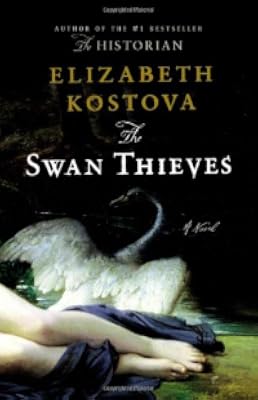
The Swan Thieves
by Elizabeth Kostova
On This Page
Description
Psychiatrist Andrew Marlowe, devoted to his profession and the painting hobby he loves, has a solitary but ordered life. When renowned painter Robert Oliver attacks a canvas in the National Gallery of Art and becomes his patient, Marlow finds that order destroyed. Desperate to understand the secret that torments the genius, he embarks on a journey that leads him into the lives of the women closest to Oliver and a tragedy at the heart of French Impressionism.Tags
Recommendations



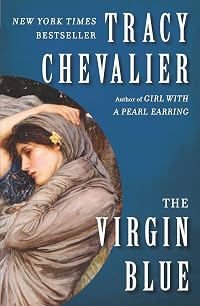
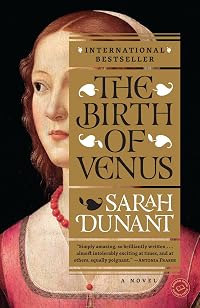
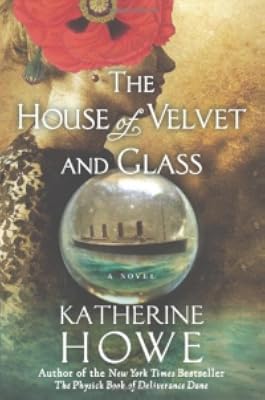

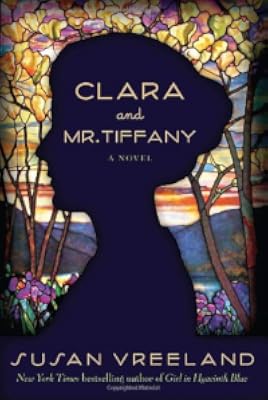
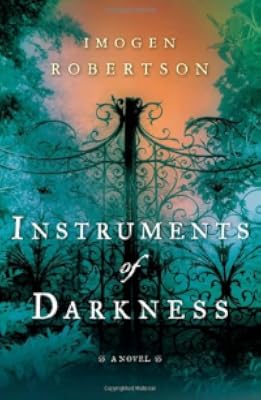
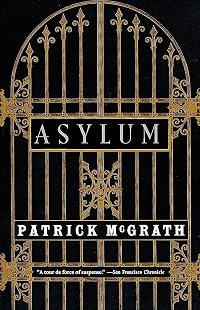

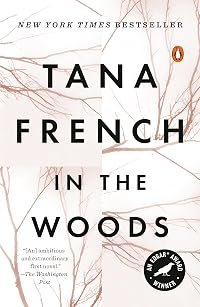
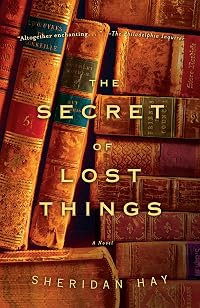
Member Recommendations
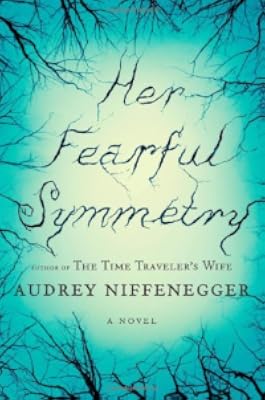
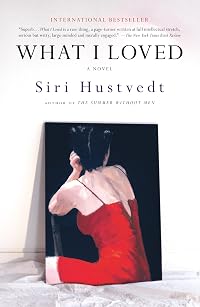
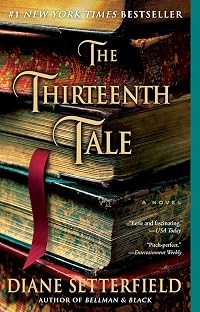
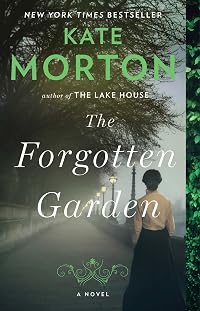
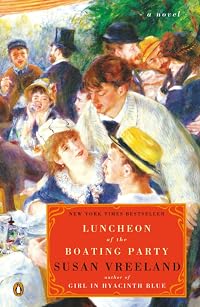
generalkala A similar art novel that also alternates between a present-day plot and a past plot.

alalba In both books the mental illness of one of the characters is linked to a mystery that a medical practitioner tries to resolve.
Member Reviews
This book review might be generous because for me, this was the right book at the right time. I didn’t love her first and more famous book, The Historian, but neither have I kicked it to the curb. I picked this one up at a library book sale and felt I was taking a chance on it. I’m glad I ended up liking it better than the first. Mostly because there is a solid pay off that the first one didn’t have. Sure there are some flaws, but I overlooked them and got wrapped up in the story itself.
First the opening scene. It took a while and some time with the descriptions of a painter’s approach to a canvas to fully appreciate it. It is like a painting, but with words. Kostova builds the scene with the weather and the woman. The snow, the show more dark, the determination, the bundle. Then at the end, there is the painter who has also built this scene, but needs an anchor. Along comes our woman and he’s got one in just a few strokes. For Kostova, the counterpoint is the painter; for the painter, it is the woman. Very neat and beautifully rendered.
Some have said that Marlow is a selfish, unethical person and maybe he is, but for the most basic of reasons - curiosity. There isn’t any malice in his actions and he comes off as tentative, gentle and he tries hard not to impose his will on Robert’s women.
The letters are an interesting device, but they aren’t consistent. First we only get Beatrice’s to Olivier. They’re sort of bland and polite, then they change. When that happens we start to get direct narrative from that time instead of correspondence. After a time we get Olivier’s letters to B as well. It’s uneven and I think apart from the fact that Robert is obsessed by B and needs to read them every day, they could have been dispensed with.
The timelines come together well as does Robert’s backstory, although it’s unclear why he snapped and became fixated on Beatrice. Kate and Mary are both remarkably calm and assured in the the help they give Marlow (nice detective name, huh?) and the intimate details of their lives with him they allow to be shared. It’s kind of amazing and a little odd that at least one of them isn’t raging.
I won’t go into the plot and how things tie together, but they do and in satisfying, but somewhat predictable ways. That didn’t detract though. I liked having my suspicions turn out to be true and I’m grateful to have read this at a time when I most needed it. show less
First the opening scene. It took a while and some time with the descriptions of a painter’s approach to a canvas to fully appreciate it. It is like a painting, but with words. Kostova builds the scene with the weather and the woman. The snow, the show more dark, the determination, the bundle. Then at the end, there is the painter who has also built this scene, but needs an anchor. Along comes our woman and he’s got one in just a few strokes. For Kostova, the counterpoint is the painter; for the painter, it is the woman. Very neat and beautifully rendered.
Some have said that Marlow is a selfish, unethical person and maybe he is, but for the most basic of reasons - curiosity. There isn’t any malice in his actions and he comes off as tentative, gentle and he tries hard not to impose his will on Robert’s women.
The letters are an interesting device, but they aren’t consistent. First we only get Beatrice’s to Olivier. They’re sort of bland and polite, then they change. When that happens we start to get direct narrative from that time instead of correspondence. After a time we get Olivier’s letters to B as well. It’s uneven and I think apart from the fact that Robert is obsessed by B and needs to read them every day, they could have been dispensed with.
The timelines come together well as does Robert’s backstory, although it’s unclear why he snapped and became fixated on Beatrice. Kate and Mary are both remarkably calm and assured in the the help they give Marlow (nice detective name, huh?) and the intimate details of their lives with him they allow to be shared. It’s kind of amazing and a little odd that at least one of them isn’t raging.
I won’t go into the plot and how things tie together, but they do and in satisfying, but somewhat predictable ways. That didn’t detract though. I liked having my suspicions turn out to be true and I’m grateful to have read this at a time when I most needed it. show less
It's not all that often that a book makes you want to do something you've never done before. This book made me want to paint, to touch a canvas with oils and brush, and create art. I've done different sorts of artistic endeavors in my life, but never really that. To place the brush strokes, smell the oils, even have flecks of paint under my fingernails. To translate the angle of the sun into a glow on a canvas -- to tell a story and open a pathway to your soul...
Robert Oliver, an American painter of some renown, is arrested at the National Gallery of Art after attacking a painting there. He mutters, "I did it for her", and then essentially stops speaking. Andrew Marlow, his psychiatrist, delves into Oliver's life for clues to help show more unravel what actually happened and help his patient. Oliver's story is one of obsession, and ultimately, Marlow, too, becomes obsessed, but with untangling Oliver's story. He speaks with the women in Oliver's life. The story is interspersed with the story of a talented 19th-century Impressionist painter.
I know a lot of people balked at this book, or felt it too slow moving, or the characters to smug and self-righteous, but for an audio-read, it was great. I loved the details of both painting and of the world of French artists who depicted the world through light and color in the style that we now know as Impressionism. The story itself was secondary, for me (and occasionally I wanted to slap Béatrice silly for focusing so much on the Olivier's age).
Once, when we were on a trip in Europe, we visited Dieppe. There, I could see in front of me the very light and landscapes so familiar from my beloved Impressionists' paintings. At the town art museum, I was so excited, because I'd be able to see the paintings, and then out the window, the "real thing." But the first rooms of the museum were filled with other art, battles, crucifixions, martyrdoms, horrible deaths. I was overwhelmed, and forgetting the original purpose of coming to the museum, just wanted to escape the gore, but had to go forward to get out. Just when I thought I'd literally be ill if I had to look at one more death scene, we entered the room where the Impressionists were. I actually heaved a sigh of relief, and greeted my old friends joyfully. (My mother used to take me to the gallery regularly when I was a child. She, too, loved the Impressionists.) Stumbling upon them in this work reminded me of that experience -- encountering old friends unexpectedly. show less
Robert Oliver, an American painter of some renown, is arrested at the National Gallery of Art after attacking a painting there. He mutters, "I did it for her", and then essentially stops speaking. Andrew Marlow, his psychiatrist, delves into Oliver's life for clues to help show more unravel what actually happened and help his patient. Oliver's story is one of obsession, and ultimately, Marlow, too, becomes obsessed, but with untangling Oliver's story. He speaks with the women in Oliver's life. The story is interspersed with the story of a talented 19th-century Impressionist painter.
I know a lot of people balked at this book, or felt it too slow moving, or the characters to smug and self-righteous, but for an audio-read, it was great. I loved the details of both painting and of the world of French artists who depicted the world through light and color in the style that we now know as Impressionism. The story itself was secondary, for me (and occasionally I wanted to slap Béatrice silly for focusing so much on the Olivier's age).
Once, when we were on a trip in Europe, we visited Dieppe. There, I could see in front of me the very light and landscapes so familiar from my beloved Impressionists' paintings. At the town art museum, I was so excited, because I'd be able to see the paintings, and then out the window, the "real thing." But the first rooms of the museum were filled with other art, battles, crucifixions, martyrdoms, horrible deaths. I was overwhelmed, and forgetting the original purpose of coming to the museum, just wanted to escape the gore, but had to go forward to get out. Just when I thought I'd literally be ill if I had to look at one more death scene, we entered the room where the Impressionists were. I actually heaved a sigh of relief, and greeted my old friends joyfully. (My mother used to take me to the gallery regularly when I was a child. She, too, loved the Impressionists.) Stumbling upon them in this work reminded me of that experience -- encountering old friends unexpectedly. show less
This is the third historical novel I have read by Elizabeth Kostova, an author of extraordinary talent. Although I liked the subject matter of THE HISTORIAN and THE SHADOW LAND more, I still found this a fascinating read and learned so much about art and painting along the way.
Like Kostova's other novels, this one slowly weaves together two stories, a little more than a hundred years apart and it takes until the very last page to see how all the characters fit together.
*In one story, a mentally ill patient, Robert Oliver, who happens to be a prominent American artist, is institutionalized after attacking a painting in a museum. Because the patient refuses to talk to his psychiatrist, the doctor, Andrew Marlowe, struggles to show more independently investigate the patient's past to find some way to understand and help him. Along the way, we meet the Oliver's ex-wife, former lover, and faculty colleague. And as Marlowe becomes increasingly immeshed in his patient's life, he finds it more difficult to maintain professional objectivity and winds up questioning aspects of his own life.
*In the second story, Beatrice de Clerval Vignot, a talented woman artist in France during the height of Impressionism, finds herself increasingly drawn to her husband's uncle, another artist, who encourages her exploration of her talent.
Kostova alternates chapters in telling the two stories and is exceptionally gifted in writing in different voices. Her prose is beautiful and evokes such powerful emotions -- tenderness, longing, passion, deep hurt, and, of course, love. The book has it all -- human drama, romance, mystery, mounting tension, and rich and distinctive characters. It's a long book but well worth the investment. show less
Like Kostova's other novels, this one slowly weaves together two stories, a little more than a hundred years apart and it takes until the very last page to see how all the characters fit together.
*In one story, a mentally ill patient, Robert Oliver, who happens to be a prominent American artist, is institutionalized after attacking a painting in a museum. Because the patient refuses to talk to his psychiatrist, the doctor, Andrew Marlowe, struggles to show more independently investigate the patient's past to find some way to understand and help him. Along the way, we meet the Oliver's ex-wife, former lover, and faculty colleague. And as Marlowe becomes increasingly immeshed in his patient's life, he finds it more difficult to maintain professional objectivity and winds up questioning aspects of his own life.
*In the second story, Beatrice de Clerval Vignot, a talented woman artist in France during the height of Impressionism, finds herself increasingly drawn to her husband's uncle, another artist, who encourages her exploration of her talent.
Kostova alternates chapters in telling the two stories and is exceptionally gifted in writing in different voices. Her prose is beautiful and evokes such powerful emotions -- tenderness, longing, passion, deep hurt, and, of course, love. The book has it all -- human drama, romance, mystery, mounting tension, and rich and distinctive characters. It's a long book but well worth the investment. show less
Astounding. I was drawn into this story immediately and savoured the journey. The book is a fascinating puzzle, a tale of obsession and retribution, mental illness and artistic genius, and also several slowly unfolding love beginnings, and love endings. I couldn't stop reading but didn't want the book to end, and was glad for all of its 564 pages. Unforgettable.
This is the third historical novel I have read by Elizabeth Kostova, an author of extraordinary talent. Although I liked the subject matter of THE HISTORIAN and THE SHADOW LAND more, I still found this a fascinating read and learned so much about art and painting along the way.
Like Kostova's other novels, this one slowly weaves together two stories, a little more than a hundred years apart and it takes until the very last page to see how all the characters fit together.
*In one story, a mentally ill patient, Robert Oliver, who happens to be a prominent American artist, is institutionalized after attacking a painting in a museum. Because the patient refuses to talk to his psychiatrist, the doctor, Andrew Marlowe, struggles to show more independently investigate the patient's past to find some way to understand and help him. Along the way, we meet the Oliver's ex-wife, former lover, and faculty colleague. And as Marlowe becomes increasingly immeshed in his patient's life, he finds it more difficult to maintain professional objectivity and winds up questioning aspects of his own life.
*In the second story, Beatrice de Clerval Vignot, a talented woman artist in France during the height of Impressionism, finds herself increasingly drawn to her husband's uncle, another artist, who encourages her exploration of her talent.
Kostova alternates chapters in telling the two stories and is exceptionally gifted in writing in different voices. Her prose is beautiful and evokes such powerful emotions -- tenderness, longing, passion, deep hurt, and, of course, love. The book has it all -- human drama, romance, mystery, mounting tension, and rich and distinctive characters. It's a long book but well worth the investment. show less
Like Kostova's other novels, this one slowly weaves together two stories, a little more than a hundred years apart and it takes until the very last page to see how all the characters fit together.
*In one story, a mentally ill patient, Robert Oliver, who happens to be a prominent American artist, is institutionalized after attacking a painting in a museum. Because the patient refuses to talk to his psychiatrist, the doctor, Andrew Marlowe, struggles to show more independently investigate the patient's past to find some way to understand and help him. Along the way, we meet the Oliver's ex-wife, former lover, and faculty colleague. And as Marlowe becomes increasingly immeshed in his patient's life, he finds it more difficult to maintain professional objectivity and winds up questioning aspects of his own life.
*In the second story, Beatrice de Clerval Vignot, a talented woman artist in France during the height of Impressionism, finds herself increasingly drawn to her husband's uncle, another artist, who encourages her exploration of her talent.
Kostova alternates chapters in telling the two stories and is exceptionally gifted in writing in different voices. Her prose is beautiful and evokes such powerful emotions -- tenderness, longing, passion, deep hurt, and, of course, love. The book has it all -- human drama, romance, mystery, mounting tension, and rich and distinctive characters. It's a long book but well worth the investment. show less
This is a long, slow read that requested - no, insisted - on the pleasure of my company for a while. I loved it.
First, it's about art and it's about history and about psychology.
Next, it's a well-told story with compelling characters and resolution that's withheld until the end (and not in a genre-template sort of way).
If you don't like to spend many days on the same book, or if you want a lot of action scenes, then this isn't for you. For the rest of us, though, it's heaven.
First, it's about art and it's about history and about psychology.
Next, it's a well-told story with compelling characters and resolution that's withheld until the end (and not in a genre-template sort of way).
If you don't like to spend many days on the same book, or if you want a lot of action scenes, then this isn't for you. For the rest of us, though, it's heaven.
I approached this book with low expectations. Touchy-feely, artsy books about people (of all things!) do not usually rock my boat - hey, I want man-books - but I enjoyed 'The Historian'., so... Robert Oliver is a talented painter brought low by an obsession with a mysterious woman whose portrait he paints repeatedly until he approaches, maybe even dives into, madness when he is arrested for attacking a painting in a museum with a knife. The book follows his therapist, also a talented painter, who tries to unravel the mystery and help Oliver back to the world. First Oliver's wife and then his lover give their different perspectives on Oliver's life and his obsession. In parallel we learn, initially through a set of letters that Oliver show more has stolen, about the woman he cannot get out of his mind.
Kostova has produced a convincing vision of how deep focus can allow someone to produce magnificent works of art, but can also lead them into tunnel vision seeing ever more detail and meaning at the expense of the wider world. As the story unfolds we hear from several characters and I like that the loose ends of the story are not all resolved - Oliver's wife makes an assumption that we know is false, but is never corrected, even when other characters are aware of the error. Life is messy and the book is more believable for that messiness being allowed in. As the story unfolds different plot lines start to synchronise, asking us to why actions by one person are deemed 'madness' and a very similar set of actions by another person are just 'commitment' and thoroughness'.
Kostova describes paintings and the act of painting, creating, but these never come alive for me...maybe I am too philistine.
An intriguing read with characters I care about and believable narrative action. show less
Kostova has produced a convincing vision of how deep focus can allow someone to produce magnificent works of art, but can also lead them into tunnel vision seeing ever more detail and meaning at the expense of the wider world. As the story unfolds we hear from several characters and I like that the loose ends of the story are not all resolved - Oliver's wife makes an assumption that we know is false, but is never corrected, even when other characters are aware of the error. Life is messy and the book is more believable for that messiness being allowed in. As the story unfolds different plot lines start to synchronise, asking us to why actions by one person are deemed 'madness' and a very similar set of actions by another person are just 'commitment' and thoroughness'.
Kostova describes paintings and the act of painting, creating, but these never come alive for me...maybe I am too philistine.
An intriguing read with characters I care about and believable narrative action. show less
Members
- Recently Added By
Published Reviews
ThingScore 33
"She has worked hard to construct an elaborate fiction of intertwining lives, but the whole situation in which the characters intertwine feels contrived, and they cross as the result of too much coincidence."
added by bookfitz
"But Kostova's new book, set partly in Washington, tells a rather simple story, and its characters, although they sometimes insist otherwise, don't change radically over time."
added by bookfitz
Kostova clearly did her research, richly painting images of famous and lesser-known works of art, and the settings that inspired them. But overall, the story just isn’t gripping. It feels overstuffed with description and underdeveloped in terms of plot. It’s a mystery without suspense.
added by Natalie220
Lists

Historical Fiction
889 works; 91 members

Top Five Books of 2020
982 works; 350 members

Books Read in 2020
4,379 works; 124 members

Books Read in 2013
1,630 works; 51 members

Books I Own But Haven't Read
144 works; 2 members
Animals in the Title
498 works; 11 members

Books Read in 2021
5,361 works; 114 members
Talk Discussions
Past Discussions
Swan Thieves in Girlybooks (October 2012)
Author Information

9+ Works 27,993 Members
Awards and Honors
Distinctions
Series
Belongs to Publisher Series
El balancí [Edicions 62] (640)
Common Knowledge
- Canonical title
- The Swan Thieves
- Original title
- The Swan Thieves
- Alternate titles
- The Swan Thieves
- Original publication date
- 2010
- People/Characters
- Robert Oliver; Andrew Marlowe; Kate Oliver; Mary Bertison; Beatrice de Clerval; Olivier Vignot (show all 8); Pedro Caillet; Henri Robinson
- Important places
- Washington, D.C., USA; Étretat, Normandy, France; Gremiere, France (fictional); Paris, France; Maine, USA; North Carolina, USA (show all 8); New York, New York, USA; France
- Epigraph
- You would hardly believe how difficult it is to place a figure alone on a canvas, and to concentrate all the interest on this single and universal figure and still keep it living and real. --Edouard Manet, 1880
- Dedication
- For my mother
la bonne mere - First words
- Outside the village there is a fire ring, blackening the thawing snow.
- Last words
- (Click to show. Warning: May contain spoilers.)He will hang it in his studio; he will take it down some sunny morning and send it to Paris.
- Original language
- English
Classifications
Statistics
- Members
- 3,632
- Popularity
- 4,473
- Reviews
- 208
- Rating
- (3.47)
- Languages
- 14 — Catalan, Chinese, Dutch, English, French, German, Hungarian, Italian, Norwegian (Bokmål), Polish, Portuguese, Spanish, Swedish, Ukrainian
- Media
- Paper, Audiobook, Ebook
- ISBNs
- 40
- ASINs
- 21
