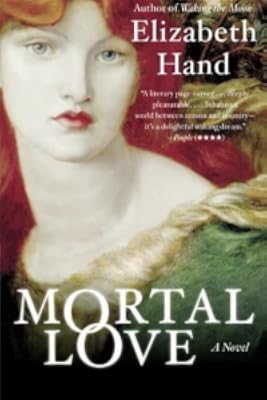
Mortal Love
by Elizabeth Hand
On This Page
Description
Swirling between eras and continents, Mortal Love is an intense novel of unforgettable characters caught in a whirlwind of art, love, and intrigue. Mercurial Larkin Meade may hold the key to lost artistic masterpieces, and to secrets too devastating to imagine. Is there an undying moment? An immortal muse? Is there ... an angel of death?.
Tags
Recommendations






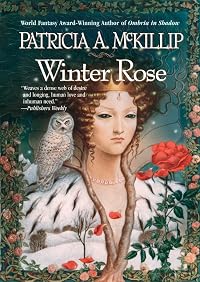
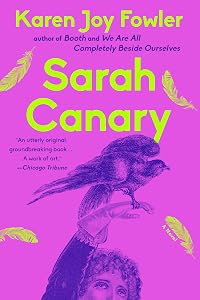
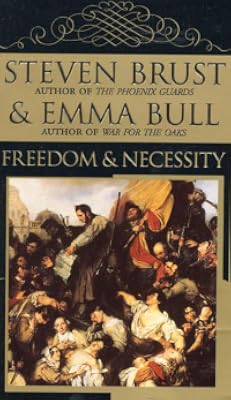


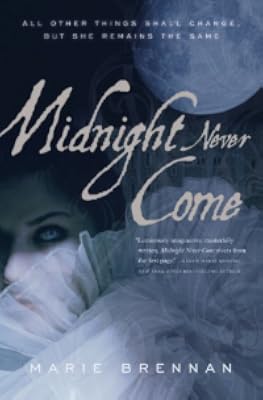

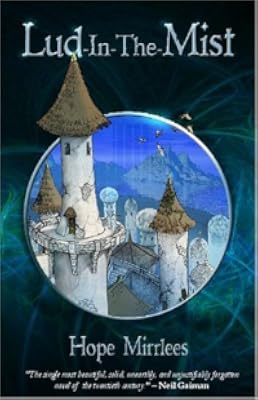
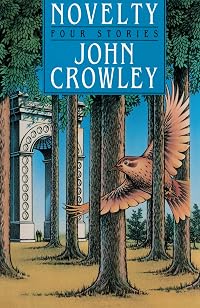
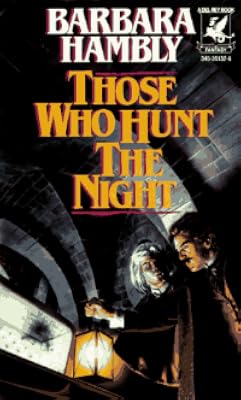
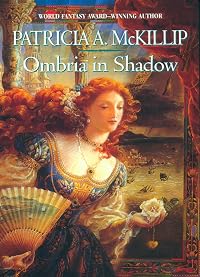


Member Recommendations
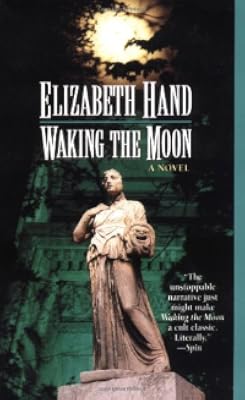
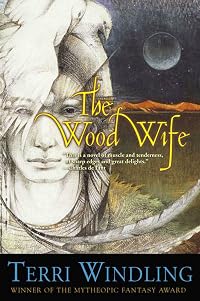
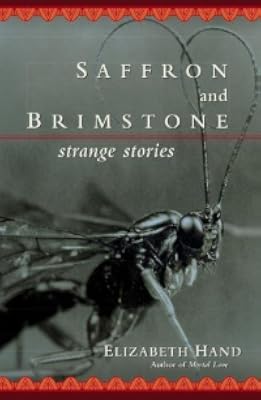
Bookmarque Similarly woven threads in varying timelines with a hint of art, love and mysticism.
Member Reviews
This is one of those books that is REALLY hard to put into a category. Is it fantasy? Is it supernatural? Is it a psychological thriller? It has elements of all three and a touch of historical fiction, but it doesn’t dwell in any of these. Instead it dwells in mythic darkness, madness, sexual longing, dire warnings and artistic agony. But in a good way.
Early on I was put in mind of Iain Pears’s The Dream of Scipio because of the way Hand layers time and consistency with some elements such as the acorn motif and the color green. She also laces together multiple timelines replete with the fanciful and the mundane. Later in the book I was reminded of A Maggot by John Fowles and that was mostly because of what I’m going to call show more hallucinations on a page. Pieces of the story that leave the bounds of reality behind and make you go back over paragraphs and paragraphs looking for the point you missed; the disconnection.
The three main narratives are at first confusing, but there are many small details that pull them together; Val Comstock in the modern time is the descendent of Radborne Comstock in the past timeline. Radborne was a painter and did studies related to Tristram and Isolde which is the subject of Daniel Rowlands’s latest writing project. They are also bound to one another through their obsession with a mysterious woman; a muse with green eyes and an allure so powerful she has driven other men mad. One of them is confined to a mental hospital run by a Dr. Thomas Learmont. The hospital also confines one Evienne Upstone, a chestnut haired beauty with haunting green eyes. The very same woman who captivated Radborne’s attention on Blackfriar Bridge and who has been invading his psyche both awake and in dreams. So he paints, frenetically and eventually ends up on an island on the coast of Maine. It is to there that Russell Learmont, present-day captain of industry, sails to acquire the other half of a Radborne Comstock painting that he already owns.
There’s more, oh so much more, so many threads that you better take good notes or have a prodigious memory. Each revelation and insight is a joy that sizzles through your brain and once you start to see the whole, you’ll be staggered by its entirety. Imaginations like this don’t come along often and I’m grateful that Hand has one and can write like a dream as well. show less
Early on I was put in mind of Iain Pears’s The Dream of Scipio because of the way Hand layers time and consistency with some elements such as the acorn motif and the color green. She also laces together multiple timelines replete with the fanciful and the mundane. Later in the book I was reminded of A Maggot by John Fowles and that was mostly because of what I’m going to call show more hallucinations on a page. Pieces of the story that leave the bounds of reality behind and make you go back over paragraphs and paragraphs looking for the point you missed; the disconnection.
The three main narratives are at first confusing, but there are many small details that pull them together; Val Comstock in the modern time is the descendent of Radborne Comstock in the past timeline. Radborne was a painter and did studies related to Tristram and Isolde which is the subject of Daniel Rowlands’s latest writing project. They are also bound to one another through their obsession with a mysterious woman; a muse with green eyes and an allure so powerful she has driven other men mad. One of them is confined to a mental hospital run by a Dr. Thomas Learmont. The hospital also confines one Evienne Upstone, a chestnut haired beauty with haunting green eyes. The very same woman who captivated Radborne’s attention on Blackfriar Bridge and who has been invading his psyche both awake and in dreams. So he paints, frenetically and eventually ends up on an island on the coast of Maine. It is to there that Russell Learmont, present-day captain of industry, sails to acquire the other half of a Radborne Comstock painting that he already owns.
There’s more, oh so much more, so many threads that you better take good notes or have a prodigious memory. Each revelation and insight is a joy that sizzles through your brain and once you start to see the whole, you’ll be staggered by its entirety. Imaginations like this don’t come along often and I’m grateful that Hand has one and can write like a dream as well. show less
Elizabeth Hand’s Mortal Love gives the reader plenty of signals that the story they’re about to experience is not an ordinary one. Nineteen pages in, a secondary character uses the phrase “Manderley on bad acid” to describe someone’s summer home, an old Victorian structure that’s been assembled by a man made miserable by grief and loss. The place is deteriorating, falling into disrepair, an owner burdened by the taxes and remote location. This seems like a traditional setting for a Gothic fantasy but then the “bad acid” element kicks in – various hallucinogenic experiences as a means of controlling anxiety over loss. Only you’re not on that island on the coast of Maine anymore because the action shifts. You’re in show more London in the wee small hours of the night in what may or may not be the best neighborhood. Certainly, it’s not Mayfair. Another shifting of locale in the book's final third and you're on a cliff in Cornwall (but not alone).
The real feat here may be that the author has managed to deliver Gothic fantasy in an urban environment, with crowds of people, in an age when cell phones make isolation difficult and where private jets can cross oceans in a matter of hours. Heck, there was even a spiffed-up, classic motorcycle. Yet the reader still experiences all of those sensations and emotions that we expect will feature heavily in the Gothic – obsession, panic,anxiety, entrapment, etc.
There are four men whose lives we follow and none of them are entirely of sound mind and body. Should they blame their inability to cope with their base passions? (In the book’s initial pages, we see a medical professional attributing a woman’s madness to that general failure of her sex, an inability to control her base passions.)
Mortal Love references the rebellious spirit of the Pre-Raphaelite artistic movement, with those detailed renderings of natural flora and fauna. (Honestly, the book cries out for an illustrated edition.) We encounter mad poets and the folklore that inspired them. There are acorns, absinthe, and Keats’ La Belle Dame Sans Merci. Hand’s prose is not dense but literary allusions are spread out and thick on the ground. show less
The real feat here may be that the author has managed to deliver Gothic fantasy in an urban environment, with crowds of people, in an age when cell phones make isolation difficult and where private jets can cross oceans in a matter of hours. Heck, there was even a spiffed-up, classic motorcycle. Yet the reader still experiences all of those sensations and emotions that we expect will feature heavily in the Gothic – obsession, panic,anxiety, entrapment, etc.
There are four men whose lives we follow and none of them are entirely of sound mind and body. Should they blame their inability to cope with their base passions? (In the book’s initial pages, we see a medical professional attributing a woman’s madness to that general failure of her sex, an inability to control her base passions.)
Mortal Love references the rebellious spirit of the Pre-Raphaelite artistic movement, with those detailed renderings of natural flora and fauna. (Honestly, the book cries out for an illustrated edition.) We encounter mad poets and the folklore that inspired them. There are acorns, absinthe, and Keats’ La Belle Dame Sans Merci. Hand’s prose is not dense but literary allusions are spread out and thick on the ground. show less
Three narrative threads intertwine in this dark fantasy of artistic inspiration and madness. In late Victorian-era London, young American painter Radborne Comstock meets and becomes obsessed with the beautiful Evienne Upstone, an auburn-haired and green-eyed artist’s model who has already served as the muse for several other artists and who has driven many of the insane by virtue of her sheer beauty and otherworldly presence. Decades later, Comstock’s grandson Valentine views his grandfather’s paintings of Evienne and is in turn inspired to create intricately detailed artworks in which a red-haired, green-eyed woman is at the same time a lush fairytale landscape. Valentine’s obsession with the woman…whom he named show more Vernoraxia…drives him, too, to the edge of madness and he ends up medicated and numbed. In contemporary London, American writer Daniel Rowlands is researching the legend of lovers Tristan and Iseult and ends up caught in the spell of Larkin Meade, a red-haired, green-eyed woman whose strange passion leaves him deranged and obsessed.
Parallels and emotional resonances shared between the three narratives suggest that, somehow, Evienne and Larkin are the same woman, or the same being—a muse, perhaps, or a force of nature too strong for mere mortals to love without madness but whom artists and writers are compelled to render imperfectly over and over in painting, poetry, and legend.
Rich, evocative, lyrical, and vibrant, “Mortal Love” wonderfully captures the exquisite lunacy of artistic expression and the urge to create. Authentic period detail and references to real-life artists combine with lushly poetic language to captivate readers much as the mysterious red-haired muse about whom Hand writes captivates artists. show less
Parallels and emotional resonances shared between the three narratives suggest that, somehow, Evienne and Larkin are the same woman, or the same being—a muse, perhaps, or a force of nature too strong for mere mortals to love without madness but whom artists and writers are compelled to render imperfectly over and over in painting, poetry, and legend.
Rich, evocative, lyrical, and vibrant, “Mortal Love” wonderfully captures the exquisite lunacy of artistic expression and the urge to create. Authentic period detail and references to real-life artists combine with lushly poetic language to captivate readers much as the mysterious red-haired muse about whom Hand writes captivates artists. show less
This seems like a book written especially for me (username checks out), so I'm a bit sad that I didn't love it more. It's hard to categorize but I think I'd describe it as a dark historical urban fantasy with undertones of folk horror?
We've got Victorian artists and writers, references to Burne-Jones, Swinburne, Morris, Rossetti, Wilkie Collins, Lady Gregory, Richard Dadd, and John Anster Fitzgerald. We've got lush, sensory writing that makes you feel the materiality and the beauty of the art of painting. We've got British Isles mythology and the Mabinogion and fairies. We've got 60s/70s countercultural folk music and a Roy Harper stand-in and a Van Morrison call-out. We've got a setting around Camden Lock market and a reference to the show more World's End pub. There's even a canal boat, fer chrissakes! I love all these things. These are things I love!
Yet, unfortunately there was something about Mortal Love that didn't quite come together. It felt disjointed and jerky in places; things happened quickly and the connections between them were sometimes too opaque for me. I think maybe what I really wanted was about 150-200 more pages for the story and the characters to breathe. show less
We've got Victorian artists and writers, references to Burne-Jones, Swinburne, Morris, Rossetti, Wilkie Collins, Lady Gregory, Richard Dadd, and John Anster Fitzgerald. We've got lush, sensory writing that makes you feel the materiality and the beauty of the art of painting. We've got British Isles mythology and the Mabinogion and fairies. We've got 60s/70s countercultural folk music and a Roy Harper stand-in and a Van Morrison call-out. We've got a setting around Camden Lock market and a reference to the show more World's End pub. There's even a canal boat, fer chrissakes! I love all these things. These are things I love!
Yet, unfortunately there was something about Mortal Love that didn't quite come together. It felt disjointed and jerky in places; things happened quickly and the connections between them were sometimes too opaque for me. I think maybe what I really wanted was about 150-200 more pages for the story and the characters to breathe. show less
A part of me would rather not talk about MORTAL LOVE.
The books I love the most sometimes render me incoherent. This incoherent state generally goes hand in hand with verbosity--I have tons to say, but I don’t know exactly how I want to say it.
This is sort of like that, but upside down. I loved MORTAL LOVE and am sure I could say tons about it in as incoherent a fashion as one might wish, but I rather want to keep it for me.
I’ve obviously chosen to ignore this impulse (spurred on, of course, but a The People Need To Know mentality), but I felt you should know where I stand.
Okay. Let’s get on with this.
Even though MORTAL LOVE came with a highly respected friend's seal of approval, I found the first chapter so confusing, and so show more devoid of a thread I could follow through to a satisfying story, that it looked like dark days ahead. I braced myself to abandon it by Chapter Three, after which point I would conveniently forget to mention I had ever tried to read it.
I was in love with it by page 20.
The People Magazine review excerpted on the cover calls MORTAL LOVE "a delightful waking dream;" as accurate a descriptor as I could hope for, with the caveat that the reviewer clearly shares my somewhat unconventional definition of "delightful." The novel is often dark, often wretched, often disturbing. Delightful if you’re up for that sort of thing; depressing if you’re not.
The waking dream bit, though, needs no qualifier. The story is dreamlike in the extreme, merging one scene with the next as smoothly as water flowing over polished stones. It provides few concrete answers, yet it’s never confusing or opaque. Hand spells little out, but the book’s structure encourages the reader to make every connection she needs. We know exactly what’s going on, despite the lack of overt confirmation.
MORTAL LOVE is a book about madness and art and intercourse between worlds (in all senses of the word). Like all the best dreams, it’s wild and dangerous and barely controlled, with a bizarre and vivid story at its heart.
It spans centuries, commenting on art and the soul and the very nature of creation.
It’s rich and strange; grounded and ethereal.
It reminded me of THE VINTNER’S LUCK, and of THE NIGHT CIRCUS.
It made me want to create.
It has me halfway convinced I should have asked more from it, but I’m not sure what else it could have given me without undermining itself.
It refuses to get out of my head.
I think you should read it, sooner rather than later.
(This review originally appeared on my blog, Stella Matutina.) show less
The books I love the most sometimes render me incoherent. This incoherent state generally goes hand in hand with verbosity--I have tons to say, but I don’t know exactly how I want to say it.
This is sort of like that, but upside down. I loved MORTAL LOVE and am sure I could say tons about it in as incoherent a fashion as one might wish, but I rather want to keep it for me.
I’ve obviously chosen to ignore this impulse (spurred on, of course, but a The People Need To Know mentality), but I felt you should know where I stand.
Okay. Let’s get on with this.
Even though MORTAL LOVE came with a highly respected friend's seal of approval, I found the first chapter so confusing, and so show more devoid of a thread I could follow through to a satisfying story, that it looked like dark days ahead. I braced myself to abandon it by Chapter Three, after which point I would conveniently forget to mention I had ever tried to read it.
I was in love with it by page 20.
The People Magazine review excerpted on the cover calls MORTAL LOVE "a delightful waking dream;" as accurate a descriptor as I could hope for, with the caveat that the reviewer clearly shares my somewhat unconventional definition of "delightful." The novel is often dark, often wretched, often disturbing. Delightful if you’re up for that sort of thing; depressing if you’re not.
The waking dream bit, though, needs no qualifier. The story is dreamlike in the extreme, merging one scene with the next as smoothly as water flowing over polished stones. It provides few concrete answers, yet it’s never confusing or opaque. Hand spells little out, but the book’s structure encourages the reader to make every connection she needs. We know exactly what’s going on, despite the lack of overt confirmation.
MORTAL LOVE is a book about madness and art and intercourse between worlds (in all senses of the word). Like all the best dreams, it’s wild and dangerous and barely controlled, with a bizarre and vivid story at its heart.
It spans centuries, commenting on art and the soul and the very nature of creation.
It’s rich and strange; grounded and ethereal.
It reminded me of THE VINTNER’S LUCK, and of THE NIGHT CIRCUS.
It made me want to create.
It has me halfway convinced I should have asked more from it, but I’m not sure what else it could have given me without undermining itself.
It refuses to get out of my head.
I think you should read it, sooner rather than later.
(This review originally appeared on my blog, Stella Matutina.) show less
There is a twinge of terror in the heart of any good fairy tale - a touch of awe, or a sense of how small we really are in the face of the unknown, tiny mortal creatures huddled together in the dark. Hand captures this feeling better than anyone, and it lends a delicious, haunting edge to this story about the pleasures and perils of courting the muse.
I keep having this feeling that the *next* book I read by Elizabeth Hand will be one of my favorite books of all time. But she keeps not-quite-getting-there, for me.
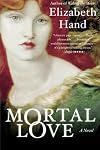
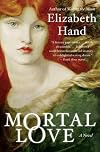
I did really like this book, however - it may be her best yet. (And, can't beat the cover art! [a Rossetti painting]).
The plot is complex and twisting, encompassing times frames from the Victorian to today, all dealing with the intersection of Faerie and our world, all featuring a woman of Faerie, powerful, beautiful and compelling, artists' muse, lover, femme fatale, who inspires the men she touches to artistic genius, but leaves them mentally broken, obsessed, literally 'burned.' Here, transcendence is always touched by the impure...
I did really like this book, however - it may be her best yet. (And, can't beat the cover art! [a Rossetti painting]).
The plot is complex and twisting, encompassing times frames from the Victorian to today, all dealing with the intersection of Faerie and our world, all featuring a woman of Faerie, powerful, beautiful and compelling, artists' muse, lover, femme fatale, who inspires the men she touches to artistic genius, but leaves them mentally broken, obsessed, literally 'burned.' Here, transcendence is always touched by the impure...
Members
- Recently Added By
Lists

Gaslamp Fantasy
87 works; 15 members

Faerie Mythology
87 works; 13 members

Books Read in 2015
3,299 works; 129 members

KayStJ's to-read list
1,616 works; 11 members

Myth (Reuse and Retelling)
188 works; 24 members

Jones & Newman: Best Horror Books Further Recommended Reading
577 works; 4 members

Books Read in 2024
4,623 works; 126 members

Books We Want To Read Again For The First Time
384 works; 160 members
Talk Discussions
Past Discussions
Bookmarque and Marissa read MORTAL LOVE by Elizabeth Hand in The Green Dragon (April 2024)
Author Information

83+ Works 9,718 Members
Awards and Honors
Awards
Distinctions
Series
Belongs to Publisher Series
Gallimard, Folio SF (345)
Work Relationships
Is contained in
Common Knowledge
- Canonical title
- Mortal Love
- Original publication date
- 2004-06-29
Classifications
- Genres
- Fiction and Literature, Fantasy, General Fiction, Historical Fiction, Horror
- DDC/MDS
- 813.54 — Literature & rhetoric American literature in English American fiction in English 1900-1999 1945-1999
- LCC
- PS3558 .A4619 .M67 — Language and Literature American literature American literature Individual authors 1961-
- BISAC
Statistics
- Members
- 418
- Popularity
- 74,029
- Reviews
- 17
- Rating
- (3.74)
- Languages
- Dutch, English, French
- Media
- Paper, Ebook
- ISBNs
- 8
- ASINs
- 3