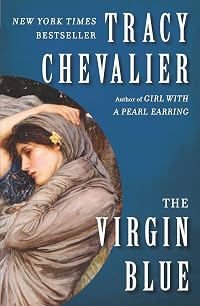
The Virgin Blue
by Tracy Chevalier
On This Page
Description
Meet Ella Turner and Isabelle du Moulin-two women born centuries apart, yet tied together by a haunting family legacy. When Ella and her husband move to a small town in France, Ella hopes to brush up on her French, qualify to practice as a midwife, and start working on a family of her own. Village life turns out to be less idyllic than she expected, however, and a strange series of events propels her on a quest to uncover her family's French ancestry. As the novel unfolds-alternating between show more Ella's story and that of Isabelle du Moulin four hundred years earlier-a common thread emerges that pulls the lives of the two women together in a most mysterious way. Part detective story, part historical fiction, The Virgin Blue is a novel of passion and intrigue that compels readers to the very last page. show lessTags
Recommendations

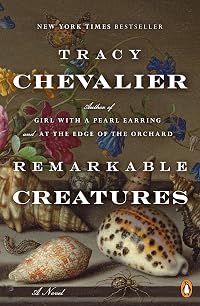
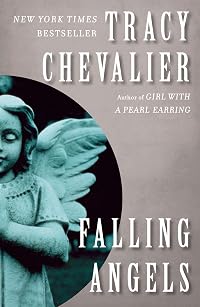
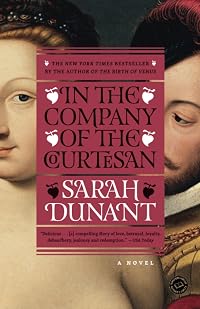
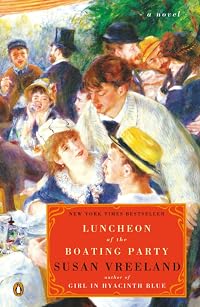

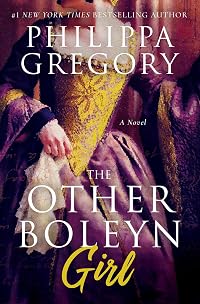
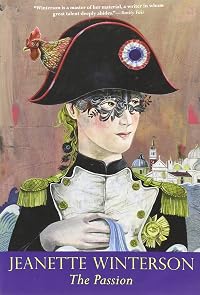
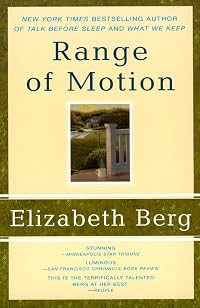
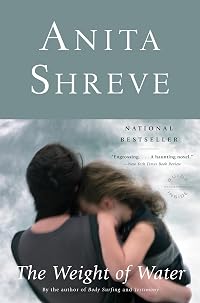
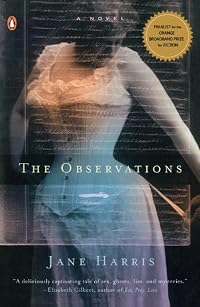
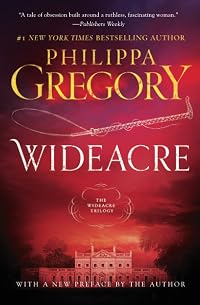

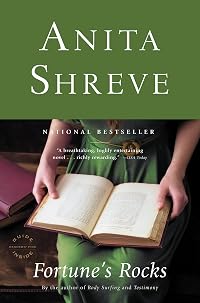

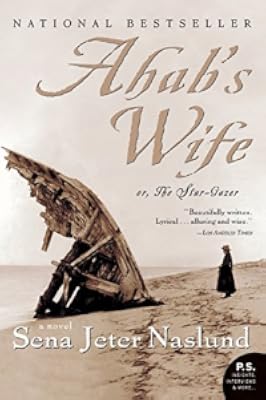
Member Recommendations
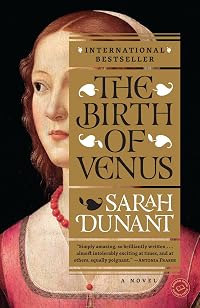
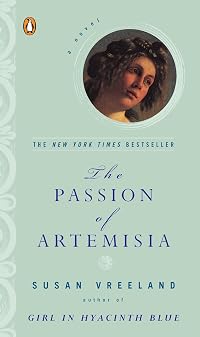
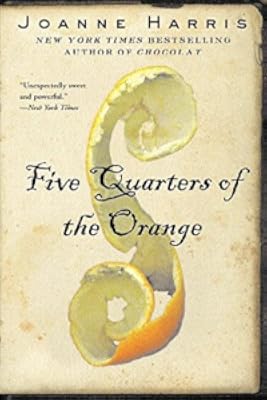
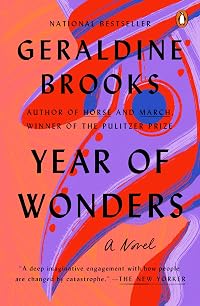
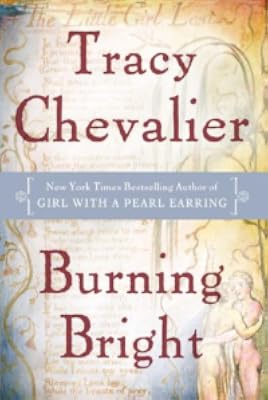
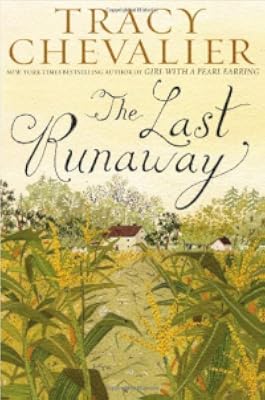
KayCliff Both books feature the problems of late sixteenth-century Protestantism.
Member Reviews
Simply put, this book is like an interesting fusion of 'Labyrinth' and 'Practical Magic'. Isabelle is a young woman in rural France who finds herself increasingly despised by those around her. Her bright red hair links her to the Virgin Mary, and whispers of witchcraft float around her as the Calvinist 'Truth' spreads through the people and the Catholics turn to persecution to fight back. Marrying into the wealthy but arrogant Tourniers, she is still marginalised and life becomes ever more difficult. Several hundred years later, Ella Turner moves from America to France with her husband, to a little provincial town that doesn't take kindly to strangers. Increasingly miserable and lonely there, she takes up the search for her ancestors as show more a project to pass the time, enlisting Jean-Paul, a local librarian, to help her. Tormented by a smothering nightmare of billowing blue and chanted words, she moves ever closer to discovering the fate of Isabelle and her children.
The book began disastrously for me. It was clunky, irritating, confusing and disjointed. In fact, if it hadn't been for a fellow LT-er mentioning having a similar experience but really liking it in the end, I might have given up before the end of the first chapter. I'm glad I took that advice and persevered! I enjoyed seeing the parallels between Isabelle and Ella building, wondering if anyone else in the 'modern' chapters might be descendants of those in the 'old' sections, and how the tangle of characters around these women fitted together. The ties between women, in friendship as well as through the generations of a family, is nicely explored, with the whispering echoes of Isabelle and her red hair reminding me of the mysterious family curse at the centre of 'Practical Magic'. The chapters alternate between Isabelle and Ella, between the third and first person voice, and between narrative styles, until the climactic chapters where both alternate ever more quickly, building suspense and a horrible sickly sense of dread and fear. That said, I worked out what was coming a little too early, which meant that I was waiting more for the WHY than the WHAT - and was therefore disappointed when the truth was revealed but never explained.
All in all, I'm really glad I carried on reading it - but I was a bit distracted by it's similarity to the later 'Labyrinth', which I read (and loved) a few years ago now. It was evocative and exciting and suspenseful, but the anticlimactic ending let it down to some extent. I think the story will stay with me so I'll hang on to it a while and let the reflection run its course before I decide whether it's a keeper or not! show less
The book began disastrously for me. It was clunky, irritating, confusing and disjointed. In fact, if it hadn't been for a fellow LT-er mentioning having a similar experience but really liking it in the end, I might have given up before the end of the first chapter. I'm glad I took that advice and persevered! I enjoyed seeing the parallels between Isabelle and Ella building, wondering if anyone else in the 'modern' chapters might be descendants of those in the 'old' sections, and how the tangle of characters around these women fitted together. The ties between women, in friendship as well as through the generations of a family, is nicely explored, with the whispering echoes of Isabelle and her red hair reminding me of the mysterious family curse at the centre of 'Practical Magic'. The chapters alternate between Isabelle and Ella, between the third and first person voice, and between narrative styles, until the climactic chapters where both alternate ever more quickly, building suspense and a horrible sickly sense of dread and fear. That said, I worked out what was coming a little too early, which meant that I was waiting more for the WHY than the WHAT - and was therefore disappointed when the truth was revealed but never explained.
All in all, I'm really glad I carried on reading it - but I was a bit distracted by it's similarity to the later 'Labyrinth', which I read (and loved) a few years ago now. It was evocative and exciting and suspenseful, but the anticlimactic ending let it down to some extent. I think the story will stay with me so I'll hang on to it a while and let the reflection run its course before I decide whether it's a keeper or not! show less
An American woman name Ella moves to France with her husband to follow his job. In this new country she feels alone, aimless and alienated. More than that, Ella begins to feel that her relationship with her husband is changing. This comes to a head when they begin trying to get pregnant and she starts having nightmares.
They decide to stop trying and Ella follows the leading of her dream to look into her family history. Her research puts her in the company of the local librarian, a prickly but intriguing man she finds herself becoming drawn to. Interspersed with her quest to uncover the meaning of her disturbing dream, are snippets from the distant past where her ancestress struggles to survive in a world that is inexplicably hostile show more towards her.
This book was interesting but the resolution of the plot was ultimately too bizarre for me to stomach. Central to the book's flaws is the character of Ella, who is a difficult protagonist to understand and sympathize with. I don't think that's necessarily a problem, although she is irrational and overreacts to a lot of things, her passion makes her a compelling presence on the page. However, when she chooses to break up with her husband by comparing him to an album that you like as a child but eventually grow out of, I couldn't get over the needless cruelty of such a dehumanizing comparison. When her husband reacts by stating that the metaphor doesn't really make sense for the situation, I was shocked at how well he was taking it. But then Ella flips out and accuses him of not listening to her. Her accusation is probably true, but she herself had behaved in such a heartless way over the last few weeks (cheating on him, running away and not telling him where she it), that I thought it was pretty rich for her to get upset at him.
The two main twists of the story were also extremely obvious and not surprising. It was clear immediately that Ella was pregnant and the author's "clues" only served to make Ella seem like an extremely incompetent midwife. It was also really clear that murder was in the offing in the other plot line, although the motive still doesn't make sense to me.
The dramatic climax of the plot was simply too much, and seemed too supernatural for me. I didn't get what the author was implying. Was Ella possessed? Seeing visions? Did the ghost of Isabella cause her friend to have a miscarriage? What was going on with all these pregnant women?
And then the fact that the residents of a small French hamlet agree to break into a historic home, destroy the hearth, steal a body, and just give it to some random American woman to inter elsewhere at her leisure just boggled my mind. And then our protagonist concludes the book by smuggling stolen human remans across international borders. The skeleton of a centuries dead little girl becomes a bizarre piece in a modern woman's journey to self-discovery. I was flabbergasted that the book concluded this way and that no one in the the story seemed at all perturbed by it.
Also, for all that the Ella constantly complains about how the French are so unfriendly, she ends up living indefinitely in the house of a single mother she's known extremely casually for maybe a day or two. Also her relationship with the French archivist made no sense. On their first meeting he's so rude to her that she cries. He becomes nicer to her over time, but I couldn't personally trust it. Someone who would be so rude to a stranger while at their literal job is not a nice person and he will hurt you again. I was not convinced by this "romance" and at the book's close I felt that she was just repeating her pattern of poor relationship choices. show less
They decide to stop trying and Ella follows the leading of her dream to look into her family history. Her research puts her in the company of the local librarian, a prickly but intriguing man she finds herself becoming drawn to. Interspersed with her quest to uncover the meaning of her disturbing dream, are snippets from the distant past where her ancestress struggles to survive in a world that is inexplicably hostile show more towards her.
This book was interesting but the resolution of the plot was ultimately too bizarre for me to stomach. Central to the book's flaws is the character of Ella, who is a difficult protagonist to understand and sympathize with. I don't think that's necessarily a problem, although she is irrational and overreacts to a lot of things, her passion makes her a compelling presence on the page. However, when she chooses to break up with her husband by comparing him to an album that you like as a child but eventually grow out of, I couldn't get over the needless cruelty of such a dehumanizing comparison. When her husband reacts by stating that the metaphor doesn't really make sense for the situation, I was shocked at how well he was taking it. But then Ella flips out and accuses him of not listening to her. Her accusation is probably true, but she herself had behaved in such a heartless way over the last few weeks (cheating on him, running away and not telling him where she it), that I thought it was pretty rich for her to get upset at him.
The two main twists of the story were also extremely obvious and not surprising. It was clear immediately that Ella was pregnant and the author's "clues" only served to make Ella seem like an extremely incompetent midwife. It was also really clear that murder was in the offing in the other plot line, although the motive still doesn't make sense to me.
The dramatic climax of the plot was simply too much, and seemed too supernatural for me. I didn't get what the author was implying. Was Ella possessed? Seeing visions? Did the ghost of Isabella cause her friend to have a miscarriage? What was going on with all these pregnant women?
And then the fact that the residents of a small French hamlet agree to break into a historic home, destroy the hearth, steal a body, and just give it to some random American woman to inter elsewhere at her leisure just boggled my mind. And then our protagonist concludes the book by smuggling stolen human remans across international borders. The skeleton of a centuries dead little girl becomes a bizarre piece in a modern woman's journey to self-discovery. I was flabbergasted that the book concluded this way and that no one in the the story seemed at all perturbed by it.
Also, for all that the Ella constantly complains about how the French are so unfriendly, she ends up living indefinitely in the house of a single mother she's known extremely casually for maybe a day or two. Also her relationship with the French archivist made no sense. On their first meeting he's so rude to her that she cries. He becomes nicer to her over time, but I couldn't personally trust it. Someone who would be so rude to a stranger while at their literal job is not a nice person and he will hurt you again. I was not convinced by this "romance" and at the book's close I felt that she was just repeating her pattern of poor relationship choices. show less
I kind of fell into reading Chevalier books because I started listening to them on tape when I drive. They have descriptive language that superimposes well on top of hours and hours of interstate. I also like having fictional stories superimposed on top of real works of art.
Which is where I get hung up on The Virgin Blue. As far as I can tell, there is no actual work of art that it is based on. It's more like Chevalier went, "Wouldn't it be great if there were this faded painting of The Virgin in an old church in the right geographic location? THen I couldn write this story I have in my head!" WHich is fine, but not what I was expecting, and hoestly, I was let down without it it. I can read romantic claptrap a variety of other places; I show more don't want to get suckered into it under the guise of Art or Learning and then find out it wasn't there at all.
But I will be reading more Chevalier. Only, I'll check to be sure it's based on an actual painting. I want to be sure our relationship has a mutual understanding next time. show less
Which is where I get hung up on The Virgin Blue. As far as I can tell, there is no actual work of art that it is based on. It's more like Chevalier went, "Wouldn't it be great if there were this faded painting of The Virgin in an old church in the right geographic location? THen I couldn write this story I have in my head!" WHich is fine, but not what I was expecting, and hoestly, I was let down without it it. I can read romantic claptrap a variety of other places; I show more don't want to get suckered into it under the guise of Art or Learning and then find out it wasn't there at all.
But I will be reading more Chevalier. Only, I'll check to be sure it's based on an actual painting. I want to be sure our relationship has a mutual understanding next time. show less
This novel took me to southern France and just for that I enjoyed it. The chapters set 400 years ago about the Huguenots were interesting, having come across this history in the Cevennes. After quite a chunk of a chapter about this period, it was a shock to come to the (more or less) present day and Ella's story of moving to France from America and finding out about her family. After another long chapter about Ella, I had to remind myself who everyone was in the past. Once I had settled in to this slightly jarring alternating chapters I was hooked. There is probably too much drama but a good story.
The precursor to A Girl with a Pearl Earring and the sublime The Lady and the Unicorn may not match them in lyrical fluidity and passion, but it makes up with its quiet intrigue and historical sojourn that traces the disparate lives of Ella and Isabelle, two women (arguably of the same lineage) whose lives intertwine ever so subtly as they live some four centuries apart, but find themselves delicately joined. While The Virgin Blue is gripping enough on its own, it falls a bit short considering the vast talent that Chevalier would exhibit in her subsequent work. Nonetheless, it is clear to the reader that the author’s passion for art and historical narrative springs from this debut novel about religious intolerance.
Several years ago, a little artsy theater in Menlo Park, California, had on its marquee, "Vermeer was Here," in way of a promo for the movie, Girl with the Pearl Earring. I furrowed my brow as I tried to puzzle that one out. I vaguely knew about the movie and book, but I didn't know who Vermeer was. Although I cleared everything up with an internet search, Vermeer and Tracy Chevalier were ever after connected in my mind with the uncomfortable feeling of being on the "I don't get it" side of a joke. (Menlo Park and Palo Alto frequently left me feeling that way.)
When the book club selection this month was for "The Works of Tracy Chevalier", I nearly passed it along. Although Girl with the Pearl Earring wasn't one of the three options for show more the meeting, I was still hesitant to read anything by Chevalier. I didn't want that "outsider" feeling again. I get that enough living in New England (although here it's not quite the same as the California "outsider" feeling...more a cold shoulder than a derisive smirk). But I also pretty much live my life with the purpose of proving my preconceived notions wrong, and that inclination won out at the last minute. I took the kids on our weekly library visit this Friday and left with The Virgin Blue and the intention to power through it this weekend in preparation for book club Monday night.
I was pleased to find that it was a quick read and required little effort to power through. The story was interesting, as was the device she used to tell it. The book consists of the interwoven tales of Isabelle and Ella, members of the same family separated in time by 400 years. When she and her husband move to France, Ella begins to be haunted by a recurring nightmare. She begins to believe that finding out the secrets to her family tree will help to cure her of the nightmare, and so the story progresses.
Chevalier's handling of the interwoven story technique isn't expert, but it's not bumbling either. The interpersonal interactions seemed realistic if a little overly simplistic. Towards the end, the action sped up and the various characters going hither and thither across Europe began to feel a little cumbersome. There were a few too many symbols in the story (the wolf, the shepherd, the blue, the red hair), which just made the connection between Ella and Isabelle seem a bit too tidy. And the fact that Ella was a midwife was kind of an unnecessary detail. It was an interesting connection but didn't really play a large role in the story. I think it was meant to explain her "uncanny" ability to spot a pregnant woman before the woman herself even knew about it, but when a librarian/researcher/archivist person can do the same thing, that sort of makes the "midwife" connection less significant.
All the same, this is the kind of first novel I enjoy reading. It's not perfect, but it shows promise. The characters seemed interesting to me, they developed over time, and there's a quality to Chevalier's descriptions and sense of connection that makes me curious about her later novels. As an on-again, off-again writer of fiction, I don't like a first novel that's awesome and expertly crafted right out of the gate. But as a reader, I don't like a really crummy first novel, either. The Virgin Blue was a fun read and wasn't so bad that it threatened my faith in humanity nor was it so good that it threatened my self confidence in my own writing. show less
When the book club selection this month was for "The Works of Tracy Chevalier", I nearly passed it along. Although Girl with the Pearl Earring wasn't one of the three options for show more the meeting, I was still hesitant to read anything by Chevalier. I didn't want that "outsider" feeling again. I get that enough living in New England (although here it's not quite the same as the California "outsider" feeling...more a cold shoulder than a derisive smirk). But I also pretty much live my life with the purpose of proving my preconceived notions wrong, and that inclination won out at the last minute. I took the kids on our weekly library visit this Friday and left with The Virgin Blue and the intention to power through it this weekend in preparation for book club Monday night.
I was pleased to find that it was a quick read and required little effort to power through. The story was interesting, as was the device she used to tell it. The book consists of the interwoven tales of Isabelle and Ella, members of the same family separated in time by 400 years. When she and her husband move to France, Ella begins to be haunted by a recurring nightmare. She begins to believe that finding out the secrets to her family tree will help to cure her of the nightmare, and so the story progresses.
Chevalier's handling of the interwoven story technique isn't expert, but it's not bumbling either. The interpersonal interactions seemed realistic if a little overly simplistic. Towards the end, the action sped up and the various characters going hither and thither across Europe began to feel a little cumbersome. There were a few too many symbols in the story (the wolf, the shepherd, the blue, the red hair), which just made the connection between Ella and Isabelle seem a bit too tidy. And the fact that Ella was a midwife was kind of an unnecessary detail. It was an interesting connection but didn't really play a large role in the story. I think it was meant to explain her "uncanny" ability to spot a pregnant woman before the woman herself even knew about it, but when a librarian/researcher/archivist person can do the same thing, that sort of makes the "midwife" connection less significant.
All the same, this is the kind of first novel I enjoy reading. It's not perfect, but it shows promise. The characters seemed interesting to me, they developed over time, and there's a quality to Chevalier's descriptions and sense of connection that makes me curious about her later novels. As an on-again, off-again writer of fiction, I don't like a first novel that's awesome and expertly crafted right out of the gate. But as a reader, I don't like a really crummy first novel, either. The Virgin Blue was a fun read and wasn't so bad that it threatened my faith in humanity nor was it so good that it threatened my self confidence in my own writing. show less
Before penning her bestselling novel Girl with a Pearl Earring, Tracy Chevalier wrote The Virgin Blue, the mesmerizing story of two women living in France 400 years apart. Let me just say that I loved, loved, LOVED this novel! I couldn't bear to put it down and so I read it practically straight through in a matter of hours.
Chevalier's description of the people and towns of France both in present day and in the past are amazingly full of life and incredibly beautiful. It was impossible not to fall in love with France while reading The Virgin Blue. The author's love both for history and art is easy to see and infectious - I am eager to read her other novels as soon as I can get my hands on them.
The characters are well-written and and show more believable and the plot is quick-moving and engrossing. The Virgin Blue is possibly the best book that I've read this year. Don't let yourself be distracted by reviews that it is not as good as Girl with a Pearl Earring - The Virgin Blue is every bit as good as some of the best historical fiction out there. show less
Chevalier's description of the people and towns of France both in present day and in the past are amazingly full of life and incredibly beautiful. It was impossible not to fall in love with France while reading The Virgin Blue. The author's love both for history and art is easy to see and infectious - I am eager to read her other novels as soon as I can get my hands on them.
The characters are well-written and and show more believable and the plot is quick-moving and engrossing. The Virgin Blue is possibly the best book that I've read this year. Don't let yourself be distracted by reviews that it is not as good as Girl with a Pearl Earring - The Virgin Blue is every bit as good as some of the best historical fiction out there. show less
Members
- Recently Added By
Lists

Historical Fiction
889 works; 91 members

Recommend the 20 best books you've read in the last five years
2,168 works; 606 members

Some of my Favourite Historical Fiction
15 works; 1 member

Stories set in Western Europe
36 works; 1 member

Works with inappropriate subject headings on LibraryThing
35 works; 5 members

A Rainbow of Books: Colors in the Title
570 works; 24 members
Author Information

27+ Works 43,012 Members
Tracy Chevalier was born on October 19, 1962 in Washington, D.C. After receiving a B.A. in English from Oberlin College, she moved to England in 1984 where she worked several years as a reference book editor. Leaving her job in 1993, she began a year-long M.A in creative writing at the University of East Anglia. She is the author of several novels show more including The Virgin Blue, Burning Bright, Remarkable Creatures, and The Last Runaway. Her novel Girl with a Pearl Earring was made into a film starring Colin Firth and Scarlett Johansson. (Bowker Author Biography) show less
Some Editions
Series
Belongs to Publisher Series
Work Relationships
Common Knowledge
- Canonical title
- The Virgin Blue
- Original title
- The Virgin Blue
- Original publication date
- 1997
- People/Characters
- Ella Turner; Isabelle du Moulin; Jean-Paul Piquemal
- Important places
- Lisle-sur-Tarn, Occitanie, France; Cévennes, France; Le Pont de Montvert, Occitanie, France; Moutier, Bern, Switzerland
- Important events*
- Reforma protestant; Matança de Sant Bartomeu (1572)
- Epigraph
- As yellow is always accompanied with light, so it may be said that blue still brings a principle of darkness with it. This colour has a peculiar and almost indescribable effect on the eye. As a hue it is powerful, but it is o... (show all)n the negative side, and in its highest purity is, as it were, a stimulating negation. Its appearance, then, is a kind of contradiction between excitement and repose.
Goethe, Theory of Colours
Translated by Charles Lock Eastlake - Dedication
- For Jonathan
- First words
- She was called Isabelle, and when she was a small girl her hair changed colour in the time it takes a bird to call to its mate.
- Quotations
- He had to gather the materials secretly: the feather from a kestrel, its point cut and sharpened; the fragment of parchment stolen from a corner of one of the pages of the Bible; a dried mushroom that dissolved into black whe... (show all)n mixed with water on a piece of slate.... Miraculously, he drew six marks to form ET.
- Last words
- (Click to show. Warning: May contain spoilers.)'Alors, tu es chez toi. Bienvenue.'
(Click to show. Warning: May contain spoilers.)Epilogue:
Then he looks around and takes the road leading west. - Publisher's editor*
- La Magrana
- Original language
- English
*Some information comes from Common Knowledge in other languages. Click "Edit" for more information.
Classifications
Statistics
- Members
- 3,738
- Popularity
- 4,283
- Reviews
- 94
- Rating
- (3.51)
- Languages
- 14 — Catalan, Danish, Dutch, English, French, German, Hebrew, Hungarian, Italian, Portuguese, Romanian, Russian, Spanish, Swedish
- Media
- Paper, Audiobook, Ebook
- ISBNs
- 66
- UPCs
- 2
- ASINs
- 9