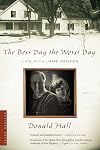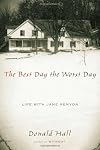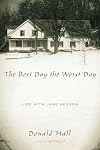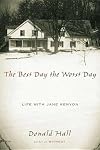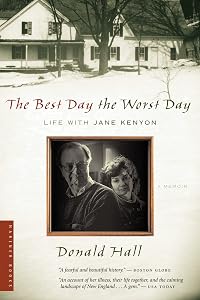
The Best Day the Worst Day: Life with Jane Kenyon
by Donald Hall
On This Page
Description
A candid memoir of love, art, and grief from a celebrated man of letters, United States poet laureate Donald Hall In an intimate record of his twenty-three-year marriage to poet Jane Kenyon, Donald Hall recounts the rich pleasures and the unforeseen trials of their shared life. The couple made a home at their New England farmhouse, where they rejoiced in rituals of writing, gardening, caring for pets, and connecting with their rural community through friends and church. The Best Day the show more Worst Day presents a portrait of the inner moods of "the best marriage I know about," as Hall has written, against the stark medical emergency of Jane's leukemia, which ended her life in fifteen months. Between recollections of better times, Hall shares with readers the daily ordeal of Jane's dying through heartbreaking but ultimately inspiring storytelling. show lessTags
Recommendations





Member Reviews
This is heart-breaking reading, in a mourning for Margaret kind of way. Few lives together, it would seem, could be as blessed as those of Donald Hall and Jane Kenyon. Their love and passion; their friends, travels, and adventures; their farm, pets and gardens; their many shared loves; their individual talents and achievements; their freedom and independence - their lives together were très riches heures indeed. Together they flourished in spite of many health related issues including bipolar depression, diabetes, impotence, and metastatic cancer. Even these travails seemed to have brought them closer. Then she was diagnosed with leukemia and a few very trying months later she died.
Hall structures the book not as one arc, but as two show more parallel, alternating narratives: the account of their deepening relationship over a couple of decades is set against the story of their life after the leukemia diagnosis. In this way he achieves a literary illusion of equilibrium - "in balance with this life, this death". In fact he was, inevitably, crushed by her death, though his epilogue would indicate that things were somewhat better some years later. The book could have been an anguished scream, but instead it is a consoling read. In an interview with Bill Moyers, Jane Kenyon describes how sad poems can bring consolation: "There's the pleasure of the thing itself, the pleasure of the poem, and somehow it works against the sadness". In this book Donald Hall has achieved much the same thing, and I hope that the act of writing it was consoling for him.
One cannot read this memoir without, at a readerly remove, feeling deep affection for Hall - his constance is remarkable. As for Jane Kenyon, I did find it difficult to get the measure of her from the book alone. It is clear from the devotion of Hall, her friends and their families, that she must have been an impressive presence: intense, articulate, frank, passionate, and loving. The book could not convey that, it was more about "life with Jane Kenyon" than Jane Kenyon. Then I got hold of her Collected Poems, and the Jane in the book became more vivid for me. Reading about her struggles with depression must pale beside reading Having it Out with Melancholy. Whenever a poem or collection was mentioned in The Best Day The Worst Day, I read it, and that has made all the difference. show less
Hall structures the book not as one arc, but as two show more parallel, alternating narratives: the account of their deepening relationship over a couple of decades is set against the story of their life after the leukemia diagnosis. In this way he achieves a literary illusion of equilibrium - "in balance with this life, this death". In fact he was, inevitably, crushed by her death, though his epilogue would indicate that things were somewhat better some years later. The book could have been an anguished scream, but instead it is a consoling read. In an interview with Bill Moyers, Jane Kenyon describes how sad poems can bring consolation: "There's the pleasure of the thing itself, the pleasure of the poem, and somehow it works against the sadness". In this book Donald Hall has achieved much the same thing, and I hope that the act of writing it was consoling for him.
One cannot read this memoir without, at a readerly remove, feeling deep affection for Hall - his constance is remarkable. As for Jane Kenyon, I did find it difficult to get the measure of her from the book alone. It is clear from the devotion of Hall, her friends and their families, that she must have been an impressive presence: intense, articulate, frank, passionate, and loving. The book could not convey that, it was more about "life with Jane Kenyon" than Jane Kenyon. Then I got hold of her Collected Poems, and the Jane in the book became more vivid for me. Reading about her struggles with depression must pale beside reading Having it Out with Melancholy. Whenever a poem or collection was mentioned in The Best Day The Worst Day, I read it, and that has made all the difference. show less
Although this is so overtly a chronicle of losing a loved one, about the horrors of cancer and its various treatments, it is also a very real picture of what makes a good and lasting marriage. Although Hall and Kenyon knew the odds of their union lasting were very slim, given the 19-year age difference and her bipolar illness, they took the plunge, Hall noting that "all marriages start in ignorance and need; what matters is what you do after you marry." Fifty-five pages later, Hall affirms what makes their marriage last -
"What we did: love. We did not spend our days gazing into each other's eyes. We did that gazing when we made love or when one of us was in trouble, but most of the time our gazes met and entwined as they looked at a show more third thing. Third things are essential to marriages ... Each member of a couple is separate. The two come together in double attention."
He speaks further of what, for them, constituted those "third things" - John Keats, the BSO, children, pets, or Eagle Pond. The twenty-three years Hall and Kenyon had together had their ups and downs to be sure, but in the end love prevailed. This book is Hall's very personal love song, written just for Jane. Read it and learn what love is really all about. show less
"What we did: love. We did not spend our days gazing into each other's eyes. We did that gazing when we made love or when one of us was in trouble, but most of the time our gazes met and entwined as they looked at a show more third thing. Third things are essential to marriages ... Each member of a couple is separate. The two come together in double attention."
He speaks further of what, for them, constituted those "third things" - John Keats, the BSO, children, pets, or Eagle Pond. The twenty-three years Hall and Kenyon had together had their ups and downs to be sure, but in the end love prevailed. This book is Hall's very personal love song, written just for Jane. Read it and learn what love is really all about. show less
I first read this book years ago, long before I lost my wife to cancer as well. It was a painful read then, but without Vicky in my life, rereading it was hellish at times. If her death hadn't redefined the term heartbreaking so intensely, I would have applied it to this book. Hall describes his life with Jane Kenyon, from meeting her to losing her on her deathbed, where he slept every night thereafter.
Mostly the story of his wife's dying, and thus not the easiest thing to read. The poems in Without cover the same territory, but this is more plain and everyday, and all the sadder for it,
An excellent read that captures the beauty
of ordinary days that make up our life.
of ordinary days that make up our life.
My review? It's on my book blog, MyShelves.This book is available at Teton County Library, call number BIO KENYON J HALL.
Donald Hall is US Poet Laureate, and I heard him read his poetry recently. He read a paragraph from this book about the last 15 months with his late wife, and I knew I wanted to read it. Jane died in her mid-forties from leukemia. This book is about grief and the absolute obsession illness necessarily becomes, but it is a book about hope of what the relationship of two individuals can be. Donald was 20 years older than Jane, and had been diagnosed with cancer. It has been assumed he would die…not Jane.
“Animals in the House” was a delightful chapter about their cats and dogs. Donald writes with a back and forth motion of being in the present pain with Jane and her illness, and then gently returning to the past and the richness of show more its ordinariness.
My favorite quote
“What we did: love. We did not spend our days gazing into each other’s eyes. We did that gazing when we made love or when one of us was in trouble, but most of the time our gazes met and entwined as they looked at a third thing. Third things are essential to marriages, objects or practices or habits or arts or institutions or games or human beings that provide a site of joint rapture or contentment. Each member of a couple is separate; the two come together in double attention.”
About relationship
Before marriage, “Neither Jane nor I said ‘I love you.’ Maybe both of us feared that ‘love’ was a synonym for ‘pain’—and we were feeling only pleasure together, light pleasure.”
“Music was such a passion for Jane. …it was enthralling to sit beside her and feel the ecstasy breathe from her body. I am musically stupid – but I took in music by attending to Jane.”
“We quarreled rarely; we were careful or cautious with each other. … We investigated the miraculous notion that people could live together and be courteous, remain wary of the other’s feelings.”
“Through bouts of ping-pong and Henry James and the church, we kept to one innovation: With rare exceptions, we remained aware of each other’s feelings. It took me half my life, more than half, to discover with Jane’s guidance that two people could live together and remain kind.”
“When we looked over one another’s work, it was essential that we never lie to each other. Even when Jane was depressed, I never praised a poem unless I meant it… If either of us had felt that the other was pulling punches, it would have ruined what was so essential to our house.”
“The double and separate psychiatric help we had received was useful in our marriage by letting us understand that each carried burdens that the other could do nothing about. This separateness, in the usual way of the psyche, helped bring us together.”
“Even at such a Christmas, I wanted to give her something that exceeded good sense, something extravagant and female.”
“As I heard her stories from Russia, I suddenly burst into tears. I was hurt that she had gone without me. She was surprised, taken aback; what had she done wrong? She looked down, without speaking, and, after a pause, quietly said, ‘I am cold, like my mother.’ Jane was not cold, but she was less needy than I was. In most marriages I have known, the husbands have been needier than their wives.”
About dreams
“I discarded the daydream. Now in one sentence Jane rehabilitated my old desire. … It seemed possible that the fantasy of childhood could become the reality of middle age. …Freud says somewhere—it doesn’t sound like Freud—that an adult’s greatest bliss is the fulfillment of a dream from childhood.”
Imagery I like
“fatigue rising like shadows at night”
“the mind must make room for what it may not avoid”
“The mind needed constantly to remind itself: This is not dying-dying; we suffer this dying to avoid that dying.”
“death minimizes hangnails”
“Winter’s imagined garden always shone brighter than summer’s real one, which was subject to moles and chipmunks, to drought and thunderstorm.”
About illness
“In our twenty years at Eagle Pond, Jane and I lived by routine, repeating the same motions in our big old house, schedules of work and love, reading and gardening. Now the schedule was nausea and dread, elevators and cafeteria, boredom and panic and occasionally relief.”
“…the nurse who was the best explainer of all. …in sentences that were comprehensible, without jargon or acronyms, words neat and precise without pedantry—and all the time, as she spoke, steady tears rolled down her cheeks.”
“When you are sick, there is nothing wherever you look that is not sickness. A friend visits and it is a strain even to acknowledge her presence; love is good but it is painful to feel unresponsive to love. Everyone wants to help but no one can give the help that would help.”
While in Seattle, away from home, for extended treatment after a bone marrow transplant: “We lived in an apartment on a street of the city but our only address was leukemia.”
“In the next few days [before death], I concentrated on being there—to look at, to touch—yet otherwise tried as hard as I could to let her go, because I knew (from her poems as well as from common sense) that my anguish to hold on to her could do nothing but cause more pain.”
“Flowers were a major adhesion to the world Jane was leaving. She would not look at them. … She would not look at flowers nor allow me to play her favorite CDs. These things tied her to what she had to part from.”
Conclusion
“Today, ten years after her death, her poems endure. So do I, still at Eagle Pond Farm, where Jane fills the air around me like a rainy day.”
Mentioned by the author that I would like to read or hear
Bill Moyer’s program about Donald Hall and Jane Kenyon, A Life Together, which won an Emmy as a documentary.
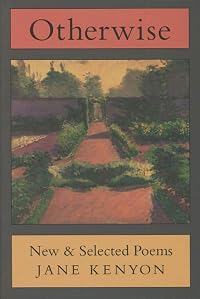
Jane Kenyon’s poetry book, Otherwise, which she assembled in her last days.
Jane’s poem “Having It Out with Melancholy.”
Donald’s textbook Writing Well.
Mahler CD done by Ozawa and the Boston Symphony.
More books by Henry James. I’ve only read The Portrait of a Lady. show less
“Animals in the House” was a delightful chapter about their cats and dogs. Donald writes with a back and forth motion of being in the present pain with Jane and her illness, and then gently returning to the past and the richness of show more its ordinariness.
My favorite quote
“What we did: love. We did not spend our days gazing into each other’s eyes. We did that gazing when we made love or when one of us was in trouble, but most of the time our gazes met and entwined as they looked at a third thing. Third things are essential to marriages, objects or practices or habits or arts or institutions or games or human beings that provide a site of joint rapture or contentment. Each member of a couple is separate; the two come together in double attention.”
About relationship
Before marriage, “Neither Jane nor I said ‘I love you.’ Maybe both of us feared that ‘love’ was a synonym for ‘pain’—and we were feeling only pleasure together, light pleasure.”
“Music was such a passion for Jane. …it was enthralling to sit beside her and feel the ecstasy breathe from her body. I am musically stupid – but I took in music by attending to Jane.”
“We quarreled rarely; we were careful or cautious with each other. … We investigated the miraculous notion that people could live together and be courteous, remain wary of the other’s feelings.”
“Through bouts of ping-pong and Henry James and the church, we kept to one innovation: With rare exceptions, we remained aware of each other’s feelings. It took me half my life, more than half, to discover with Jane’s guidance that two people could live together and remain kind.”
“When we looked over one another’s work, it was essential that we never lie to each other. Even when Jane was depressed, I never praised a poem unless I meant it… If either of us had felt that the other was pulling punches, it would have ruined what was so essential to our house.”
“The double and separate psychiatric help we had received was useful in our marriage by letting us understand that each carried burdens that the other could do nothing about. This separateness, in the usual way of the psyche, helped bring us together.”
“Even at such a Christmas, I wanted to give her something that exceeded good sense, something extravagant and female.”
“As I heard her stories from Russia, I suddenly burst into tears. I was hurt that she had gone without me. She was surprised, taken aback; what had she done wrong? She looked down, without speaking, and, after a pause, quietly said, ‘I am cold, like my mother.’ Jane was not cold, but she was less needy than I was. In most marriages I have known, the husbands have been needier than their wives.”
About dreams
“I discarded the daydream. Now in one sentence Jane rehabilitated my old desire. … It seemed possible that the fantasy of childhood could become the reality of middle age. …Freud says somewhere—it doesn’t sound like Freud—that an adult’s greatest bliss is the fulfillment of a dream from childhood.”
Imagery I like
“fatigue rising like shadows at night”
“the mind must make room for what it may not avoid”
“The mind needed constantly to remind itself: This is not dying-dying; we suffer this dying to avoid that dying.”
“death minimizes hangnails”
“Winter’s imagined garden always shone brighter than summer’s real one, which was subject to moles and chipmunks, to drought and thunderstorm.”
About illness
“In our twenty years at Eagle Pond, Jane and I lived by routine, repeating the same motions in our big old house, schedules of work and love, reading and gardening. Now the schedule was nausea and dread, elevators and cafeteria, boredom and panic and occasionally relief.”
“…the nurse who was the best explainer of all. …in sentences that were comprehensible, without jargon or acronyms, words neat and precise without pedantry—and all the time, as she spoke, steady tears rolled down her cheeks.”
“When you are sick, there is nothing wherever you look that is not sickness. A friend visits and it is a strain even to acknowledge her presence; love is good but it is painful to feel unresponsive to love. Everyone wants to help but no one can give the help that would help.”
While in Seattle, away from home, for extended treatment after a bone marrow transplant: “We lived in an apartment on a street of the city but our only address was leukemia.”
“In the next few days [before death], I concentrated on being there—to look at, to touch—yet otherwise tried as hard as I could to let her go, because I knew (from her poems as well as from common sense) that my anguish to hold on to her could do nothing but cause more pain.”
“Flowers were a major adhesion to the world Jane was leaving. She would not look at them. … She would not look at flowers nor allow me to play her favorite CDs. These things tied her to what she had to part from.”
Conclusion
“Today, ten years after her death, her poems endure. So do I, still at Eagle Pond Farm, where Jane fills the air around me like a rainy day.”
Mentioned by the author that I would like to read or hear
Bill Moyer’s program about Donald Hall and Jane Kenyon, A Life Together, which won an Emmy as a documentary.
Jane Kenyon’s poetry book, Otherwise, which she assembled in her last days.
Jane’s poem “Having It Out with Melancholy.”
Donald’s textbook Writing Well.
Mahler CD done by Ozawa and the Boston Symphony.
More books by Henry James. I’ve only read The Portrait of a Lady. show less
Members
- Recently Added By
Author Information

102+ Works 12,614 Members
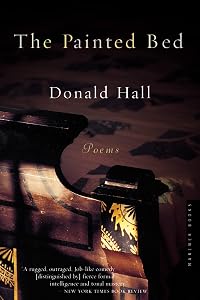
Donald Andrew Hall Jr. was born in New Haven, Connecticut on September 20, 1928. He received a bachelor's degree from Harvard University in 1951. His first collection of poetry, Exiles and Marriages, was published in 1955. His other collections included Without, The Museum of Clear Ideas, and The Painted Bed. He received several awards including show more the National Book Critics Circle Award for The One Day, the Lenore Marshall Poetry Prize for The Happy Man, the Poetry Society of America's Robert Frost Silver medal, and the Ruth Lilly Prize for poetry. He served as poetry editor of The Paris Review from 1953 to 1962 and was the United States poet laureate for 2006-2007. He was also a memoirist, an essayist, and the author of textbooks and children's books. His memoirs were entitled Life Work and Unpacking the Boxes. His children's book, Ox-Cart Man illustrated by Barbara Cooney, won the Caldecott Medal. He received a National Medal of Arts in 2011. He died on June 23, 2018 at the age of 89. (Bowker Author Biography) show less
Common Knowledge
- People/Characters
- Jane Kenyon; Donald Hall
Classifications
Statistics
- Members
- 199
- Popularity
- 164,379
- Reviews
- 7
- Rating
- (4.14)
- Languages
- English
- Media
- Paper, Ebook
- ISBNs
- 3
- UPCs
- 2
- ASINs
- 2