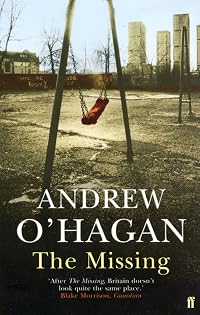
The Missing
by Andrew O'Hagan
On This Page
Description
This book - part autobiography, part inquiry into mystery, part social history - tries to find out how people can disappear without a trace, and looks at the impact these disappearances can have on communities.Tags
Recommendations


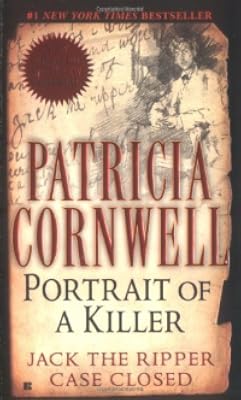

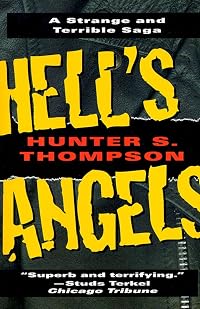

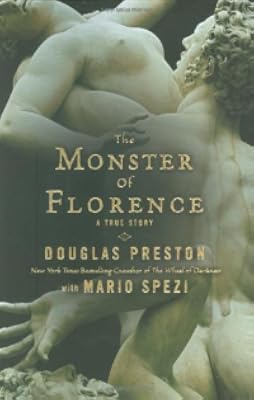
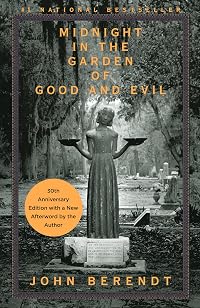










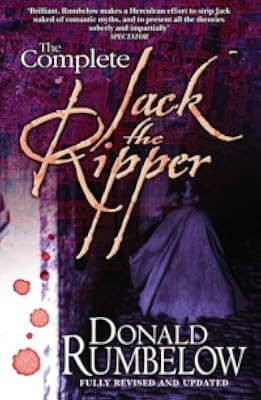
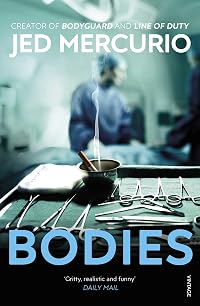
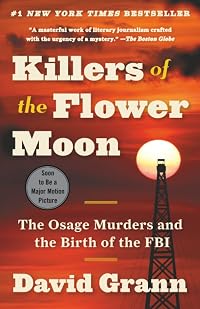
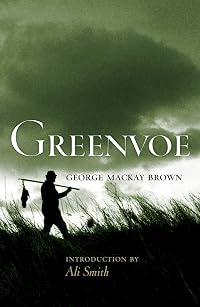


Member Recommendations

Member Reviews
This was O’Hagan’s first book and unlike his later fiction works is a piece of investigative reporting.
It begins as a series of histories; of O’Hagan’s family, on both sides, of Glasgow’s troubles with sectarianism, of O’Hagan’s childhood, the Bible John murders, of Kilwinning and Irvine old (that of John Galt) and New, but transforms into a meditation on people who have gone missing; as a three year old boy and, later, a young woman of whom the only trace was her handbag, did during O’Hagan’s youth in Irvine to where his family had moved in the early days of the New Town’s construction. In the text he writes that he has, since childhood, fuelled by those two incidents in his home town, had a morbid fear of show more disappearing. Of that ongoing sectarianism O’Hagan says, “There’s sometimes too much pleasure, and too much social cohesion, involved in an ongoing mutual hatred for it to be surrendered just like that. In the absence of much else, of course, prejudice is just a form of tradition.” Which perhaps goes a long way to explaining sectarianism’s persistence.
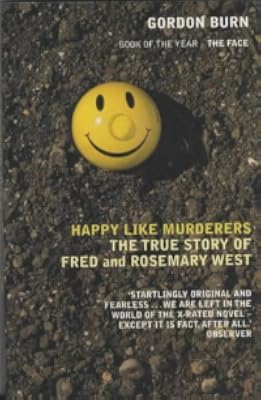
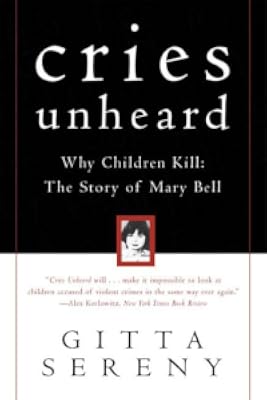
In the book’s course O’Hagan meditates on the cruelties children perpetrate on one another when there are no adults around; with particular emphasis on an incident from his youth - when he was a joint perpetrator - and the James Bulger case (“There was something unhelpful about the way that case was discussed..... the two Scouse boys were called devils, treated as complete anomalies, and they were hounded outside the court by adults sick with the desire for retribution,”) before finally coming to the heart of his investigation, 25, Cromwell Street, Gloucester, by way of Fred West’s connections to Glasgow via his first wife, whose body, with those of her friend and daughter, was eventually dug up in the garden of West’s previous home in Much Marcle, Herefordshire. The last quarter of the book is taken up with West’s life and activities and the missing and, up till the discovery of their bodies, his seemingly unmissed, victims.
There are different ways to be a misper (as police jargon for missing persons has it.) Some people have reasons for going missing - and want to remain so. Many folk O’Hagan met in an occasional shelter, for drop-ins, fell into that category. He also notes an increasing category of missing who are simply unnoticed until their bodies are found in their homes months or years after their deaths.
While it is the thought and possible plight of missing persons that toll through the book it is the autobiographical details of O’Hagan’s family and early life which are the most immediate and memorable to the reader. (O’Hagan refers to going to school for the first time - in long trousers. Such a change there was in fifteen years or so; in my day such sartorial splendour was not sported until Secondary School.)
In the afterword to this 2004 edition O’Hagan writes that he opened the US publication of the book with the sentence, “We are none of us safe in this world,” and now does not wish to limit its “ominous tenor”. But surely that has always been true? We could fall under the proverbial bus - or cart as was. A close examination of the awful events that take place, of the lives cut short or compromised, will inevitably lead to such a sense of insecurity. Feeding and encouraging such thoughts is what fuels the tabloid press and right wing politicians eager to reduce freedoms for the populace and scrutiny of themselves. Perhaps O’Hagan’s journalistic endeavour has obscured to him a wider perspective. There is no such thing as absolute safety. And protection from threat – terrorist or otherwise – can never be complete. Yet notwithstanding what goes on today in the world - and the UK - my generation and that of my children are generally - and statistically - safer than those of my parents and grandparents. (This may not apply to the missing of course.)
It is a usually neglected yet necessary endeavour to reflect on and pay attention to people who are perhaps too easily forgotten and whose fate may or may not be grim. Even in this digital and camera-surveilled age it is possible to disappear, apparently without trace. The light O’Hagan shines on the problem is not sparing neither is it comfortable. show less
It begins as a series of histories; of O’Hagan’s family, on both sides, of Glasgow’s troubles with sectarianism, of O’Hagan’s childhood, the Bible John murders, of Kilwinning and Irvine old (that of John Galt) and New, but transforms into a meditation on people who have gone missing; as a three year old boy and, later, a young woman of whom the only trace was her handbag, did during O’Hagan’s youth in Irvine to where his family had moved in the early days of the New Town’s construction. In the text he writes that he has, since childhood, fuelled by those two incidents in his home town, had a morbid fear of show more disappearing. Of that ongoing sectarianism O’Hagan says, “There’s sometimes too much pleasure, and too much social cohesion, involved in an ongoing mutual hatred for it to be surrendered just like that. In the absence of much else, of course, prejudice is just a form of tradition.” Which perhaps goes a long way to explaining sectarianism’s persistence.
In the book’s course O’Hagan meditates on the cruelties children perpetrate on one another when there are no adults around; with particular emphasis on an incident from his youth - when he was a joint perpetrator - and the James Bulger case (“There was something unhelpful about the way that case was discussed..... the two Scouse boys were called devils, treated as complete anomalies, and they were hounded outside the court by adults sick with the desire for retribution,”) before finally coming to the heart of his investigation, 25, Cromwell Street, Gloucester, by way of Fred West’s connections to Glasgow via his first wife, whose body, with those of her friend and daughter, was eventually dug up in the garden of West’s previous home in Much Marcle, Herefordshire. The last quarter of the book is taken up with West’s life and activities and the missing and, up till the discovery of their bodies, his seemingly unmissed, victims.
There are different ways to be a misper (as police jargon for missing persons has it.) Some people have reasons for going missing - and want to remain so. Many folk O’Hagan met in an occasional shelter, for drop-ins, fell into that category. He also notes an increasing category of missing who are simply unnoticed until their bodies are found in their homes months or years after their deaths.
While it is the thought and possible plight of missing persons that toll through the book it is the autobiographical details of O’Hagan’s family and early life which are the most immediate and memorable to the reader. (O’Hagan refers to going to school for the first time - in long trousers. Such a change there was in fifteen years or so; in my day such sartorial splendour was not sported until Secondary School.)
In the afterword to this 2004 edition O’Hagan writes that he opened the US publication of the book with the sentence, “We are none of us safe in this world,” and now does not wish to limit its “ominous tenor”. But surely that has always been true? We could fall under the proverbial bus - or cart as was. A close examination of the awful events that take place, of the lives cut short or compromised, will inevitably lead to such a sense of insecurity. Feeding and encouraging such thoughts is what fuels the tabloid press and right wing politicians eager to reduce freedoms for the populace and scrutiny of themselves. Perhaps O’Hagan’s journalistic endeavour has obscured to him a wider perspective. There is no such thing as absolute safety. And protection from threat – terrorist or otherwise – can never be complete. Yet notwithstanding what goes on today in the world - and the UK - my generation and that of my children are generally - and statistically - safer than those of my parents and grandparents. (This may not apply to the missing of course.)
It is a usually neglected yet necessary endeavour to reflect on and pay attention to people who are perhaps too easily forgotten and whose fate may or may not be grim. Even in this digital and camera-surveilled age it is possible to disappear, apparently without trace. The light O’Hagan shines on the problem is not sparing neither is it comfortable. show less
A well-written, thoughtful book that is both frustrating and compelling in equal measure. It rubs up against some very important themes, making a number of prescient and rare observations as it does so, but nevertheless it is all over the place structurally. Its grasp, then, as per Browning's dictum, exceeds its reach, but there are far worse things that could be said of a book. Hopefully other authors will cover (or have covered) this vital but untrodden ground, similarly juxtaposing the strange and undefined relationship between the nature of absence and our proclivity to watch, record and celebrate every aspect of our banal existence. Somewhere in all this is something very revealing and important. Sadly, ironically, even inevitably, show more concrete conclusions are also missing here. Perhaps every age lacks the neutrality to look at itself with a naked eye. show less
Part memoir, part social commentary, this book is about missing people in Great Britain. It's a bit dated because it was written before the internet came into widespread use, but much of what it says still applies. The book is not about specific cases so much as the phenomenon in general. O'Hagan, a journalist, interviewed runaways and homeless people in addition to law enforcement officials as part of his research. Much of what he says, especially about the people who die and are left undiscovered in their apartments for months, makes for very depressing reading. This book is well worth the time to look at and fostered greater awareness in myself, although I knew a great deal about missing people already.
I don't get it, nothing happens. I thought this was supposed to be about missing persons, but it's just a lot of rambling about his genealogy and Glasgow.
This is probably the best book by O'Hagan.
Ratings
Members
- Recently Added By
Author Information

29+ Works 2,955 Members
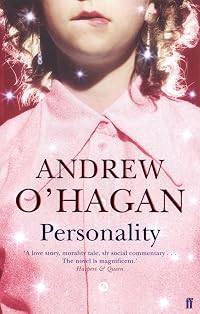
Andrew O'Hagan was born in 1968 in Glasgow, Scotland. He studied at the University of Strathclyde. He is an Editor at Large for Esquire, London Review of Books and Critic at Large for T: The New York Times Style Magazine. He is a creative writing fellow at King's College London. He has worked as an editor and ghostwriter. He has twice been show more nominated for the Man Booker Prize. He was voted one of Granta's Best of Young British Novelists in 2003. He has won the Los Angeles Times Book Award and the E.M. Forster Award from the American Academy of Arts & Letters, made Honorary Doctor of Letters by University of Strathclyde in 2008, and was made Fellow of the Royal Society of Literature in 2010. His book awards include the 2000 Winifred Holtby Memorial Prize for Our Fathers, the 2003 James Tait Black Memorial Prize (fiction), for Personality, and the 2010 Glenfiddich Spirit of Scotland Award for Writing. His fiction includes Our Fathers, Personality, Be Near Me, The Life and Opinions of Maf the Dog, and of His Friend Marilyn Monroe, The Illuminations. His non-fiction includes The Missing and The Atlantic Ocean. He also has written short stories and book reviews. (Bowker Author Biography) show less
Awards and Honors
Common Knowledge
- Original publication date
- 1995
Classifications
Statistics
- Members
- 126
- Popularity
- 259,569
- Reviews
- 5
- Rating
- (3.66)
- Languages
- Dutch, English, Spanish
- Media
- Paper
- ISBNs
- 6