On This Page
Description
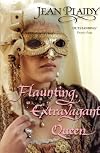
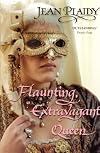
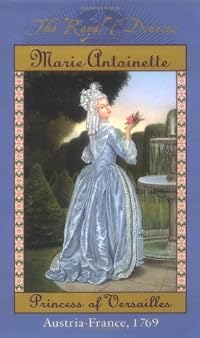
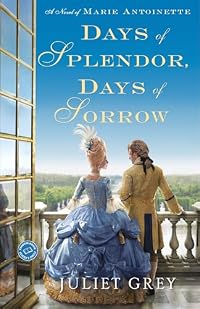
At the age of 15, Marie Antoniette, beautiful and charming bride to the impotent Dauphin, is plunged into the intrigue of Versailles. Frivolous and reckless, she flouts the strict and demanding etiquette of the glittering court, and discovers the true nature of love, hate and jealousy. But the clouds of revolution are overhead, and Marie Antoinette, who only wishes to enjoy life, learns too late that the price of her enjoyment is very high.Tags
Recommendations













Member Reviews
The excellent conclusion to Jean Plaidy's French Revolution trilogy; it is fitting that Revolution proper should begin in the final novel, as the rot had set in long before the reign of poor Louis XVI and his controversial queen.
It is impossible not to admire the author, for her fair and historically accurate (based upon existing research) portrayal of Marie Antoinette, and also the subject, who was far from either a cruel and grasping queen or a martyred saint. Plaidy brings a familiar sequence of events to life - an awkward marriage, the strict etiquette and spoiled extravagance of Versailles, a frivolous and naive young woman seeking escape in pleasure, the building wrath of a nation - and makes history accessible, as well as show more debunking legends.
Louis was well-meaning and gentle, unsuited to his role as king yet interested in the welfare of his people; perhaps the one argument for a republic he would have understood is that those in power should be chosen for their strengths and abilities, and not have authority forced upon them. Marie Antoinette, whose story this is, adapted to the boredom and frustration of her younger years by seeking to enjoy privilege to the full, although she only ever wanted to please and make people love her; by the time she understood her position and responsibility, it was too late. She is a character to love and hate, pity and sympathise with - the innocence of her years as Dauphine, before coming to the throne at nineteen ('We are too young to rule', as goes the famous quote here attributed to her), her love and devotion to her children, and her dignity at the end. Her only failing was her weakness over the eager, besotted and pretty Count Fersen; Plaidy believes that they did have an affair, but Louis is much the nobler and more admirable man in Antoinette's life. (Fersen's persistance is obnoxious.)
Every detail is here, but more time is spent on Antoinette's Versailles heyday - the Revolution is summarised, from the flight to Varennes to the Queen's sordid trial and her execution, but it is merely the epilogue of her story. show less
It is impossible not to admire the author, for her fair and historically accurate (based upon existing research) portrayal of Marie Antoinette, and also the subject, who was far from either a cruel and grasping queen or a martyred saint. Plaidy brings a familiar sequence of events to life - an awkward marriage, the strict etiquette and spoiled extravagance of Versailles, a frivolous and naive young woman seeking escape in pleasure, the building wrath of a nation - and makes history accessible, as well as show more debunking legends.
Louis was well-meaning and gentle, unsuited to his role as king yet interested in the welfare of his people; perhaps the one argument for a republic he would have understood is that those in power should be chosen for their strengths and abilities, and not have authority forced upon them. Marie Antoinette, whose story this is, adapted to the boredom and frustration of her younger years by seeking to enjoy privilege to the full, although she only ever wanted to please and make people love her; by the time she understood her position and responsibility, it was too late. She is a character to love and hate, pity and sympathise with - the innocence of her years as Dauphine, before coming to the throne at nineteen ('We are too young to rule', as goes the famous quote here attributed to her), her love and devotion to her children, and her dignity at the end. Her only failing was her weakness over the eager, besotted and pretty Count Fersen; Plaidy believes that they did have an affair, but Louis is much the nobler and more admirable man in Antoinette's life. (Fersen's persistance is obnoxious.)
Every detail is here, but more time is spent on Antoinette's Versailles heyday - the Revolution is summarised, from the flight to Varennes to the Queen's sordid trial and her execution, but it is merely the epilogue of her story. show less
Having read a biography of Marie Antoinette, I think this fictional account of this fascinating woman is a damn good read. Jean Plaidy has done a great job of bringing Marie Antoinette to life, along with Louis XVI.
The author focuses on many of the most important aspects of this frightening period of French history, mixing in some trivialities, which gives a more rounded story. In reality, Marie Antoinette's final few years were much more drawn-out and wretched than how they are portrayed here. That said, enough events feature here to still make the reader feel the utmost sympathy for Marie Antoinette and her family.
The author does a good job in showing the transition of the "Flaunting, Extravagant Queen" to a loyal wife and mother, show more who all her life is - in the eyes of lookers-on - damned in whatever she does, and damned in whatever she doesn't. show less
The author focuses on many of the most important aspects of this frightening period of French history, mixing in some trivialities, which gives a more rounded story. In reality, Marie Antoinette's final few years were much more drawn-out and wretched than how they are portrayed here. That said, enough events feature here to still make the reader feel the utmost sympathy for Marie Antoinette and her family.
The author does a good job in showing the transition of the "Flaunting, Extravagant Queen" to a loyal wife and mother, show more who all her life is - in the eyes of lookers-on - damned in whatever she does, and damned in whatever she doesn't. show less
This was written in 1957, but it is still an excellent book covering the period from when Marie Antoinette left Austria to become Louis' wife until her beheading. Overall a very sad story, from this recount of events she had so many enemies in court and beyond, mainly caused by jealousy. Not helped by a weak indecisive king - so many times when he could and should have taken control. I would now like to read one or two other versions of her story. Nice to return to Jean Plaidy, I cut my teeth in Historical Fiction with Jean Plaidy - she was a favourite of my mum's and her books were available in the house. In fact this copy was from then, and was passed onto me shortly before her death.
Ratings
Members
- Recently Added By
Lists

Carly's TBR
7 works; 1 member
Author Information

258+ Works 37,270 Members
Jean Plaidy was a British writer who wrote under various pen names. Her real name is Eleanor Alice Burford Hibbert. She was born in London on September 1, 1906. Most of the books written as Jean Plaidy are historical romances based on English history featuring historical figures. The first, Beyond the Blue Mountains, was published in 1947. Hibbert show more also wrote five nonfiction histories and two children's books. Besides Jean Plaidy, Hibbert wrote under Victoria Holt, Phillipa Carr, Elbur Ford, Kathleen Kellow, Ellalice Tate, and her maiden name, Eleanor Burford. Hibbert died on January 18, 1993. (Bowker Author Biography) show less
Some Editions
Series

Common Knowledge
- Canonical title
- Flaunting, Extravagant Queen
- Original publication date
- 1957
- People/Characters
- Marie Antoinette; Madame de Tourzel; Louis XVI, King of France
- Important places
- France; Paris, France; Varennes, Hauts-de-France, France
- Important events
- French Revolution
Classifications
Statistics
- Members
- 117
- Popularity
- 277,416
- Reviews
- 3
- Rating
- (3.91)
- Languages
- English, Portuguese, Spanish
- Media
- Paper, Audiobook, Ebook
- ISBNs
- 11
- ASINs
- 6