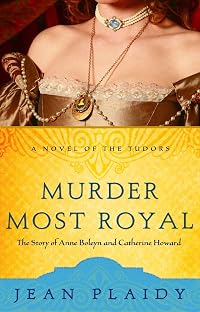
On This Page
Description
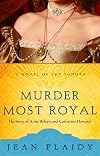
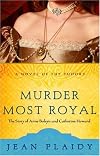
Fiction. Literature. Historical Fiction. HTML:One powerful king. Two tragic queens.In the court of Henry VIII, it was dangerous for a woman to catch the king's eye. Anne Boleyn and Catherine Howard were cousins. Both were beautiful women, though very different in temperament. They each learned that Henry's passion was all-consuming–and fickle.
Sophisticated Anne Boleyn, raised in the decadent court of France, was in love with another man when King Henry claimed her as his own. Being his show more mistress gave her a position of power; being his queen put her life in jeopardy. Her younger cousin, Catherine Howard, was only fifteen when she was swept into the circle of King Henry. Her innocence attracted him, but a past mistake was destined to haunt her.
Painted in the rich colors of Tudor England, Murder Most Royal is a page-turning journey into the lives of two of the wives of the tempestuous Henry VIII.
Look for the Reading Group Guide at the back of this book.
Also available as an ebook. show less
Tags
Recommendations






Member Reviews
Like with the Plantagenet saga, the author attempts to pack many years’ worth of history from numerous viewpoints into one volume, which results in a lot of bland scenes that should’ve been dramatized. The pace often drags, and little action occurs.
“Murder Most Royal” has some good moments, hence my rating it two stars instead of one, but these high points are few and far between in this slow-paced novel. I skipped several tedious paragraphs that were doing nothing to move the story along – in fact, they were dragging it down.
The author tried to cover too much. The section on Thomas Moor and his family, for example, should’ve been cut. It’s one viewpoint too many for the reader to digest.
As with all Plaidy novels, show more “Murder Most Royal” features a lot of repeated info and dry facts. The main reason why her works are so dry is because there’s far too much *telling*, as opposed to *showing*. The reader is often told what happened in a few sentences, when the author could’ve dramatized scenes to show what happened.
At times, like with the quote below, the narrative is so dry and lacking in drama that it reads like a history book, not a novel:
*Cromwell outlined his plan. For years the old Duke of Cleves had wanted an alliance with England. His son had a claim to the Duchy of Guelders, which Duchy was in relation to the Emperor Charles very much what Scotland was to Henry, ever ready to be a cause of trouble. A marriage between England and the house of Cleves would therefore seriously threaten the Emperor’s hold on his Dutch dominions.*
Something else Plaidy’s guilty of is her continuous use of the passive voice, such as “The door of the Palace,” as opposed to the active, “The Palace door.” Passive voice = passive prose.
Same can be said about the extent of reported speech. Dialogue is active, reported speech isn’t, and like with the quote below, it sometimes doesn’t even make clear what was said:
*Francis retorted in such a way as to make Henry squirm, and he did not go to Calais to make a personal inspection of prospective wives.*
We never do find out in what way Francis retorted. This is storytelling at its worst.
Another annoying trait this author has is writing with hindsight. Her characters say prophetic things, which is too unrealistic, or they wish for things – repeatedly – until they either get their wish or die trying.
The future was unknown for these people, but in several Plaidy books they have premonitions, which I can’t believe the real people these characters are based on would ever have, such as Ann Boleyn more than once stating – or implying – that she’ll one day be beheaded. It’s all down to the author writing with hindsight, which I find very irritating.
My biggest criticism of this novel is the inconsistency in language. It’s a blend of old-style English and modern English, albeit the modern language is tainted not only with the passive voice, but with mixed-up syntax like this:
*Oh, how much simpler to manage had been his daughter Mary!*
Badly-written sentences like the one above slow the narrative down. I guess the author is trying to make the characters feel as authentic as possible, but when writing for a modern audience, the choice of language should be contemporary. Granted, some readers like the authentic approach, but not everyone who reads historical fiction appreciates this method.
Examples of inconsistent language include the following:
Henry VIII to Anne Boleyn: “Anne, thou talkest wildly.” Then a few lines later Henry says: “Sweetheart, you talk with wildness!”
The Dowager Duchess of Norfolk says to Catherine Howard: “Dost think I would not find thee a teacher at Lambeth?” Soon after she adds: “And why do you bother me with lessons and teachers?”
Mary Lassels says to Thomas Mannox: “Man, what meanest thou to play the fool of this fashion! Knowest thou not that an my lady of Norfolk knew of the love between thee and Mistress Howard she will undo thee?” And a little later Mary tells Catherine Howard: “I have come to warn you. You are very young, and I do not think you realize what you do.”
The last example of Mary Lassels’s speech particularly highlights the contrasting language. It being in dialogue makes it worse, as in real life people don’t have such huge variations in speech – except, perhaps, when fooling around or when drunk. In normal circumstances, though, someone doesn’t go from saying, “Man, what meanest thou to play the fool of this fashion!” one minute, to saying, “I have come to warn you” the next.
Very inconsistent, highly unrealistic, and most irritating for the reader (this one, anyway).
Something about Jean Plaidy’s books keep me coming back for more. Perhaps it’s her obvious love for English history, which I share, that draws me back. I wish she’d focused less on turning out as greater quantity of novels as possible and concentrated more on quality writing. A novel like this one should be revised about 20 times, yet this at best feels like a fifth draft. show less
“Murder Most Royal” has some good moments, hence my rating it two stars instead of one, but these high points are few and far between in this slow-paced novel. I skipped several tedious paragraphs that were doing nothing to move the story along – in fact, they were dragging it down.
The author tried to cover too much. The section on Thomas Moor and his family, for example, should’ve been cut. It’s one viewpoint too many for the reader to digest.
As with all Plaidy novels, show more “Murder Most Royal” features a lot of repeated info and dry facts. The main reason why her works are so dry is because there’s far too much *telling*, as opposed to *showing*. The reader is often told what happened in a few sentences, when the author could’ve dramatized scenes to show what happened.
At times, like with the quote below, the narrative is so dry and lacking in drama that it reads like a history book, not a novel:
*Cromwell outlined his plan. For years the old Duke of Cleves had wanted an alliance with England. His son had a claim to the Duchy of Guelders, which Duchy was in relation to the Emperor Charles very much what Scotland was to Henry, ever ready to be a cause of trouble. A marriage between England and the house of Cleves would therefore seriously threaten the Emperor’s hold on his Dutch dominions.*
Something else Plaidy’s guilty of is her continuous use of the passive voice, such as “The door of the Palace,” as opposed to the active, “The Palace door.” Passive voice = passive prose.
Same can be said about the extent of reported speech. Dialogue is active, reported speech isn’t, and like with the quote below, it sometimes doesn’t even make clear what was said:
*Francis retorted in such a way as to make Henry squirm, and he did not go to Calais to make a personal inspection of prospective wives.*
We never do find out in what way Francis retorted. This is storytelling at its worst.
Another annoying trait this author has is writing with hindsight. Her characters say prophetic things, which is too unrealistic, or they wish for things – repeatedly – until they either get their wish or die trying.
The future was unknown for these people, but in several Plaidy books they have premonitions, which I can’t believe the real people these characters are based on would ever have, such as Ann Boleyn more than once stating – or implying – that she’ll one day be beheaded. It’s all down to the author writing with hindsight, which I find very irritating.
My biggest criticism of this novel is the inconsistency in language. It’s a blend of old-style English and modern English, albeit the modern language is tainted not only with the passive voice, but with mixed-up syntax like this:
*Oh, how much simpler to manage had been his daughter Mary!*
Badly-written sentences like the one above slow the narrative down. I guess the author is trying to make the characters feel as authentic as possible, but when writing for a modern audience, the choice of language should be contemporary. Granted, some readers like the authentic approach, but not everyone who reads historical fiction appreciates this method.
Examples of inconsistent language include the following:
Henry VIII to Anne Boleyn: “Anne, thou talkest wildly.” Then a few lines later Henry says: “Sweetheart, you talk with wildness!”
The Dowager Duchess of Norfolk says to Catherine Howard: “Dost think I would not find thee a teacher at Lambeth?” Soon after she adds: “And why do you bother me with lessons and teachers?”
Mary Lassels says to Thomas Mannox: “Man, what meanest thou to play the fool of this fashion! Knowest thou not that an my lady of Norfolk knew of the love between thee and Mistress Howard she will undo thee?” And a little later Mary tells Catherine Howard: “I have come to warn you. You are very young, and I do not think you realize what you do.”
The last example of Mary Lassels’s speech particularly highlights the contrasting language. It being in dialogue makes it worse, as in real life people don’t have such huge variations in speech – except, perhaps, when fooling around or when drunk. In normal circumstances, though, someone doesn’t go from saying, “Man, what meanest thou to play the fool of this fashion!” one minute, to saying, “I have come to warn you” the next.
Very inconsistent, highly unrealistic, and most irritating for the reader (this one, anyway).
Something about Jean Plaidy’s books keep me coming back for more. Perhaps it’s her obvious love for English history, which I share, that draws me back. I wish she’d focused less on turning out as greater quantity of novels as possible and concentrated more on quality writing. A novel like this one should be revised about 20 times, yet this at best feels like a fifth draft. show less
I am normally a fan of Jean Plaidy's historical novels, but Murder Most Royal, about Anne Boleyn and Catherine Howard, took me an age to get through and nearly put me off reading altogether this month, because I was determined to finish this before starting another novel. Honestly, Cynthia Harrod-Eagles' book The Dark Rose, about the fictional Morland family, covers the same historical timeline and personalities with more interest and liveliness than Plaidy managed!
Readers wishing to learn about the Court of 'Enery the Eighth and (three of) his six wives in a fictional format might find Plaidy's novel informative, because her style - ever formal and plain - straddles the history textbook and Victorian potboiler. She covers all the show more pertinent details about Henry the power-mad polygamist, who invented the Church of England to better dispatch his unwanted wives, Anne Boleyn the 'wanton witch', and Catherine Howard, Henry's 'rose without a thorn', but does so in a plodding parody of her usual historical works. Great chunks of exposition and amateur psychology are interspersed with dialogue peppered with verrily archaic language, which tends towards parody on occasion. Granted, I prefer Plaidy's straightforward account to Philippa Gregory's controversial theories in The Other Boleyn Girl, but there must be a happy medium.
Disappointing. show less
Readers wishing to learn about the Court of 'Enery the Eighth and (three of) his six wives in a fictional format might find Plaidy's novel informative, because her style - ever formal and plain - straddles the history textbook and Victorian potboiler. She covers all the show more pertinent details about Henry the power-mad polygamist, who invented the Church of England to better dispatch his unwanted wives, Anne Boleyn the 'wanton witch', and Catherine Howard, Henry's 'rose without a thorn', but does so in a plodding parody of her usual historical works. Great chunks of exposition and amateur psychology are interspersed with dialogue peppered with verrily archaic language, which tends towards parody on occasion. Granted, I prefer Plaidy's straightforward account to Philippa Gregory's controversial theories in The Other Boleyn Girl, but there must be a happy medium.
Disappointing. show less
What do Anne Boleyn and Katherine Howard have in common? Not only were they the two wives that Henry VIII had beheaded for infidelity, they were also cousins. Their relationship, although not close, does make them ripe for comparison and logical for an intertwining of their stories.
Somewhat unsurprisingly, but also somewhat disappointingly, the majority of the book dealt with Anne, not Katherine. Katherine did get the some pages here and there during Anne’s ascendance and reign, and of course had the end to herself, but I would have liked to see a bit more of her.
Plaidy seems to treat both Anne and Katherine very evenhandedly. Anne has her faults and lets her power and fear go somewhat to her head, but she is not someone who deserves show more her execution. Katherine is a naive and sexual human being who essentially doesn’t know better than to dally with men in her grandmother’s house, but she isn’t the conniving nymphomaniac purposefully cuckolding Henry as other books sometimes describe her.
Like “To Hold the Crown,” this was one of Plaidy’s better, more flowing works. In some of her books the writing gets somewhat stilted and is more old fashioned, but that isn’t the case with “Murder Most Royal.” All you Tudor historical fiction fanatics, give this book a try. show less
Somewhat unsurprisingly, but also somewhat disappointingly, the majority of the book dealt with Anne, not Katherine. Katherine did get the some pages here and there during Anne’s ascendance and reign, and of course had the end to herself, but I would have liked to see a bit more of her.
Plaidy seems to treat both Anne and Katherine very evenhandedly. Anne has her faults and lets her power and fear go somewhat to her head, but she is not someone who deserves show more her execution. Katherine is a naive and sexual human being who essentially doesn’t know better than to dally with men in her grandmother’s house, but she isn’t the conniving nymphomaniac purposefully cuckolding Henry as other books sometimes describe her.
Like “To Hold the Crown,” this was one of Plaidy’s better, more flowing works. In some of her books the writing gets somewhat stilted and is more old fashioned, but that isn’t the case with “Murder Most Royal.” All you Tudor historical fiction fanatics, give this book a try. show less
A good read, but about 200 pages too long. While the descriptive writing is good, it bogs down along the way. I found that I muddled through and then simply scanned to the end.
This novel spanned Henry VIII's marriages with Jane Seymour, Anne of Cleves and Catherine Howard and his relationship with each. His marriage to Anne of Cleves was very short (as was his marriage) and it was a very good read. I only rated it 4 stars rather than my usual 5 stars because I prefer books with lots of dialogue which Jean Plaidy's novels usually provide but this was not so much. This is #5 in the Tudor Saga Series.
Typical Plaidy - bit dry and repetitive in parts, but I very much enjoyed the book.
Great to read so soon after The Boleyn Inheritance .
Great to read so soon after The Boleyn Inheritance .
This book is brilliant. i would recommend it to anyone. one of plaidy' more flowing books and she rambles less in this one.
Members
- Recently Added By
Author Information

254+ Works 37,344 Members
Jean Plaidy was a British writer who wrote under various pen names. Her real name is Eleanor Alice Burford Hibbert. She was born in London on September 1, 1906. Most of the books written as Jean Plaidy are historical romances based on English history featuring historical figures. The first, Beyond the Blue Mountains, was published in 1947. Hibbert show more also wrote five nonfiction histories and two children's books. Besides Jean Plaidy, Hibbert wrote under Victoria Holt, Phillipa Carr, Elbur Ford, Kathleen Kellow, Ellalice Tate, and her maiden name, Eleanor Burford. Hibbert died on January 18, 1993. (Bowker Author Biography) show less
Some Editions
Series

Work Relationships
Is contained in
Common Knowledge
- Canonical title*
- Koninklijke Moordenaar
- Original title
- The King's Pleasure
- Original publication date
- 1949
- People/Characters
- Henry VIII, King of England; Anne Boleyn; Katherine Howard; Jane Boleyn
- Important places
- England, UK
*Some information comes from Common Knowledge in other languages. Click "Edit" for more information.
Classifications
Statistics
- Members
- 559
- Popularity
- 53,183
- Reviews
- 11
- Rating
- (3.77)
- Languages
- 6 — Czech, Dutch, English, German, Portuguese, Spanish
- Media
- Paper, Audiobook, Ebook
- ISBNs
- 20
- UPCs
- 1
- ASINs
- 15