On This Page
Description
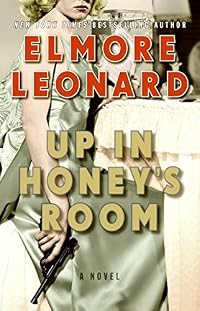
The odd thing about Walter Schoen, German born but now running a butcher shop in Detroit, he's a dead ringer for Heinrich Himmler, head of the SS and the Gestapo. They even share the same birthday. Honey Deal, Walter's American wife, doesn't know that Walter is a member of a spy ring that sends U.S. war production data to Germany and gives shelter to escaped German prisoners of war. But she's tired of telling him jokes he doesn't understand-it's time to get a divorce. Along comes Carl show more Webster, the hot kid of the Marshals Service. He's looking for Jurgen Schrenk, a former Afrika Korps officer who escaped from a POW camp in Oklahoma. Carl's pretty sure Walter's involved with keeping Schrenk hidden, so Carl gets to know Honey, hoping she'll take him to Walter. Carl then meets Vera Mezwa, the nifty Ukrainian head of the spy ring who's better looking than Mata Hari, and her tricky lover Bohdan with the Buster Brown haircut and a sly way of killing. Honey's a free spirit; she likes the hot kid marshal and doesn't much care that he's married. But all Carl wants is to get Jurgen Schrenk without getting shot. And then there's Otto-the Waffen-SS major who runs away with a nice Jewish girl. It's Elmore Leonard's world-gritty, funny, and full of surprises. show lessTags
Recommendations










Member Reviews
“Sieg Heil, y’all. I’m Honey Deal”
I adore Honey Deal.
This is the way our Honey addresses the gathering of weird, wannabee WWII spies. I laugh out loud. Not one of my typical giggles when something amuses me in a book. Most times, I only smile, but when it’s Elmore Leonard’s dialogue, all bets are off. And this is a novel completely carried by dialogue. No one does it better.
“My husband was in the shipping business, coastal freighters that traded among ports on the Black Sea. Fadey got along with the Soviets, gritting his teeth, offering bribes when his bullshit wasn’t enough. He had only complimentary things to say about Josef Stalin, that pockmarked midget. Do you know how tall he is? The Russians say five foot six. show more Oh, really? He wears lifts in his shoes or he’d be no taller than a five-foot pile of horseshit. It’s the reason he’s killed ten million of his own people. His mother sent him to a seminary to become a priest, but God rejected him.”
“‘I love Virgil,’ the Tulsa lieutenant said. ‘The first thing he ever said to me--we’re in that bar in the basement of the Mayo. He says, ‘You ever been in a pissing contest?’ I said no, what do you go for, height or distance? He says, ‘No, we piss on the ice in urinals and bet on whose pile of cubes gets melted down the most.’ But the thing about your dad, he didn’t piss on any kind of regular basis. He could hold it.’
‘That’s why he’s still one of the great pissers,’ Carl said, ‘he can hold it as long as he wants , which you don’t find at all in men his age. I’ve been in that bar with my dad, but I can’t say I ever pissed next to him. Go in the woods with him hunting, I don’t think I ever saw him piss, not wanting to leave his sign.’
‘That’s your dad,’ the Tulsa lieutenant said.”
“Vera said, ‘Bo, I don’t want to be in this house anymore. Please get me out of here before I become an alcoholic.’
‘You already are.’
‘I count my drinks,’ Vera said. ‘I never have more than twenty-five in a day.’” show less
I adore Honey Deal.
This is the way our Honey addresses the gathering of weird, wannabee WWII spies. I laugh out loud. Not one of my typical giggles when something amuses me in a book. Most times, I only smile, but when it’s Elmore Leonard’s dialogue, all bets are off. And this is a novel completely carried by dialogue. No one does it better.
“My husband was in the shipping business, coastal freighters that traded among ports on the Black Sea. Fadey got along with the Soviets, gritting his teeth, offering bribes when his bullshit wasn’t enough. He had only complimentary things to say about Josef Stalin, that pockmarked midget. Do you know how tall he is? The Russians say five foot six. show more Oh, really? He wears lifts in his shoes or he’d be no taller than a five-foot pile of horseshit. It’s the reason he’s killed ten million of his own people. His mother sent him to a seminary to become a priest, but God rejected him.”
“‘I love Virgil,’ the Tulsa lieutenant said. ‘The first thing he ever said to me--we’re in that bar in the basement of the Mayo. He says, ‘You ever been in a pissing contest?’ I said no, what do you go for, height or distance? He says, ‘No, we piss on the ice in urinals and bet on whose pile of cubes gets melted down the most.’ But the thing about your dad, he didn’t piss on any kind of regular basis. He could hold it.’
‘That’s why he’s still one of the great pissers,’ Carl said, ‘he can hold it as long as he wants , which you don’t find at all in men his age. I’ve been in that bar with my dad, but I can’t say I ever pissed next to him. Go in the woods with him hunting, I don’t think I ever saw him piss, not wanting to leave his sign.’
‘That’s your dad,’ the Tulsa lieutenant said.”
“Vera said, ‘Bo, I don’t want to be in this house anymore. Please get me out of here before I become an alcoholic.’
‘You already are.’
‘I count my drinks,’ Vera said. ‘I never have more than twenty-five in a day.’” show less
Up in Honey’s Room, is the second book featuring U.S. Marshal Carl Webster. In an Elmore Leonard novel, the unique becomes the typical. An escaped Nazi prisoner of war desperately wants to be a rodeo cowboy. A nest of German spies, including a cross-dressing death camp survivor and a Detroit meat cutter who believes he is Heinrich Himmler’s twin separated at birth. For me, the ending wasn’t as satisfying as most of Leonard’s stories. It doesn’t take much away from a fun read.
Rat-a-Tat-Tat That Falls Flat
If you're going to read an Elmore Leonard novel, some words of advice.
Get in. Sit down. Hang on. Shut up. Don't ask where you're going or how you'll get there. You'll arrive before you know it.
Leonard is a master at literature-in-transit. By the time you turn to page 1, most of his stories are already careening along with guns a-blazing—whether that's from the saddle of a horse in his early westerns, or the mean streets of Detroit, or from the back seat of a DeSoto tire-squealing around a corner and machine-gunning (rat-a-tat-tat) federal agents during Prohibition, as we find in his recent novel The Hot Kid.
The author, who cut his teeth in the twilight of the pulp era, doesn't slow down for the show more reader—he expects us to make a running leap for the open door and get in, sit down, etc. His emphatic, declarative sentences make it easy for us to keep tumbling forward through the pages. We might not grasp everything and the cavalcade of characters might start to blur our eyes, but Leonard's sheer exuberance of language (both inter- and intra-sentence) make everything compulsively readable, front to back. We don't even have to care about the characters; Leonard does and that's all that matters. He loves these flawed, offbeat characters of his. Words lick against their bodies in cool sentences like: "He heard his name called and turned to see a young guy in black holding a big heavy show-off nickel-plate automatic against his leg, the shoulders of his suit wide, zooty, the pants pegged at his light-tan shoes." Elmore Leonard is the kind of writer who knows when a word like "zooty" will fit and when it will not and for that we love him.
That kind of charitable forgiveness will carry readers a long way into his newest novel Up in Honey's Room, which turns out to be a rather disappointing, fair-to-middling entry in Leonard's long line of crackling-good yarns. Honey is neither great, nor mediocre. If it was a movie, I'd say, "Wait for it to come out on DVD."
The letdown in Leonard's newest novel is amplified by the fact that The Hot Kid (to which this is a sequel of sorts) was a full-immersion pleasure, soaking readers in the sights, smells and sounds of 1930s Oklahoma where U.S. marshal Carl Webster tracks down bootleggers and bank robbers. Barreling through the plot with the determination of Elliot Ness, Carl is a wholesomely appealing character. Smart, funny, and carrying around an over-pumped ego (his trademark line is "If I have to pull my weapon, I'll shoot to kill"), Carl is one of those characters you can't take your eyes off of, even when Leonard is filling up the page with a crowd of thugs, dames and lawmen.
Some of that verve, vim and vigor is missing from Up in Honey's Room. Carl's still here, but he's turned into a glass of Coke left out overnight: flat and no bubbles. The one character who really stands out from these pages is a particularly weird, lurid Ukrainian hit man named Bohdan Kravchenko, a trigger-happy cross-dresser with a Buster Brown haircut.
It's usually futile to try and describe an Elmore Leonard plot. It's like listing the ingredients of sausage—there are so many different things packed in there, but all you really care about is how it tastes. Up in Honey's Room is set in 1944 Detroit where Carl has tracked down two German POWs who have escaped from a camp in Oklahoma. The pair are hiding out at a meat-processing farm run by Walter Schoen who is a dead ringer for Heinrich Himmler. Walter's ex-wife is Honey Deal (as in "a honey of a deal") and likes to walk around her apartment topless when Carl shows up to question her about Walter's German friends. She's got "bedroom eyes and that lower lip waiting there for him to bite." Leonard also throws in a spy ring, a plot to assassinate Franklin Delano Roosevelt, ribald jokes, and over-consumption of booze and cigarettes.
That's the sausage, but it's Leonard's smart, fast, and funny writing which makes the mouth water. As always, dialogue remains his forte. His characters speak like they were chewing firecrackers. And that's almost enough to make you forgive the book's other faults. Almost. show less
If you're going to read an Elmore Leonard novel, some words of advice.
Get in. Sit down. Hang on. Shut up. Don't ask where you're going or how you'll get there. You'll arrive before you know it.
Leonard is a master at literature-in-transit. By the time you turn to page 1, most of his stories are already careening along with guns a-blazing—whether that's from the saddle of a horse in his early westerns, or the mean streets of Detroit, or from the back seat of a DeSoto tire-squealing around a corner and machine-gunning (rat-a-tat-tat) federal agents during Prohibition, as we find in his recent novel The Hot Kid.
The author, who cut his teeth in the twilight of the pulp era, doesn't slow down for the show more reader—he expects us to make a running leap for the open door and get in, sit down, etc. His emphatic, declarative sentences make it easy for us to keep tumbling forward through the pages. We might not grasp everything and the cavalcade of characters might start to blur our eyes, but Leonard's sheer exuberance of language (both inter- and intra-sentence) make everything compulsively readable, front to back. We don't even have to care about the characters; Leonard does and that's all that matters. He loves these flawed, offbeat characters of his. Words lick against their bodies in cool sentences like: "He heard his name called and turned to see a young guy in black holding a big heavy show-off nickel-plate automatic against his leg, the shoulders of his suit wide, zooty, the pants pegged at his light-tan shoes." Elmore Leonard is the kind of writer who knows when a word like "zooty" will fit and when it will not and for that we love him.
That kind of charitable forgiveness will carry readers a long way into his newest novel Up in Honey's Room, which turns out to be a rather disappointing, fair-to-middling entry in Leonard's long line of crackling-good yarns. Honey is neither great, nor mediocre. If it was a movie, I'd say, "Wait for it to come out on DVD."
The letdown in Leonard's newest novel is amplified by the fact that The Hot Kid (to which this is a sequel of sorts) was a full-immersion pleasure, soaking readers in the sights, smells and sounds of 1930s Oklahoma where U.S. marshal Carl Webster tracks down bootleggers and bank robbers. Barreling through the plot with the determination of Elliot Ness, Carl is a wholesomely appealing character. Smart, funny, and carrying around an over-pumped ego (his trademark line is "If I have to pull my weapon, I'll shoot to kill"), Carl is one of those characters you can't take your eyes off of, even when Leonard is filling up the page with a crowd of thugs, dames and lawmen.
Some of that verve, vim and vigor is missing from Up in Honey's Room. Carl's still here, but he's turned into a glass of Coke left out overnight: flat and no bubbles. The one character who really stands out from these pages is a particularly weird, lurid Ukrainian hit man named Bohdan Kravchenko, a trigger-happy cross-dresser with a Buster Brown haircut.
It's usually futile to try and describe an Elmore Leonard plot. It's like listing the ingredients of sausage—there are so many different things packed in there, but all you really care about is how it tastes. Up in Honey's Room is set in 1944 Detroit where Carl has tracked down two German POWs who have escaped from a camp in Oklahoma. The pair are hiding out at a meat-processing farm run by Walter Schoen who is a dead ringer for Heinrich Himmler. Walter's ex-wife is Honey Deal (as in "a honey of a deal") and likes to walk around her apartment topless when Carl shows up to question her about Walter's German friends. She's got "bedroom eyes and that lower lip waiting there for him to bite." Leonard also throws in a spy ring, a plot to assassinate Franklin Delano Roosevelt, ribald jokes, and over-consumption of booze and cigarettes.
That's the sausage, but it's Leonard's smart, fast, and funny writing which makes the mouth water. As always, dialogue remains his forte. His characters speak like they were chewing firecrackers. And that's almost enough to make you forgive the book's other faults. Almost. show less
One of Leonard's lesser stories, set around WWII, revolving around nazi plotters and a woman - the titular Honey - dragged into their schemes, and those of US Marshall Webster, who is on their tail. Set in Detroit, mentioning Harlan, these are familiar themes for Leonard, so's the snappy dialogue, but something's off with the plot that never quite comes together for me.
It is a story told
primarily through dialogue and character development. I thought it
was great stuff, but I caution that it is not for everyone. Honey Deal is
the "real doll," a femme fatale that thought it would be interesting to
marry Walter Shoen, a German butcher who sympathizes with the
Nazis. After a year of being bored silly by his German manners, she
walks out on him. Five years later, the war is in full swing and federal
Marshal Carl Webster is hunting two Nazi POWs that escaped from a
penitentiary in Oklahoma. Carl is the real deal too, an honest-to-godcowboy from the west who is intent on getting his man and who keeps
his hands off the goods even when Honey turns around topless in an
effort to make him. Carl thinks Honey's show more ex husband is harboring the
fugitives and enlists her help in talking to her ex. The Nazis are a crazy
group, including Walter who believes he is Heinreich Himmler's twin
separated at birth, another one who thinks he wants to be a cowboy in
a rodeo, and of course the Romanian Countess who has a transvestite
butler. It is a crazy tale and once you get into it, there's no turning
back. Leonard wrote this to be realistic and it has that feel. You feel as
if you are in war-era Detroit and the characters are something else,
especially Honey Deal. I recommend reading this one, show less
primarily through dialogue and character development. I thought it
was great stuff, but I caution that it is not for everyone. Honey Deal is
the "real doll," a femme fatale that thought it would be interesting to
marry Walter Shoen, a German butcher who sympathizes with the
Nazis. After a year of being bored silly by his German manners, she
walks out on him. Five years later, the war is in full swing and federal
Marshal Carl Webster is hunting two Nazi POWs that escaped from a
penitentiary in Oklahoma. Carl is the real deal too, an honest-to-godcowboy from the west who is intent on getting his man and who keeps
his hands off the goods even when Honey turns around topless in an
effort to make him. Carl thinks Honey's show more ex husband is harboring the
fugitives and enlists her help in talking to her ex. The Nazis are a crazy
group, including Walter who believes he is Heinreich Himmler's twin
separated at birth, another one who thinks he wants to be a cowboy in
a rodeo, and of course the Romanian Countess who has a transvestite
butler. It is a crazy tale and once you get into it, there's no turning
back. Leonard wrote this to be realistic and it has that feel. You feel as
if you are in war-era Detroit and the characters are something else,
especially Honey Deal. I recommend reading this one, show less
What do you get when you throw together a German spy ring, a famed Nazi hunter, a crazed cross-dressing double agent, a German expat longing to make a name for himself and a Hudson's department store sales girl? A fabulous read. I have never read Leonard before and but I thoroughly enjoyed this book. the characters are over the top, in your face and yet they all fall together into a fun, wild, fast-paced story.
Being born and raised just north of Detroit I loved seeing the city used as a backdrop-it was fun to hear of places I know, have frequented, woven into such a great plot. I have already begun stocking my bookshelves with more Leonard-thanks for the fun read
Being born and raised just north of Detroit I loved seeing the city used as a backdrop-it was fun to hear of places I know, have frequented, woven into such a great plot. I have already begun stocking my bookshelves with more Leonard-thanks for the fun read
(This review is for the audio book.)
A clueless German butcher, a US federal marshal, a gorgeous blonde with no clear role (it's her room that's important), and a pair of Boris and Natasha-like spies form the core of this entertaining World War II tale. Oh, and throw in the KKK and a pair of likable German POWs. The butcher and spies are up to something, the marshal must find out what, but it doesn't really matter; it's the eccentric crew and their shenanigans that engage.
The humor in the book is enhanced by Arliss Howard, who narrates the audio version and does a great job with the heavy Southern, German, and Eastern European accents. Recommended.
A clueless German butcher, a US federal marshal, a gorgeous blonde with no clear role (it's her room that's important), and a pair of Boris and Natasha-like spies form the core of this entertaining World War II tale. Oh, and throw in the KKK and a pair of likable German POWs. The butcher and spies are up to something, the marshal must find out what, but it doesn't really matter; it's the eccentric crew and their shenanigans that engage.
The humor in the book is enhanced by Arliss Howard, who narrates the audio version and does a great job with the heavy Southern, German, and Eastern European accents. Recommended.
Members
- Recently Added By
Lists

Books Read in 2013
1,630 works; 51 members
Author Information

181+ Works 40,657 Members
Elmore John Leonard, Jr. 10/11/25 -- 8/20/13 Elmore John Leonard, Jr., popularly known as mystery and western writer Elmore Leonard, was born in New Orleans, Louisiana on October 11, 1925. He served in the United States Naval Reserve from 1943 to 1946. He received a Ph.D. in English from the University of Detroit in 1950. After graduating, he show more wrote short stories and western novels as well as advertising and education film scripts. In 1967, he began to write full-time and received several awards including the 1977 Western Writers of America award and the 1984 Writers of America Edgar Allan Poe award. His other works include Get Shorty, Out of Sight, Hombre, Mr. Majestyk, 3:10 to Yuma, and Rum Punch. Many of his works were adapted into movies. Library of America recently announced plans to publish the first of a three-volume collection of his books beginning in the Fall of 2014. Leonard died on August 20, 2013 from complications of a stroke he had earlier. He was 87 years old. (Bowker Author Biography) show less
Some Editions
Awards and Honors
Awards
Distinctions
Notable Lists
Series

Belongs to Publisher Series
Stile libero [Einaudi] (Noir)
Common Knowledge
- Canonical title*
- Su nella stanza di Honey
- Original publication date
- 2007
- People/Characters
- Carlos "Carl" Webster; Louise "Louly" Brown; Honey Deal Schoen; Muriel Deal; Walter Schoen; Kevin Dean (show all 12); Darcy Deal; Virgil Webster; Vito Tessa; Jurgen Schrenk; Otto Penzler; Narcissa Rainbow
- Important events
- World War II; Death of Franklin Delano Roosevelt
- First words
- Honey phoned her sister-in-law Muriel, still living in Harlan County, Kentucky, to tell her she'd left Walter Schoen, calling him Valter, and was on her way to being Honey Deal again.
- Last words
- (Click to show. Warning: May contain spoilers.)"You gonna tell her about Honey walking around in her high heels, naked?"
*Some information comes from Common Knowledge in other languages. Click "Edit" for more information.
Classifications
Statistics
- Members
- 739
- Popularity
- 37,986
- Reviews
- 23
- Rating
- (3.37)
- Languages
- 5 — Dutch, English, French, Italian, Spanish
- Media
- Paper, Audiobook, Ebook
- ISBNs
- 31
- ASINs
- 12