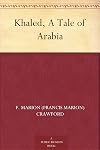
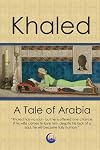
Khaled
by F. Marion Crawford
On This Page
Description
First published in 1891, this is an oriental romance written in the style of the Arabian Nights which tells the story of a genie ("genius" is Crawford's word) who becomes human. It is said to be Crawford's favourite of his own works.Tags
Recommendations













Member Reviews
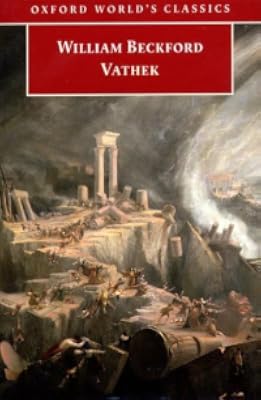
The obvious comparison with Khaled is to Vathek, the other Arabian Nights-esque novel in the Ballantine Adult Fantasy series.
Unlike that ridiculous trashfire of a manic episode pretending to be a novel, Khaled is actually a well-written, interesting, and entertaining ride through a very simple story with something poignant to say about the nature of love and affection. Crawford also, unlike the author of Vathek, can convincingly fake the idea that his story is taking place in arabia and knows a couple details of islam and old middle eastern stories. I'd read more of Crawford's novels.
It has some elements that unfortunately aged super-poorly (unquestioning of slavery, treating women like property), but you expect that in a book from the show more late 1800s. show less
Unlike that ridiculous trashfire of a manic episode pretending to be a novel, Khaled is actually a well-written, interesting, and entertaining ride through a very simple story with something poignant to say about the nature of love and affection. Crawford also, unlike the author of Vathek, can convincingly fake the idea that his story is taking place in arabia and knows a couple details of islam and old middle eastern stories. I'd read more of Crawford's novels.
It has some elements that unfortunately aged super-poorly (unquestioning of slavery, treating women like property), but you expect that in a book from the show more late 1800s. show less
One of F. Marion Crawford's two masterworks of full-length fantasy fiction. The other is "The Witch of Prague." In the introduction to this edition, Lin Carter proclaims that work tiresome. I disagree, but I understand. "The Witch of Prague" is Gothic and weird in a particularly Gothic way. There's sort of a philosophical purpose that must confuse some readers, a heaviness of tone that will repel many.
Nothing like that will be found in "Khaled: A Tale of Arabia." This is a tale as if Sheherazade herself spun it, with magic, and religion, and mystery, and romance, and derring-do in equal measure. And one great, unforgettable character, a murderous Christian woman. The eponymous djinn, Khaled, becomes mortal to earn the love of a show more princess. As one of the genie he had saved this beautiful princess, and thus gained attention of the Asrael, angel of Death. And with the boon of humanity he gets a shot at immortality. It sounds more complicated than it is.
The tale is a delight, and one of the author's own favorites. show less
Nothing like that will be found in "Khaled: A Tale of Arabia." This is a tale as if Sheherazade herself spun it, with magic, and religion, and mystery, and romance, and derring-do in equal measure. And one great, unforgettable character, a murderous Christian woman. The eponymous djinn, Khaled, becomes mortal to earn the love of a show more princess. As one of the genie he had saved this beautiful princess, and thus gained attention of the Asrael, angel of Death. And with the boon of humanity he gets a shot at immortality. It sounds more complicated than it is.
The tale is a delight, and one of the author's own favorites. show less
Set in the world of the Arabian Nights, this is the story of a hard-working djinn named Khaled. He is so conscientious that, while watching the parade of princes and sultans seeking the hand of the lovely Princess Zehowah, he takes an Indian prince, who was about to win Zehowah’s hand in marriage, into the desert and kills him. Khaled’s punishment is mitigated by the fact the prince was not a Muslim, and would have treated Zehowah badly back home. He is sent to Earth as a man, and his task is to win Zehowah’s love, in order to gain a soul and enter paradise.
Khaled has nothing to offer Zehowah in the way of silks and jewels, but she decides to marry him (her father, a Sultan, lets her decide) as a political union. There is much show more talk between them about the real meaning of love. Khaled conquers other tribes, and brings Zehowah more gold and riches, hoping to win her heart, but it doesn’t work. Also taken in battle is Almasta, a woman from Central Asia with flaming red hair. She is given to a local sheik, to be one of his wives. The sheik is found dead. Almasta is given to Zehowah’s father, the Sultan, as one of his wives. He is found dead the next morning, without a mark on him. She is then given to Abdullah, sheik of a tribe of Bedouins camping outside the city. Khaled, now the Sultan, makes it very clear that if Abdullah should suffer an untimely demise, Almasta will be the next one to die.
Abdullah hatches a plot to force Khaled from the Sultanship. His men spread out all over the city, spreading whispers about Khaled. They say that he is a Shiite in a Sunni country, that no one knows his father’s name or the name of his tribe, and that he will hand the city over to the Persians. A member of Abdullah’s tribe tells his cousin, the sheik of the beggars inside the city, and a counter-plan is hatched to keep Abdullah under surveillance at all times while he is in the city. At a convenient moment, Abdullah is to be kidnapped, and held until after the time that he told his followers that he will open up the castle, from the inside, and give away the riches within. Khaled knows nothing about the counter-plan, because he expects to be killed by Abdullah’s men, or captured and then killed.
Few novels have been written about the Arabian Nights; fewer still, that are really good and worth reading. If you can find a copy, the reader will not go wrong with this one. show less
Khaled has nothing to offer Zehowah in the way of silks and jewels, but she decides to marry him (her father, a Sultan, lets her decide) as a political union. There is much show more talk between them about the real meaning of love. Khaled conquers other tribes, and brings Zehowah more gold and riches, hoping to win her heart, but it doesn’t work. Also taken in battle is Almasta, a woman from Central Asia with flaming red hair. She is given to a local sheik, to be one of his wives. The sheik is found dead. Almasta is given to Zehowah’s father, the Sultan, as one of his wives. He is found dead the next morning, without a mark on him. She is then given to Abdullah, sheik of a tribe of Bedouins camping outside the city. Khaled, now the Sultan, makes it very clear that if Abdullah should suffer an untimely demise, Almasta will be the next one to die.
Abdullah hatches a plot to force Khaled from the Sultanship. His men spread out all over the city, spreading whispers about Khaled. They say that he is a Shiite in a Sunni country, that no one knows his father’s name or the name of his tribe, and that he will hand the city over to the Persians. A member of Abdullah’s tribe tells his cousin, the sheik of the beggars inside the city, and a counter-plan is hatched to keep Abdullah under surveillance at all times while he is in the city. At a convenient moment, Abdullah is to be kidnapped, and held until after the time that he told his followers that he will open up the castle, from the inside, and give away the riches within. Khaled knows nothing about the counter-plan, because he expects to be killed by Abdullah’s men, or captured and then killed.
Few novels have been written about the Arabian Nights; fewer still, that are really good and worth reading. If you can find a copy, the reader will not go wrong with this one. show less
An oriental fantasy romance about a jinni, genie, who receives a mortal soul only if he can win the love of his wife, Zehowah. After killing a man, Khaled is cursed to live as a human in the desert, navigating love, duty, and political intrigue to earn humanity. He marries Zehowah but is initially a stranger to her, needing to prove his devotion to earn her true love before dying.
Wow, what an absolutely great plot summary the other reviewer wrote! I might add that it's a fun read too.
Ratings
Members
- Recently Added By
Lists

Ballantine Adult Fantasy Series
85 works; 8 members
Author Information

181+ Works 1,727 Members
F. Marion Crawford was born on August 2, 1854, in Bagni de Lucca, Tuscany, Italy. He was the son of the American sculptor Thomas Crawford. He was educated by a French governess; then at St. Paul's School, Concord, N.H.; in the quiet country village of Hatfield Regis, under an English tutor; at Trinity College, Cambridge, where they thought him to show more become a mathematician; at Heidelberg and Karlsruhe, and at the University of Rome, where a special interest in Oriental languages sent him to India with the idea of preparing for a professorship. He spent a short time as a newspaper editor there. His first novel, Mr. Isaacs, was published in 1882. During his lifetime, he wrote over forty novels and one play, Francesca da Rimini. His novels include Dr. Claudius, A Roman Singer, A Cigarette Maker's Romance, The Witch of Prague, The Heart of Rome, and The Diva's Ruby. He died on April 9, 1909. (Bowker Author Biography) show less
Some Editions
Series
Belongs to Publisher Series
Work Relationships
Is contained in
The Witch of Prague and Other Crawford Horror Classics: The Screaming Skull, The Doll's Ghost, The Upper Berth, Khaled: A Tale of Arabia, For the Blood Is the Life, Man Overboard! by F. Marion Crawford
Common Knowledge
Classifications
Statistics
- Members
- 129
- Popularity
- 251,513
- Reviews
- 5
- Rating
- (3.95)
- Languages
- English, Spanish
- Media
- Paper, Audiobook, Ebook
- ISBNs
- 13
- ASINs
- 6