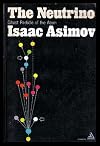
The Neutrino: Ghost Particle of the Atom
by Isaac Asimov
On This Page
Tags
Recommendations


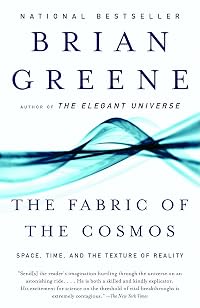
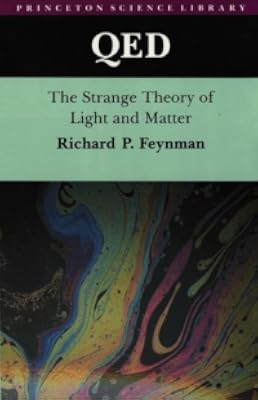
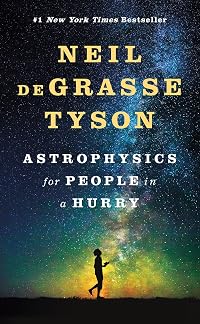


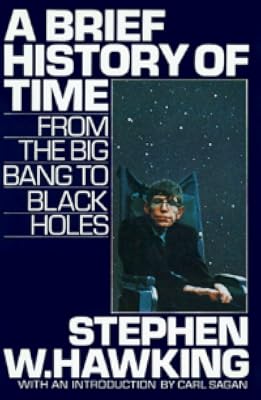












Member Recommendations
nillacat Explanation of a key theory of modern physics by a master teacher.
nillacat Charming presentation of some concepts of Quantum Physics. It is an entertainment, not an education; that is not a fault. It inspires interest.

themulhern The subject of "The Neutrino" is neutrinos, but it is just as much about the process of scientific enquiry as is "The Ring of Truth". Also, Morrison is an author of "The Ring of Truth" but appears as a practicing physicist in "The Neutrino" in the chapter on astronomy.
Member Reviews
In his usual thorough, graceful, magisterial manner
Isaac Asimov describes the discover of the Neutrino, a
particle which, invented to make the bookkeeping come
out, delightfully deigned to exist.
The first half of this short book describes the nature
of the scientific endeavor: careful observation,
inference and generalization of principles, which guide
further observation and theorizing. These
generalizations, labeled Laws of Nature, are so useful
that when new observations seem to violate a
well-established law, every effort is made to adjust and
preserve it by coming up with explanations for the new
phenomena that are in accord with the established
principles. Only occasionally must these laws be
scrapped entire. And sometimes they show more guide theoreticians
to new science.
So with the Neutrino, a particle so small and
standoffish that it is very difficult to observe: huge
numbers of them stream from the Sun and pass through the
Earth without interaction with any other forms of
matter, as though the Earth were not there at all. But
certain neucleonic interactions could not be properly
accounted for; a small amount of energy and linear and
angular momenta always seemed to go missing: the theory
requires these properties be conversed, but small
amounts could not be measured. To preserve the
conservation laws, the Neutrino was postulated -
massless and without charge, but bearing the missing
kinetic energy and momenta.
And having been predicted, it was in time observed.
The book was published in 1966 so the catalogue of
physical facts is no longer complete and correct: there
is a family of neutrinos and they are not quite massless
and their interactions are complex and fascinating. But
these are incidental matters to the lay reader, who may
come away from this book with an appeciation for the nature
of scientific work, the interplay of observation, intuition,
deduction, imagination and aesthetic sensibility by which
the working of nature may be increasingly deeply understood. show less
Isaac Asimov describes the discover of the Neutrino, a
particle which, invented to make the bookkeeping come
out, delightfully deigned to exist.
The first half of this short book describes the nature
of the scientific endeavor: careful observation,
inference and generalization of principles, which guide
further observation and theorizing. These
generalizations, labeled Laws of Nature, are so useful
that when new observations seem to violate a
well-established law, every effort is made to adjust and
preserve it by coming up with explanations for the new
phenomena that are in accord with the established
principles. Only occasionally must these laws be
scrapped entire. And sometimes they show more guide theoreticians
to new science.
So with the Neutrino, a particle so small and
standoffish that it is very difficult to observe: huge
numbers of them stream from the Sun and pass through the
Earth without interaction with any other forms of
matter, as though the Earth were not there at all. But
certain neucleonic interactions could not be properly
accounted for; a small amount of energy and linear and
angular momenta always seemed to go missing: the theory
requires these properties be conversed, but small
amounts could not be measured. To preserve the
conservation laws, the Neutrino was postulated -
massless and without charge, but bearing the missing
kinetic energy and momenta.
And having been predicted, it was in time observed.
The book was published in 1966 so the catalogue of
physical facts is no longer complete and correct: there
is a family of neutrinos and they are not quite massless
and their interactions are complex and fascinating. But
these are incidental matters to the lay reader, who may
come away from this book with an appeciation for the nature
of scientific work, the interplay of observation, intuition,
deduction, imagination and aesthetic sensibility by which
the working of nature may be increasingly deeply understood. show less
I expect that this will be what I have learned to expect from Asimov. The ostensible subject is the neutrino, but he'll take a long time getting to it, recycling work that he's done for other books. But his writing is generally pleasant, clear, and pithy, and even though I "know this stuff" I don't mind reading about if from a slightly different perspective.
Detailed review:
Introduction: The Riddle of the Universe
Chapter 1: Momentum
A good discussion of momentum, using mostly billiard ball examples. Includes a discussion of angular momentum and a verbal mathematical formula: angular momentum is mass times rotational velocity time the square of the average distance from the axis of rotation. There are a lot of assumptions about uniformity show more in that definition, obviously. TODO: Work out angular momentum w/ a bit of calculus.
Chapter 2: Energy
* Conservation of Mass
We rely on this, and it was really Lavoisier who did the good initial work.
* Conservation of Energy
"mechanical equivalent of heat" converting energy that can be measured in ergs into calories.
* Universal Gravitation
Newton defines his law and it works for the planets. William Herschel observes binary stars whose movement can be studied. Using the law of universal gravitation it is possible to deduce from their orbits other facts about the stars. I have never tried to deduce properties of orbiting bodies from their orbits. The solar system has a lot of angular momentum, a fact which requires some explaining.
* The Sun's Energy
The solar constant is 1.97 cal / cm^2 / min. At the radius of the earth, the amount of energy passing through a square centimeter per minute in 1.97cal. That's 5.6 * 10^27 cal/min. How does the sun produce all that energy?
Hypothesis 1: Coal Fire. Even something as big as the sun would burn to nothing in 1500 years. Not a coal fire, then.
Hypothesis 2: Meteorites are falling into the sun at a great rate, roughly 100 trillion tons every minutes. It seems unlikely that there is that amount of stuff flying around in space. Wouldn't some of it have hit the earth? Also, this would increase the mass of the sun by about 1% every 300,000 years. This would cause the earth's orbit to decrease and it's solar year to decrease by about 2 seconds every year. This has not happened.
Hypothesis 3: By Helmholtz. The sun is gradually collapsing on itself. But, to meet this energy budget, the sun's radius must have been roughly the same as the earth current orbit 18,000,000 years ago. That just doesn't leave enough time for geological processes on earth to have proceeded to their current state. So, that doesn't work either.
Chapter 3: Atomic Structure
* Radioactivity
Henri Bequerel notices that uranium is radioactive. alpha, beta, and gamma rays are classified. In 1900 Max Planck insists on quanta and the gamma rays are interesting because their wavelengths are really short, so their quanta are really large.
* The Atomic Nucleus
Radioactivity leads to thoughts of sub-atomic particles (oxymoron, ha-ha!). Tin has 10 isotopes!
* Nuclear Energy
In 1938, Hans Bethe did some theoretical calculations assuming that the sun is generating its energy by fusion of hydrogen to helium, and figured that if it started out as pure hydrogen and converted it all to helium that would require 100 billion years. That gives a large margin of error indeed.
Chapter 4: Mass-Energy
In which it gets weird. The fusion reaction 4H -> He make a single He atom with less mass than the the 4 H atoms had. The rest is expelled as energy, in what form? Here, we may surmise that a proton + an electron becomes a single neutron, and the neutron weighs less than its formerly existing components. Also, a gamma ray is just light, but it behaves like a particle in a collision with an electron, i.e., momentum is conserved.
Chapter 5: Electric Charge
About how the law of conservation of electric charge was found to hold in radioactive decay. Sub-atomic particles have spin and this is also conserved very nicely. When beta-decay occurs a neutron breaks down into a proton and an electron. The lost mass becomes energy as the electron is ejected at a high velocity. In isolation, a neutron will break down rather fast, it's half life is just a few minutes.
Chapter 6: Anti-particles
Introduces the concept of baryon number to help elucidate why a proton can't break down into a positron. How is a neutron different from an anti-neutron, since they can't have opposite charges? The orientation of their spin, apparently.
At this point we have arrived at four baryons and three leptons. What next?
Chapter 7: Enter the Neutrino
Well, when beta-decay occurs, it looks like mass is just totally lost. Is there another particle being ejected at the same time? Well, if we postulated just the right particle, mass-less, without charge, w/ just the right properties, then we would get all the conservation laws to work out.
And, we could invent a new one, conservation of lepton number? But, will we ever manage to locate that particle, or is it just imaginary?!! show less
Detailed review:
Introduction: The Riddle of the Universe
Chapter 1: Momentum
A good discussion of momentum, using mostly billiard ball examples. Includes a discussion of angular momentum and a verbal mathematical formula: angular momentum is mass times rotational velocity time the square of the average distance from the axis of rotation. There are a lot of assumptions about uniformity show more in that definition, obviously. TODO: Work out angular momentum w/ a bit of calculus.
Chapter 2: Energy
* Conservation of Mass
We rely on this, and it was really Lavoisier who did the good initial work.
* Conservation of Energy
"mechanical equivalent of heat" converting energy that can be measured in ergs into calories.
* Universal Gravitation
Newton defines his law and it works for the planets. William Herschel observes binary stars whose movement can be studied. Using the law of universal gravitation it is possible to deduce from their orbits other facts about the stars. I have never tried to deduce properties of orbiting bodies from their orbits. The solar system has a lot of angular momentum, a fact which requires some explaining.
* The Sun's Energy
The solar constant is 1.97 cal / cm^2 / min. At the radius of the earth, the amount of energy passing through a square centimeter per minute in 1.97cal. That's 5.6 * 10^27 cal/min. How does the sun produce all that energy?
Hypothesis 1: Coal Fire. Even something as big as the sun would burn to nothing in 1500 years. Not a coal fire, then.
Hypothesis 2: Meteorites are falling into the sun at a great rate, roughly 100 trillion tons every minutes. It seems unlikely that there is that amount of stuff flying around in space. Wouldn't some of it have hit the earth? Also, this would increase the mass of the sun by about 1% every 300,000 years. This would cause the earth's orbit to decrease and it's solar year to decrease by about 2 seconds every year. This has not happened.
Hypothesis 3: By Helmholtz. The sun is gradually collapsing on itself. But, to meet this energy budget, the sun's radius must have been roughly the same as the earth current orbit 18,000,000 years ago. That just doesn't leave enough time for geological processes on earth to have proceeded to their current state. So, that doesn't work either.
Chapter 3: Atomic Structure
* Radioactivity
Henri Bequerel notices that uranium is radioactive. alpha, beta, and gamma rays are classified. In 1900 Max Planck insists on quanta and the gamma rays are interesting because their wavelengths are really short, so their quanta are really large.
* The Atomic Nucleus
Radioactivity leads to thoughts of sub-atomic particles (oxymoron, ha-ha!). Tin has 10 isotopes!
* Nuclear Energy
In 1938, Hans Bethe did some theoretical calculations assuming that the sun is generating its energy by fusion of hydrogen to helium, and figured that if it started out as pure hydrogen and converted it all to helium that would require 100 billion years. That gives a large margin of error indeed.
Chapter 4: Mass-Energy
In which it gets weird. The fusion reaction 4H -> He make a single He atom with less mass than the the 4 H atoms had. The rest is expelled as energy, in what form? Here, we may surmise that a proton + an electron becomes a single neutron, and the neutron weighs less than its formerly existing components. Also, a gamma ray is just light, but it behaves like a particle in a collision with an electron, i.e., momentum is conserved.
Chapter 5: Electric Charge
About how the law of conservation of electric charge was found to hold in radioactive decay. Sub-atomic particles have spin and this is also conserved very nicely. When beta-decay occurs a neutron breaks down into a proton and an electron. The lost mass becomes energy as the electron is ejected at a high velocity. In isolation, a neutron will break down rather fast, it's half life is just a few minutes.
Chapter 6: Anti-particles
Introduces the concept of baryon number to help elucidate why a proton can't break down into a positron. How is a neutron different from an anti-neutron, since they can't have opposite charges? The orientation of their spin, apparently.
At this point we have arrived at four baryons and three leptons. What next?
Chapter 7: Enter the Neutrino
Well, when beta-decay occurs, it looks like mass is just totally lost. Is there another particle being ejected at the same time? Well, if we postulated just the right particle, mass-less, without charge, w/ just the right properties, then we would get all the conservation laws to work out.
And, we could invent a new one, conservation of lepton number? But, will we ever manage to locate that particle, or is it just imaginary?!! show less
Not for the contemporary first time reader; the science is out of date. But, this was one of the very first nonfiction science books I read for fun because liked the author and it started me on a roll. Very approachable. And to this day still fascinated by Neutrinos.
Ratings
Members
- Recently Added By
Author Information

2,398+ Works 293,790 Members
Isaac Asimov was born in Petrovichi, Russia, on January 2, 1920. His family emigrated to the United States in 1923 and settled in Brooklyn, New York, where they owned and operated a candy store. Asimov became a naturalized U.S. citizen at the age of eight. As a youngster he discovered his talent for writing, producing his first original fiction at show more the age of eleven. He went on to become one of the world's most prolific writers, publishing nearly 500 books in his lifetime. Asimov was not only a writer; he also was a biochemist and an educator. He studied chemistry at Columbia University, earning a B.S., M.A. and Ph.D. In 1951, Asimov accepted a position as an instructor of biochemistry at Boston University's School of Medicine even though he had no practical experience in the field. His exceptional intelligence enabled him to master new systems rapidly, and he soon became a successful and distinguished professor at Columbia and even co-authored a biochemistry textbook within a few years. Asimov won numerous awards and honors for his books and stories, and he is considered to be a leading writer of the Golden Age of science fiction. While he did not invent science fiction, he helped to legitimize it by adding the narrative structure that had been missing from the traditional science fiction books of the period. He also introduced several innovative concepts, including the thematic concern for technological progress and its impact on humanity. Asimov is probably best known for his Foundation series, which includes Foundation, Foundation and Empire, and Second Foundation. In 1966, this trilogy won the Hugo award for best all-time science fiction series. In 1983, Asimov wrote an additional Foundation novel, Foundation's Edge, which won the Hugo for best novel of that year. Asimov also wrote a series of robot books that included I, Robot, and eventually he tied the two series together. He won three additional Hugos, including one awarded posthumously for the best non-fiction book of 1995, I. Asimov. "Nightfall" was chosen the best science fiction story of all time by the Science Fiction Writers of America. In 1979, Asimov wrote his autobiography, In Memory Yet Green. He continued writing until just a few years before his death from heart and kidney failure on April 6, 1992. (Bowker Author Biography) show less
Common Knowledge
- Original publication date
- 1966
- People/Characters
- Philip Morrison
Classifications
Statistics
- Members
- 142
- Popularity
- 231,025
- Reviews
- 3
- Rating
- (4.00)
- Languages
- English, German
- Media
- Paper
- ISBNs
- 4
- ASINs
- 2