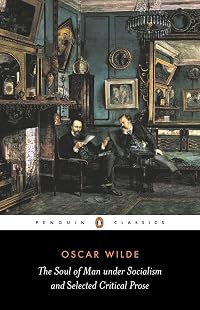
The Soul of Man Under Socialism and Selected Critical Prose (Penguin Classics)
by Oscar Wilde 
On This Page
Description
Selection includes The Portrait of Mr W.H., Wilde's defence of Dorian Gray, reviews, and the writings from 'Intentions' (1891)- 'The Decay of Lying, 'Pen, Pencil, Poison', and 'The Critic as Artist'. Wilde is familiar to us as the ironic critic behind the social comedies, as the creator of the beautiful and doomed Dorian Gray, as the flamboyant aesthete and the demonised homosexual. This volume presents us with a different Wilde. Wilde emerges here as a deep and serious reader of literature show more and philosophy, and an eloquent and original thinker about society and art. show lessTags
Recommendations








Member Reviews
Focusing on "The Critic as Artist," because space + time––
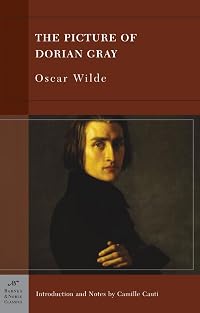
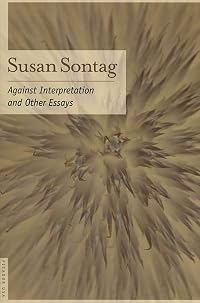
Oscar Wilde’s approach to the criticism of art is one that posits that art and beauty are their own ends, just as Kant does. “All art is quite useless,” Wilde writes as the final word in the Preface to The Picture of Dorian Gray, and he argues in favor of a disinterested appreciation of art. For Wilde, the critic ought not impose an ideological framework upon art, but “treat the work of art simply as a starting-point for a new creation” (239). Wilde makes the case for the opposite of the Horatian view that states the purpose of art is to delight and instruct, or in Matthew Arnold’s estimation that art is to ennoble. The question of aesthetic judgement, of show more aesthetic taste is also a question of critical judgement—a question of interpretation. Wilde says, “the critic will indeed be an interpreter, but he will not be an interpreter in the sense of one who simply repeats in another form a message that has been put into his lips to say” (245) and describes criticism as “recognizing no position as final, and refusing to bind itself by the shallow shibboleths of any sect or school, creates that serene philosophic temper which loves truth for its own sake, and loves it not the less because it knows it to be unattainable” (276). Art and truth, in Wilde’s estimation, are ends in and of themselves. And, like Kant’s ideal of beauty qua beauty that only exists in the realm of ideas, art and truth are to be valued as ends, even if such an ideal is unattainable. In this, as in many other instances when thinking of meta-criticism, I am reminded that Susan Sontag splits the difference when in “Against Interpretation” she writes that while in some cultural instances, “interpretation is a liberating act,” in a culture where there is an undue emphasis on the “hypertrophy” of the intellect (what in Kant’s view would be “[judging] objects merely according to concepts” [62]) “interpretation is the revenge of the intellect upon art.”
I think of this often—whenever I read articles in journals or academic literary criticism. I think of this when in a Milton class, I expressed awe at the beauty of a particular turn of phrase that Milton uses in Paradise Lost (“the womb of uncreated night”) and was laughed at by the professor. I think of this in theory classes, the professors of which often respond to poetic critical prose in the style of Eric Auerbach, William Empson, or Cleanth Brooks with condescension. “We do not write like this anymore,” they say with no small degree of glee which rather corroborates Sontag’s pithy remark about the small minded and intellectual revenge. I think of this when I teach and my students (the majority of whom are not in the humanities) struggle to understand how to make an argument about literature because they’re frightened of getting it wrong. I tell them that I want their point of view—I want their bias.
I struggle with a critical tradition that seems to be a wholesale insistence that beauty is irrelevant and politics is all. To be clear: that is not to say that art is apolitical--it is very political, but that is not all it is and its politics certainly do not determine whether a work is successful as a work of art. [What a tender world it would be if it were...]
If art were only political without an aesthetic dimension, then how could we possibly make a distinction between art and propaganda? How do we recover art that has been made to speak for politics to which it would rather not lend itself?
I want the critic to tell me why a work is beautiful, why it moves, why it hurts, why it endures—not only why it is moral, why it is immoral, what purpose it does or does not or may serve. And I most certainly reject the notion that the critic ought to be the arbiter of what should or should not be read. show less
Oscar Wilde’s approach to the criticism of art is one that posits that art and beauty are their own ends, just as Kant does. “All art is quite useless,” Wilde writes as the final word in the Preface to The Picture of Dorian Gray, and he argues in favor of a disinterested appreciation of art. For Wilde, the critic ought not impose an ideological framework upon art, but “treat the work of art simply as a starting-point for a new creation” (239). Wilde makes the case for the opposite of the Horatian view that states the purpose of art is to delight and instruct, or in Matthew Arnold’s estimation that art is to ennoble. The question of aesthetic judgement, of show more aesthetic taste is also a question of critical judgement—a question of interpretation. Wilde says, “the critic will indeed be an interpreter, but he will not be an interpreter in the sense of one who simply repeats in another form a message that has been put into his lips to say” (245) and describes criticism as “recognizing no position as final, and refusing to bind itself by the shallow shibboleths of any sect or school, creates that serene philosophic temper which loves truth for its own sake, and loves it not the less because it knows it to be unattainable” (276). Art and truth, in Wilde’s estimation, are ends in and of themselves. And, like Kant’s ideal of beauty qua beauty that only exists in the realm of ideas, art and truth are to be valued as ends, even if such an ideal is unattainable. In this, as in many other instances when thinking of meta-criticism, I am reminded that Susan Sontag splits the difference when in “Against Interpretation” she writes that while in some cultural instances, “interpretation is a liberating act,” in a culture where there is an undue emphasis on the “hypertrophy” of the intellect (what in Kant’s view would be “[judging] objects merely according to concepts” [62]) “interpretation is the revenge of the intellect upon art.”
I think of this often—whenever I read articles in journals or academic literary criticism. I think of this when in a Milton class, I expressed awe at the beauty of a particular turn of phrase that Milton uses in Paradise Lost (“the womb of uncreated night”) and was laughed at by the professor. I think of this in theory classes, the professors of which often respond to poetic critical prose in the style of Eric Auerbach, William Empson, or Cleanth Brooks with condescension. “We do not write like this anymore,” they say with no small degree of glee which rather corroborates Sontag’s pithy remark about the small minded and intellectual revenge. I think of this when I teach and my students (the majority of whom are not in the humanities) struggle to understand how to make an argument about literature because they’re frightened of getting it wrong. I tell them that I want their point of view—I want their bias.
I struggle with a critical tradition that seems to be a wholesale insistence that beauty is irrelevant and politics is all. To be clear: that is not to say that art is apolitical--it is very political, but that is not all it is and its politics certainly do not determine whether a work is successful as a work of art. [What a tender world it would be if it were...]
If art were only political without an aesthetic dimension, then how could we possibly make a distinction between art and propaganda? How do we recover art that has been made to speak for politics to which it would rather not lend itself?
I want the critic to tell me why a work is beautiful, why it moves, why it hurts, why it endures—not only why it is moral, why it is immoral, what purpose it does or does not or may serve. And I most certainly reject the notion that the critic ought to be the arbiter of what should or should not be read. show less
Oscar Wilde's critical writings make for a delightful and infuriating read: delightful because his effervescent, epigrammatic style sweeps you along, and infuriating because so much of what he says is total crap.
Take "The Decay of Lying." This is a Platonic dialogue in which Wilde's spokesperson, Vivian, tries to liberate Romance and Imagination in literature from the "prison-house of realism" that has confined 19th-c. literature, and especially fiction, to a dreary representation of dreary reality: we have "sold our birthright for a mess of facts." Vivian is quite entertaining and insightful when he is skewering the great realists of the 19th-c., including Dickens, Zola ("if he has not got genius, he can at least be dull") and James show more ("James writes fiction as if it were a painful duty"). As long as Wilde is exploring the limitations of realist fiction, he is on firm ground, but once he moves to a larger, abstract theory of art his pronouncements become increasingly hollow and superficial. His argument that, as English drama became more life-like, all the life drained out of it, has the ring of truth; but when he attempts to ground this anti-realist aesthetic in Euripides, of all people ("It is exactly because Hecuba is nothing to us that her sorrows are such an admirable motive for tragedy"), one realizes one is being duped. As almost everybody knows, Euripides was the most Dickensian of Greek tragic dramatists, frequently maligned for his sentimentality, social commentary, and depiction of Homeric heroes as ordinary men and women; indeed, the two extant Greek tragedies in which Hecuba appears, Hecuba and The Trojan Women), are plays by Euripides in which the dramatist used Homeric myth to comment upon the Peloponnesian War.
As this example suggests, it takes only a moment's reflection to discover the fallacies just beneath the epigrammatic surface brilliance of Vivian's argument, which explains why the epigrammatic surface brilliance is so utterly necessary for this essay to "work." Vivian is a lot like Lord Henry Wotton in The Picture of Dorian Gray, spewing clever epigrams that are sometimes astute, sometimes glib; but while Dorian is a great masterpiece because it invites us to test Henry's pronouncements against the unfolding of the narrative, here we are, I think, invited to surrender before Vivian's barrage of wit.
The ultimate aim of the dialogue is to lay the groundwork for a formalist theory of literature in which the literary work is an autonomous, self-sufficient, quasi-sacred object: "Art finds her own perfection within, and not outside of herself" and so forth. The New Critics would approve. But when he reaches for examples they don't add up. Life imitates art rather than the reverse, says Vivian; the human race has grown melancholy because we are all copying "a puppet" named Hamlet. It could not be that in Hamlet Shakespeare was creating a literary representation of a sensitive and intelligent person responding to the post-Copernican decay of established belief systems that we, also, must find a way to live with. Moreover, when Vivian says that Robespierre was an imitation of Rousseau, he fails to account for the fact that Rousseau is not only a literary artist but also a political theorist: putting a political theory into practice is somewhat different from life imitating art.
As the dialogue continues, Vivian's assertions become increasingly naive and absurd. One of his most provocative claims is to suggest that even Nature imitates Art insofar as Nature only exists for humans as it is perceived: "external Nature...imitates Art. The only effects that she can show us are effects that we have already seen through poetry, or in paintings." I find this an exciting and broadly persuasive suggestion, but he backs it up with an absurd example: "There may have been fogs for centuries in London. I dare say there were. But no one saw them. . .They did not exist till Art had invented them." Perhaps; or, perhaps, the London peasouper did not exist until it was invented by industrial pollution. And then there is the litany of obviously spurious anecdotes about life imitating art that, I suppose, are intended to illustrate the art of lying.
Then there are outright contradictions. Greek art, he says, does not imitate life. How do we know? Because the depictions of men and women in Greek sculpture do not resemble what we find in "an authority, like Aristophanes." Isn't Aristophanes also a Greek artist? Yet here he is treated as a reliable reporter of mundane reality against which the imaginative richness of Greek plastic art can be measured.
Throughout, Wilde's (or Vivian's) aesthetic theory rests upon a somewhat annoying dichotomy between the lovely refinement of the cultured class and the sordid lives of the bestial poor, a dichotomy that Wilde considers an unfortunate effect of 19th-c. capitalism but which he nevertheless presents as a social fact rather than a broad categorical generalization. While gritting my teeth through these Arnoldian stereotypes of the "lower orders," I could not help but think of the post-Earnest Wilde, flush with cash, spending it on destitute male prostitutes in London's slums. Wilde's elitism is even more central to The Soul of Man under Socialism, a libertarian-socialist tract about which I will write a few words at a later time. . . show less
Take "The Decay of Lying." This is a Platonic dialogue in which Wilde's spokesperson, Vivian, tries to liberate Romance and Imagination in literature from the "prison-house of realism" that has confined 19th-c. literature, and especially fiction, to a dreary representation of dreary reality: we have "sold our birthright for a mess of facts." Vivian is quite entertaining and insightful when he is skewering the great realists of the 19th-c., including Dickens, Zola ("if he has not got genius, he can at least be dull") and James show more ("James writes fiction as if it were a painful duty"). As long as Wilde is exploring the limitations of realist fiction, he is on firm ground, but once he moves to a larger, abstract theory of art his pronouncements become increasingly hollow and superficial. His argument that, as English drama became more life-like, all the life drained out of it, has the ring of truth; but when he attempts to ground this anti-realist aesthetic in Euripides, of all people ("It is exactly because Hecuba is nothing to us that her sorrows are such an admirable motive for tragedy"), one realizes one is being duped. As almost everybody knows, Euripides was the most Dickensian of Greek tragic dramatists, frequently maligned for his sentimentality, social commentary, and depiction of Homeric heroes as ordinary men and women; indeed, the two extant Greek tragedies in which Hecuba appears, Hecuba and The Trojan Women), are plays by Euripides in which the dramatist used Homeric myth to comment upon the Peloponnesian War.
As this example suggests, it takes only a moment's reflection to discover the fallacies just beneath the epigrammatic surface brilliance of Vivian's argument, which explains why the epigrammatic surface brilliance is so utterly necessary for this essay to "work." Vivian is a lot like Lord Henry Wotton in The Picture of Dorian Gray, spewing clever epigrams that are sometimes astute, sometimes glib; but while Dorian is a great masterpiece because it invites us to test Henry's pronouncements against the unfolding of the narrative, here we are, I think, invited to surrender before Vivian's barrage of wit.
The ultimate aim of the dialogue is to lay the groundwork for a formalist theory of literature in which the literary work is an autonomous, self-sufficient, quasi-sacred object: "Art finds her own perfection within, and not outside of herself" and so forth. The New Critics would approve. But when he reaches for examples they don't add up. Life imitates art rather than the reverse, says Vivian; the human race has grown melancholy because we are all copying "a puppet" named Hamlet. It could not be that in Hamlet Shakespeare was creating a literary representation of a sensitive and intelligent person responding to the post-Copernican decay of established belief systems that we, also, must find a way to live with. Moreover, when Vivian says that Robespierre was an imitation of Rousseau, he fails to account for the fact that Rousseau is not only a literary artist but also a political theorist: putting a political theory into practice is somewhat different from life imitating art.
As the dialogue continues, Vivian's assertions become increasingly naive and absurd. One of his most provocative claims is to suggest that even Nature imitates Art insofar as Nature only exists for humans as it is perceived: "external Nature...imitates Art. The only effects that she can show us are effects that we have already seen through poetry, or in paintings." I find this an exciting and broadly persuasive suggestion, but he backs it up with an absurd example: "There may have been fogs for centuries in London. I dare say there were. But no one saw them. . .They did not exist till Art had invented them." Perhaps; or, perhaps, the London peasouper did not exist until it was invented by industrial pollution. And then there is the litany of obviously spurious anecdotes about life imitating art that, I suppose, are intended to illustrate the art of lying.
Then there are outright contradictions. Greek art, he says, does not imitate life. How do we know? Because the depictions of men and women in Greek sculpture do not resemble what we find in "an authority, like Aristophanes." Isn't Aristophanes also a Greek artist? Yet here he is treated as a reliable reporter of mundane reality against which the imaginative richness of Greek plastic art can be measured.
Throughout, Wilde's (or Vivian's) aesthetic theory rests upon a somewhat annoying dichotomy between the lovely refinement of the cultured class and the sordid lives of the bestial poor, a dichotomy that Wilde considers an unfortunate effect of 19th-c. capitalism but which he nevertheless presents as a social fact rather than a broad categorical generalization. While gritting my teeth through these Arnoldian stereotypes of the "lower orders," I could not help but think of the post-Earnest Wilde, flush with cash, spending it on destitute male prostitutes in London's slums. Wilde's elitism is even more central to The Soul of Man under Socialism, a libertarian-socialist tract about which I will write a few words at a later time. . . show less
Ratings
Members
- Recently Added By
Author Information

1,763+ Works 120,942 Members
Flamboyant man-about-town, Oscar Wilde had a reputation that preceded him, especially in his early career. He was born to a middle-class Irish family (his father was a surgeon) and was trained as a scholarship boy at Trinity College, Dublin. He subsequently won a scholarship to Magdalen College, Oxford, where he was heavily influenced by John show more Ruskin and Walter Pater, whose aestheticism was taken to its radical extreme in Wilde's work. By 1879 he was already known as a wit and a dandy; soon after, in fact, he was satirized in Gilbert and Sullivan's Patience. Largely on the strength of his public persona, Wilde undertook a lecture tour to the United States in 1882, where he saw his play Vera open---unsuccessfully---in New York. His first published volume, Poems, which met with some degree of approbation, appeared at this time. In 1884 he married Constance Lloyd, the daughter of an Irish lawyer, and within two years they had two sons. During this period he wrote, among others, The Picture of Dorian Gray (1891), his only novel, which scandalized many readers and was widely denounced as immoral. Wilde simultaneously dismissed and encouraged such criticism with his statement in the preface, "There is no such thing as a moral or an immoral book. Books are well written or badly written. That is all." In 1891 Wilde published A House of Pomegranates, a collection of fantasy tales, and in 1892 gained commercial and critical success with his play, Lady Windermere's Fan He followed this comedy with A Woman of No Importance (1893), An Ideal Husband (1895), and his most famous play, The Importance of Being Earnest (1895). During this period he also wrote Salome, in French, but was unable to obtain a license for it in England. Performed in Paris in 1896, the play was translated and published in England in 1894 by Lord Alfred Douglas and was illustrated by Aubrey Beardsley. Lord Alfred was the son of the Marquess of Queensbury, who objected to his son's spending so much time with Wilde because of Wilde's flamboyant behavior and homosexual relationships. In 1895, after being publicly insulted by the marquess, Wilde brought an unsuccessful slander suit against the peer. The result of his inability to prove slander was his own trial on charges of sodomy, of which he was found guilty and sentenced to two years of hard labor. During his time in prison, he wrote a scathing rebuke to Lord Alfred, published in 1905 as De Profundis. In it he argues that his conduct was a result of his standing "in symbolic relations to the art and culture" of his time. After his release, Wilde left England for Paris, where he wrote what may be his most famous poem, The Ballad of Reading Gaol (1898), drawn from his prison experiences. Among his other notable writing is The Soul of Man under Socialism (1891), which argues for individualism and freedom of artistic expression. There has been a revived interest in Wilde's work; among the best recent volumes are Richard Ellmann's, Oscar Wilde and Regenia Gagnier's Idylls of the Marketplace , two works that vary widely in their critical assumptions and approach to Wilde but that offer rich insights into his complex character. (Bowker Author Biography) show less
Oscar Wilde has a Legacy Library. Legacy libraries are the personal libraries of famous readers, entered by LibraryThing members from the Legacy Libraries group.
Classifications
- Genres
- Literature Studies and Criticism, Fiction and Literature
- DDC/MDS
- 820.9 — Literature & rhetoric English & Old English literatures English and Old English (Anglo-Saxon) literatures History, description, critical appraisal of works in more than one form
- LCC
- PR5811 .D69 — Language and Literature English English Literature 19th century , 1770/1800-1890/1900
- BISAC
Statistics
- Members
- 161
- Popularity
- 202,042
- Reviews
- 2
- Rating
- (3.96)
- Languages
- English
- Media
- Paper, Ebook
- ISBNs
- 2
- ASINs
- 2