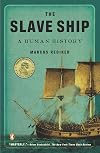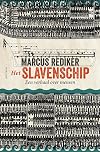
The Slave Ship: A Human History
by Marcus Rediker
On This Page
Description
For more than three centuries, slave ships carried millions of people from the coasts of Africa to the New World. Here, award-winning historian Rediker creates a detailed history of these vessels and the human drama acted out on their rolling decks. Rediker restores the slave ship to its rightful place alongside the plantation as a formative institution of slavery, as a place where a profound and still haunting history of race, class, and modern capitalism was made.--From publisher description.Tags
Recommendations
















































Member Reviews
Marcus Rediker's The Slave Ship: A Human History (Viking, 2007) explores the history of the transatlantic slave trade by concentrating on both the slave ship itself (which Rediker calls "a strange and potent combination of war machine, mobile prison, and factory") and also on the humans who populated the ships and paid for their voyages: the slaves themselves, the common sailors, the captains, and the bankrolling merchants. Rediker notes that while many histories of the slave trade have been written, the scholarship has been plagued by what novelist Stephen Unsworth termed the "violence of abstraction" - a reliance on numbers and statistics which serves to dehumanize slavery and those involved with its continuation.
At the end of his show more introduction, Rediker writes "[T]his has been a painful book to write, and if I have done any justice to the subject, it will be a painful book to read" (p. 13). He's right, but his following sentence is also correct: "There is no way around this, nor should there be." This is indeed a profoundly disturbing book, one which I had to put down for hours and in a couple cases even days at a time before I felt comfortable opening it again.
The first chapter is comprised of a series of vignettes showing some of the various gruesome, imaginative and horrifying ways slaves found to rebel on board the ships, or to take their own lives to end their suffering. Rediker goes on to provide a deep, thoughtful analysis of the ships used to haul human cargo, as well as one of the best overviews I've read of the origins of African slavery and an ethnographic look at the regions from which most slaves were 'obtained'.
Chapters in the middle of the book highlight three particular individuals: the slave Olaudah Equiano, sailor James Field Stanfield, and captain John Newton. This is also the best scholarly treatment of Newton I've read, as Rediker is able to cut through the myths about the man and examine his career in its totality. I had no idea, for example, that Newton was such a prolific writer while serving in the slave trade: Rediker suggests that between his letters, diaries and logbooks, Newton "may have written more from the decks of a slave ship - and more about what transpired on the decks of a slave ship - than has any other captain" (p. 158).
Following the targeted examples, Rediker takes captains, sailors and then slaves in a more general light, discussing the impact of merchants' orders on the way the captains carried our their missions, examining the terroristic nature of the captain's authority aboard ship (toward both sailors and slaves), and getting deep into the question of how the enslaved came to form a collective identity on the ships which in some cases prompted revolt or resistance.
Finally, Rediker briefly discusses the abolitionist movement as it emerged during the late 1790s, ably analyzing the spread of a particularly effective piece of propaganda, the image of the slave ship Brooks. He also works to remind readers of the important work done by leading abolitionist Thomas Clarkson (lately overshadowed by William Wilberforce and others), who spoke with hundreds of slave-trade sailors about their experiences on board the ships, working - Rediker argues - as an early sort of social historian.
Powerful, moving, and extremely well-written, Rediker's book should be read by anyone with an interest in human history. The range of sources and research is staggering, and the footnotes are both thorough and illuminating. With a minor reservation about some of the views expressed in the epilogue, I recommend this book very highly indeed.
http://philobiblos.blogspot.com/2007/10/book-review-slave-ship-human-history.htm... show less
At the end of his show more introduction, Rediker writes "[T]his has been a painful book to write, and if I have done any justice to the subject, it will be a painful book to read" (p. 13). He's right, but his following sentence is also correct: "There is no way around this, nor should there be." This is indeed a profoundly disturbing book, one which I had to put down for hours and in a couple cases even days at a time before I felt comfortable opening it again.
The first chapter is comprised of a series of vignettes showing some of the various gruesome, imaginative and horrifying ways slaves found to rebel on board the ships, or to take their own lives to end their suffering. Rediker goes on to provide a deep, thoughtful analysis of the ships used to haul human cargo, as well as one of the best overviews I've read of the origins of African slavery and an ethnographic look at the regions from which most slaves were 'obtained'.
Chapters in the middle of the book highlight three particular individuals: the slave Olaudah Equiano, sailor James Field Stanfield, and captain John Newton. This is also the best scholarly treatment of Newton I've read, as Rediker is able to cut through the myths about the man and examine his career in its totality. I had no idea, for example, that Newton was such a prolific writer while serving in the slave trade: Rediker suggests that between his letters, diaries and logbooks, Newton "may have written more from the decks of a slave ship - and more about what transpired on the decks of a slave ship - than has any other captain" (p. 158).
Following the targeted examples, Rediker takes captains, sailors and then slaves in a more general light, discussing the impact of merchants' orders on the way the captains carried our their missions, examining the terroristic nature of the captain's authority aboard ship (toward both sailors and slaves), and getting deep into the question of how the enslaved came to form a collective identity on the ships which in some cases prompted revolt or resistance.
Finally, Rediker briefly discusses the abolitionist movement as it emerged during the late 1790s, ably analyzing the spread of a particularly effective piece of propaganda, the image of the slave ship Brooks. He also works to remind readers of the important work done by leading abolitionist Thomas Clarkson (lately overshadowed by William Wilberforce and others), who spoke with hundreds of slave-trade sailors about their experiences on board the ships, working - Rediker argues - as an early sort of social historian.
Powerful, moving, and extremely well-written, Rediker's book should be read by anyone with an interest in human history. The range of sources and research is staggering, and the footnotes are both thorough and illuminating. With a minor reservation about some of the views expressed in the epilogue, I recommend this book very highly indeed.
http://philobiblos.blogspot.com/2007/10/book-review-slave-ship-human-history.htm... show less
This nonfiction book takes a scholarly yet accessible look at the Slave Ship trade over four hundred years of operation, mainly from the British and American perspective. It tells of the upheaval and transport of 12-14 million Africans, incorporating intense cruelty and deprivation, to the New World as slaves.
By the end of the book the point is made that the starting point of capital Globalization was the sale of humans as slaves. Indeed, reflecting on history, the basis of fiscally successful empires has always relied on cheap or free labour. Rediker emphasizes this exploitative aspect of capitalism.
Steel yourself for a horrifying account of barbarism, brutality, greed and disregard for the human life, both of sailor and slave. The show more reader is given the vantage point of understanding this horrific trade from the decks of the ships, and the book is supported by much archival material, including direct observational quotes from men of the times, often guilt-ridden, agonized or self-serving justifications.
This account is not for the faint-hearted. There are descriptions of the terrible conditions and treatment of the slaves on the ships; including the various methods and tortures used to control and contain. Also, the exploitation of sailors is described, showing the absolute power wielded by the ship's captain. and highlighting the utter disregard for basic human decency that these leaders repeatedly showed by their actions. Some of this book is extremely upsetting to read. In the end, the slave trade captains and the industrialists are revealed as the true villains of the trade.
Rediker uses the testimony from one slave captain who later became an abolitionist, to explain the mind-set of the cruel captain:
“It is unaccountable, but it is certainly true, that the moment a Guinea captain comes in sight of this [African] shore, the Demon cruelty seems to fix his residence within him”. Stanfield immortalizes this idea in a poem, which explains that if the captain seemed barbarous on the outward passage, he became positively demonic; his heart is colonized by cruelty. The illustration of this idea I leave for you to read in the book!
Rediker explains in his introduction the need for such continuing evaluation:
“I offer this study with the greatest reverence for those who suffered almost unthinkable violence, terror, and death, in the firm belief that we must remember that such horrors have always been, and remain, central to the making of global capitalism.
He concludes by quoting:
“What is the price of mass premature death? The price of exploitation, of unpaid labour; these are constituent elements of racism, especially when wedded to class oppression and they are with us still.
…these questions must be decided by a social movement for justice, led by the descendants of those who have suffered most from the legacy of the slave trade, slavery and the racism they spawned, joined by allies in a broader struggle to end the violence and terror that have always been central to the rise and continuing operation of capitalism.”
As we sit enjoying the fruits of our capitalist forebears, it pays to consider the origins and machinations that lead to our lifestyle and our fortunes! However, it has to be said that our human history is littered with innumerable examples of exploitation and cruelty, from the Crusades, through-out history, to the Holocaust and beyond. How can it all be repaired, repaid? Where do we draw a line in the sand. It is not, I think, as simple as Rediker concludes. show less
By the end of the book the point is made that the starting point of capital Globalization was the sale of humans as slaves. Indeed, reflecting on history, the basis of fiscally successful empires has always relied on cheap or free labour. Rediker emphasizes this exploitative aspect of capitalism.
Steel yourself for a horrifying account of barbarism, brutality, greed and disregard for the human life, both of sailor and slave. The show more reader is given the vantage point of understanding this horrific trade from the decks of the ships, and the book is supported by much archival material, including direct observational quotes from men of the times, often guilt-ridden, agonized or self-serving justifications.
This account is not for the faint-hearted. There are descriptions of the terrible conditions and treatment of the slaves on the ships; including the various methods and tortures used to control and contain. Also, the exploitation of sailors is described, showing the absolute power wielded by the ship's captain. and highlighting the utter disregard for basic human decency that these leaders repeatedly showed by their actions. Some of this book is extremely upsetting to read. In the end, the slave trade captains and the industrialists are revealed as the true villains of the trade.
Rediker uses the testimony from one slave captain who later became an abolitionist, to explain the mind-set of the cruel captain:
“It is unaccountable, but it is certainly true, that the moment a Guinea captain comes in sight of this [African] shore, the Demon cruelty seems to fix his residence within him”. Stanfield immortalizes this idea in a poem, which explains that if the captain seemed barbarous on the outward passage, he became positively demonic; his heart is colonized by cruelty. The illustration of this idea I leave for you to read in the book!
Rediker explains in his introduction the need for such continuing evaluation:
“I offer this study with the greatest reverence for those who suffered almost unthinkable violence, terror, and death, in the firm belief that we must remember that such horrors have always been, and remain, central to the making of global capitalism.
He concludes by quoting:
“What is the price of mass premature death? The price of exploitation, of unpaid labour; these are constituent elements of racism, especially when wedded to class oppression and they are with us still.
…these questions must be decided by a social movement for justice, led by the descendants of those who have suffered most from the legacy of the slave trade, slavery and the racism they spawned, joined by allies in a broader struggle to end the violence and terror that have always been central to the rise and continuing operation of capitalism.”
As we sit enjoying the fruits of our capitalist forebears, it pays to consider the origins and machinations that lead to our lifestyle and our fortunes! However, it has to be said that our human history is littered with innumerable examples of exploitation and cruelty, from the Crusades, through-out history, to the Holocaust and beyond. How can it all be repaired, repaid? Where do we draw a line in the sand. It is not, I think, as simple as Rediker concludes. show less
A good overview of the slave trade in general combined with a detailed survey of life on board. Interesting to learn that the white crew members were treated nearly as horribly as the black slaves. A very powerful book..
Well-researched and detailed description of the Atlantic slave trade & human relationships in the slave ship. Perhaps it could have been organized a little differently, because it gets very repetitive in stating the author's main points. However, the individual stories of slave trades & life at sea for the captives, sailors, and captain were very informative and moving.
Not a cohesive continuous story, but hundreds of unrelated short descriptions of the lives of sailors, slaves, merchants, captains, and the ships involved in the slave trade. Well researched, but one quickly gets the idea from the multiple examples that this was a shameful era. While clearly there was a common theme throughout the book, not having a common character or continuous story line failed to hold my interest.
Powerful topic; captures the horror. The only audio book in my collection. The audio edition is read by an actor with a wonderfully resonant voice, yet the reading lacks passion ... made it hard to stay engaged.
Rediker employed numerous resources to write this work that helps the reader understand the slave trade from start to end. Who contracted to build and ready a ship to be a floating prison. How found and who were the people who crewed these death ships? Who captained them? How were they paid? Where and how did they get the slaves? How was this human cargo maintained on the"middle passage"? How many made it to land, slaves and sailors, and in what condition? What happened to those who made land? Who fought to keep the slave ships, and who fought to outlaw them? This author answers all these questions with an objectively drawn account.
Members
- Recently Added By
Published Reviews
added by private library
Lists

Books about pirates
29 works; 10 members

Days of yarrr
13 works; 1 member

The Hive Recommends
62 works; 2 members
Author Information

16+ Works 2,903 Members
Marcus Rediker is Distinguished Professor of Atlantic History at the University of Pittsburgh and Senior Research Fellow at the Collge d'tudes mondiales in Paris. His books include The Many-Headed Hydra, Villains of All Nations, The Slave Ship, The Amistad Rebellion, and Outlaws of the Atlantic. Rediker is also the producer of the prize-winning show more documentary film Ghosts of Amistad: In the Footsteps of the Rebels (Tony Buba, director). He lives in Pittsburgh, Pennsylvania. show less
Some Editions
Awards and Honors
Series
Belongs to Publisher Series
Common Knowledge
- Canonical title
- The Slave Ship: A Human History
- Original title
- The Slave Ship: A Human History
- Original publication date
- 2007-10-04
- Important places
- Atlantic Ocean; Ghana (as Gold Coast); Caribbean Sea; Bight of Biafra
- Epigraph*
- /
- Dedication
- To Wendy, Zeke, and Eva, with love and hope
- First words
- Lying in the bottom of the canoe in three or four inches of dirty water with a woven mat thrown over her travel-weary body, the woman could feel the rhythmic pull of the paddles by the Bonny canoemen, but could not see where ... (show all)they were taking her.
- Last words
- (Click to show. Warning: May contain spoilers.)The long, violent passage of the slave ship might finally come to an end, and the "most magnificent drama" might become magnificent in an entirely new way.
- Publisher's editor
- Wendy Wolf; Ellen Garrison
- Blurbers
- Walker, Alice; Unsworth, Barry; Berlin, Ira; Manning, Patrick
- Original language
- English
*Some information comes from Common Knowledge in other languages. Click "Edit" for more information.
Classifications
- Genres
- History, Nonfiction, General Nonfiction
- DDC/MDS
- 306.362096 — Society, government, & culture Social sciences, sociology & anthropology Social Behavior - Dating, Marriage, Divorce Economic institutions Systems of labor Slavery Biography And History Biography And History Africa
- LCC
- HT1322 .R42 — Social sciences Communities. Classes. Races Communities. Classes. Races Classes Slavery
- BISAC
Statistics
- Members
- 860
- Popularity
- 31,769
- Reviews
- 8
- Rating
- (3.79)
- Languages
- 9 — Dutch, English, French, German, Hebrew, Italian, Portuguese, Spanish, Swedish
- Media
- Paper, Audiobook, Ebook
- ISBNs
- 23
- UPCs
- 1
- ASINs
- 6