On This Page
Description
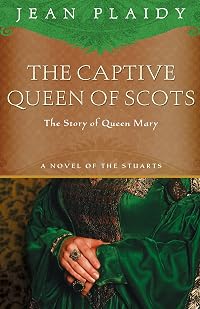
The haunting story of the beautiful—and tragic—Mary, Queen of Scots, as only legendary novelist Jean Plaidy could write itMary Stuart became Queen of Scotland at the tender age of six days old. Her French-born mother, the Queen Regent, knew immediately that the infant queen would be a vulnerable pawn in the power struggle between Scotland’s clans and nobles. So Mary was sent away from the land of her birth and raised in the sophisticated and glittering court of France. Unusually tall show more and slim, a writer of music and poetry, Mary was celebrated throughout Europe for her beauty and intellect. Married in her teens to the Dauphin François, she would become not only Queen of Scotland but Queen of France as well. But Mary’s happiness was short-lived. Her husband, always sickly, died after only two years on the throne, and there was no place for Mary in the court of the new king. At the age of twenty, she returned to... Historical Fiction. Literature. Fiction. show less
Tags
Recommendations






Member Reviews
I've always preferred stories about Queen Elizabeth I to those of her cousin, Mary, Queen of Scots, and this novel did not change my mind. If anything, it cemented my general contempt for the latter for all time.
That should by no means be taken as a statement about the quality of Royal Road to Fotheringay, which is textbook Jean Plaidy fictionalized biography. The novel takes us from Mary Stuart's early days as the toddler queen of Scotland, romping through various castles and monastaries with her "four Marys" (four little girls of noble birth, all of whom share her given name, who were raised along with her to give her company and, later on, servants) through her later upbringing in France as the intended bride of the Dauphin, the show more sickly boy who grew up (sort of) to be the short-reigning King Francis II, her disastrous second and third marriages, and then skips on to her infamously botched execution on the orders of her cousin Elizabeth I of England. A sequel, The Captive Queen of Scots, presumably covers the twenty or so years between the death of her third husband and Mary's own death, and will be read in due course. Probably. Once I'm done with gnashing my teeth over how much I wanted to slap Mary through most of this novel.
I had, of course, a similar experience reading Plaidy's two novels concerning Lucrezia Borgia last year. I'm not sure how similar these two heroines really were, but as Plaidy wrote them, both were spoiled, petted young things who grew up into pathological people pleasers who allowed monstrous goings on to take place all around them without even trying to do anything about said goings on, before, during or after. Of course they are also products of their age, and I'm meant to feel sympathy towards them (Plaidy seems to have made it her special mission to rehabilitate, or at least explain, Borgia), or at least try to understand them, but... man, it's rough. It's rough.
Royal Road to Fotheringay was a lot more unpleasant a read than the Borgia books, though, because so many of the characters it has to portray are, incredibly, even more unpleasant. From Mary's creepy Uncle Charles, a Roman Catholic Cardinal who helped "guide" her during her upbringing in France and who does a lot of "caressing" and engages in blatant emotional manipulation that all but amounts to abuse, to her second husband, the vain and spoilt and cranky Darnley to her womanizing, raping, pillaging jackass of a third husband, James Hepburn, to Mary's mother Mary of Guise and one-time mother-in-law Catherine de' Medici, Mary Stuart's life is like one long parade of monsters. If only she weren't so damned passive, gullible, foolishly romantic and willing to be manipulated... seriously, she is the Dobby the House Elf of European monarchs. Not that she ever stood much of a chance of being anything else.
And this chick ruled a country. Well, sort of.
Maddening as it is, though, it's a good story, impeccably told. And that counts for something. show less
That should by no means be taken as a statement about the quality of Royal Road to Fotheringay, which is textbook Jean Plaidy fictionalized biography. The novel takes us from Mary Stuart's early days as the toddler queen of Scotland, romping through various castles and monastaries with her "four Marys" (four little girls of noble birth, all of whom share her given name, who were raised along with her to give her company and, later on, servants) through her later upbringing in France as the intended bride of the Dauphin, the show more sickly boy who grew up (sort of) to be the short-reigning King Francis II, her disastrous second and third marriages, and then skips on to her infamously botched execution on the orders of her cousin Elizabeth I of England. A sequel, The Captive Queen of Scots, presumably covers the twenty or so years between the death of her third husband and Mary's own death, and will be read in due course. Probably. Once I'm done with gnashing my teeth over how much I wanted to slap Mary through most of this novel.
I had, of course, a similar experience reading Plaidy's two novels concerning Lucrezia Borgia last year. I'm not sure how similar these two heroines really were, but as Plaidy wrote them, both were spoiled, petted young things who grew up into pathological people pleasers who allowed monstrous goings on to take place all around them without even trying to do anything about said goings on, before, during or after. Of course they are also products of their age, and I'm meant to feel sympathy towards them (Plaidy seems to have made it her special mission to rehabilitate, or at least explain, Borgia), or at least try to understand them, but... man, it's rough. It's rough.
Royal Road to Fotheringay was a lot more unpleasant a read than the Borgia books, though, because so many of the characters it has to portray are, incredibly, even more unpleasant. From Mary's creepy Uncle Charles, a Roman Catholic Cardinal who helped "guide" her during her upbringing in France and who does a lot of "caressing" and engages in blatant emotional manipulation that all but amounts to abuse, to her second husband, the vain and spoilt and cranky Darnley to her womanizing, raping, pillaging jackass of a third husband, James Hepburn, to Mary's mother Mary of Guise and one-time mother-in-law Catherine de' Medici, Mary Stuart's life is like one long parade of monsters. If only she weren't so damned passive, gullible, foolishly romantic and willing to be manipulated... seriously, she is the Dobby the House Elf of European monarchs. Not that she ever stood much of a chance of being anything else.
And this chick ruled a country. Well, sort of.
Maddening as it is, though, it's a good story, impeccably told. And that counts for something. show less
I have a lot of sympathy for the real Mary Stuart, and the version of the Queen of Scots presented in this novel also won my sympathy.
I like that the story opens when Mary is only an infant. It’s a cute first chapter, featuring five little Marys playing hide and seek. I also found it cute that the little queen’s friends are referred to as her “four Marys”.
I’m not as familiar with Scottish history as I am with my own country’s past (i.e. England), and in other novels and history books that I’ve read Mary is usually an important background figure, whom Elizabeth I considers as a rival. Therefore, many events in this story were new to me, or perhaps I’d heard about such and such a thing, but didn’t know the full show more story.
So, we see Mary grow to 22, and along the way she suffers much heartache, but it’s not all bad. She’s a bit naïve, which is a shame, as her life probably would’ve panned out better for her otherwise.
I would’ve rated this five stars if it had been written with more finesse. It’s one of Plaidy’s better efforts, I must admit, but as always, she “tells” instead of “shows”, which in my opinion is the biggest sin in fiction writing.
The author also uses the passive voice most of the time. For instance, we get “At the door of the cathedral the procession halted”, as opposed to the active voice: “The procession halted at the cathedral door”.
Another trait this author is sometimes guilty of is writing with the benefit of hindsight:
“A terrible desolation came over her, for she had a sad premonition that she would never see his face again.”
These characters based on real people wouldn’t have thought that way. They might *dread* not seeing someone they care about again, but they could never *foresee* as the above quote suggests. What’s more, sentences like the above quote are spoilers. Any avid reader knows that when an author gives a character a premonition, that premonition will come true, so it robs all suspense.
The earlier part of the novel is set in France. As a result, we occasionally get this sort of thing:
“There was one which described her feelings without reserve. Pour luy aussi j’ay jette mainte larme, Premier qu’il fust de ce corps possesseur,Duquel alors il n’avoit pas le coeur….”
Although I recognise the odd word in the above quote, I’ve no concept of the overall meaning. I’m pro-language learning, but in a book written in English, I expect it to be entirely in English. Slot in anything in another language and I as the reader am locked out of the story. A good author should never do this to any of their readers.
One other criticism is the ending. Without giving it away, I’ll state that it’s a rush job with so much "telling" it’s like reading a summary in a history book. First, we skip on 20 years, only for the narrator to sum up what happened during those 20 years. Why disrupt the chronology like this? It’s annoying. Why not keep the chronology in place and lead us through those 20 years, rather than jump ahead, skip back, and work forwards again?
The final couple of scenes, however, did move me, so the author did a good job at the very end. show less
I like that the story opens when Mary is only an infant. It’s a cute first chapter, featuring five little Marys playing hide and seek. I also found it cute that the little queen’s friends are referred to as her “four Marys”.
I’m not as familiar with Scottish history as I am with my own country’s past (i.e. England), and in other novels and history books that I’ve read Mary is usually an important background figure, whom Elizabeth I considers as a rival. Therefore, many events in this story were new to me, or perhaps I’d heard about such and such a thing, but didn’t know the full show more story.
So, we see Mary grow to 22, and along the way she suffers much heartache, but it’s not all bad. She’s a bit naïve, which is a shame, as her life probably would’ve panned out better for her otherwise.
I would’ve rated this five stars if it had been written with more finesse. It’s one of Plaidy’s better efforts, I must admit, but as always, she “tells” instead of “shows”, which in my opinion is the biggest sin in fiction writing.
The author also uses the passive voice most of the time. For instance, we get “At the door of the cathedral the procession halted”, as opposed to the active voice: “The procession halted at the cathedral door”.
Another trait this author is sometimes guilty of is writing with the benefit of hindsight:
“A terrible desolation came over her, for she had a sad premonition that she would never see his face again.”
These characters based on real people wouldn’t have thought that way. They might *dread* not seeing someone they care about again, but they could never *foresee* as the above quote suggests. What’s more, sentences like the above quote are spoilers. Any avid reader knows that when an author gives a character a premonition, that premonition will come true, so it robs all suspense.
The earlier part of the novel is set in France. As a result, we occasionally get this sort of thing:
“There was one which described her feelings without reserve. Pour luy aussi j’ay jette mainte larme, Premier qu’il fust de ce corps possesseur,Duquel alors il n’avoit pas le coeur….”
Although I recognise the odd word in the above quote, I’ve no concept of the overall meaning. I’m pro-language learning, but in a book written in English, I expect it to be entirely in English. Slot in anything in another language and I as the reader am locked out of the story. A good author should never do this to any of their readers.
One other criticism is the ending. Without giving it away, I’ll state that it’s a rush job with so much "telling" it’s like reading a summary in a history book. First, we skip on 20 years, only for the narrator to sum up what happened during those 20 years. Why disrupt the chronology like this? It’s annoying. Why not keep the chronology in place and lead us through those 20 years, rather than jump ahead, skip back, and work forwards again?
The final couple of scenes, however, did move me, so the author did a good job at the very end. show less
Once again Jean Plaidy doesn't disappoint. Great book on Mary, Queen of Scots. She has a line in the book that says "The Queen of England was governed by ambition; the Queen of Scots by her emotions...." that sums it up exactly. My grandmother was born and raised in Scotland and spoke to me quite a bit about Queen Mary but always in a positive way. As I have continued to read about her both in historical fiction and non-fiction, I don't truly blame her for what she became as she was not raised to be a Queen but it frustrates me none-the-less. She was a victim of her own circumstances. I loved the book and would highly recommend. One note - it does make a massive jump from her "last day as Queen" at age 24 to the day of her death - it show more highlights what happened during that period but does not elaborate on it. show less
Dnf. I really wanted to love this book. I love anything about Mary Queen of Scots. I just can’t make myself finish it though. Here’s the gist of the whole story: Mary is the most beautiful, gorgeous, sexy, charming, pretty, enchanting, insert any other synonym you can think of for good looking here girl that ever lived and every man in Scotland and France desires her. Now, keep in mind, we’re talking about a child here in the beginning of the book. 6 years old and her uncle, Cardinal Whatshisface, is telling her other uncle how he basically lusts after this little girl. Then it moves on to him fondling, groping, kissing her in the mouth, etc. I just wanted to gag. I tried to tell myself that it would get better, but it didn’t. show more Kept going back to Uncle Pedo. And the repetitive statements about her beauty and how everyone thinks she’s the most gorgeous thing they’ve ever laid eyes upon gets old after a while. I’ve read a lot of books about the Queen of Scots and none of them have ever focused so much on her beauty. Was she the most beautiful woman that ever lived? Possibly. It’s pretty boring to read about though. I also don’t like the constant switching perspectives. There is no separation to show when it’s switching, it’s just very random. I don’t like the writing style at all. If this authors books are all like this, I guess they’re probably not for me. It’s unfortunate because I love historical fiction but very few can write it well. show less
An enjoyable account of the life of Mary Queen of Scots, revealing her as a flawed and very human personality.
It is the story of Mary Stuart, Queen of Scots as she is brought up in the French Courts as she is betrothed to young Francois. (As an infant she was made Queen of Scotland when her father James V died.) It then goes on to her travels to Scotland and her second and third marriage, which were both disastrous and were not recommended to her. To use a word used in the book and which comes to mind often when thinking of Mary's decisions in her life, "Folly".
The edition I own is the same as one pictured (Pan [M197] 1967, 2nd printing Paperback) but it is slightly more used. Where your thumb goes when reading a paperback, my edition has the actual binding off in a little square at the bottom. The knowledge that I was reading a book that came show more to me from the UK and that it belonged to an unknown person"Merle Horvington" as transcribed inside of the book, brought me a sense of 'vintage pleasure'. I did have to be careful though as several little pieces of the binding was just crumbling at the touch. I was quite thankful it did not have that old book musty smell though it was yellowing around the edges..but not bad for a book older than I am!
Back to the contents of the book. I do not want to give away plot lines or events, but I intend to give a brief review. I truly enjoyed this version of Mary as Plaidy interprets her. I had begun my British History passion with Henry VIII, and then Elizabeth I, so I have had Elizabeth's biased view of Mary till now. Through this book, I cannot but help to feel so much more empathy for her although the decisions she makes in her love life and consequently politically are utterly disastrous and you just want to yell at her. Poor thing was misguided from the get-go. The only good thing that happens is that she and Darnley have a healthy son. The bad thing is that she barely got to see her child as she was on the run ever after and then a prisoner. That son becomes James VI of Scotland, and James I of England whom I spoke of in earlier posts in regards to Arbella aka Arabella and her own misfortune for being born a Stuart.
I have previously read Jane Dunn's Elizabeth and Mary: Cousins, Rivals, Queens which is non-fiction. I can not point out any direct historical inaccuracies although I am not one for noticing for the smaller details. As far as my review of that book I had previously written on WeRead via Facebook: "It was okay.. nothing new and seemed a bit of disorganized. I didn't like how all of the major events were eluded to several times before getting to that point in time. Could never get a sense of time with this book."
I wonder if Mary was simply more in tune to her beauty and cared more for the finer things in life and not brought up to think politically. Since this work is fiction I cannot say for sure.
The book ends as she is abdicating Scotland, and now I have begun "The Captive Queen of Scots." It picks up directly where "Fotheringay" left off and you learn soon the fate of the pregnancy that we learn of towards the end of "Fotheringay".
I give The Royal Road to Fotheringay 5 of 5 stars as a piece of Fiction. show less
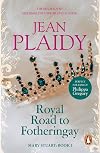
The edition I own is the same as one pictured (Pan [M197] 1967, 2nd printing Paperback) but it is slightly more used. Where your thumb goes when reading a paperback, my edition has the actual binding off in a little square at the bottom. The knowledge that I was reading a book that came show more to me from the UK and that it belonged to an unknown person"Merle Horvington" as transcribed inside of the book, brought me a sense of 'vintage pleasure'. I did have to be careful though as several little pieces of the binding was just crumbling at the touch. I was quite thankful it did not have that old book musty smell though it was yellowing around the edges..but not bad for a book older than I am!
Back to the contents of the book. I do not want to give away plot lines or events, but I intend to give a brief review. I truly enjoyed this version of Mary as Plaidy interprets her. I had begun my British History passion with Henry VIII, and then Elizabeth I, so I have had Elizabeth's biased view of Mary till now. Through this book, I cannot but help to feel so much more empathy for her although the decisions she makes in her love life and consequently politically are utterly disastrous and you just want to yell at her. Poor thing was misguided from the get-go. The only good thing that happens is that she and Darnley have a healthy son. The bad thing is that she barely got to see her child as she was on the run ever after and then a prisoner. That son becomes James VI of Scotland, and James I of England whom I spoke of in earlier posts in regards to Arbella aka Arabella and her own misfortune for being born a Stuart.
I have previously read Jane Dunn's Elizabeth and Mary: Cousins, Rivals, Queens which is non-fiction. I can not point out any direct historical inaccuracies although I am not one for noticing for the smaller details. As far as my review of that book I had previously written on WeRead via Facebook: "It was okay.. nothing new and seemed a bit of disorganized. I didn't like how all of the major events were eluded to several times before getting to that point in time. Could never get a sense of time with this book."
I wonder if Mary was simply more in tune to her beauty and cared more for the finer things in life and not brought up to think politically. Since this work is fiction I cannot say for sure.
The book ends as she is abdicating Scotland, and now I have begun "The Captive Queen of Scots." It picks up directly where "Fotheringay" left off and you learn soon the fate of the pregnancy that we learn of towards the end of "Fotheringay".
I give The Royal Road to Fotheringay 5 of 5 stars as a piece of Fiction. show less
Plaidy's books always look so daunting for their length but they usually end up being quick reads as was the case for the Royal Road to Fotheringay. All of her characters though do end up reading very much the same and it is only the circumstances of history which set them apart.
Members
- Recently Added By
Lists

KayStJ's to-read list
1,616 works; 11 members
Author Information

254+ Works 37,340 Members
Jean Plaidy was a British writer who wrote under various pen names. Her real name is Eleanor Alice Burford Hibbert. She was born in London on September 1, 1906. Most of the books written as Jean Plaidy are historical romances based on English history featuring historical figures. The first, Beyond the Blue Mountains, was published in 1947. Hibbert show more also wrote five nonfiction histories and two children's books. Besides Jean Plaidy, Hibbert wrote under Victoria Holt, Phillipa Carr, Elbur Ford, Kathleen Kellow, Ellalice Tate, and her maiden name, Eleanor Burford. Hibbert died on January 18, 1993. (Bowker Author Biography) show less
Some Editions
Series

Work Relationships
Common Knowledge
- Canonical title
- Royal Road to Fotheringhay
- Original title
- Mary Queen of Scotland: The Triumphant Year
- Original publication date
- 1955
- People/Characters
- Mary, Queen of Scots; François II, King of France; Catherine de Medici; Elizabeth I, Queen of England
- Important places
- France; Scotland, UK
- Canonical DDC/MDS
- 823.914
- Canonical LCC
- PR6015.I3
Classifications
Statistics
- Members
- 428
- Popularity
- 72,350
- Reviews
- 10
- Rating
- (3.72)
- Languages
- Czech, English, German, Spanish
- Media
- Paper, Audiobook, Ebook
- ISBNs
- 13
- ASINs
- 14